 Bellingham Window
 Window Installation for Sunnyland Homes
Sunnyland is one of Bellingham's established residential neighborhoods, with homes spanning a real range of ages — older originals with single-pane glass sitting a few doors down from more recent replacements. That mix means there's no single "typical" window job in this neighborhood. Some houses need a straightforward like-for-like swap. Others have openings that were patched or modified over the years and need real assessment before a new window goes in. What every home in Sunnyland has in common is the climate it sits in, and that's the part a window installation can't afford to treat as an afterthought.
Whatcom County's marine climate is consistent but demanding: salt-tinged air moving in off Bellingham Bay, rain that comes in sideways as often as it falls straight down, and a moss and mildew season that can run most of the year on shaded, north-facing walls. Windows sit at some of the most vulnerable points in a home's exterior — every unit is a seam in the wall assembly, whether it's a small utility window or a large fixed picture window. Installing one correctly in this climate means treating that seam as seriously as the glass and frame themselves.
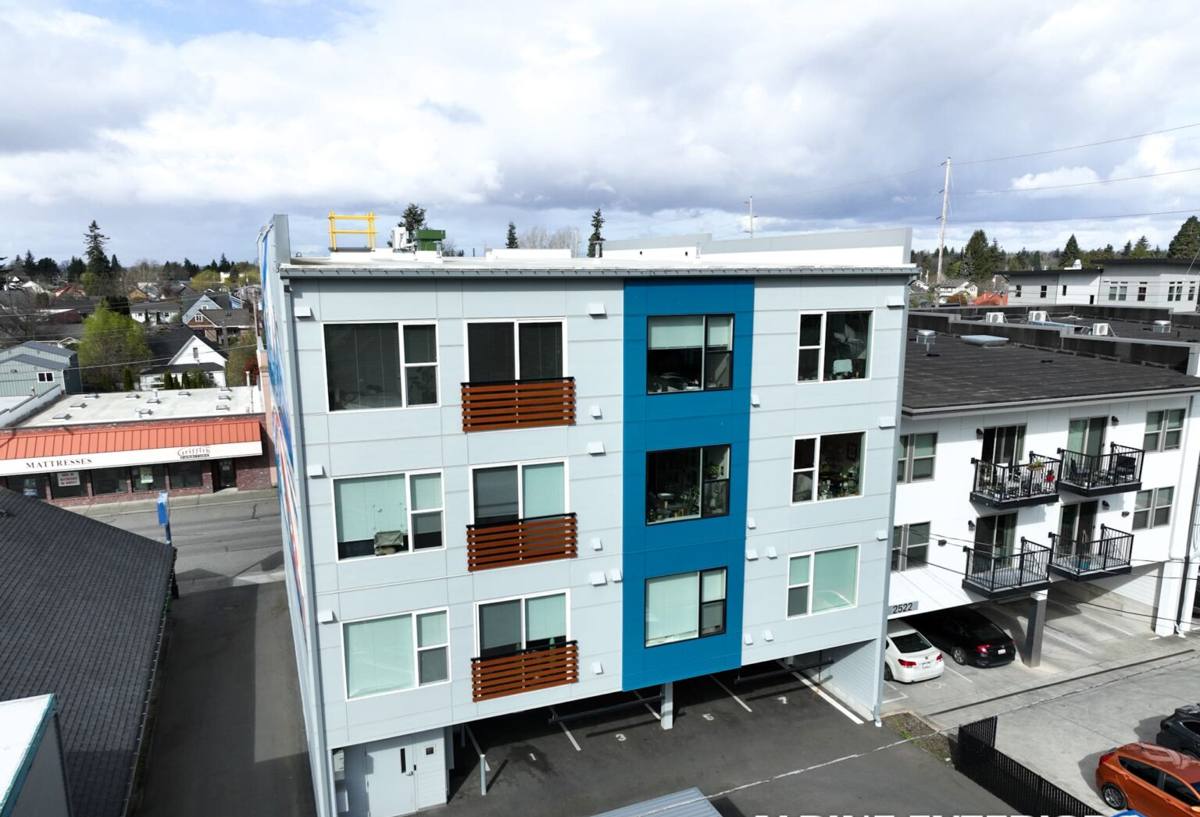
What Bellingham's Climate Does to Windows
Salt Air and Marine Exposure
Even away from the immediate waterfront, Bellingham's air carries a steady amount of salt and moisture off the bay. Over years, that exposure works on hardware, fasteners, and lower-grade frame components faster than it would in a drier inland setting. It's slow, quiet damage — corroded locks, stiff hardware, a frame that's lost its finish — and it rarely announces itself until it's already a maintenance problem.
Driving Rain
Wind off the water pushes rain sideways into wall assemblies and window openings rather than letting gravity do the work. That matters because a flashing detail or sealant joint that would perform fine somewhere calmer can still let water in here specifically, because the wind is driving moisture into gaps a straight-down rain model never tests. Window installation in this climate has to assume rain will hit the opening from an angle, not just from above.
A Long Moss and Mildew Season
Mild temperatures, consistent dampness, and tree cover common to neighborhoods like Sunnyland add up to extended moss and mildew growth, especially on shaded sides of the house. Around windows, that shows up as staining on sills and trim, and in worse cases, as a sign that water is sitting somewhere it shouldn't be instead of draining away. A sill that isn't sloped correctly, or a frame that traps moisture instead of shedding it, becomes a growth surface over time.
Signs a Sunnyland Home Needs New Windows
- Visible fog or moisture between panes of double-pane glass — a sign the seal has failed
- Drafts you can feel near the frame even when the window is fully latched
- Wood trim or sills that are soft, discolored, or show recurring moss and mildew after cleaning
- Windows that are difficult to open, close, or lock, often from swollen frames or corroded hardware
- Condensation forming regularly on the interior glass during colder months
- Rising heating bills without another clear explanation
- Visible gaps between the window frame and the surrounding wall or trim
Not every one of these means a full replacement is necessary right away. But taken together, or left unaddressed for a few more wet seasons, they tend to point toward a window that's no longer doing its job as a weather barrier, not just an aesthetic issue.
What a Correct Window Installation Actually Involves
Removal and Opening Assessment
The old window doesn't just get pulled and replaced — the opening gets checked while it's exposed. This is often the first real look at what's been happening behind the trim: whether the sheathing is sound, whether prior flashing was done correctly, and whether there's any hidden rot or moisture damage that needs to be addressed before a new window goes in. Skipping this step and simply installing a new unit over a compromised opening just seals a problem back up instead of fixing it.
Flashing and Weather Barrier Integration
This is the step that matters most in a climate like this one. Flashing has to be sequenced correctly — sill pan flashing that sheds water outward, side flashing that laps over it, and head flashing that laps over the sides, all tied into the house wrap so water is directed out and down rather than trapped behind the wall. Done out of order, or with gaps left at the corners, flashing can look complete from the outside while still leaving an entry point for water.
Sealing and Air Sealing
Beyond flashing, the gap between the window frame and the rough opening needs to be sealed and insulated correctly — enough to stop air infiltration without over-packing the space in a way that can distort the frame. Sealant at the exterior trim joints matters too, but it's a backup to correct flashing, not a substitute for it.
Trim and Finish
The last step is exterior trim and finish work that ties the new window cleanly into the surrounding siding, so it reads as original to the house rather than added on. On older Sunnyland homes especially, matching trim profiles and reveal lines to the rest of the house is part of getting the job to look right, not just perform right.
Choosing a Frame Material for This Climate
Frame material is a real trade-off, not just a style choice, and it matters more here than it would in a drier region. We'll walk through the honest pros and cons for your specific home rather than defaulting to whichever product is fastest to install.
| Frame Material | How It Holds Up Here | Maintenance |
|---|---|---|
| Vinyl | Handles sustained coastal moisture well; performance varies by product quality and reinforcement | Low — no painting or sealing required |
| Fiberglass | Very stable in wet, temperature-swinging conditions; resists warping and expansion | Low — factory finish holds up well against salt air and UV |
| Aluminum | Strong but conducts heat and cold; needs a thermal break to perform well in this climate | Low, but condensation can be an issue without a thermal break |
| Wood (exterior exposed) | Attractive but sensitive to sustained moisture and salt air without diligent upkeep | High — regular painting or sealing needed to prevent rot |
| Wood-clad (wood interior, composite or metal exterior) | Combines interior wood look with a protected, low-maintenance exterior face | Moderate — exterior cladding is low-maintenance; interior wood still needs periodic attention |
For most Sunnyland homes facing this climate directly, we lead with vinyl or fiberglass on weather-exposed elevations because they hold up to sustained moisture with the least ongoing upkeep. Wood-clad units can still make sense where the interior wood look matters and the home's exposure is more moderate — it's a conversation worth having against your specific home, not a one-size answer.
Our Process, Start to Finish
- On-site assessment — we look at each opening individually, check for existing damage, and note anything unusual about the framing or trim
- Honest recommendation — straightforward replacement, opening repair first, or a different frame material, explained with the reasoning behind it
- Ordering — sizing confirmed and units ordered, with a realistic timeline communicated up front
- Removal and opening prep — old window comes out, the opening is inspected, and any hidden rot or flashing issues are addressed before anything new goes in
- Installation and flashing — the new window is set, shimmed level and square, and flashed in the correct sequence for this climate
- Sealing and trim — air sealing, exterior sealant, and trim finished to match the surrounding siding
- Final walkthrough — every window is opened, closed, and checked before we consider the job done
Cost Factors to Expect
| Factor | What It Affects | Why It Matters in Sunnyland |
|---|---|---|
| Number of windows and sizes | Total material and labor | Older homes in the neighborhood often mix original openings with previously modified ones |
| Frame material | Unit cost and long-term upkeep | Vinyl and fiberglass generally cost less over time in a climate this consistently wet |
| Opening condition | Repair costs before the new window goes in | Hidden rot or old flashing issues are common once the wall is opened up on older homes |
| Standard vs. custom sizing | Lead time and unit cost | Older openings sometimes don't match today's standard manufacturer sizes |
| Trim and finish work | Labor time and final appearance | Matching trim to an older home's existing profiles takes more care than a new-construction match |
Real numbers depend on the specific home and its openings, which is why we walk the property before quoting instead of pricing off a flat per-window rate.
Mistakes We Often Find on Past Installations
A fair amount of the window work we get called for in Sunnyland isn't a first installation — it's fixing or replacing something installed incorrectly before. The patterns repeat: sealant used as the primary water barrier instead of proper flashing, head flashing left out entirely, shims left in place without trimming that later interfere with drainage, or a new window set into an opening with rot that was never addressed underneath. None of these mistakes are visible from the street. They show up years later as a draft, a soft sill, or water staining inside on a wall that should be dry.
What to ask before you hire:
- Ask how they sequence flashing on a window installation, not just whether they "seal it well"
- Ask what happens if they find rot or damage once the old window is out
- Confirm current Washington contractor licensing and insurance
- Get a written scope of work, including what's covered under the installation warranty versus the manufacturer's window warranty
- Ask how long they've actually worked in Bellingham and this specific climate, not just in the trade generally
Why a Local Sunnyland Crew Matters
Manufacturer installation instructions are written for average conditions, not for a specific stretch of Whatcom County with salt air, driving rain, and a moss season that runs most of the year. A crew that actually works in Sunnyland regularly knows which wall orientations stay wet longest, which older openings tend to have hidden framing issues, and where it's worth spending extra time on flashing even when a faster shortcut would look fine on installation day. That experience doesn't show up in a sales pitch — it shows up two or three winters later, in whether the window is still performing the way it should.
We're not asking you to take our word for how a window should be installed in this climate. We're glad to walk your home, point out what we're seeing at your existing openings, and explain the reasoning behind whatever we recommend — including if that recommendation is simpler or less expensive than you expected.
If you're weighing new windows for a Sunnyland home, or just want an honest look at what's going on with the ones you have, reach out using the form below to schedule a free, no-pressure estimate.