 Bellingham Window
 Storm Damage Roof Repair in York: Built for What Whatcom County Weather Actually Does
York is one of Bellingham's established in-city neighborhoods, and like the rest of Whatcom County it sits inside a marine climate that treats a roof harder than most homeowners realize until something goes wrong. Wind off the water and through the lowlands doesn't arrive politely — it drives rain sideways under shingle edges, works loose flashing back and forth until it fails, and during the worst windstorms it can lift shingles, snap branches onto a roof plane, or peel back ridge caps that were never fastened quite tightly enough to begin with. Add a moss season that runs long on shaded, north-facing slopes, and a roof here is dealing with a combination of stresses that a drier inland climate simply doesn't produce.
Bellingham Window Co works on homes across York and the rest of Whatcom County, and while windows are a core focus, we also handle roofing, siding, and decks — because storm damage rarely respects the boundary between one exterior system and another. A roof leak from a storm often shows up first as a stain around a window head or a soft spot in siding below a bad flashing joint, so treating the roof as one piece of a connected building envelope, rather than an isolated repair, is how damage actually gets fixed instead of just patched over.
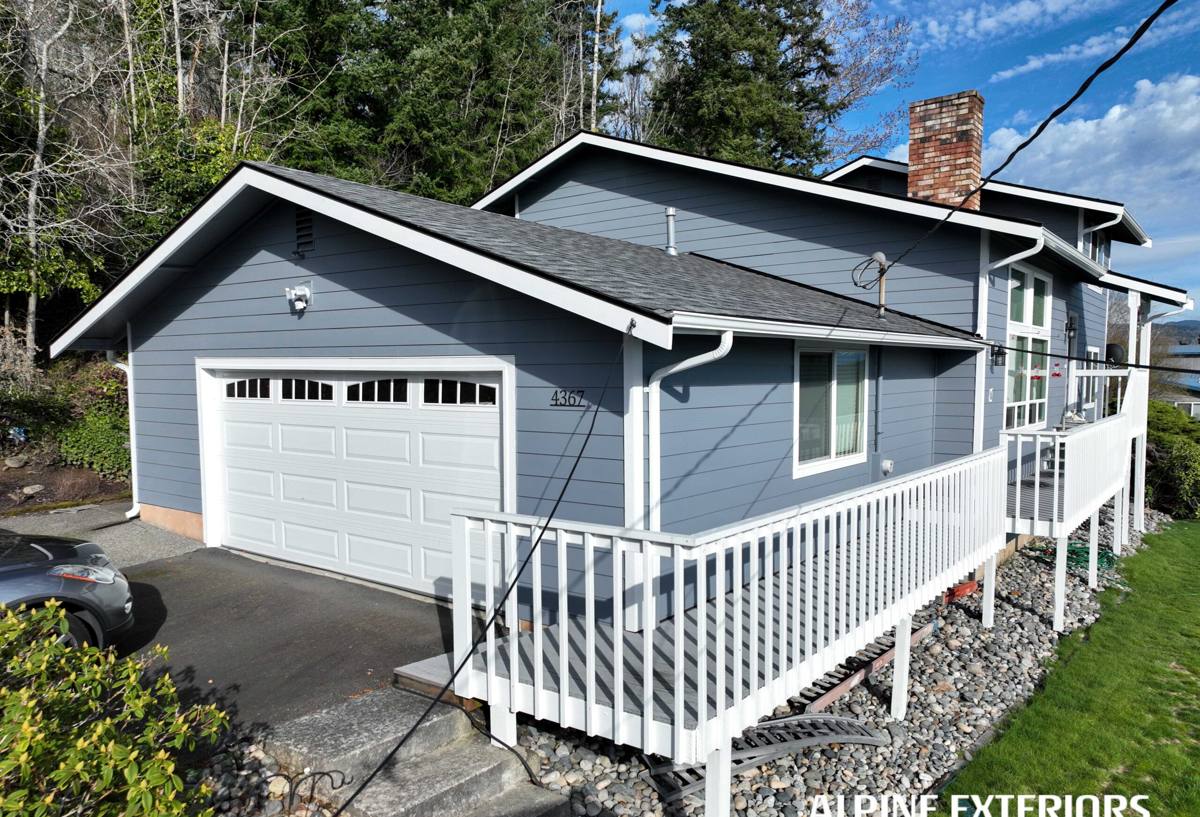
What Actually Counts as Storm Damage
Wind and Uplift Damage
Sustained wind and gusts can lift the tab edge of a shingle just enough to break its seal, even without visibly tearing it off. Once that seal is broken, the shingle no longer sheds wind-driven rain the way it's designed to, and it can lift again in the next storm until it eventually tears loose. This kind of damage is often invisible from the ground.
Wind-Driven Rain Intrusion
Rain that's pushed sideways by wind finds its way under shingle edges, around flashing, and through any gap that wouldn't leak in calm weather. This is the most common storm damage we see in this region — not a dramatic hole in the roof, but water working its way in through a compromised seal or flashing joint during a bad windstorm.
Impact Damage
Falling branches, wind-thrown debris, and occasionally hail can crack, dent, or punch through shingles and, in more serious cases, damage the roof decking underneath. This is usually the most visible category of storm damage, but the full extent often isn't clear until someone gets on the roof to check the decking, not just the surface.
Storm Damage vs. Ordinary Wear
Not every problem found after a storm was caused by that storm. Curling, granule loss, and aging flashing sealant are often pre-existing wear that a storm simply exposed or accelerated. Being honest about that distinction matters, especially if you're filing an insurance claim — we'll tell you plainly what looks storm-related and what looks like ordinary age, rather than blurring the two.
The First 24 to 48 Hours: Stopping Active Damage
When a roof is actively leaking or has visible storm damage, the first priority isn't a full repair plan — it's stopping water from getting further into the house. That usually means a temporary tarp or emergency covering over the affected area, secured well enough to hold through the next round of wind and rain, along with a check of the attic or ceiling below for water that's already gotten in. A rushed, poorly secured tarp can do more harm than good if it tears loose in the next storm, so this step is worth doing right even though it's temporary.
Once the immediate water intrusion is controlled, we can do a proper inspection without the pressure of active leaking, and put together a repair plan based on what the roof actually needs rather than what's fastest.
What a Correct Storm Repair Actually Involves
A storm repair that only replaces the shingles that are visibly missing or torn is addressing the symptom, not necessarily the cause. A thorough repair looks at the whole assembly:
- Inspecting the roof decking underneath damaged shingles for soft spots, moisture staining, or rot before anything new goes down
- Checking underlayment condition in the affected area, since torn or aged underlayment won't stop water even with new shingles on top
- Re-securing or replacing flashing at valleys, chimneys, vents, and wall intersections, since storm damage frequently starts or worsens at these transition points rather than in the open field of the roof
- Matching replacement shingles as closely as possible in type, weight, and color to minimize a visibly patched appearance
- Confirming proper fastening patterns and seal-down on new and adjacent shingles, since a repair surrounded by already-compromised seals will fail again in the next storm
- Checking attic ventilation and insulation in the affected area for moisture that got in before the repair was made
Skipping the decking and underlayment check is the most common shortcut in a rushed storm repair, and it's exactly what leads to a "fixed" roof leaking again during the next storm season.
Repair or Replace? How We Help You Decide
Storm damage doesn't automatically mean a full roof replacement, and it doesn't automatically mean a simple patch will hold, either. The right call depends on the roof's age, how widespread the damage is, and what condition the rest of the roof was already in before the storm.
| Factor | Points Toward Repair | Points Toward Replacement |
|---|---|---|
| Roof age | Under roughly half its expected lifespan | Already near or past its expected service life |
| Extent of damage | Isolated to one section or slope | Scattered across multiple slopes or widespread granule loss |
| Decking condition | Sound, dry decking under the damaged area | Soft, stained, or rotted decking found during inspection |
| Prior roof condition | Well-maintained with no history of leaks | Existing wear, past patch jobs, or known trouble spots |
| Underlayment condition | Recent, intact underlayment beyond the damaged area | Aged or brittle underlayment throughout |
We'll walk the roof, explain what we find in plain terms, and give you the honest answer rather than defaulting to whichever option is easier to sell. A well-maintained roof with isolated storm damage is often a straightforward, reasonably priced repair. A roof that was already near the end of its life is usually better served by putting the storm-damage budget toward a replacement instead of a repair that won't hold long anyway.
Working With Insurance on a Storm Claim
Most homeowner policies cover roof damage caused by a specific storm event, though coverage details and deductibles vary by policy. A few things make the claims process smoother:
- Document damage with photos as soon as it's safe to do so, before any tarping or temporary repair changes what's visible
- Keep a written estimate that separates storm-caused damage from any pre-existing wear, since adjusters look closely at that distinction
- Ask your adjuster directly whether the claim covers full replacement, repair only, or a partial roof section, since this varies by policy and by the extent of damage found
We can provide a written estimate and documentation to support your claim, but the claim decision itself is between you and your insurance company. We'll give you an honest assessment either way, whether or not it lines up with what an adjuster initially offers.
Our Process for a York Storm Repair
- Emergency response to stop active water intrusion, including temporary tarping if needed
- Full roof inspection, including decking and underlayment, not just a visual check of the surface
- A written explanation of what's storm damage versus pre-existing wear, and a repair or replacement recommendation
- A clear, itemized estimate before any work begins
- Repair work done to match existing materials as closely as possible, with attention to flashing and ventilation, not just shingles
- A final walkthrough so you can see and understand exactly what was done
Why a Local Whatcom County Crew Matters After a Storm
Storms bring out traveling crews who go door to door in the days afterward offering fast, cheap repairs. Some do fine work. Many aren't local, won't be reachable if a repair fails a year later, and have every incentive to move fast rather than get the flashing and decking details right. A crew that works Whatcom County roofs year-round has a reason to still be answering the phone next winter, and has already seen how salt air, wind-driven rain, and a long moss season affect roofs in York and neighborhoods like it over time — not just how a shingle performs on a spec sheet.
That local knowledge shows up in small but important decisions: which flashing details are worth extra time given how this county's storms actually behave, how much moss and shade a particular roof slope deals with, and when a repair is genuinely sufficient versus when it's just delaying a replacement that's coming either way.
Signs Your York Home May Need a Storm Damage Inspection
- Missing, torn, or visibly lifted shingles after a windstorm
- Granules collecting in gutters or at downspout outlets
- New water stains on ceilings or upper interior walls following a storm
- Visible sagging or soft spots when walking the attic floor
- Flashing that looks bent, lifted, or separated around chimneys, vents, or roof-to-wall transitions
- Daylight visible through the roof deck from inside the attic
- A sudden increase in moss or debris buildup on one section of the roof after storm activity
Any one of these is worth a professional look, even if it seems minor. Storm damage that goes unaddressed through a wet Whatcom County winter tends to get worse, not stay the same.
Get a Free, No-Pressure Estimate
If your York home has visible or suspected storm damage, we're glad to take a look and give you a straightforward read on what it actually needs — no pressure, no upsell, no exaggerated scope. Reach out using the form below to schedule a free estimate.