 Bellingham Window
 Window Installation in York — Built for Bellingham's Coastal Weather
York is one of Bellingham's older, closer-in neighborhoods, and that means a lot of the housing stock is carrying original or early-replacement windows that were never built for the kind of weather Whatcom County throws at them year after year. Salt-laden air off the water, wind-driven rain that hits siding sideways instead of straight down, and a long, damp moss season all work on window frames and seals in ways that inland climates just don't experience. When we install windows in York, we're not doing a generic swap-out — we're accounting for a specific set of local conditions that determine which materials hold up, how flashing needs to be detailed, and how long a job should realistically last before it needs attention again.
This page is about window installation specifically, not roofing or siding, though the same weather that damages one usually stresses the others. If you're noticing drafts, fogging glass, or wood rot around your window frames, the installation quality — not just the window itself — is usually the deciding factor in whether the next set lasts fifteen years or thirty.
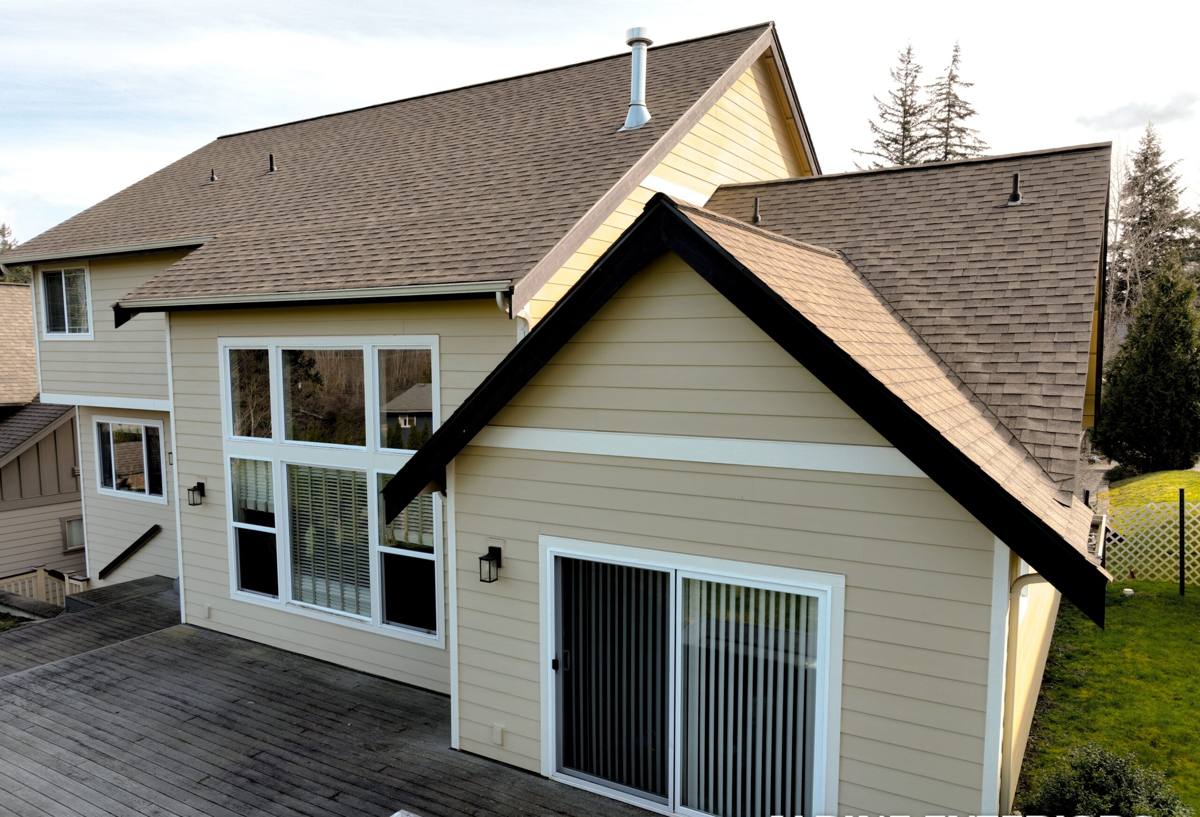
What Salt Air, Rain, and Moss Season Do to Windows Over Time
Bellingham's climate is mild compared to a lot of the country, but "mild" doesn't mean gentle on building materials. A few things stack up against windows here specifically:
- Salt air corrosion: Homes closer to the water deal with airborne salt that slowly attacks metal hardware, aluminum frames, and fasteners — locks get stiff, hinges corrode, and unprotected metal components degrade faster than they would inland.
- Driving rain: Storms off the Sound don't always fall straight down. Wind-driven rain pushes water sideways into any gap in the flashing or sealant, which is why so many window failures in this region start as water intrusion around the frame rather than failure of the glass itself.
- Moss and moisture season: Bellingham's long wet stretch from fall through spring keeps humidity high around window sills and trim for months at a time. Moss and algae take hold on horizontal surfaces, sills stay damp longer, and wood components that aren't properly sealed or flashed start to soften and rot from the outside in.
- Temperature swings: Cool, damp nights and warmer days cause condensation on older single-pane or failed double-pane glass, which adds even more moisture load right at the frame.
None of this means windows can't last decades here — plenty do. It means the installation details that get skipped in drier climates (proper flashing laps, sill pans, correct sealant selection, drainage paths) aren't optional in York. They're the difference between a window that performs for its full warranty life and one that starts leaking behind the trim in year six.
Signs Your York Home's Windows Are Due for Replacement
Not every drafty window needs full replacement — sometimes it's a sealant or hardware fix. But there are signs that point specifically to a failed installation or a window past its service life:
- Fogging or a visible haze between panes of double-pane glass — the seal has failed and the insulating gas has escaped
- Soft, discolored, or crumbling wood trim around the frame, especially on the sill or bottom corners
- Visible moss or dark staining building up on the sill or lower frame year after year
- Windows that are hard to open, close, or lock — often a sign of frame warping or corroded hardware
- A noticeable draft you can feel with your hand near the frame on a windy day
- Rising heating bills without another clear explanation
- Rot or soft spots on the interior wall or ceiling below or beside a window, which usually means water has been getting past the flashing for a while
If you're seeing interior wall damage near a window, that's worth a look sooner rather than later — it usually means water has been finding its way in for longer than the window's appearance would suggest.
What Correct Installation Actually Involves
The window unit itself is only part of the job. Most of the failures we get called out to fix in older York homes trace back to installation shortcuts, not bad windows. A correct installation follows a specific sequence, and skipping steps is how leaks start.
Removal and Inspection
Once the old window is out, we inspect the rough opening for hidden rot, soft framing, or prior water damage before anything new goes in. In a wet climate like ours, this step catches problems that would otherwise get sealed up and hidden behind the new window for years.
Flashing and Weatherproofing
This is the step that matters most for driving rain. Proper flashing — sill pan, jamb flashing, and head flashing installed in the correct shingle-lap order — directs any water that gets behind the siding back out, rather than letting it pool at the sill. This is where a rushed installation and a correct one look identical from the street but perform completely differently in a storm.
Setting, Shimming, and Sealing
The window has to be set plumb, level, and square, then shimmed and fastened according to the manufacturer's specifications — not just "close enough." An out-of-square window stresses the frame, strains the seals, and shortens the life of the glass unit. Sealant is applied at specific points, not just smeared around the perimeter, because sealing the wrong spots can trap moisture instead of keeping it out.
Trim and Finish
Interior and exterior trim gets reinstalled or replaced, gaps get insulated, and everything is checked for smooth operation before we call it finished. We also walk the exterior for anywhere moss or algae is likely to collect and make sure water has a clear path away from the frame.
Choosing a Frame Material for This Climate
There's no single "best" window material — it depends on your home's age, style, budget, and how much upkeep you want to take on. Here's how the common options compare for a wet, salt-air coastal climate like Bellingham's:
| Frame Material | Moisture & Salt Air Resistance | Maintenance | Relative Cost |
|---|---|---|---|
| Vinyl | Very good — won't rot or corrode, handles humidity well | Low — occasional cleaning | Lower |
| Fiberglass | Excellent — dimensionally stable, resists moisture and salt exposure | Low | Mid to higher |
| Wood (unclad) | Fair — needs consistent upkeep to avoid rot in our wet season | High — regular painting or sealing | Mid to higher |
| Wood-clad (vinyl or aluminum exterior) | Good — clad exterior protects wood from the weather side | Moderate | Higher |
| Aluminum | Fair — prone to corrosion near salt air unless well-finished | Moderate | Varies |
For homes in York exposed to salt air and heavy seasonal rain, we most often steer clients toward vinyl or fiberglass for the frame itself — not because wood windows can't work here, but because unclad wood requires a maintenance commitment that a lot of homeowners underestimate until they're repainting sills every couple of years. If you want the look of wood, a clad option gives you that appearance with less exposure to the weather that causes problems.
Our Installation Process, Start to Finish
- Free on-site estimate: We look at your existing windows, the condition of the surrounding trim and framing, and talk through what you actually need — not an upsell, a straight assessment.
- Measurement and ordering: Accurate measurements matter more in older homes, where openings are rarely perfectly square after decades of settling.
- Scheduling around weather: We plan installation days around Bellingham's forecast when we can, since an open wall opening in a downpour is exactly the situation good flashing is designed to prevent — but there's no reason to invite it.
- Installation: Removal, inspection, flashing, setting, and finish work as outlined above, done one opening at a time so your home isn't left exposed.
- Walkthrough and cleanup: We check operation on every window, clean up the work area, and go over care basics before we leave.
Why Local Experience in York Matters
York's homes span a real mix of ages and styles, and a lot of them have been added onto, re-sided, or partially updated over the years — which means rough openings aren't always standard sizes, and what's behind the trim isn't always what the home's age would suggest. A crew that's worked in this neighborhood knows to check for those surprises before they become change orders mid-project. We also know which parts of a wall assembly tend to hold moisture in homes this close to the water, and we flash and seal accordingly rather than following a generic checklist built for a drier region.
Beyond the technical side, working locally in Whatcom County means we're accountable to the same community we live and work in. If something's not right after we leave, we're not far away.
Maintaining New Windows Through Whatcom County's Moss Season
A correctly installed window still benefits from basic seasonal upkeep, especially given how long our wet season runs. A few habits go a long way:
- Rinse sills and tracks periodically during the wet months to keep moss and algae from taking hold
- Keep gutters and downspouts clear so water isn't sheeting down over window heads
- Check exterior caulking annually and touch up any cracked or shrinking sealant before the rainy season sets in
- Trim back vegetation that's holding moisture against exterior walls near windows
- Operate locks and hardware a few times through the winter so they don't seize up from disuse and moisture
None of this replaces good installation — it just protects the investment you've already made in it.
If your York home has windows that are drafty, foggy, hard to operate, or just old enough that you're wondering whether it's time, we're glad to take a look. Reach out for a free, no-pressure estimate using the form below and we'll give you an honest read on what your home actually needs.