 Bellingham Window
 Composite Decking for Happy Valley's Marine Climate
Happy Valley is one of Bellingham's established, tree-covered neighborhoods, and like most of the city, it sits inside a marine climate that is hard on outdoor living spaces. Salt-laden air off Bellingham Bay, long stretches of driving rain, and a moss season that can run from fall through spring all work against a deck that isn't built or maintained correctly. Composite decking, installed the right way, holds up well against all three — but "installed the right way" is doing a lot of work in that sentence, and it's where a lot of decks in this area go wrong.
This page covers what a composite deck actually needs to perform in Happy Valley's conditions, what a correct installation involves, and why working with a crew that already knows this part of Whatcom County matters more than it might seem.
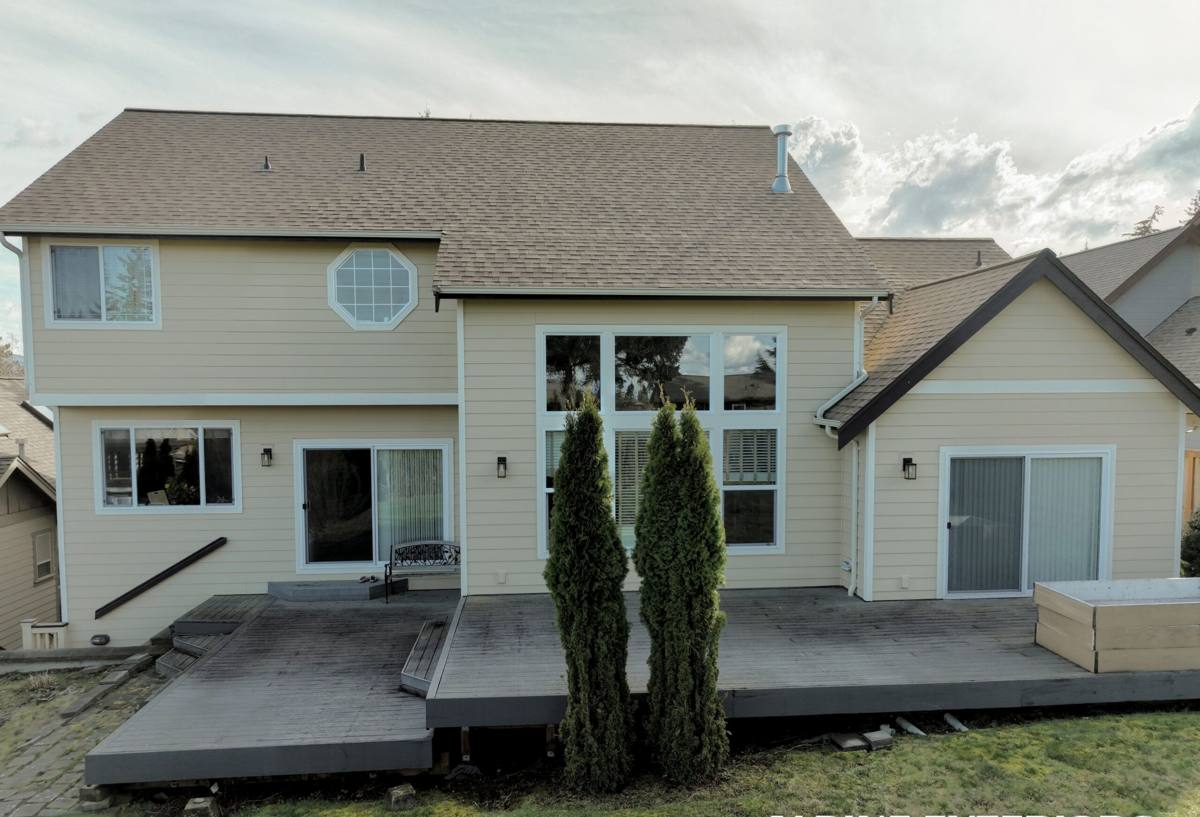
What Happy Valley's Conditions Actually Do to a Deck
Salt Air and Corrosion
Bellingham's proximity to the water means airborne salt reaches inland neighborhoods, including Happy Valley, more than most homeowners expect. Salt air accelerates corrosion on exposed metal — fasteners, joist hangers, railing brackets, and hidden clip systems. Composite boards themselves don't corrode, but a deck is only as good as the metal holding it together. Standard hardware store fasteners are not built for this.
Driving Rain and Standing Water
Whatcom County doesn't just get a lot of rain — a good share of it comes in sideways during fall and winter storms. That means water finds its way onto vertical surfaces, under railings, and into any gap that wasn't properly sealed or sloped. Composite decking resists water absorption far better than wood, but the structure underneath it — ledger boards, joists, framing connections — is still wood or wood-adjacent in most builds, and that's where rot actually starts.
Moss, Shade, and Slow-Drying Surfaces
Mature tree cover is part of what makes Happy Valley an attractive place to live, but shaded decks that stay damp for days at a time are exactly where moss, algae, and mildew take hold. On wood decking this shows up as slick, discolored boards and eventual surface breakdown. On composite, the surface itself won't rot, but organic growth can still build up and make boards slippery if a deck doesn't get enough airflow or occasional cleaning.
What a Correctly Built Composite Deck Requires
Composite boards get most of the attention, but the board is the last thing installed, not the most important thing. A deck that fails early almost always failed underneath the decking, not on top of it.
The Substructure Comes First
Joists, beams, and posts need to be sized correctly for the span and load, and in this climate we treat every framing connection as a moisture risk until proven otherwise. That means joist tape or a flashing membrane over the top of each joist before boards go down, stainless or coated fasteners rated for treated lumber and coastal exposure, and hardware that won't react badly with either the wood treatment chemicals or salt air over time.
Ledger Attachment and Flashing
Where a deck attaches to the house, the ledger board and its flashing are the single most common point of failure we see on older decks in this region. Water that gets behind a poorly flashed ledger doesn't just damage the deck — it can work its way into the house's wall structure. This connection gets proper step flashing and a drainage gap, not just a bead of caulk.
Airflow and Drainage Underneath
A deck built low to the ground or tight against grade traps moisture underneath, which slows drying and invites rot in the framing even if the visible boards look fine. We build in enough clearance and, where the site allows it, drainage away from the structure so the space underneath the deck can actually dry out between storms.
Composite vs Other Decking Materials in This Climate
| Material | Moisture Behavior | Upkeep in Wet, Shaded Areas | Typical Trade-Off |
|---|---|---|---|
| Capped Composite | Very low water absorption; core is moisture-resistant | Occasional washing to clear moss/algae film | Higher upfront material cost |
| Pressure-Treated Wood | Absorbs water readily; needs sealing | Regular staining/sealing, sanding for splinters | Lower upfront cost, ongoing labor |
| Cedar | Naturally rot-resistant but still absorbs moisture | Refinishing to maintain color and protection | Attractive appearance, moderate maintenance |
| Uncapped Composite | Can absorb moisture at cut ends and surface over time | More prone to staining and mold in shaded, damp spots | Lower cost than capped composite, shorter service life here |
We install capped composite as our standard for shaded, wet-climate properties like most of what you find in Happy Valley. Uncapped composite and untreated wood aren't wrong products — they're just a worse match for a yard that stays damp under tree cover for long stretches of the year, and we'd rather tell a homeowner that upfront than sell a deck that needs constant attention.
Choosing the Right Composite Board for a Shaded, Damp Lot
Capped vs Uncapped
Capped composite boards have a protective polymer shell wrapped around the wood-fiber core. That shell is what actually resists moisture, staining, and mold growth — the core material alone would behave much more like wood if left exposed. For a lot with regular shade and slow drying, we treat capped boards as the baseline, not an upgrade.
Color and Heat
Darker composite colors show less staining from moss and organic debris but can run hotter in direct summer sun. On a shaded Happy Valley lot, heat is rarely the deciding factor, so we typically steer homeowners toward color based on how the board hides pollen, needle debris, and the occasional streak of moss rather than sun exposure.
Surface Texture and Traction
A wood-grain embossed surface sheds water differently than a smooth board and generally provides better footing when the deck is damp — which, in this climate, is often. We walk homeowners through samples on-site rather than off a brochure, since texture matters more here than in drier parts of the state.
Our Process for a Happy Valley Composite Deck
Every project starts with a site visit, not a sales pitch. We look at drainage, sun and shade patterns, existing structure (if it's a rebuild), and how the deck connects to the house before we talk products or pricing.
- On-site assessment of framing, ledger condition, drainage, and shade exposure
- Written scope covering substructure work, flashing, fastener spec, and board selection — not just a board name
- Permit handling where required by the local jurisdiction
- Demo of the old deck (if applicable) with a check of what's underneath before we build over it
- Framing and flashing work, inspected before boards go down
- Composite board installation with hidden fastener systems where the product allows it
- Railing, stair, and edge detail work matched to the home
- Final walkthrough covering care and what to expect in year one
We don't skip the framing inspection step to save a day. Boards can be replaced later if something's wrong with them; a rotted joist under a finished deck is a much bigger, more expensive problem to find later.
Living With a Composite Deck in Whatcom County
Composite decking is genuinely lower-maintenance than wood, but "low-maintenance" doesn't mean "no maintenance" in a climate like this one. A rinse or light wash a couple of times a year — more often in heavily shaded spots — keeps moss and organic film from building up on the surface. Avoid pressure washing at close range or high pressure, since it can damage the board's cap or drive water into board ends and fastener holes. Keeping gutters and downspouts clear also matters more than people expect, since runoff dumped near the deck's footings or framing undoes a lot of the moisture protection built into the structure.
If you already have a composite deck that's showing dark streaking, slippery patches, or soft spots near the house, those are worth a look before they become bigger problems — surface issues are usually easy to address, but soft framing underneath is not something to leave alone.
Why Local Experience in Happy Valley Matters
A deck built to a generic spec sheet doesn't account for a specific lot's shade pattern, drainage, or exposure to wind-driven rain off the bay. Crews that regularly work in Bellingham and the surrounding Whatcom County neighborhoods have already seen how composite decking performs here over several wet seasons — which fastener systems hold up, which flashing details actually keep water out, and where corners get cut on decks that fail early. That local track record is what separates a deck that looks good on installation day from one that still looks and performs well five winters from now.
What Affects the Cost of Your Project
| Factor | Why It Matters |
|---|---|
| Existing framing condition | Rebuilding rotted substructure adds cost but is not optional if found |
| Deck size and shape | Cutouts, multiple levels, and stairs add labor and material waste |
| Board selection | Capped composite costs more upfront than uncapped composite or wood |
| Railing and fastener systems | Hidden fasteners and coastal-rated hardware add cost but reduce long-term maintenance |
| Site access and drainage work | Slope, tree roots, and grading affect labor time and equipment needs |
We'd rather walk a homeowner through these factors on-site than quote a number sight unseen — two decks that look similar in size can have very different scopes once framing condition and drainage are factored in.
If you're planning a new deck or replacing an aging one in Happy Valley, we're happy to take a look and talk through what your specific lot needs — no pressure, no obligation. Use the form below to request a free estimate.