 Bellingham Window
 Decks in Sunnyland Face a Specific Kind of Wear
Sunnyland sits inland from Bellingham Bay but still gets the same marine air that moves through most of Whatcom County — damp, salt-tinged, and slow to dry out under the neighborhood's mature tree canopy. Add in Bellingham's driving rain patterns, where wind pushes water sideways into ledger boards and railings instead of straight down, and you have a climate that is genuinely tough on outdoor structures. A deck built with the wrong assumptions — assumptions that might hold up fine in a drier inland climate — will show problems here within a few seasons: soft spots near the house, black streaking on horizontal surfaces, and fasteners that start to weep rust stains long before the wood itself fails.
None of this means a deck can't last decades in Sunnyland. It means the build has to account for moisture from the start, not patch it in after the fact. That's the difference between a deck that needs real work at year eight and one that's still solid at year twenty-five.
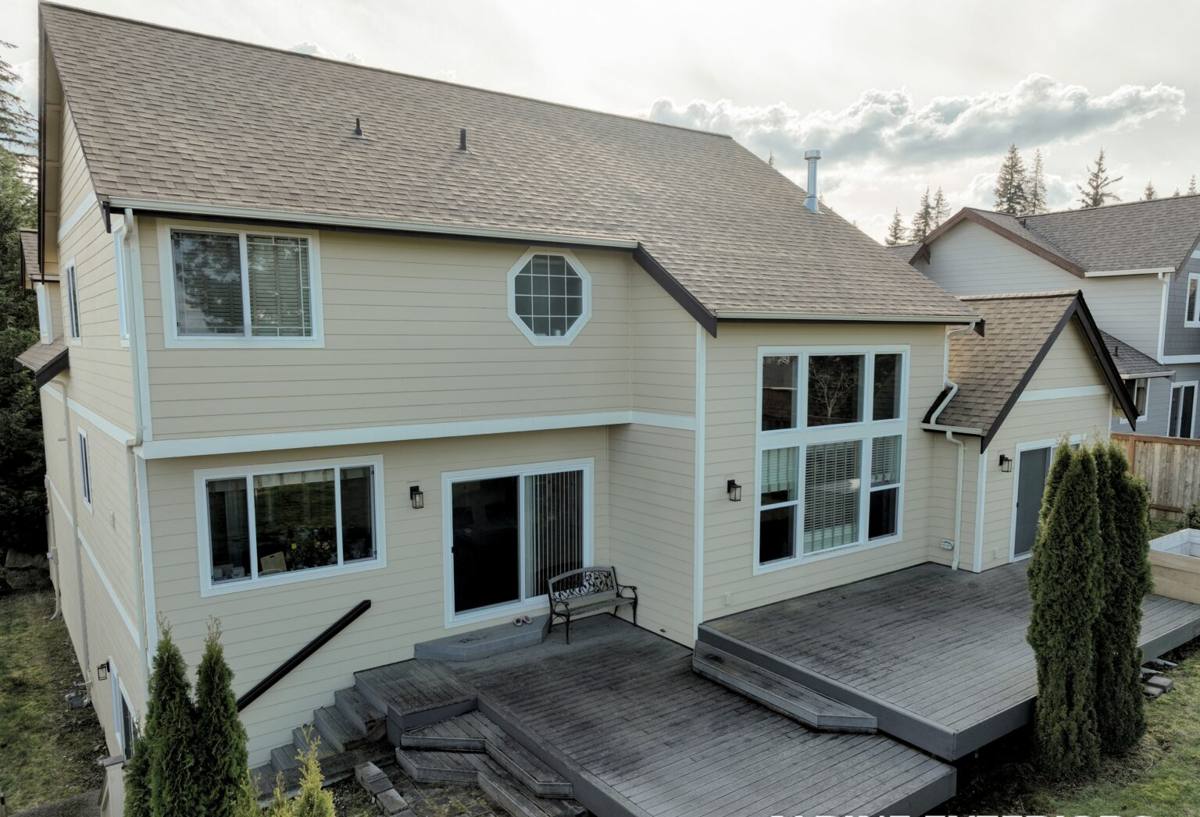
What Sunnyland's Climate Actually Demands From a Deck
Three regional factors drive most of the decisions we make on a Sunnyland deck project: salt-laden air, sustained wet-season rainfall, and an extended moss season that can run from fall through spring under shaded lots. Each one points to a different set of choices.
Salt Air and Metal Fatigue
Even a few miles inland, marine air accelerates corrosion on anything less than the right grade of fastener or hardware. Standard galvanized screws and joist hangers can start showing surface rust within a couple of wet seasons in this climate. We spec stainless steel or heavy hot-dip galvanized fasteners and connectors rated for coastal exposure — it costs more up front and is one of the cheapest ways to add years to a deck's structural life.
Driving Rain and Water Intrusion
The single most common failure point on decks throughout Bellingham isn't the decking surface — it's the ledger board, where the deck attaches to the house. Wind-driven rain finds any gap in flashing and works its way behind the siding, rotting the rim joist and sheathing from the inside where you can't see it until it's serious. Correct ledger flashing, with proper step flashing integrated behind the house's water-resistive barrier, is non-negotiable on every deck we attach to a structure.
Moss, Shade, and Slow Drying
Sunnyland's tree cover is part of what makes the neighborhood pleasant to live in, but shaded, slow-drying surfaces are exactly where moss and algae take hold. A deck with poor airflow underneath, or boards installed tight with no drainage gap, stays damp for days after a storm and becomes a moss farm by the second winter. Spacing, ventilation, and surface texture all factor into how much maintenance a deck will actually need once it's built.
Material Choices That Hold Up Locally
There's no single "best" decking material — the right choice depends on budget, how much upkeep you want to do, and how much sun or shade the deck gets. Here's how the common options actually perform under Whatcom County conditions.
| Material | Moisture Performance | Maintenance | Typical Lifespan Here |
|---|---|---|---|
| Pressure-treated fir/hem-fir | Good if sealed regularly; framing-grade PT lumber is the standard for structural members | Needs re-staining or sealing every 2-3 years | 15-25 years with upkeep |
| Western red cedar | Naturally rot- and insect-resistant; still needs sealing to prevent graying and moisture uptake | Annual or biennial cleaning and sealing | 20-25 years with upkeep |
| Composite decking | Excellent — doesn't absorb water or rot, resists moss better on textured caps | Occasional washing; no staining or sealing | 25-30+ years, manufacturer-warrantied |
| PVC decking | Best moisture resistance of any surface option; won't swell or rot | Lowest maintenance; occasional cleaning | 30+ years, manufacturer-warrantied |
For framing — the structural bones under any surface material — we use pressure-treated lumber rated for ground contact where posts meet footings, regardless of what decking goes on top. That structural layer is what actually determines how long the deck lasts, and it's the part most homeowners never see once the project is done.
Fasteners, Flashing, and the Details That Actually Prevent Rot
The visible decking gets all the attention, but the details that determine whether a deck survives a Bellingham winter are mostly hidden:
- Ledger boards flashed with proper step flashing integrated under the house's siding and water-resistive barrier, not just caulked and hoped for
- A consistent drainage gap between deck boards so water sheds instead of pooling and feeding moss growth
- Joist tape or a comparable moisture barrier on top of framing lumber to stop water from wicking into end grain and fastener holes
- Stainless or coastal-rated hardware at every connection point, especially joist hangers and structural screws
- Footings poured below the local frost depth and sized to the soil conditions on the specific lot — Sunnyland's terrain varies enough that we don't assume a standard footing spec works everywhere
- Under-deck airflow, either through proper joist spacing or a ventilation gap at the rim, so the structure can actually dry out between storms
Skip any one of these and the deck may look fine for a year or two before the real problem shows up — usually as soft framing you can't see until a board flexes underfoot or a post starts to lean.
Permits and Code Requirements
Most deck projects attached to a house, or built above a certain height off grade, require a permit through the City of Bellingham or Whatcom County depending on the property's location. Permitted work gets inspected at the footing stage and again before it's covered, which is a genuine benefit to the homeowner — it catches structural issues before they're buried under decking. Code also sets minimum requirements that matter for safety: guardrail height, baluster spacing, stair rise and run, and structural spans based on joist size and spacing. We pull permits and handle inspections as part of the project, so you're not left tracking down paperwork or wondering if the work will pass a future home sale inspection.
Our Process for a Sunnyland Deck Project
We keep the process straightforward because a deck project shouldn't feel complicated for the homeowner, even though there's real engineering behind it.
1. On-Site Assessment
We walk the property, look at grade, drainage, existing structure (if we're replacing a deck), and sun/shade exposure, since that affects both material recommendations and expected maintenance.
2. Design and Material Selection
We talk through decking material, railing style, and layout based on how you'll actually use the space, and give you an honest read on maintenance expectations for each option before you commit.
3. Permitting
We handle the permit application and coordinate inspections with the city or county, so the structural work is verified at the stages that matter.
4. Construction
Footings, framing, flashing, and decking — built in that order, with the hidden structural work done right before anything gets covered up.
5. Final Walkthrough
We go over the finished deck together, including what maintenance it'll need and roughly when, so there are no surprises down the road.
What Moss Season Means for Deck Maintenance
Whatcom County's wet season runs long, and shaded lots — common throughout Sunnyland — stay damp well after the rain stops elsewhere. A deck that's built with proper drainage and airflow will still need periodic attention, just less of it. Sweeping debris off the surface before it composts into a moss-friendly layer, keeping gutters clear so runoff isn't dumping directly onto the deck, and washing the surface once or twice a year go a long way. Sealed wood decks need re-sealing on a regular cycle; composite and PVC surfaces mainly just need washing to stay slip-resistant, since a moss film on any decking surface is a real fall hazard, not just a cosmetic issue.
Signs an Existing Deck Needs Attention
If you're not building new but wondering whether your current deck is holding up, a few checks will tell you a lot:
- Soft or spongy spots when you walk the surface, especially near the house
- Rust streaking around screws or joist hangers
- Gaps or cracking in the caulk or flashing where the deck meets the house
- Persistent moss or black staining that comes back quickly after cleaning
- Railings or posts that flex more than they used to
- Visible daylight or gaps at the ledger board connection
Any of these are worth a professional look before they turn into a structural repair instead of routine maintenance.
Why a Crew That Already Works Sunnyland Matters
Deck-building fundamentals don't change from neighborhood to neighborhood, but local conditions do. A crew that's worked lots throughout Sunnyland and the surrounding Bellingham area already has a feel for the terrain variation, the tree cover and shade patterns, and how the local building department reviews deck permits — none of which is something you learn from a general contracting background alone. That familiarity shows up in fewer surprises during the footing dig, a smoother permit process, and a deck that's designed with this specific climate in mind rather than a generic spec sheet.
Get an Honest Look at Your Project
Whether you're planning a new deck or trying to figure out if an existing one needs repair or replacement, we're happy to come take a look and give you a straight answer — no pressure, no hard sell. Use the form below to request a free estimate for your Sunnyland deck project.