 Bellingham Window
 Deck Repair Built for Barkley's Climate, Not a Generic Checklist
Barkley sits close enough to the water and open enough to Whatcom County's weather patterns that decks here age differently than decks in drier inland parts of the state. Salt-laden air off Bellingham Bay works its way into fasteners and metal connectors. Driving rain off the water finds every unsealed seam and end-cut. And the long gray stretch from fall through spring gives moss and algae months to establish themselves on any surface that stays damp. A deck repair that doesn't account for all three of those things tends to fail again within a couple of seasons.
We work on decks across Bellingham and the surrounding Whatcom County area regularly, and Barkley's mix of newer-construction homes and established properties gives us a good cross-section of what actually goes wrong here. This page focuses specifically on deck repair — diagnosing what's failed, fixing it correctly, and leaving you with a deck that will hold up through the next few wet seasons, not just look fine for the summer.
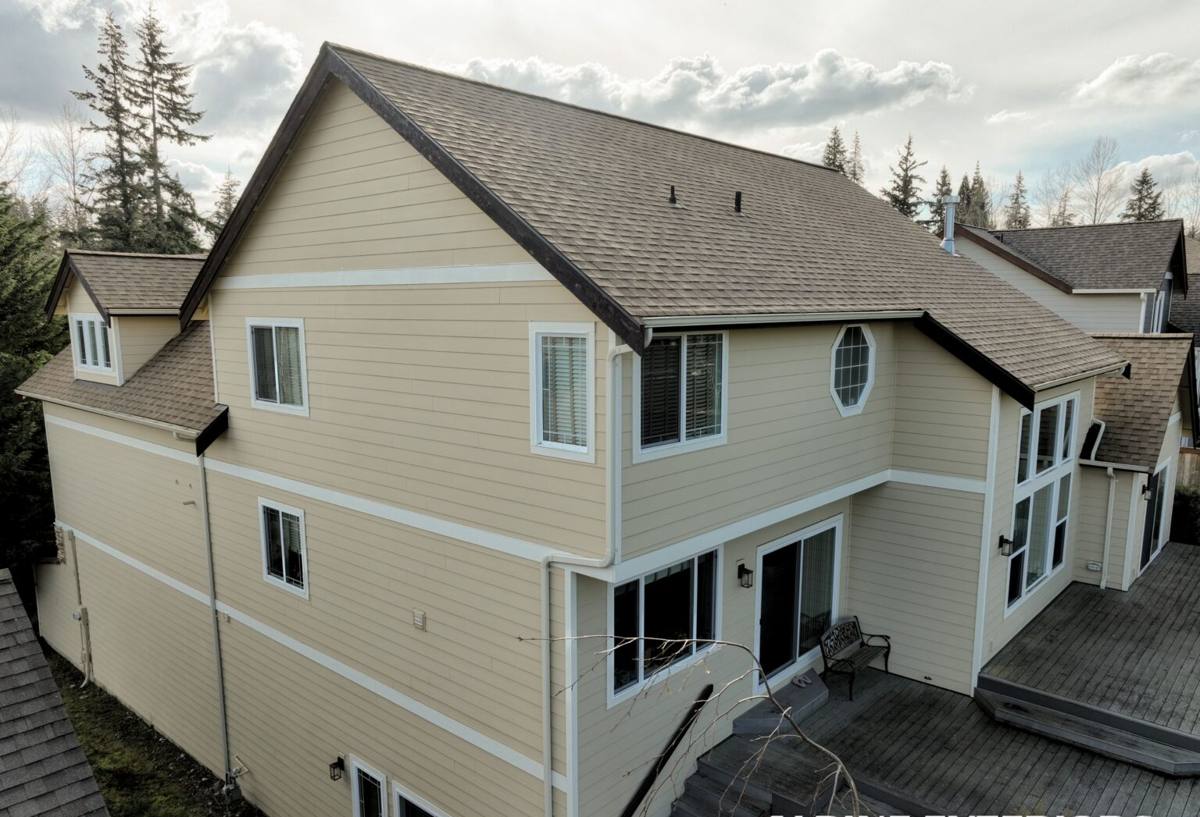
Why Local Decks Take This Kind of Beating
Three regional factors do most of the damage we see on Barkley decks:
Salt Air
Even a few miles inland from the bay, airborne salt accelerates corrosion on any exposed metal — deck screws, joist hangers, post bases, and railing hardware. Once a fastener starts rusting, it loses grip strength long before it looks obviously bad, which is why a deck can feel "solid enough" right up until a board or railing section fails.
Driving Rain
Wind-driven rain doesn't just fall straight down — it gets pushed sideways into ledger boards, under flashing, and into any gap where two pieces of wood or trim meet. Water that gets trapped behind a ledger board or under a rail post base is often the source of rot you can't see until you probe for it.
Moss Season
Whatcom County's long wet season means moss and algae have months of uninterrupted moisture and shade to take hold, especially on the north or shaded sides of a home, under overhangs, or in low-traffic corners of a deck. Beyond looking bad, established moss holds moisture directly against the wood surface and makes boards slick and dangerous underfoot.
Signs a Barkley Deck Needs Repair, Not Just a Cleaning
A pressure wash and a fresh coat of sealant can make a tired deck look better without fixing what's actually wrong underneath. Before you spend money on cosmetic work, check for these signs that point to a real repair need:
- Soft, spongy, or springy spots when you walk across the deck surface
- Boards that have visibly cupped, split, or separated at the ends
- Rust streaks running down from screws, bolts, or metal connectors
- Gaps opening up where the deck ledger meets the house
- Railings or posts that wiggle more than a firm push should allow
- Persistent moss or dark staining that comes back within weeks of cleaning
- Visible daylight or moisture staining underneath the deck, viewed from below
- Stair stringers that flex or feel uneven underfoot
Any one of these on its own might be a minor fix. Several together usually mean the structure needs a real look, not another cleaning cycle.
What a Correct Deck Repair Actually Involves
A repair done right starts below the surface, not with the boards you can see.
Structural Check First
We check the ledger board attachment to the house, the condition of the joists, and the post and footing connections before touching anything cosmetic. This is the part of the deck most exposed to trapped moisture and the part most expensive to get wrong. A deck that looks fine on top but has a compromised ledger or rotted joist is a safety issue, not a cosmetic one.
Fasteners and Hardware
Given how hard salt air is on metal here, we replace corroded screws, bolts, and joist hangers with fasteners rated for coastal or treated-lumber exposure rather than reusing hardware that's already showing rust. Mixing new lumber with old, corroding hardware is one of the more common shortcuts that leads to a repeat repair.
Board Replacement
Individual boards that are cupped, split, or soft get replaced rather than flipped or patched. Flipping a damaged board just hides the problem on the underside where it keeps deteriorating out of sight.
Drainage and Airflow
Wherever possible, we address the conditions that caused the damage in the first place — gaps for airflow under the deck, proper flashing at the ledger, and board spacing that lets water shed instead of pool. Repairing damage without correcting the moisture path just means doing the same repair again in a few years.
Repair vs. Replacement: How We Help You Decide
Not every deck needs a full rebuild, and not every deck is worth repairing piece by piece. The honest answer depends on where the damage is concentrated and how the structure underneath is holding up.
| Factor | Leans Toward Repair | Leans Toward Replacement |
|---|---|---|
| Structural framing (joists, ledger, posts) | Solid, isolated soft spots only | Widespread rot or corrosion in framing |
| Surface boards | Scattered damaged boards | Most boards cupped, splitting, or worn thin |
| Age of the deck | Under 15-20 years, built to a decent standard | Original construction was already marginal |
| Hardware condition | Localized rust, easily swapped | Corrosion throughout connectors and fasteners |
| Budget priority | Extend usable life at lower cost | Want a long-term reset and possibly a layout change |
We'll always tell you plainly which category your deck falls into rather than defaulting to the bigger job. A lot of the decks we look at in Barkley are good repair candidates — the framing is sound, and it's specific areas exposed to standing water or driving rain that have failed.
Our Deck Repair Process
We keep this straightforward:
- On-site inspection. We walk the deck top and bottom, probe suspect boards and framing, and check hardware condition.
- Plain-language assessment. You get a clear rundown of what's failed, what's still sound, and what your realistic options are — no upsell pressure toward a full rebuild if it isn't warranted.
- Written estimate. Scope and cost laid out before any work starts, so there are no surprises mid-project.
- Repair work. Structural fixes first, then board and hardware replacement, then surface finishing.
- Final walkthrough. We check the repaired areas with you and point out any maintenance steps worth knowing about going forward.
Materials: Honest Trade-Offs
We'll use whatever material makes sense for your deck's age, structure, and budget, but each option comes with real trade-offs worth understanding upfront.
Pressure-Treated Lumber
The most common and most economical repair material. It handles this climate reasonably well when properly sealed and maintained, but it does require periodic re-sealing to keep moisture out of end grain and fastener holes — skip that maintenance in a wet climate like ours and you'll see faster deterioration.
Cedar
Naturally more resistant to rot and holds up well aesthetically, but it's a softer wood that shows wear from foot traffic and weather faster than composite, and it still needs regular sealing to perform at its best in a high-rainfall area.
Composite Decking
Higher upfront cost but far less ongoing maintenance — no sealing, better resistance to moss staining, and more consistent performance through wet seasons. The trade-off is cost and the fact that repairs to composite are typically board-replacement rather than sanding or spot-refinishing, since the material doesn't take stain or paint the way wood does.
We're candid about which option fits your situation rather than pushing whichever material has the best margin. If your existing deck framing is solid wood and only the surface boards need attention, that's a straightforward decision point we can walk through together.
Why a Crew That Already Works Barkley Matters
Deck repair done by a crew unfamiliar with this specific climate tends to under-spec the materials and skip the drainage details that matter most here — the kind of shortcuts that don't show up as a problem until the following wet season. A crew that regularly works Bellingham and the wider Whatcom County area already knows which fastener grades hold up against salt air, which board spacing sheds driving rain properly, and which areas of a deck are most prone to moss buildup given our seasonal light and moisture patterns.
That local familiarity also means faster, more accurate estimates — we're not guessing at how your deck will perform through a Bellingham winter, we're applying what we've already seen work and fail on similar homes in the area.
Keeping a Repaired Deck in Good Shape
Once your deck is repaired, a little seasonal upkeep goes a long way toward avoiding a repeat repair:
- Clear leaves and debris from between boards before fall rains set in, so water doesn't pool and sit
- Rinse or gently brush off moss growth as soon as it appears, especially on shaded sections
- Check railing posts and stair connections once a year for any looseness
- Re-seal wood decking on the schedule appropriate to the product — don't wait until it's visibly gray and dry
- Keep gutters and downspouts near the deck clear so runoff isn't draining directly onto it
If you're noticing soft spots, rust stains, or moss that keeps coming back on a deck in Barkley or elsewhere in the Bellingham area, we're happy to take a look and give you a straight answer on what it needs. Reach out for a free, no-pressure estimate using the form below.