 Bellingham Window
 Siding That Has to Work Year-Round in Barkley
Barkley sits close enough to Bellingham Bay and the surrounding wetlands that homes here take on a specific mix of weather stress: salt-tinged air drifting in off the water, long stretches of driving rain through fall and winter, and a shaded, damp season that lets moss and algae get a foothold on anything that holds moisture. None of that is dramatic on any given day. It's the accumulation over years that causes trouble — siding that looks fine in year three and starts failing in year twelve because it was never built for this climate in the first place.
We install James Hardie fiber cement siding exclusively, and Barkley is a neighborhood where that decision matters in a very practical way. Hardie's HZ5 product line is engineered specifically for climates like Whatcom County's — freeze-thaw cycles, sustained moisture exposure, and coastal humidity. That's not a marketing detail; it changes how the board is formulated and how long it holds up before you're back to repainting, patching, or replacing sections.
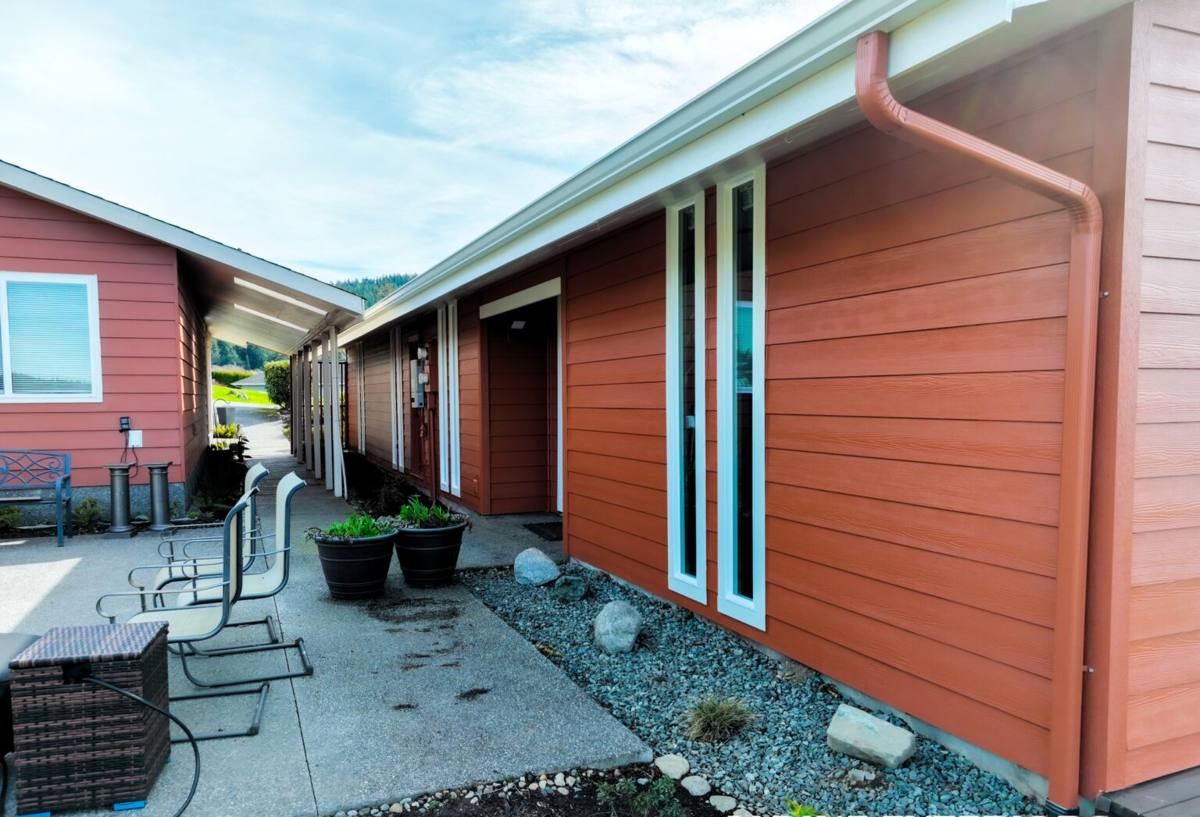
What Bellingham's Climate Actually Does to Siding
It helps to be specific about the mechanisms at work, because "wet climate" undersells what's really happening on a wall over ten or fifteen years.
Salt Air
Proximity to the bay means airborne salt settles on exterior surfaces, especially on the windward side of a house. Salt accelerates corrosion of fasteners and trim hardware, and it can degrade certain paint and coating systems faster than inland exposure would. Materials and finishes that aren't rated for coastal-adjacent conditions tend to chalk, fade, or lose adhesion sooner than their manufacturer's stated lifespan.
Driving Rain
Wind-driven rain doesn't just wet the surface of a wall — it pushes moisture sideways into every seam, lap, and penetration. Siding systems with weak water-shedding details (poor lap geometry, inadequate flashing, caulk used as a substitute for proper overlap) let water track behind the cladding. Once moisture gets behind siding and can't dry out, you're dealing with sheathing rot and mold, not just a cosmetic problem.
Moss and Algae Season
Bellingham's shaded lots, tree cover, and long damp stretches from fall through spring create ideal conditions for moss and algae growth on north-facing and shaded walls. Porous or wood-based siding gives these organisms something to grip and feed on. Left unaddressed, moss holds moisture against the siding surface, which speeds up exactly the kind of moisture damage driving rain already threatens.
Why James Hardie Holds Up Where Other Materials Struggle
Fiber cement is fundamentally different from wood-based or vinyl siding in how it responds to this kind of climate. It's non-combustible, dimensionally stable across temperature and humidity swings, and it doesn't rot, delaminate, or feed insects the way wood-based products can. The ColorPlus factory finish is baked on under controlled conditions, which gives it better adhesion and UV resistance than field-applied paint — a real advantage against salt exposure and the freeze-thaw stress this area sees each winter.
We standardized on Hardie because we were tired of watching other products fail in this exact climate for predictable reasons: LP SmartSide and similar wood-strand products are engineered wood, and engineered wood still depends on an intact resin-and-wax coating to keep moisture out — any breach at a cut edge, fastener hole, or joint becomes a weak point in a climate that gives moisture every opportunity to find it. Cedar and primed spruce require an ongoing maintenance commitment (recoating, caulking, moisture monitoring) that most homeowners don't sign up for and few contractors are honest about upfront. Vinyl expands and contracts with temperature swings and can crack in impact or cold, and it doesn't offer the same fire resistance. Hardie isn't immune to installation mistakes, but the material itself is built to tolerate the conditions Barkley homes actually face.
What a Correct James Hardie Installation Involves
Hardie siding performs the way it's rated to perform only when it's installed to the manufacturer's specifications. This is the part of the job that separates a siding system that lasts thirty-plus years from one that develops problems in five. A correct install includes:
- Proper starter strip placement and consistent lap reveal so water sheds correctly at every course
- Correct fastener type, spacing, and penetration depth — under- or over-driven nails are a common source of premature cracking
- Rain screen or drainage plane detailing appropriate for this climate, so any incidental moisture behind the siding has a path to dry out
- Flashing at every window, door, and penetration — not caulk used as a substitute for flashing
- Correct gapping and sealant at butt joints and trim intersections, per Hardie's climate-specific installation guide
- Field-cut edges primed or sealed before installation, since factory ColorPlus finish doesn't extend to a cut edge
Every one of these details matters more in a wet, coastal-influenced climate than it would somewhere dry. Skipping flashing or using the wrong fastener spacing might not show up as a problem for a year or two — but in Barkley's rain patterns, it usually does show up eventually, and by then it's a repair, not a maintenance item.
Our Process, From Estimate to Finished Siding
We keep the process straightforward and try not to make it more complicated than it needs to be:
- Walkthrough and assessment — we look at your home's current siding condition, exposure to prevailing wind and rain, shaded areas prone to moss, and any existing moisture or trim issues before we talk product.
- Product and color selection — we walk through Hardie's plank profiles, panel options, and ColorPlus palette so you land on something that fits the house and the neighborhood.
- Written estimate — a clear scope of work, materials, and price, with no vague allowances.
- Prep and removal — old siding removed, sheathing inspected and repaired if needed before anything new goes up. This step gets skipped by crews trying to move fast, and it's the step that determines whether the new siding actually lasts.
- Installation to Hardie spec — flashing, drainage detailing, fastening, and reveal done to manufacturer standards, not shortcuts.
- Final walkthrough — we go over the finished work with you before we consider the job done.
James Hardie Product Lines for This Climate
Hardie makes several plank and panel profiles, and the right one depends on your home's style and exposure:
| Product | Best Use | Notes for Whatcom County |
|---|---|---|
| HardiePlank Lap Siding | Traditional lap look, most common residential choice | HZ5 formulation suited to freeze-thaw and coastal humidity |
| HardiePanel Vertical Siding | Modern or mixed-material facades, accent walls | Clean lines pair well with board-and-batten trim details |
| HardieShingle | Craftsman and cottage-style homes | Shingle look without wood's moisture and pest vulnerability |
| HardieTrim | Window, door, and corner trim | Matches durability of the field siding instead of mixing in wood trim that weathers faster |
ColorPlus finishes come in a range of factory-baked colors designed to resist fading; for homeowners who want to paint down the road, primed Hardie is also available, though the factory finish generally holds up better against this area's UV and moisture combination.
Cost Factors Worth Understanding Upfront
| Factor | How It Affects Cost |
|---|---|
| Home size and wall complexity | More corners, dormers, and trim details mean more labor and cut waste |
| Existing siding removal and sheathing condition | Rot repair found during tear-off adds cost but prevents covering up a bigger problem |
| Product line and profile | Shingle and panel styles typically run higher than standard lap |
| Trim and detail work | Full HardieTrim packages cost more than mixing in other trim materials, but they hold up better long-term |
| Access and site conditions | Multi-story sections, tight lot lines, or landscaping obstacles affect labor time |
We give firm written estimates before work starts, not a rough number that grows once the old siding comes off.
Why a Crew That Already Works Barkley Makes a Difference
Installation quality depends on judgment calls that come from familiarity with the specific conditions a job site faces — how much wind-driven rain a particular wall orientation gets, which shaded sides need extra attention to drainage detailing, how the local permitting and inspection process runs. A crew that's worked Barkley and the surrounding Bellingham neighborhoods has already seen how these homes age in this climate, which means fewer surprises and fewer callbacks. That local experience, paired with a single-product focus on James Hardie, is what lets us stand behind the installation instead of just the material.
Ready to Talk About Your Home
If your Barkley home's siding is showing moss staining, cracked or peeling paint, or signs of moisture damage near trim and seams, it's worth having it looked at before those issues get bigger. We offer free, no-pressure estimates — we'll walk your home, tell you honestly what we see, and give you a straightforward quote for correctly installed James Hardie siding.