 Bellingham Window
 Birch Bay's Waterfront Climate Asks More of Your Siding
Birch Bay sits right on the water, and that changes what a house needs from its exterior compared to homes a few miles inland in Bellingham. Salt-laden air off the bay works on fasteners, caulk, and paint film differently than ordinary marine-layer moisture. Add Whatcom County's long, wet winters and the driving rain that comes with west-facing exposure, and you get siding that stays damp longer, dries slower, and grows moss earlier in the season than siding on a sheltered inland lot.
Board and batten is a popular look for Birch Bay's beach-community feel — vertical lines read as coastal, cottage, or modern-farmhouse depending on the trim details, and it holds up visually on both older cottages and newer builds. But the style only performs as well as the material and the installation behind it. A board and batten wall has more seams (every batten is a joint) than a standard lap siding wall, and in a salt-air, high-rain environment, every seam is a place water can find its way in if it isn't detailed correctly.
What Board and Batten Siding Actually Is
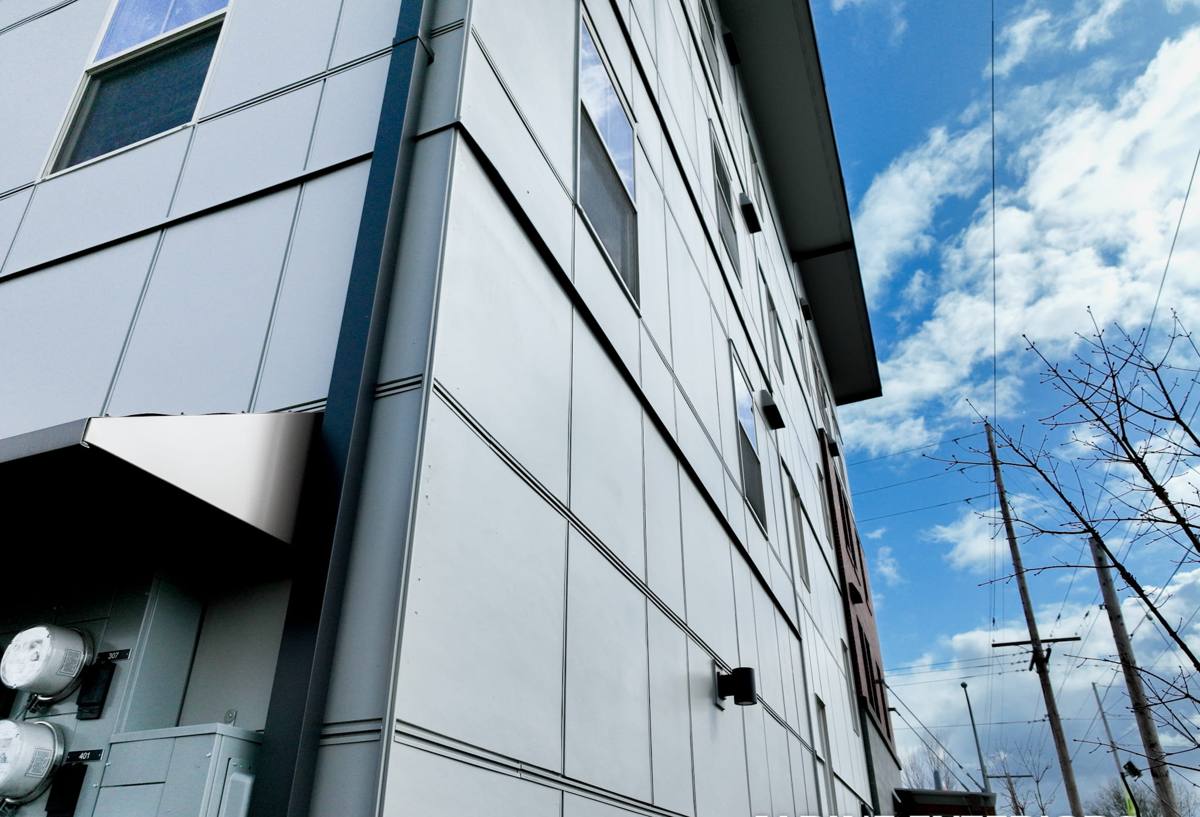
Board and batten is a vertical siding pattern: wide flat panels (or boards) installed vertically, with narrower strips — the battens — covering the seams between them. The result is a rhythm of wide-narrow-wide-narrow vertical lines instead of the horizontal shadow lines of lap siding. It's been used on coastal and farm buildings for generations because the vertical orientation sheds water down and off the wall rather than catching it on horizontal ledges.
Why It Suits This Area
Homes near the bay often use board and batten as an accent — on gables, dormers, or a single elevation — paired with lap siding elsewhere, or as a full-house treatment on smaller cottage-style builds. Either way, in Birch Bay it needs to do two jobs at once: hold up to salt air and wind-driven rain, and still look clean without repainting every few years.
The James Hardie Board and Batten System We Install
We install James Hardie fiber cement exclusively, and for board and batten that means factory-primed or ColorPlus-finished vertical panels paired with Hardie trim boards used as battens. We don't run board and batten in vinyl, engineered wood, or unfinished cedar — not because those materials can't be installed, but because we've standardized on one system we can back up and install to the same spec on every job.
Why the HZ5 Line Matters Here
James Hardie engineers its fiber cement to different regional formulations — HZ5 is the version built for climates with more moisture exposure and freeze-thaw cycling, which fits Whatcom County's wet winters. It's not a cosmetic difference; it affects how the product handles sustained dampness over years of exposure, which is exactly the condition Birch Bay's waterfront lots create.
ColorPlus Finish
ColorPlus is a factory-applied, baked-on finish rather than a job-site paint job. In a salt-air environment, that matters because factory finishes are more consistent in coverage and adhesion than field-applied paint, and the color comes with its own finish warranty separate from the product warranty. That's relevant on a coastline where UV, salt, and moisture all attack a paint film at once.
What a Correct Board and Batten Installation Involves
The visual pattern is the easy part. The details that keep water out are where board and batten jobs succeed or fail, especially in a high-moisture, salt-exposed setting like Birch Bay.
- Drainage plane behind the panel: A proper installation includes a water-resistive barrier and, ideally, a rainscreen gap so any moisture that gets past the siding can drain and the wall can dry from behind — not just from the face.
- Batten fastening and spacing: Battens need to land over solid backing and be fastened per manufacturer spec, not just nailed wherever they look right, so they don't work loose in wind off the bay.
- Joint and seam treatment: Every horizontal panel joint and vertical batten seam is a potential water entry point. These need correct flashing and sealant, not just butted material and caulk.
- Clearances: Proper gaps at the foundation, roofline, and any deck or porch intersections keep splash-back and roof runoff from soaking the bottom courses — a common failure point on waterfront homes with more standing moisture around the foundation.
- Fastener choice: Corrosion-resistant fasteners matter more here than almost anywhere else in Whatcom County, given the salt content in the air.
Skip any one of these and the siding can still look right for a year or two before problems show up — which is exactly why board and batten has a reputation for being unforgiving of shortcuts in coastal settings.
Comparing Board and Batten Materials for a Birch Bay Home
| Material | Moisture Behavior | Maintenance Burden | Salt Air Suitability |
|---|---|---|---|
| James Hardie fiber cement (HZ5) | Non-combustible, engineered for wet climates, dimensionally stable | Low — factory finish, no repainting cycle in the near term | Built for this; corrosion-resistant fastening still required |
| Cedar or primed wood | Absorbs moisture, prone to swelling/checking in sustained damp conditions | High — regular refinishing and moisture monitoring | Vulnerable without disciplined upkeep |
| Vinyl board and batten | Doesn't absorb water but can warp/distort with heat and wind flex | Low, but limited repair options if damaged | Can become brittle over time in UV and salt exposure |
| Engineered wood (LP-style) | Treated to resist moisture but edge/seam integrity depends heavily on installation | Moderate — periodic inspection of seams recommended | Performance depends on consistent sealed edges |
This is a general comparison, not a claim about any specific product failing — every material on this list can perform if installed correctly. It's why we chose to standardize on one system, install it the same way every time, and stand behind that work.
Our Process on Birch Bay Projects
Every board and batten project starts with an honest look at what's already on the wall, not just a quote based on square footage.
- Assessment: We check the existing siding, sheathing, and any visible moisture damage before quoting — board and batten replacement is a good moment to catch problems hiding behind the old material.
- Scope decision: Full tear-off versus recover depends on what we find underneath. We won't cover over rot or a failed water-resistive barrier just to save a step.
- Prep and drainage plane: Housewrap or building paper and, where called for, furring strips go in before a single piece of Hardie touches the wall.
- Installation to spec: Panels and battens go up per James Hardie's fastening schedule and clearance requirements — not shortcuts, not "close enough."
- Final walkthrough: We check seams, caulk lines, and clearances with you before calling the job done.
Living With Board and Batten Siding in Birch Bay: Moss and Salt Maintenance
Even the right material benefits from a little seasonal attention in this climate. Moss thrives in the shaded, damp conditions common on tree-lined lots and north-facing walls throughout Whatcom County, and salt residue from bay air can dull a finish faster than plain rainwater alone.
- Rinse siding periodically to clear salt residue and organic buildup, especially on walls facing the water or shaded by trees
- Keep gutters clean so overflow doesn't run down the wall face and feed moss growth at the top courses
- Trim back vegetation and tree cover that keeps siding shaded and damp longer than the rest of the house
- Walk the exterior once or twice a year looking for soft spots, staining below battens, or caulk lines that have pulled away
- Address any cracked or missing caulk at seams promptly — it's a five-minute fix before it becomes a moisture problem behind the wall
Why a Crew That Already Works in Birch Bay Matters
Board and batten installed to spec in a dry inland climate has more room for error than the same job three blocks from the water. A crew that regularly works Birch Bay and the rest of coastal Whatcom County has already seen how fast salt air ages a fastener, how wind off the bay finds gaps a calmer site never would, and where moss actually starts on a house versus where it just ends up. That local pattern recognition shows up in the small decisions — fastener choice, drainage detailing, clearance heights — that a spec sheet alone doesn't fully cover.
It also means realistic expectations going in. We won't tell a waterfront homeowner their siding will look factory-fresh with zero upkeep, and we won't oversell a material that isn't built for this exposure. We install one system, install it correctly, and tell you plainly what it will take to keep it looking good on a house that faces the bay.
Get a Straightforward Estimate
If you're weighing board and batten for a Birch Bay home — a full exterior or a single accent elevation — we're happy to take a look, walk you through what your specific site and exposure call for, and give you a straight answer on scope and cost. The estimate is free, there's no pressure, and you can use the form below to get started.