 Bellingham Window
 Why Birch Bay Homes Wear Out Windows Faster Than Homes Inland
Birch Bay sits right on the water, and that changes what a window has to survive. A window that would last 25 years in a sheltered neighborhood a few miles inland can show frame corrosion, seal failure, or wood rot in half that time if it's facing the bay and taking the weather head-on. When we quote a window job in Birch Bay, we're not just thinking about R-values and glass coatings — we're thinking about salt, wind, and moisture load first, because those are what actually determine how long the install holds up.
Salt Air and Metal Hardware
Salt in the air settles on everything, including window hardware, cladding fasteners, and aluminum components. Over time it accelerates corrosion on lower-grade hardware and can pit or dull finishes that would hold up fine a few miles away. This is one of the biggest differences between a window spec that works for most of Bellingham and one that's actually right for a bayfront or near-bayfront property.
Driving Rain and Wind-Driven Water
Whatcom County gets plenty of rain generally, but Birch Bay's exposure means storms often come with real wind behind them. That combination — wind plus rain — pushes water sideways into gaps that would never see moisture on a calmer site. A window that isn't flashed and sealed correctly for wind-driven rain will eventually leak, even if the window unit itself is a good product. Most water intrusion problems we find in coastal replacements trace back to installation detailing, not the window itself.
A Long Moss Season
The damp stretch here runs long, and moss doesn't just grow on roofs — it takes hold in window sills, exterior trim, and any spot where water sits instead of draining. Once moss and the moisture it holds get into wood trim or a sill pan, rot follows. Good drainage detailing at the sill is one of the most overlooked parts of a window install, and it matters more in Birch Bay than almost anywhere else in the county.
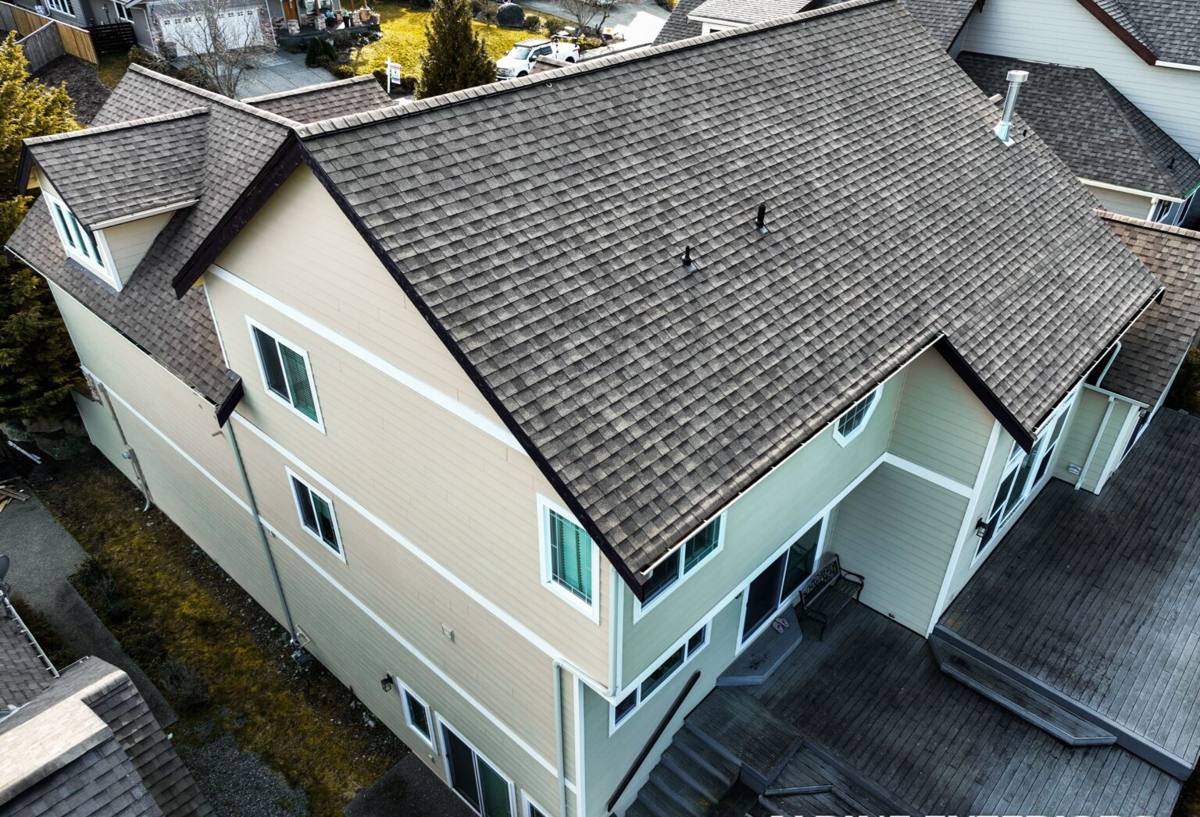
What "Energy-Efficient" Actually Means for This Location
Energy efficiency isn't just a U-factor number on a sticker. For a Birch Bay home, an efficient window needs to do three things well at once: resist heat loss, resist air infiltration during wind events, and keep doing both after years of salt and moisture exposure. A window that's efficient on day one but fails at the seals in year six isn't actually efficient — it's a short-term fix with a long-term water problem behind it.
Frame Material Comparison for Coastal Exposure
| Frame Material | Coastal Durability | Maintenance | Typical Fit for Birch Bay |
|---|---|---|---|
| Vinyl | Good — won't corrode or rot | Low | Strong all-around choice; good seal life if installed correctly |
| Fiberglass | Very good — stable in temperature swings, resists warping | Low | Excellent for direct wind/rain exposure; higher upfront cost |
| Wood (unclad) | Poor without diligent upkeep — prone to rot in this climate | High | Only recommended with a durable exterior cladding, not bare wood |
| Aluminum-clad wood | Fair to good — depends on cladding quality and seams | Moderate | Workable, but seam integrity around the clad joints needs care |
| Aluminum (uninsulated) | Poor for efficiency — conducts cold, can pit near salt air | Moderate | Not our recommendation for primary living spaces here |
We don't push one material on every home. The right call depends on how exposed the wall is, what the existing framing looks like, and what the homeowner wants to maintain long-term. What we won't do is install bare wood frames on a bay-facing wall without a serious conversation about the maintenance commitment that comes with it — it's not that wood is a bad product, it's that this particular exposure is unusually hard on it.
Signs Your Current Windows Are Costing You Money
Most homeowners don't think about their windows until something is visibly wrong, but by then you've usually been losing energy for a while. Here's what we look for during a walkthrough:
- Visible fog or moisture between panes (a failed seal on double- or triple-glazed units)
- Drafts you can feel near the frame, especially during windy weather
- Soft, discolored, or spongy wood trim around the window opening
- Moss or dark staining building up on the sill or lower frame
- Difficulty opening, closing, or locking — often a sign the frame has shifted or swollen
- Condensation forming on the inside of the glass regularly in cooler months
- Noticeably higher heating bills compared to similar-sized homes nearby
- Visible daylight or gaps where the frame meets the siding or trim
Any one of these on its own might not mean much. Two or three together, especially on the side of the house facing the water, usually means the window system has been compromised for a while.
What a Correct Installation Actually Involves
The window unit is maybe half the job. The other half is everything around it — and in a high-exposure location like Birch Bay, that half matters more than usual.
Removal and Opening Inspection
Once the old window is out, we check the rough opening for hidden rot, moisture damage, or prior flashing mistakes. This is often where we find the real cause of a homeowner's original complaint — not a bad window, but water that's been getting behind it for years.
Sill Pan and Flashing
A sill pan gives any water that does get past the window a path back outside instead of into the wall framing. Paired with correctly lapped flashing tape at the sides and head, this is the single biggest factor in whether a coastal window install stays dry long-term.
Air Sealing and Insulation
Gaps around the frame get sealed with appropriate low-expansion foam or backer rod and sealant — not just caulked on the surface. This is what actually stops the drafts and controls the energy loss, separate from the glass performance itself.
Exterior Sealant and Trim Detail
The exterior seal has to handle wind-driven rain, not just still-air moisture. We use sealants and detailing rated for that kind of exposure, and we make sure trim is set up to shed water away from the frame rather than trap it.
Our Process, Start to Finish
- On-site assessment — we look at exposure, existing frame condition, and how each opening is currently performing before recommending anything.
- Product recommendation — we walk through frame material, glass package, and hardware options suited to that specific wall's exposure, with honest trade-offs on cost and maintenance.
- Written estimate — clear scope, materials, and timeline, no vague allowances.
- Installation — removal, opening inspection, sill pan and flashing, window setting, air sealing, and exterior trim work, done in that order for a reason.
- Walkthrough and cleanup — we check operation on every window, confirm the seals look right, and leave the site clean.
Choosing Glass for Wind and Salt Exposure
Double-pane, low-E glass is the standard efficiency baseline almost everywhere now, and it's a solid choice for most Birch Bay homes. For walls that take the brunt of the wind and rain, some homeowners choose upgraded glass packages — better gas fill, warm-edge spacers that resist seal failure longer, or laminated glass for added durability against wind-blown debris. None of this is required for every window in the house; it's worth targeting on the exposed side and using standard packages elsewhere to keep the budget sensible.
What This Typically Costs and What Drives the Price
| Cost Factor | Why It Moves the Price |
|---|---|
| Frame material | Fiberglass and premium vinyl cost more upfront than basic vinyl but hold up longer here |
| Glass package | Upgraded low-E coatings, gas fills, or laminated glass add cost per unit |
| Opening condition | Hidden rot or damaged framing found during removal adds repair time before the new window goes in |
| Number and size of openings | Larger and more numerous windows scale cost directly |
| Exposure level | Bay-facing walls may warrant upgraded flashing and sealant detailing |
| Trim and siding tie-in | Matching or repairing exterior trim around the new window adds labor |
We give real, itemized estimates rather than a single lump number, so you can see where the money is going and adjust scope if needed.
Why Local Experience in Birch Bay Matters
A crew that mostly works inland can install a technically good window and still get the flashing detail wrong for this kind of exposure, because it's never been tested by conditions like these. We work throughout Whatcom County, including Birch Bay's bayfront and near-bayfront properties, and we've seen firsthand what wind-driven rain and long-term salt exposure do to installs that weren't detailed for it. That's not a marketing line — it's the reason we default to sill pans, upgraded flashing, and corrosion-resistant hardware on exposed walls even when it's not the cheapest option, because the cheaper option tends to cost more in five years.
Keeping New Windows Performing Long-Term
Even a correctly installed window benefits from basic upkeep in this climate:
- Rinse salt residue off frames and glass periodically, especially after storms
- Keep sills and tracks clear of debris and moss so water can drain freely
- Check exterior sealant lines yearly for cracking or separation
- Operate hardware occasionally through the year to keep it from seizing
- Address any soft trim or staining early, before it spreads to the frame
None of this is difficult, but skipping it is how a good install starts developing problems ahead of schedule.
If your windows are drafty, fogged, or just showing their age, we're happy to take a look and give you a straightforward, no-pressure estimate — use the form below to get started.