 Bellingham Window
 New-Construction Windows Built for Birchwood's Climate
Birchwood sits inside Bellingham's marine climate zone, which means any new build here is going to spend its first winter — and every winter after — dealing with wind-driven rain off the bay, long stretches of damp gray weather, and the kind of humidity that keeps moss growing on roofs and siding most of the year. New-construction windows are your first and best chance to build a house that handles all of that correctly, because at this stage the window opening is still raw framing. There's no siding to work around, no old caulk to scrape off, no interior trim to protect. You get one shot at doing the flashing, sealing, and fastening right before everything gets closed in.
We install new-construction windows for builders and owner-builders across Whatcom County, and Birchwood jobs get the same approach we use everywhere in the area: treat every opening like it will eventually see standing water at the sill, because in this climate, eventually it will.
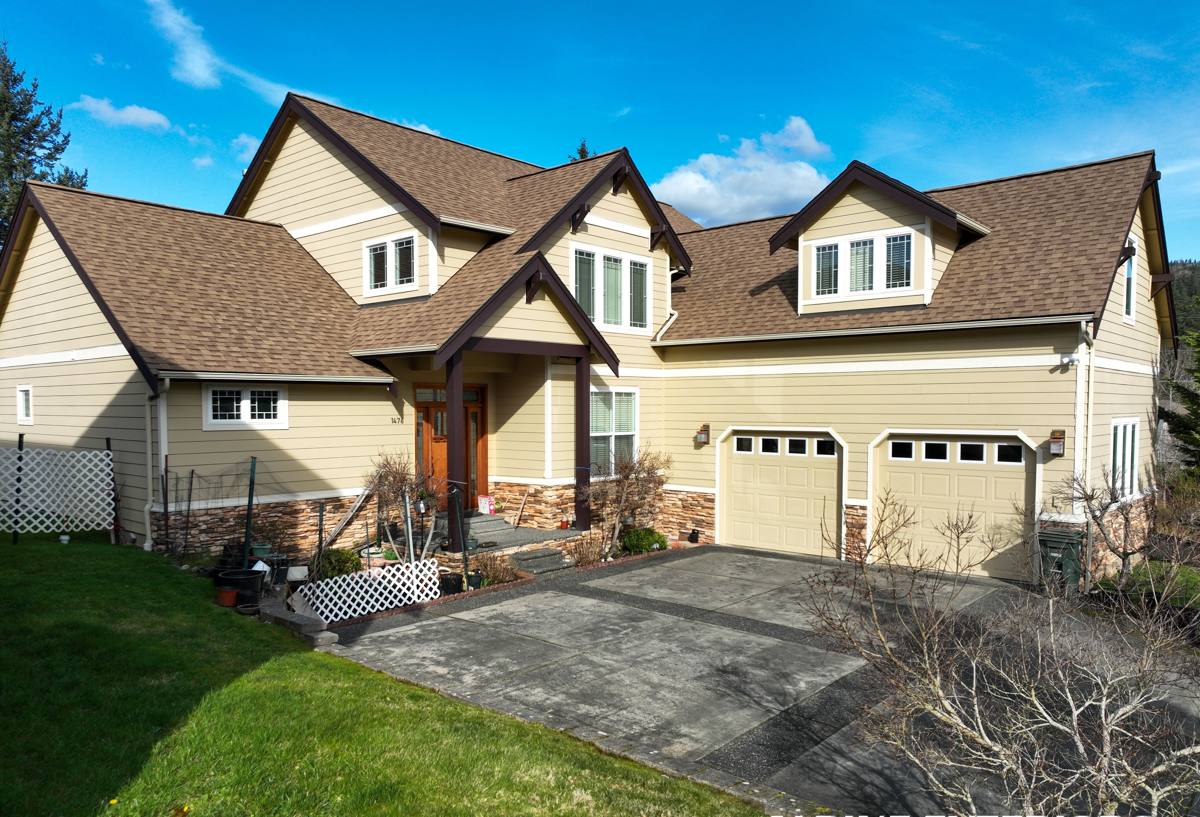
What Birchwood Homes Need From a New-Construction Window Package
Three regional realities drive most of our decisions on a new build in this neighborhood:
- Salt-tinged air from Bellingham Bay accelerates corrosion on cheap hardware, fasteners, and unprotected metal flashing — so material choice at the framing stage matters more here than in a dry inland climate.
- Driving rain during fall and winter storms pushes water sideways against the building envelope, which means flashing details have to shed water outward and downward, not just sit there as a barrier.
- Extended moss and mildew season keeps exterior surfaces damp for long stretches, so any gap in the water-resistive barrier around a window opening becomes a slow, hidden rot problem instead of a fast, obvious leak.
None of this is exotic — it's standard Pacific Northwest building science. But it means a new-construction window install in Birchwood isn't just "set the window and caulk it." It's a sequence of steps, done in the right order, that keeps water moving away from the wood framing for the next 30-plus years.
New Construction vs. Replacement: Why the Distinction Matters
New-construction windows have a nail fin (or flange) built into the frame that gets fastened directly to the sheathing and integrated with the house wrap and flashing. Replacement windows, by contrast, are built to fit inside an existing opening without disturbing the exterior siding. Using the wrong approach — or a hybrid shortcut — is one of the most common ways a new build ends up with a moisture problem years down the line.
| Factor | New Construction Window | Replacement Window |
|---|---|---|
| Installation stage | Before siding and finish work | After siding is already in place |
| Flashing integration | Fully integrated with WRB and house wrap | Relies on existing flashing, sealant at perimeter |
| Best fit for Birchwood new builds | Yes — full water-management control | Only if retrofitting into finished walls |
| Long-term moisture risk if done correctly | Low | Slightly higher, depends on existing wall condition |
For a genuine new build or an addition in Birchwood, new-construction windows are the right call almost every time — they give us full access to build the water-management system from scratch instead of working around what's already there.
What a Correct Installation Actually Involves
Flashing and Water Management
Every opening gets a sill pan flashing before the window ever goes in. This creates a shallow, sloped tray that catches any water that gets past the window and directs it back outside rather than letting it sit against the framing. From there, flashing tape or housewrap flashing integrates the window's nail fin with the wall's water-resistive barrier in a shingle-lap pattern — top piece overlapping the sides, sides overlapping the sill — so water always drains down and out, never into a seam.
Fastening and Structural Integrity
Fasteners go through the nail fin into solid framing at the spacing the window manufacturer specifies — not just "enough to hold it up." Under-fastened new-construction windows can rack in high wind, which in turn breaks the seal at the frame corners. In a location that sees real winter storm wind off the water, this isn't a theoretical concern.
Sealing and Insulation
Low-expansion foam or backer rod and sealant fills the gap between the window frame and the rough opening — enough to stop air infiltration and provide a thermal break, but not so much that it bows the frame and causes the sash to bind. Interior air-sealing (a separate step from exterior weatherproofing) closes off the last path for drafts and condensation-driving air leaks.
Choosing Frame and Glass for Whatcom County Weather
Material choice affects how a window performs over 20-plus years of Bellingham weather, not just how it looks on day one.
- Vinyl frames — good moisture and corrosion resistance, no painting required, solid value for most new builds.
- Fiberglass frames — more dimensionally stable through temperature swings, higher upfront cost, strong long-term performance.
- Wood-clad frames — attractive interior wood look with a protective exterior cladding, but they demand more attention to flashing detail since any breach in the cladding exposes wood to moisture.
For glass, we spec low-E coatings and argon or krypton gas fills as standard on new builds here — they cut heat loss through the glass and reduce interior condensation on cold, wet mornings, which is a real and common complaint in this climate. Double-pane is standard; triple-pane is worth discussing for north-facing rooms or homes aiming for higher energy performance.
Our Process for Birchwood New-Construction Projects
Whether you're a builder framing a spec home or a homeowner managing your own build, our process stays consistent:
- Review the plans and rough opening sizes before the windows are ordered — catching a sizing error on paper is free; catching it after framing costs time and money.
- Coordinate delivery timing with the builder's schedule so windows arrive dried-in and ready to install, not sitting exposed on site.
- Install sill pan flashing, set the window, and integrate flashing tape with the housewrap in the correct shingle-lap order.
- Fasten per manufacturer spec and check the unit for square, plumb, and smooth operation before moving to the next opening.
- Air-seal and insulate the interior gap, leaving the opening ready for interior trim.
- Walk the finished openings with the builder or homeowner before siding closes everything in — this is the last easy chance to catch anything.
A quick pre-install checklist we run on every Birchwood job:
- Rough openings measured and squared to spec
- Sill pan flashing installed and sloped correctly
- House wrap cut and prepped in the correct pattern (not just slit and taped)
- Correct fastener type and spacing confirmed for the window model
- Flashing tape integration inspected before window is set
- Interior and exterior sealant gaps checked for consistency, no gaps or overfill
Mistakes We See on New Construction Sites
Most of the water problems we get called out to inspect on newer homes trace back to a handful of preventable issues: house wrap cut in the wrong order so water runs behind the flashing instead of over it, sealant used as a substitute for proper flashing tape, under-fastened nail fins, or windows set before the sill pan was fully cured or dry. None of these show up right away — they show up two, five, or ten winters later as stains, soft trim, or mold at the sill. Getting the sequence right the first time is far cheaper than any of those repairs.
Cost Factors for New-Construction Windows
| Factor | Impact on Cost |
|---|---|
| Frame material (vinyl, fiberglass, wood-clad) | Vinyl is typically the most economical; fiberglass and wood-clad run higher |
| Glass package (double-pane, triple-pane, upgraded low-E) | Better thermal performance adds cost but reduces long-term energy loss |
| Number and size of openings | Larger or custom-shaped windows cost more per unit |
| Flashing and water-management detailing | Doing it correctly adds modest labor cost up front, avoids expensive repairs later |
| Site access and build schedule | Coordinated delivery and install with the framing crew keeps labor efficient |
We give straightforward, itemized estimates rather than vague per-window averages, since the real cost drivers are the specifics of your plan and site — not a generic price list.
Why Hire a Crew That Already Works in Birchwood
A crew that installs windows across Bellingham and Whatcom County day in and day out already knows how this specific climate behaves — how much water a fall storm can drive sideways into an unfinished wall, how long moss season really lasts, and which flashing sequences hold up and which ones fail quietly. That local pattern recognition is hard to get from a crew that mostly works drier inland climates or does a handful of window jobs a year. It also means we can move efficiently on a builder's schedule without slowing down the framing-to-siding timeline, because we've coordinated with local builders on this exact sequence before.
If you're planning new construction or an addition in Birchwood and want windows installed right the first time, we're happy to walk your plans and give you a free, no-pressure estimate — just fill out the form below.