 Bellingham Window
 Board & Batten Siding in Columbia: Built for This Climate, Not Just This Look
Board and batten has a clean, vertical look that works well on the mix of older bungalows and updated homes you find in Columbia and the surrounding Bellingham neighborhoods. But in Whatcom County, board and batten siding is not just a style choice — it's a system that has to handle salt-laden air off Bellingham Bay, long stretches of driving rain, and months of low sun angles that keep north- and west-facing walls damp and shaded. When that system is built wrong, homeowners see it first as moss creeping up the battens, then as soft spots at the base of the boards, then as paint failure. When it's built right, it should be one of the lowest-maintenance sidings on the house.
This page covers what board and batten actually requires in Columbia's climate, what a correct installation looks like from the studs out, and why we install it exclusively in James Hardie fiber cement rather than the vinyl, engineered wood, or raw cedar versions of the same look.
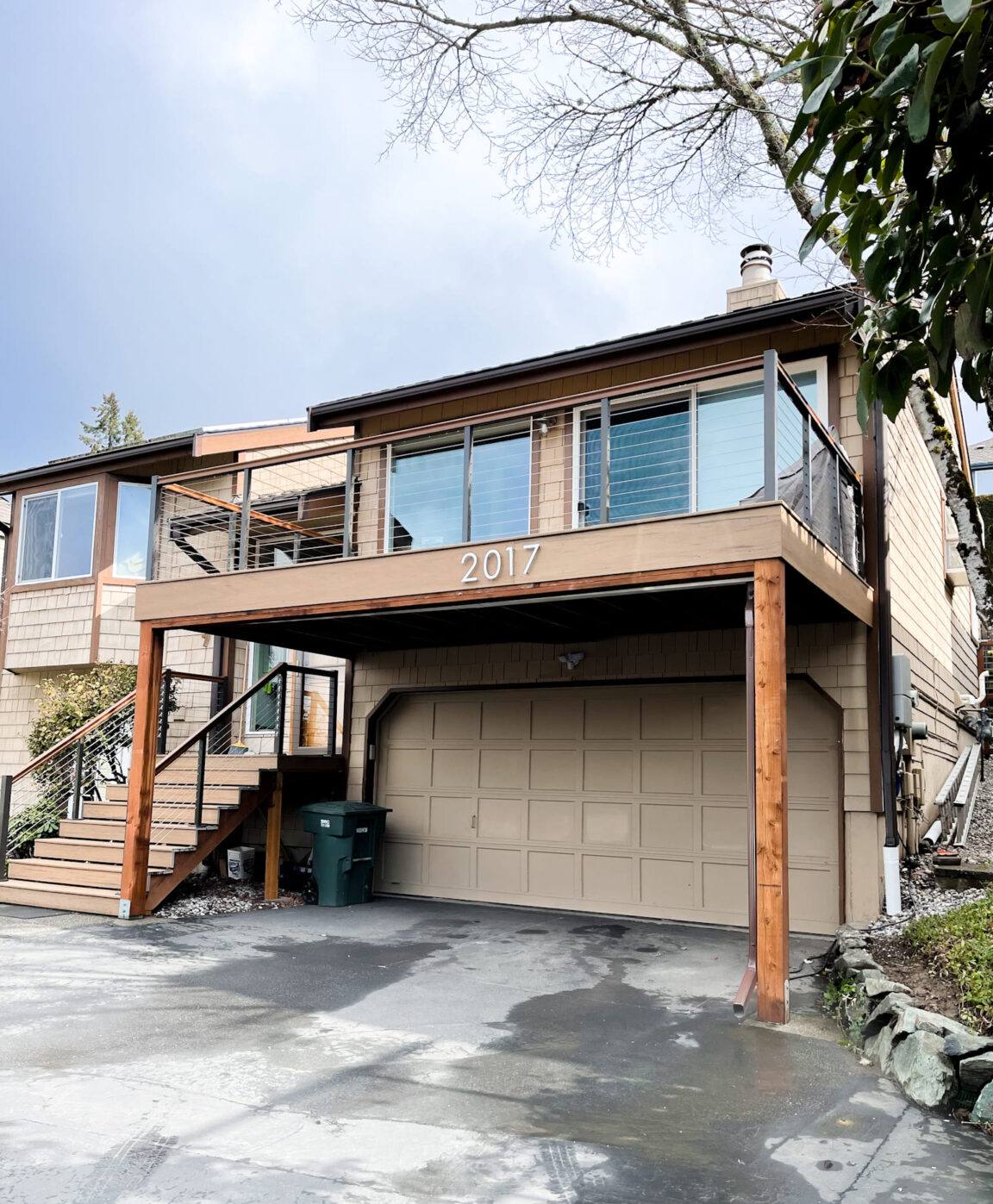
What Columbia's Climate Does to Vertical Siding
Salt air and coastal moisture
Homes closer to the water in and around Bellingham deal with airborne salt that accelerates corrosion on fasteners, flashing, and any metal trim details. Board and batten has more exposed vertical seams than lap siding, and every one of those seams is a place where a poor fastener choice or a gap in the water-resistive barrier can let salt-laden moisture start working on the wall assembly underneath.
Driving rain and wind-driven wetting
Bellingham doesn't just get rain — it gets rain pushed sideways by wind off the water, and board and batten's vertical battens create a lot of small ledges and shadow lines where wind-driven water can find a way behind the siding if the laps and flashing details aren't done to spec. This is a different stress than a dry-climate installation, and it's why installation sequence matters more here than the siding brand on the truck.
Moss season
Whatcom County's long, mild, wet fall-through-spring stretch is ideal moss and algae growing weather. Board and batten's vertical battens naturally shed water faster than horizontal lap siding when properly installed, which actually gives it an advantage in moss resistance — but only if the batten spacing, caulking, and factory finish are correct. Get any of those wrong and the battens become moss magnets instead.
What a Correct Board & Batten Job Actually Involves
Board and batten looks simple from the curb — vertical panels or boards with a batten covering each seam — but the assembly behind that look is what determines whether it lasts 10 years or 40. A correct installation in this climate includes:
- A continuous water-resistive barrier installed shingle-style so any moisture that does get past the siding drains down and out, not into the wall.
- A rainscreen gap (typically furring strips) behind the siding so water that reaches the back side of the panel can drain and the wall can dry, rather than trapping moisture against the sheathing.
- Corrosion-resistant fasteners rated for the coastal exposure common in Columbia and other near-water Bellingham neighborhoods — not the generic fasteners used on inland installs.
- Proper flashing at every window, door, and roof intersection, since board and batten's vertical joints intersect these openings differently than lap siding does.
- Correct batten spacing and fastening pattern so the panels can expand and contract with temperature and moisture changes without cracking the caulk joints.
- Factory-applied finish on both the panel and the trim, so field-painted cut edges are sealed before they ever see a Bellingham winter.
Skipping any one of these isn't usually visible on installation day. It shows up two, five, or ten winters later as a soft board, a moss-streaked batten, or a paint film that's failing years ahead of schedule.
The James Hardie System We Use for Board & Batten
We install board and batten using James Hardie's fiber cement panel products — typically HardiePanel vertical siding paired with HardieTrim battens — finished in ColorPlus factory-applied color. This is the only board and batten system we put on homes, and it's a deliberate standard, not a default:
- Non-combustible core. Fiber cement doesn't feed a fire the way wood-based or vinyl products can, which matters for insurance conversations as much as safety.
- Climate-engineered product line. James Hardie makes region-specific HZ formulations, and the version we install is matched to Pacific Northwest moisture exposure rather than a one-size-fits-all national spec.
- ColorPlus factory finish. The color and top coat are baked on at the factory under controlled conditions, which holds up to UV and moisture far more consistently than a field-applied paint job — especially on cut edges that get properly sealed before installation, not after.
- Dimensional stability. Fiber cement doesn't swell, cup, or split the way engineered wood or solid wood battens can when they take on repeated moisture cycles, which is a real risk on Bellingham's wetter walls.
- Transferable warranty. Hardie's warranty structure is backed by a large, established manufacturer, which carries more weight at resale than a smaller or regional siding brand's coverage.
Why We Don't Install the Other Versions of This Look
Board and batten is available in vinyl, engineered wood (like LP SmartSide), and traditional cedar, and each has real fans. We don't install any of them, and we think homeowners deserve the honest reasoning rather than a sales pitch:
| Material | What it does well | Why it's a harder fit for Columbia's climate |
|---|---|---|
| Vinyl board and batten | Low upfront cost, no painting | Can warp or become brittle with temperature swings; seams and battens are prone to visible gapping over time; not repairable in sections the way fiber cement is |
| Engineered wood (LP SmartSide and similar) | Lighter weight, easier to cut on site | Wood-based core is more vulnerable to prolonged moisture exposure than fiber cement; edge sealing during installation is critical and unforgiving in a wet climate |
| Solid cedar | Natural material, classic look | Requires ongoing refinishing to resist moss and moisture; movement and checking are more likely with our seasonal humidity swings; combustible |
| James Hardie fiber cement | Non-combustible, factory finish, climate-engineered formulation | Heavier to install and requires correct fastening technique — which is why installation experience matters |
None of these alternatives are bad products in every context. They're just trade-offs we're not willing to install on homes that have to stand up to salt air, sideways rain, and moss season year after year.
Our Installation Process
Every board and batten job we do in Columbia follows the same sequence, regardless of whether it's a full re-side or a single wall replacement:
- On-site assessment. We look at existing wall condition, sheathing, current moisture damage, and sun/wind exposure specific to the lot, since a shaded, wind-exposed wall needs different attention than a sheltered one on the same house.
- Tear-off and sheathing check. We remove existing siding and inspect the sheathing underneath for rot or damage before anything new goes up — this is where hidden moisture problems from a prior installation usually surface.
- Water-resistive barrier and rainscreen. We install the drainage plane and furring strips correctly the first time, since this layer is invisible once the siding goes on but does most of the long-term work.
- Flashing at every penetration. Windows, doors, hose bibs, and roof intersections all get proper flashing before panels go up around them.
- Panel and batten installation. Panels and battens are fastened per James Hardie's published spec for the specific product and exposure, with corrosion-resistant fasteners throughout.
- Sealant and finish check. Cut edges are sealed, caulk joints are checked, and the finish is inspected before we call the job done.
- Final walkthrough. We walk the job with the homeowner so there's no ambiguity about what was done and what to expect going forward.
What Drives the Cost of a Board & Batten Project
| Factor | Why it matters in Columbia |
|---|---|
| Wall condition underneath | Hidden rot or damaged sheathing found during tear-off adds repair work before new siding can go up |
| Wind and moisture exposure | Walls facing prevailing weather or closer to the water may need additional flashing or fastener upgrades |
| House height and access | Multi-story sections and difficult access add labor time regardless of material |
| Trim and detail complexity | Homes with more windows, dormers, or transitions require more cutting and flashing work per square foot |
| Scope | A full re-side spreads certain fixed costs (equipment, disposal) differently than a single-wall replacement |
We don't quote board and batten off a square-footage number alone — the assessment visit is what actually determines cost, because two houses with the same square footage can have very different wall conditions.
Maintaining Board & Batten Siding in a Wet Climate
- Rinse siding occasionally, especially north- and west-facing walls, to slow moss and algae buildup before it takes hold.
- Keep gutters clear and downspouts directed away from the wall base, since board and batten's vertical seams near grade are the most moisture-exposed part of the system.
- Trim back vegetation and landscaping that shades siding or holds moisture against a wall.
- Inspect caulk joints at trim and penetrations every year or two, since even the best sealant has a service life.
- Address any soft spots, staining, or paint failure early — on fiber cement these are rare, but early attention prevents small issues from becoming wall assembly problems.
Why It Matters to Hire a Crew That Already Works in Columbia
Board and batten installation quality comes down to details that don't show up in a sales brochure: fastener corrosion resistance for salt exposure, rainscreen execution for driving rain, and batten spacing that resists moss without trapping moisture. A crew that already works Columbia and the rest of Bellingham has seen how these details play out over multiple winters on real houses in this exact climate — not a generalized national installation guide. That local track record is what separates a board and batten job that looks good on day one from one that still looks good in year fifteen.
If you're considering board and batten siding for a home in Columbia, we're happy to walk the property, look at your existing wall condition, and give you an honest read on what the job actually involves. Reach out below for a free, no-pressure estimate.