 Bellingham Window
 Board & Batten in a Neighborhood Built Around the Lake
Silver Beach sits close enough to Lake Whatcom that the water shapes daily life here — and it shapes what happens to a house's exterior, too. Homes tucked among mature trees near the lake get less direct sun and more standing shade than homes a mile inland, which means siding here dries slower after every rain. Board and batten is a popular choice in this part of Bellingham because the vertical lines suit the mix of craftsman cottages, mid-century ranches, and newer builds around the neighborhood, and because the deep shadow lines of the battens hide the small settling and expansion movements that older homes near the lakeshore tend to show over time.
But board and batten is also a profile that punishes bad installation faster than lap siding does. Every batten seam is a potential water path, and in a climate where Whatcom County gets long stretches of driving rain and an extended moss season, a siding system with more seams needs more discipline in how it's flashed, fastened, and finished. We've installed and repaired board and batten across Bellingham long enough to know exactly where it fails when it's done wrong, and what it takes to make sure it doesn't.
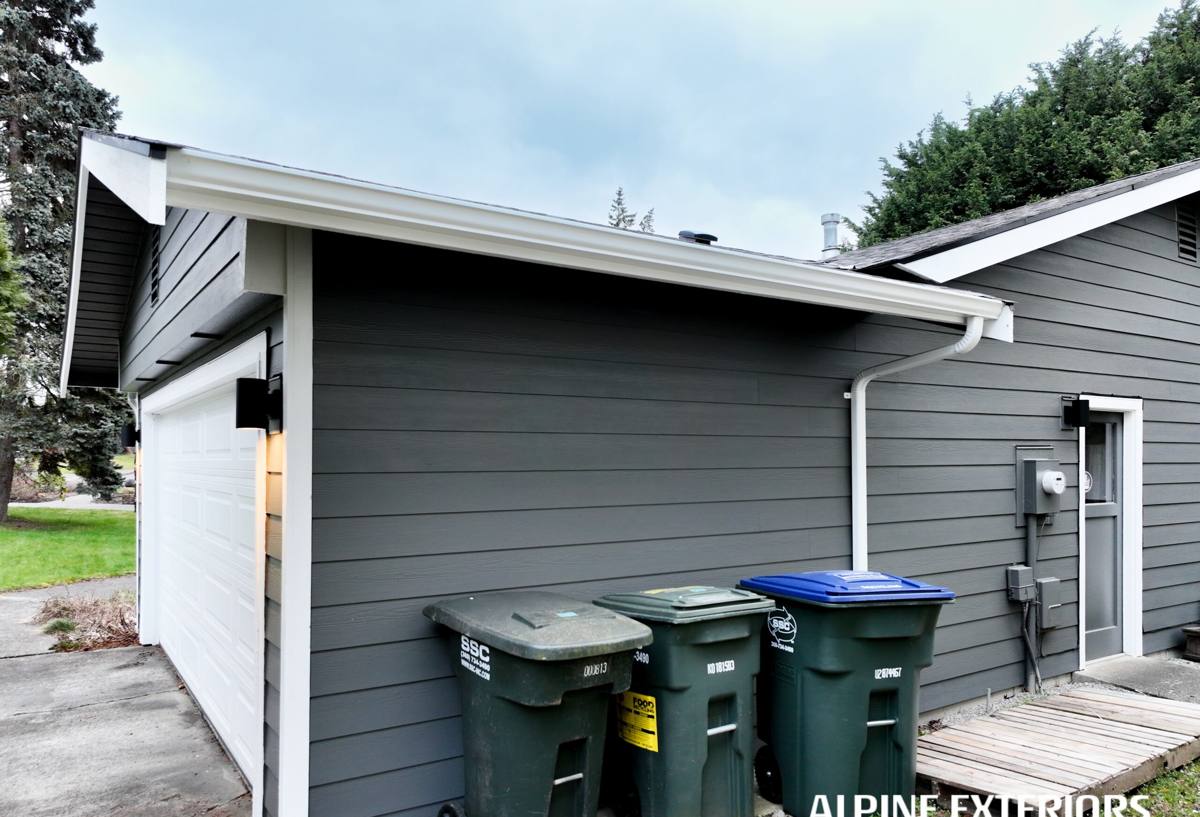
What Silver Beach's Climate Actually Does to Siding
Moisture That Doesn't Leave
Salt air off the greater Bellingham/Puget Sound region combines with the driving rain typical of a Pacific Northwest winter to keep exterior wood and wood-composite products damp for days at a stretch. Add the tree cover and lake-adjacent humidity common around Silver Beach, and you get siding that never fully dries between storms for much of the year. That's the single biggest factor in how fast a siding product ages here — not the rain itself, but how long the wall stays wet after it.
Moss, Not Just an Eyesore
A long moss season isn't cosmetic. Moss and algae hold moisture directly against the siding surface, and on products that aren't dimensionally stable, that sustained dampness is what starts rot, swelling, and paint failure at the edges and seams. North-facing and shaded walls — common on lots with heavy tree cover near the lake — are the first to show it.
Freeze-Thaw Cycling
Whatcom County doesn't get brutal winters, but it gets enough freeze-thaw swings to matter. Water that's soaked into a seam or a fastener hole and then freezes expands, and repeated cycles of that will open up small failures into big ones over a few seasons.
What a Correct Board & Batten Installation Involves
The board and batten look is simple — vertical panels with battens covering the seams — but the assembly behind it is where jobs succeed or fail. A correct installation on a Silver Beach home includes:
A Drainable Rainscreen Gap
Siding should never sit flush against the weather-resistive barrier. A furring strip or engineered rainscreen gap behind the panels lets any moisture that gets past the surface drain and dry out instead of sitting against the wall sheathing. In a climate with this much sustained dampness, skipping this step is the single most common cause of hidden rot behind board and batten siding.
Flashing at Every Horizontal Break
Window and door heads, trim boards, and any horizontal transition need proper flashing integrated with the weather barrier — not just caulk. Caulk is a maintenance item, not a waterproofing strategy, and it's the first thing that fails under years of driving rain.
Correct Fastening for a Vertical Panel
Board and batten panels move with temperature and moisture more than lap siding does, especially over long vertical runs. Fastener spacing, type, and depth all have to match the manufacturer's specification, or the panel will eventually crack at the fastener or pull loose at the edges.
Batten Placement Over Real Structural Backing
Battens need to land over framing or blocking, not just be nailed through panel into sheathing. This is a step that's easy to shortcut and hard to catch after the fact — it only shows up years later when a batten starts working loose.
Why We Only Install James Hardie for This Profile
We don't install LP SmartSide, vinyl, Cemplank, Allura, primed spruce, or cedar board and batten — on this house style or any other. That's a standard we hold across every job, not just around Silver Beach, and it comes down to how each of those products handles the exact conditions this neighborhood deals with every year: sustained dampness, shade, and a long moss season.
Wood products — cedar and primed spruce — can look excellent when new, but they're organic material in a climate that keeps them wet more often than dry. That means an ongoing commitment to painting, caulking, and moisture monitoring that most homeowners don't want to sign up for indefinitely. Engineered wood products like LP SmartSide perform better than raw wood but are still wood-based, meaning edge swelling and moisture sensitivity remain real risks if a seam, cut end, or fastener hole isn't sealed exactly to spec — and on a vertical profile with more seams, that margin for error matters more. Vinyl board and batten is low-maintenance and inexpensive, but it's a thin plastic panel that can warp in direct heat, crack in cold snaps, and simply doesn't hold up as a long-term exterior on a home in a wet, wooded setting.
James Hardie fiber cement is not organic material — it doesn't feed rot, it doesn't swell at cut edges the way wood-based products can, and it's non-combustible, which matters more each year as wildfire smoke seasons stretch into the Pacific Northwest. Hardie's HZ5 product line is engineered specifically for climates like ours, with moisture and freeze-thaw performance built into the product rather than relying entirely on paint and caulk maintenance. The ColorPlus factory finish is baked on under controlled conditions, which holds color and resists fading and chipping far better than a field-applied paint job exposed to Bellingham's rain before it's ever fully cured. And Hardie backs the product with a strong transferable warranty — meaning if you sell the house, the coverage doesn't just evaporate.
Board & Batten Material Comparison
| Material | How It Handles Sustained Damp | Maintenance Burden | Long-Term Fit for This Climate |
|---|---|---|---|
| James Hardie fiber cement | Non-combustible, engineered moisture resistance (HZ5 line) | Low — factory ColorPlus finish, no repainting cycle for years | Built for this exact climate profile |
| Cedar | Absorbs moisture, needs to dry between storms | High — regular staining/painting and caulk upkeep | Handsome but demanding in shaded, damp lots |
| Primed spruce | Prone to edge swelling if seams aren't perfectly sealed | High — paint maintenance from day one | Higher risk near lake-adjacent shade |
| LP SmartSide | Engineered wood, better than raw wood but still moisture-sensitive at cuts/seams | Moderate — depends on installation precision | Workable but installation-sensitive here |
| Vinyl | Doesn't rot but can warp/crack with temperature swings | Low, but limited repair options | Lower durability expectations long-term |
Our Process on Silver Beach Jobs
Every home near the lake has its own combination of tree cover, slope, and sun exposure, so we start with a site walk before we talk product or price.
- Assessment: we check the current siding, look for existing moisture damage, and evaluate how much sun and shade the walls actually get through the year — that tells us how the rainscreen and drainage plan should be designed.
- Tear-off and sheathing check: once the old siding is off, we inspect the sheathing and weather-resistive barrier underneath. This is often where hidden problems from a prior installation show up, and it's far cheaper to address them now than after new siding is on.
- Drainage plane and flashing: we install the rainscreen gap and flash every window, door, and horizontal transition before a single panel goes up.
- Panel and batten installation: Hardie panels and battens go up to manufacturer spec — fastener type, spacing, and batten backing all documented, not eyeballed.
- Final detail and walkthrough: trim, caulking at true movement joints only, and a walkthrough so you know exactly what was done and why.
What Drives the Cost
| Factor | Why It Matters |
|---|---|
| Wall complexity | Board and batten on gables, dormers, and cut-ins takes more labor per square foot than flat wall runs |
| Existing siding removal | Tear-off and disposal of old wood or vinyl adds time before the new install even starts |
| Sheathing repair | Rot found during tear-off has to be fixed before new siding goes on — this varies job to job |
| Rainscreen and flashing detail | Doing drainage correctly costs more up front than skipping it, and it's the difference that shows up in year ten, not year one |
| Panel and batten spacing/color | ColorPlus finish options and batten spacing choices affect material cost |
We won't quote a job without seeing the walls first — anyone who gives you a firm number over the phone for board and batten work is guessing.
Signs Your Current Siding Is Already Behind
If your home is currently sided in wood, vinyl, or an engineered wood product, watch for these warning signs before they turn into a bigger repair:
- Soft or spongy spots when you press on the siding, especially near the bottom edges or around window trim
- Persistent moss or algae growth that comes back within weeks of cleaning
- Visible gaps or separation at batten seams
- Peeling or bubbling paint that returns within a couple years of repainting
- Dark staining streaks below seams or fastener lines, which usually means water is tracking behind the siding, not just running over it
- Warping or bowing panels, particularly on shaded or lake-facing walls
Any one of these on its own might just need a repair. Several at once usually means the underlying system — not just the surface — has reached the end of its useful life.
Why a Crew That Already Works This Neighborhood Matters
Board and batten installation quality depends on judgment calls that don't show up on a spec sheet — how much rainscreen gap a heavily shaded wall needs, where the moss line tends to sit on a lake-adjacent lot, which walls in a given micro-location take the worst of the driving rain. A crew that's already worked houses around Silver Beach has seen how those conditions actually play out on real walls, not just in a manufacturer's climate chart. That local pattern recognition is what keeps a board and batten job from becoming a callback three winters later.
If you're weighing a siding replacement or want a second opinion on an existing installation, we're happy to take a look and walk the property with you — no pressure, no obligation. Use the form below to request a free estimate, and we'll get back to you to schedule a time to come out.