 Bellingham Window
 South Hill's Exposure Is Tougher on Siding Than It Looks
South Hill sits up above downtown Bellingham, which means most homes here get a mix of conditions that don't show up the same way in flatter, more sheltered parts of Whatcom County. The elevation and open exposure toward Bellingham Bay bring wind-driven rain straight at west- and south-facing walls, while the mature tree canopy that gives the neighborhood its character also throws deep, damp shade across large sections of many homes. Add in salt-laden air coming off the water and a moss season that can run from fall through spring, and you have a combination that punishes siding that isn't built to handle it.
None of this is unique to one street or one style of house. It's a neighborhood-wide pattern, and it's why siding failures on South Hill tend to show up in predictable places: north and west walls, areas under overhanging branches, and lower courses near grade where splashback and standing moisture do their work over years, not months.
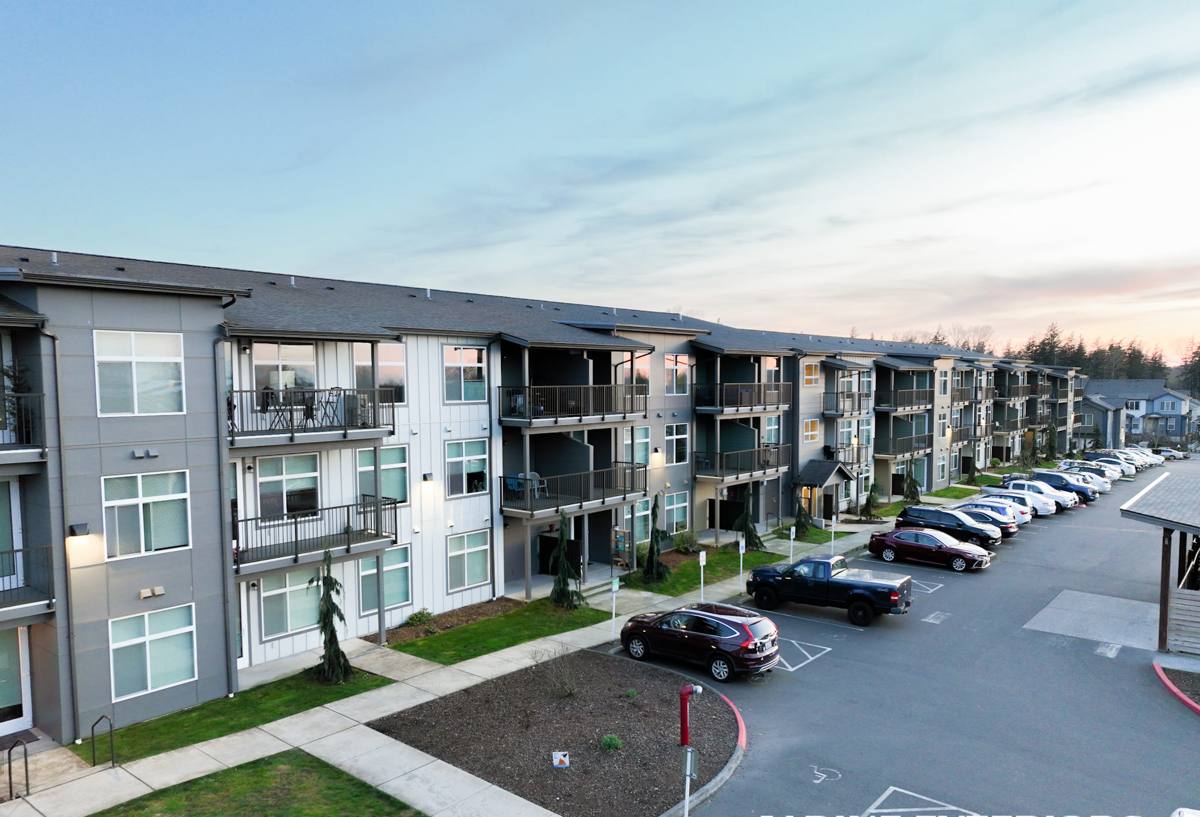
Why Moss, Salt Air, and Driving Rain Break Down the Wrong Siding
Moss and Constant Shade
Moss itself doesn't destroy siding directly, but it holds moisture against the surface far longer than open air would allow. On wood, primed spruce, or cedar, that means paint failure, soft spots, and eventually rot underneath a mat of moss that looks harmless from the sidewalk. On vinyl, moss doesn't rot the material, but it traps water behind panels and accelerates seam and fastener problems that are already common with that product.
Salt Air Off the Bay
Salt-laden air corrodes exposed metal fasteners, flashing, and trim faster than it would inland. It also keeps surfaces slightly damp more often, which feeds the moss and mildew cycle described above. Siding and fastening systems that aren't rated for coastal exposure age faster here than the same products would in eastern Whatcom County.
Driving Rain and Wind
Wind off the water doesn't just drop rain straight down — it pushes it sideways and up under laps, trim, and penetrations. A siding system depends as much on how it's flashed and lapped as on what it's made of. Get the water management wrong and it doesn't matter how good the material is; water will find its way behind it.
What James Hardie Fiber Cement Actually Solves
We install James Hardie exclusively, and on a site like South Hill the reasons are practical, not just brand preference. Fiber cement doesn't rot, and it doesn't feed mold and mildew growth the way wood-based products can. It holds up to repeated wetting and drying cycles without swelling, cupping, or losing its shape at the seams — a real issue for vinyl in temperature swings and wind exposure. It's also non-combustible, which matters as wildfire smoke and dry-season fire risk have become a more regular part of summers even in wetter parts of Washington.
Hardie's ColorPlus factory-applied finish is baked on under controlled conditions rather than field-painted, which gives it better resistance to fading and moisture intrusion at the surface than a job-site paint job — an advantage in a spot that stays damp as much as South Hill does. And Hardie backs its products with a long, transferable warranty structure, which matters to homeowners who may sell in the next decade and want that coverage to carry forward.
What a Correct James Hardie Installation Involves
The material is only half the equation. A large share of the siding problems we get called out to inspect on South Hill trace back to installation shortcuts, not the product itself. A correct Hardie install on a home like this includes:
- A drainage plane and, where conditions call for it, a rainscreen gap so any water that gets behind the siding can drain and dry instead of sitting against the sheathing
- Proper flashing at every window, door, deck ledger, and penetration — the details that matter most under wind-driven rain
- Correct nailing pattern and fastener spacing per Hardie's installation specifications, not a generic pattern borrowed from another siding type
- Manufacturer-specified clearances at grade, roof lines, and decks so the bottom courses aren't sitting in standing water or constant splashback
- Factory-primed or ColorPlus-finished cut edges properly sealed, since exposed raw edges are where moisture intrusion typically starts
- Trim and joint caulking rated for the product and for sustained damp exposure, not a generic exterior caulk
Skip any one of these and you can end up with a wall that looks right for a few years and then starts failing in exactly the spots this climate is hardest on.
Choosing the Right Hardie Product Line for a South Hill Home
James Hardie makes climate-engineered product lines, and matching the right one to a hillside, shaded, bay-exposed home is part of doing the job correctly rather than just picking a lap profile people like the look of.
| Consideration | HZ5 Line | HZ10 Line |
|---|---|---|
| Built for | Moderate freeze/moisture climates | Wet, humid, coastal-exposure climates |
| Fit for South Hill | Acceptable on sheltered, sun-exposed walls | Better match for shaded, west/south, or bay-facing walls |
| Moisture resistance engineering | Standard | Enhanced for high-moisture, high-humidity exposure |
| Typical use on this job | Rear or interior-facing elevations | Front, side, and weather-facing elevations |
We'll generally recommend HZ10 for the walls that face the weather and take the brunt of the moss and rain, and it's a reasonable, defensible choice to use HZ5 on more sheltered elevations if a homeowner wants to manage cost. What we won't do is put a climate mismatch on a wall that's going to see years of shade and salt air just to save a small amount up front — that's the kind of decision that shows up as a callback five years later.
Our Process, Start to Finish
- Walk-through and moisture check. We look at existing siding, trim, and any soft spots, and check for hidden moisture behind problem areas before quoting anything.
- Elevation-by-elevation plan. We map which walls need HZ10, where rainscreen is warranted, and where trim, flashing, or window details need attention beyond just the siding swap.
- Removal and sheathing inspection. Old siding comes off in sections so we can actually see the wall behind it — this is where rot or past water damage gets caught before it's covered back up.
- Water management first. House wrap, flashing, and rainscreen furring (where used) go in before a single piece of Hardie is hung.
- Installation to Hardie spec. Correct fastening, clearances, and sealed cut edges, following the manufacturer's published requirements rather than shortcuts.
- Trim, caulk, and final detailing. The finishing work that determines whether water sheds cleanly off the wall for the next several decades.
- Cleanup and walk-through. We review the finished work with the homeowner before calling the job done.
Cost Factors on a South Hill Project
Every home is different, but a few things consistently move the price on a hillside project like this:
| Factor | Why It Matters Here |
|---|---|
| Access and slope | Hillside lots and setbacks can require staging, extended scaffolding, or careful material staging that flatter lots don't need |
| Extent of existing damage | Rot or moisture damage found once old siding comes off adds sheathing or framing repair before new siding can go on |
| HZ10 vs. HZ5 mix | Using HZ10 on weather-exposed elevations costs a bit more but is the right call for shaded, bay-facing walls |
| Trim and detail complexity | Older South Hill homes often have more architectural trim than a simple production-built house, which adds labor |
| Rainscreen inclusion | Adding a drainage gap behind the siding is extra labor but pays off directly in a climate this damp |
Why Hiring a Crew That Already Works South Hill Matters
Hillside neighborhoods like this come with practical realities — narrow access, mature landscaping to work around, retaining walls, and older homes where the sheathing behind the old siding isn't always what the permit drawings say it should be. A crew that has already worked jobs on South Hill knows to check for these things before they become a mid-project surprise, and knows what Whatcom County and City of Bellingham permitting and inspection expect for exterior work in the area.
There's also a simple accountability argument: a contractor who plans to keep working in this neighborhood has every incentive to do the flashing, the fastening, and the trim detailing right the first time, because a callback on a South Hill job is a callback their next South Hill customer will hear about.
Keeping James Hardie Siding Looking Right After Install
Correctly installed Hardie siding is low-maintenance, not zero-maintenance. A short routine keeps it performing the way it's designed to in this climate:
- Rinse off moss and organic buildup once or twice a year, especially on shaded north and west walls
- Trim back tree branches and shrubs that keep siding in constant shade or contact
- Check caulking at trim joints and penetrations every year or two and recaulk where it's cracked or pulling away
- Keep gutters and downspouts clear so water isn't overflowing onto siding below the roofline
- Walk the base of the walls after big storms and check that grade and mulch haven't crept up against the bottom courses
If you're weighing a siding replacement on a South Hill home, we're happy to take a look, walk the exposed elevations with you, and give you a straight assessment of what the house actually needs. Reach out for a free, no-pressure estimate using the form below.