 Bellingham Window
 Bellingham's Marine Climate Is Hard on Roofs — and Columbia Feels It Directly
Homes in the Columbia neighborhood sit close enough to Bellingham Bay and the surrounding water to catch the full effect of our marine climate: salt-laden air, driving rain that comes in sideways off the water, and long stretches of gray, damp weather that never really let a roof dry out. In a lot of the country, a roof gets a hard freeze-thaw cycle or brutal sun exposure. Here in Whatcom County, the enemy is slower and quieter — moisture that sits, salt air that accelerates corrosion on metal components, and moss that gets a foothold and never lets go.
None of that is dramatic on its own. That's exactly the problem. A small flashing gap or a patch of moss doesn't announce itself the way a wind-torn shingle does. It just sits there, working steadily, until a homeowner finds a stain on a ceiling months later. Roof repair in this part of Bellingham is as much about managing constant low-grade moisture exposure as it is about fixing storm damage.
Warning Signs Columbia Homeowners Shouldn't Ignore
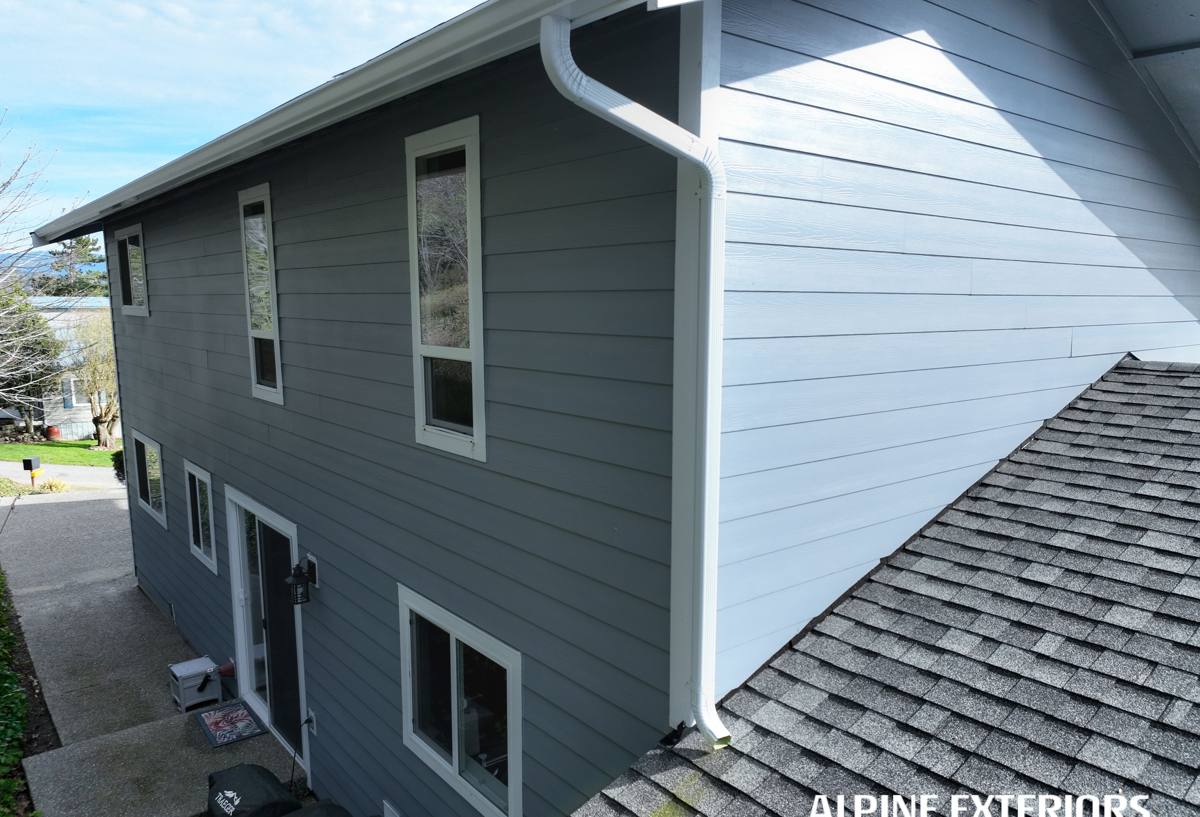
Most roof problems we get called out for in this neighborhood didn't start as emergencies — they started small and got worse over a wet winter. Watch for:
- Dark streaking or green-black patches on north-facing slopes, especially under tree cover
- Granules collecting in gutters or at downspout outlets
- Soft or spongy spots underfoot when walking a low-slope section
- Daylight visible around chimney, vent pipe, or skylight flashing from the attic
- Water stains on interior ceilings that appear only during heavy rain, then seem to disappear
- Shingles that look curled, lifted, or cracked along the roof edges
- Sagging in valleys where two roof planes meet
Any one of these on its own might be minor. Two or three together usually means water has been finding a way in for a while, and it's worth having someone look before the next atmospheric river event pushes it further.
What Correct Roof Repair Really Involves
Diagnosing the Actual Source of a Leak
Water rarely enters where it shows up. It can travel along a rafter or sheathing seam for several feet before dripping through drywall. A repair that just patches the ceiling stain location without tracing the path back to the actual entry point is a repair that fails again next winter. Our process starts in the attic when possible, checking sheathing, insulation, and framing for moisture patterns before we ever go up on the roof itself.
Flashing, Not Just Shingles
Most leaks we find in this area trace back to flashing — the metal detailing around chimneys, skylights, vent pipes, and roof-to-wall transitions — rather than the field shingles themselves. Flashing is the part most prone to failure from thermal movement, sealant breakdown, and the corrosive effect of salt air, and it's also the part most often rushed or reused incorrectly during a quick patch job. A correct repair replaces failed flashing rather than caulking over it.
Moss and Moisture Management
Moss doesn't just sit on shingles — its root structure lifts granules and shingle edges, holding water against the roofing material long after the surrounding area has dried. Removing moss without damaging the underlying shingles takes a soft-wash approach rather than aggressive pressure washing or scraping. Where moss has already caused granule loss or shingle lift, that section typically needs actual shingle repair or replacement, not just cleaning.
Ventilation Checks
A roof that's constantly damp from the outside and poorly ventilated from the inside is fighting moisture on two fronts. As part of most repair visits, we check attic ventilation and insulation baffles, since trapped warm, moist air accelerates sheathing rot and can shorten the life of an otherwise sound roof.
Roofing Materials Common in Columbia Neighborhoods
Columbia's housing stock spans decades, and the roofing material on your home changes what a correct repair looks like.
| Material | Typical Repair Considerations | Notes for This Climate |
|---|---|---|
| Composition (asphalt) shingle | Individual shingle replacement, flashing resealing, granule loss patching | Most common; moss and moisture are the main aging factors here |
| Cedar shake | Splitting, curling, and moss-related rot in individual shakes | Needs regular moss control; older shake roofs often show more repair needs by section |
| Metal panel roofing | Fastener backing out, sealant failure at seams and penetrations | Salt air can accelerate corrosion at cut edges and exposed fasteners |
| Low-slope / flat membrane | Seam separation, ponding water, membrane punctures | Common on additions and porches; drainage design matters as much as the membrane itself |
Knowing which category your roof falls into — and how it was originally installed — shapes whether a repair is a straightforward patch or a sign that a larger section needs attention.
Our Roof Repair Process, Start to Finish
We keep the process simple and transparent, because most homeowners just want to know what's wrong, what it'll take to fix, and what it'll cost — without a sales pitch attached.
- Inspection. We walk the roof and check the attic where accessible, looking for the actual source of any leak or damage rather than just the visible symptom.
- Written assessment. You get a clear explanation of what we found, what's causing it, and what repair options make sense — including when a repair is genuinely the right call versus when it's a stopgap.
- Repair plan and estimate. A straightforward scope and price before any work begins, with the reasoning behind it explained plainly.
- The repair itself. Proper flashing work, matched materials where possible, and moss or debris cleared from the work area — not just the section being repaired.
- Follow-up. A final check to confirm the fix holds, especially important given how much of this region's roof damage only shows itself under sustained rain.
Repair or Replace? How We Help You Decide
Not every roof problem needs a repair — and not every repair should be treated as a full replacement sales opportunity. We look at the age of the roofing material, how widespread the damage is versus isolated to one area, and how many prior repairs a roof has already had. A ten-year-old roof with a single failed flashing detail is a repair. A twenty-five-year-old roof with moss damage in multiple sections and granule loss throughout is a different conversation. We'll tell you honestly which category your roof falls into rather than defaulting to whichever answer costs more.
Why Hiring a Crew That Already Works Columbia Matters
Roofing problems in this neighborhood follow patterns shaped by the local terrain, tree cover, and exposure to weather coming off the bay. A crew that regularly works in and around Columbia has already seen how moss builds up faster under mature tree canopy in certain pockets, how wind-driven rain finds weak points on homes facing open exposure, and which flashing details tend to fail first on the housing styles common to this part of Bellingham. That familiarity means less time spent guessing and more time spent fixing the actual problem correctly the first time. It also means a crew that isn't learning Whatcom County's weather behavior on your roof.
Cost Factors in Roof Repair
Roof repair costs vary a lot based on the actual scope of work, but a few factors consistently move the price up or down.
| Factor | Effect on Cost |
|---|---|
| Roof pitch and accessibility | Steeper or harder-to-access roofs take longer and require more safety setup |
| Extent of moss or moisture damage | Cleaning alone is far less than replacing rotted sheathing beneath damaged shingles |
| Flashing complexity | Multiple penetrations (chimney, skylights, vents) each add material and labor |
| Material match | Matching older or discontinued shingle or shake colors can take longer to source |
| Number of repair areas | Several small issues across the roof may cost more in total than one larger, concentrated repair |
We provide a written estimate before starting so there are no surprises once the work begins.
A Quick Checklist Before You Call for Repair
If you're trying to decide whether it's time to have your roof looked at, run through this:
- Has it been more than a year since the roof was last inspected or cleaned of moss and debris?
- Are there visible stains on interior ceilings, especially near chimneys or skylights?
- Do gutters collect noticeable granules after a heavy rain?
- Is moss visible on north-facing or shaded slopes?
- Are there large trees overhanging sections of the roof?
- Has the attic ever been checked for daylight gaps or damp insulation?
If you checked more than one or two of these, it's worth having a repair specialist take a direct look rather than waiting for a leak to confirm it.
If you're noticing any of these signs on a home in Columbia or nearby, we're happy to take a look and give you a straight answer — no pressure, no upsell, just an honest assessment and a free estimate using the form below.