 Bellingham Window
 Siding Repair for Columbia Homes
Columbia is one of Bellingham's older, established neighborhoods, with a mix of home ages and siding types that reflects decades of growth close to Bellingham Bay. That mix means siding repair calls here run the full range — from a single section of storm-damaged lap siding to widespread moisture damage on a home that's never had its siding fully replaced. Whatcom County's climate doesn't do older siding any favors, and Columbia's proximity to the water puts it squarely in the path of the salt air, driving rain, and long moss season that wear exteriors down faster than homeowners expect.
We're a Bellingham-based crew, and Columbia is regular territory for us. We install and repair James Hardie fiber cement siding exclusively. That's a professional standard built from years of pulling failed siding off houses in this exact climate, not a sales preference, and it shapes how we approach every repair call in the neighborhood.
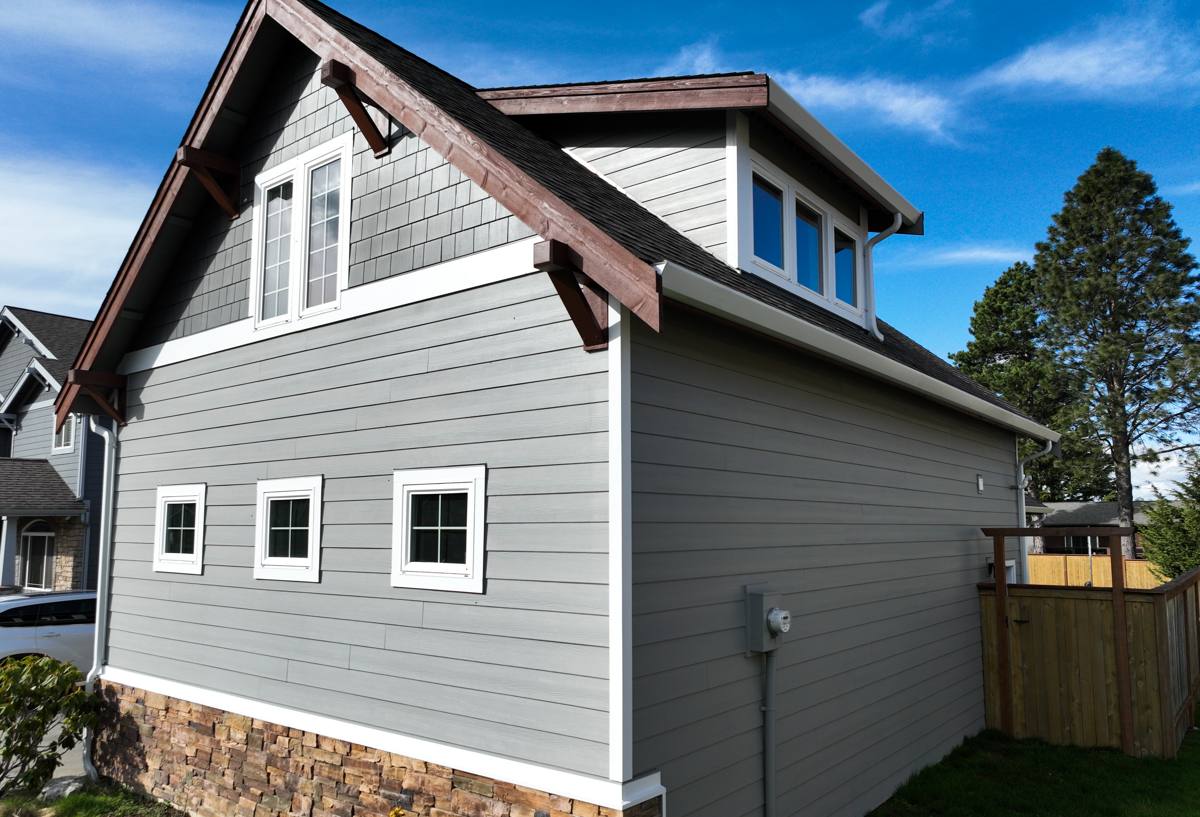
What Columbia's Climate Does to Siding
Salt Air Off Bellingham Bay
Columbia sits close enough to the water that salt-laden air is a regular part of the local weather, even on homes without a direct bay view. Salt accelerates corrosion on fasteners, flashing, and exposed trim, and it breaks down lower-quality paint and coatings faster than a drier inland climate would. On repair calls, corroded nails and stained trim around window and door openings are some of the clearest signs that salt exposure has been at work over time.
Driving Rain
Storms coming off the water rarely fall straight down. Wind pushes rain sideways into wall assemblies, siding laps, and the joints where trim meets the wall, and that sideways load finds gaps a careless repair or original installation left behind. Homes in Columbia that catch wind exposure from the water tend to show moisture problems first at butt joints, corners, and anywhere flashing was skipped or under-lapped.
A Long Moss Season
Mild temperatures and near-constant moisture give moss and mildew a growing season that can run most of the year on shaded or north-facing walls. Older trees are common throughout Columbia, and the shade they cast keeps siding damp longer than it would sit in full sun. Any surface with even minor porosity becomes a growth surface over time, and that moss holds moisture against the siding rather than letting it dry.
What a Correct Siding Repair Actually Involves
A lot of siding repairs we get called out for in Columbia are re-dos of a quick patch job that covered up a problem instead of fixing it. A repair that actually holds up starts with finding out how far the damage goes, not just replacing what's visibly cracked or stained.
- Full extent inspection: Pulling back the damaged section to check the house wrap, sheathing, and framing underneath before deciding what actually needs replacing.
- Matching the existing profile: Repair sections need to match the reveal, texture, and color of the surrounding siding, or the patch stands out for the life of the house.
- Correct flashing at the repair boundary: Every seam where new material meets old needs flashing and lapping that sheds water outward, not a bead of caulk standing in for real flashing.
- Fastener spacing and type to spec: Hardie specifies fastener placement and corrosion-resistant fastener types for a reason, and loose spacing or the wrong fastener is one of the more common causes of repeat failures we find on tear-outs.
- Sealed butt joints and trim transitions: These are the first places wind-driven rain finds a way behind the siding, and they're worth doing carefully rather than fast.
None of this is exotic. It's the manufacturer's own installation spec, applied consistently to the repaired section rather than shortcut because it's a smaller job than a full re-side.
When Repair Makes Sense vs. When It Doesn't
Not every siding problem in Columbia calls for a full replacement, and not every problem should be patched. A section damaged by a fallen branch or a one-time impact is usually a straightforward repair. Widespread moisture damage behind the siding, siding that's failing in multiple unrelated spots, or a house that's never had a rain screen gap installed behind aging siding is a different situation, and patching those spots individually usually just delays a bigger cost. Part of our job on the first visit is being honest about which category a given home falls into.
Our Repair Process
- On-site inspection: We walk the property, examine the damage up close, and check adjacent areas for moisture that hasn't shown visible signs yet.
- Honest scope assessment: We tell you plainly whether this is a contained repair or a sign of a bigger issue, and why.
- Matched materials: We source Hardie product that matches your existing siding's profile and ColorPlus finish as closely as possible.
- Repair to manufacturer spec: Flashing, fastening, and joint sealing follow Hardie's installation requirements, not a shortcut version of them.
- Final check: We confirm the repaired section drains and sheds water the way the rest of the wall assembly does before we call the job done.
Why We Only Repair and Install James Hardie Siding
We used to work with a broader range of siding products. We stopped, and the reason came from what we kept finding on repair and tear-off calls across Bellingham, including in neighborhoods like Columbia, not from a supplier relationship or a marketing angle.
| Factor | What It Means for a Columbia Home |
|---|---|
| Non-combustible core | Fiber cement doesn't feed a fire the way wood-based siding products can, a real factor for both safety and insurance. |
| Factory-applied ColorPlus finish | Baked on under controlled conditions, so it resists fading and moisture damage better than field-applied paint near the water. |
| Climate-engineered HZ product lines | Hardie's HZ5 formulation is built for regions with sustained moisture and freeze-thaw cycling, which describes coastal Whatcom County. |
| Dimensional stability | Fiber cement doesn't swell, cup, or warp the way engineered wood products can after repeated wet-weather exposure. |
| Strong transferable warranty | Backed by one of the stronger warranty structures in the industry, provided the installation follows spec. |
We won't install or patch in LP SmartSide, vinyl siding, Cemplank, Allura, primed spruce, or cedar. Each of those products has a place in the market and homeowners who are satisfied with them. But repairing a house's exterior with a product different from what's already on the wall creates its own problems, and where a full re-side is the right call, we've made a professional decision to install one system we stand behind rather than offer something cheaper that shifts maintenance risk back onto the homeowner.
Signs a Columbia Home Needs Siding Repair
- Soft or spongy siding, especially low on the wall or around window and door trim
- Moss or dark staining that returns quickly after cleaning
- Visible cracking, buckling, or gaps at butt joints and corners
- Rust staining around fasteners or trim
- Peeling or bubbling paint, particularly on shaded or north-facing walls
- Warping or separation at trim boards and window casings
- A musty smell near an exterior wall, which often points to moisture already behind the siding
Cost Factors for Columbia Siding Repair
| Factor | Why It Affects Cost |
|---|---|
| Extent of hidden moisture damage | Repairs sometimes reveal damaged sheathing or framing that needs addressing before new siding goes on |
| Size and location of the repair area | Ground-level sections are simpler than second-story or hard-to-access areas |
| Matching existing siding profile and finish | Older siding profiles or discontinued colors can take more effort to match closely |
| Number of separate repair areas | Several smaller repairs across a house can add up to more than one larger, contiguous repair |
These are general drivers, not a quote. Every Columbia home carries a different repair history and sits under different tree cover and wind exposure, so we look at the actual damage in person before putting a number on the work.
Timing a Repair Around Bellingham's Weather
Whatcom County's wettest, windiest stretch typically runs from late fall through winter, and that's the hardest season to get a clean, properly cured repair done. Spring and summer generally offer drier, more stable conditions for fiber cement work, letting sealants and finishes set up the way they're meant to. That said, active moisture intrusion doesn't wait for good weather. A section of siding that's soft, stained, or visibly failing is worth addressing as soon as it's noticed rather than waiting out the season, since the damage underneath tends to spread while it's ignored.
Why a Local Crew Matters for Columbia
A crew that works across Bellingham regularly sees how salt air, driving rain, and moss actually behave on real Columbia houses over a full year, not just how a repair looks the day it's finished. That local experience shapes practical decisions on a repair call: which walls stay wet longest, where extra flashing attention pays off, and when a homeowner is better served by an honest recommendation for a larger repair or re-side instead of a patch that won't hold. Columbia's mix of older and newer homes means no two repair calls look quite the same, and a crew that's seen the range knows the difference between a quick fix and a lasting one.
Get a Free, No-Pressure Estimate
If siding on your Columbia home is showing damage, staining, or softness, we're glad to take a look and give you a straightforward, honest assessment of what it actually needs. Reach out using the form below to schedule a free estimate — no pressure, no upsell script.