 Bellingham Window
 Siding Replacement for Columbia Homes
Columbia is one of Bellingham's established residential neighborhoods, and like most of the city's older neighborhoods, it's got a real mix of housing stock — homes from different decades sitting on the same block, mature trees shading a lot of the lots, and siding in every condition from recently updated to well past its service life. When a siding replacement comes up in a neighborhood like this, the age and condition of the home matters as much as the weather, because older wall assemblies weren't always built or wrapped the way current codes and materials expect.
What doesn't change from house to house is the climate. Bellingham sits close enough to Bellingham Bay and the Salish Sea that salt-tinged air is a constant, rain here comes in sideways more often than straight down, and shaded walls in a tree-covered neighborhood like Columbia hold onto moisture long enough to grow moss for most of the year. Any siding replacement in this part of Whatcom County has to be built around those three facts, not around a generic install that would work fine somewhere drier.
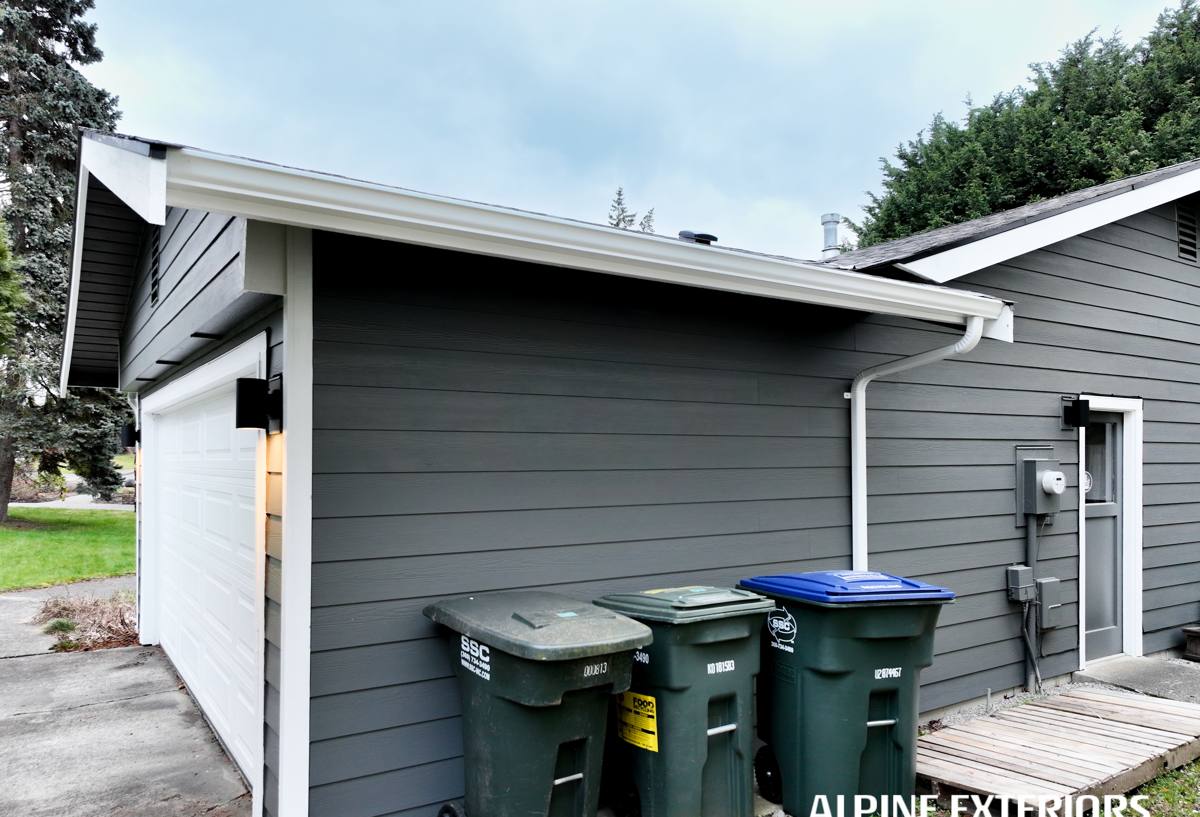
What Bellingham's Climate Does to Siding Over Time
Driving Rain and Wind Exposure
Wind off the water pushes rain sideways and up under laps, trim, and corner boards that were never designed to be hit from that angle. Over years, siding that looks fine from the street can be taking on moisture at every horizontal joint, and the damage doesn't show up on the surface until it's already reached the sheathing behind it.
Salt Air and Fastener Corrosion
Salt exposure is hard on anything metal — nail heads, flashing, trim fasteners — and corrosion at those points is one of the more common reasons siding fails from the inside out rather than the outside in. A replacement done with the wrong fastener spec can look correct on install day and still be failing at the nail line within a decade.
Moss Season and Trapped Moisture
Bellingham's moss season runs most of the year on north-facing and tree-shaded walls, and Columbia's mature tree canopy means a lot of homes here have at least one wall that almost never gets direct sun. Moss itself doesn't destroy siding, but the moisture it holds against the surface does, especially where an old install left no way for water to drain or dry out.
Signs a Columbia Home Needs Replacement, Not Repair
Not every siding problem calls for a full tear-off. But there's a point where patching individual boards or panels stops making financial or practical sense, and knowing where that line is can save a homeowner from spending repair money that doesn't actually solve anything.
- Soft or spongy spots when you press on the siding, especially near the bottom of walls or below windows
- Paint that keeps failing in the same spots within a year or two of repainting
- Visible cupping, warping, or gaps at seams that weren't there a few years ago
- Persistent moss or staining on a wall that comes back no matter how often it's cleaned
- Siding that's original to a home built more than 25-30 years ago, especially if it's wood-based or older vinyl
- Interior signs — musty smells, staining on interior walls near exterior corners — that suggest moisture is already getting past the siding
Any one of these can sometimes be handled with a repair. Two or three of them together, especially on an older home, usually means the wall assembly underneath needs a look, and that's a replacement conversation, not a patch job.
Why Material Choice Matters for This Climate
We install James Hardie fiber cement siding exclusively — we don't offer LP SmartSide, vinyl, Cemplank, Allura, primed spruce, or cedar. Those are all products other contractors install competently, and each has its place. But given what this climate does to a wall over ten, twenty, and thirty years, we made a professional decision to stand behind one system rather than offer a lower-cost option that shifts moisture and maintenance risk onto the homeowner down the road.
| Material | Moisture Behavior | Maintenance in This Climate | Realistic Lifespan |
|---|---|---|---|
| James Hardie fiber cement | Dimensionally stable; doesn't swell, rot, or absorb water like wood-based products | Low; factory ColorPlus finish resists moss and fading | 30+ years installed to spec |
| LP SmartSide (engineered wood) | More sensitive to moisture at cut edges and fastener penetrations | Moderate; edge sealing and paint upkeep needed | 15-25 years, climate-dependent |
| Vinyl | Doesn't rot, but can warp, gap, or crack in temperature swings | Low, but trapped moisture underneath is hard to detect | 20-30 years, variable |
| Cedar | Absorbs moisture readily without regular sealing or paint | High; recurring repainting or resealing cycle | 15-25 years with consistent upkeep |
The factory-applied ColorPlus finish on Hardie's siding is a bigger deal in a marine climate than it might sound like on paper. Field-painted materials depend on paint quality holding up against salt air and constant damp; a baked-on factory finish simply has less exposed, unprotected surface for that weather to work on.
What a Correct Siding Replacement Actually Involves
Tear-Off and What's Underneath
Pulling the old siding is when we find out what's really going on with a wall — hidden rot, inadequate or missing weather-resistive barrier, sheathing that needs attention before anything new goes up. Skipping a real look at this stage just buries whatever problems are already there under new material.
Drainage and Ventilation Behind the Siding
A correctly built wall gives moisture that gets past the surface a way to drain and dry out, rather than sitting trapped against the sheathing. That gap matters more in a climate that stays damp as much of the year as Bellingham's does.
Fastening and Flashing to Spec
Corrosion-resistant fasteners at the correct spacing, and properly lapped flashing at every window, door, corner, and wall-to-roof transition — these are the details that separate a wall that performs for decades from one that starts showing problems within a few wet seasons.
Our Process for a Columbia Siding Replacement
Walkthrough and Assessment
We look at the specific walls on your home — which ones take direct weather, which are shaded by trees and slower to dry, and whether the existing assembly already has moisture issues that need addressing before new siding goes on.
Detailing the Plan
Fastening pattern, flashing details, and how the new siding meets trim, windows, and rooflines get worked out before crews start cutting material, so there's no improvising in the field on the details that matter most.
Installation to Manufacturer Spec
Every fastener, gap, and flashing lap follows James Hardie's published requirements for this climate zone, which is also what keeps the manufacturer's warranty intact.
Final Walkthrough
We walk the finished job with you and cover what little maintenance this material actually needs, so you know what a healthy wall looks like going forward.
Why Hire a Crew That Already Works in Columbia
A siding replacement done by a crew that's already worked this specific neighborhood carries an advantage that doesn't show up in a bid sheet. They've already seen which orientations in Columbia hold moss longest because of the tree cover, how the age and construction of the neighborhood's older homes tends to affect what's found once old siding comes off, and how much drainage detail actually earns its keep in this exact climate versus what a generic national install guide assumes. That judgment is the difference between a wall that still looks and performs the same in twenty years and one that's showing problems by year five.
Cost Factors for Siding Replacement in This Area
Every home is different, but a few factors consistently move the price on a Columbia siding replacement:
| Factor | Why It Matters |
|---|---|
| Home age and wall condition | Older homes more often need repair or upgraded moisture barriers found during tear-off |
| Total wall area and complexity | More corners, dormers, and transitions mean more cuts, flashing, and labor |
| Siding profile chosen | Lap, shingle, and board and batten styles differ in material use and install labor |
| Trim and window count | Each opening needs its own flashing and finish detail |
| Site access | Mature trees, steep lots, or tight setbacks common in older neighborhoods can add labor time |
We'll walk your specific home and give you real numbers rather than a rough square-footage estimate — two houses of the same size in Columbia can come in very differently depending on what's actually going on with the existing walls.
Getting Started
If your Columbia home's siding is showing its age, or you just want an honest opinion on whether repair or replacement makes more sense, we're glad to take a look and walk you through what we find. There's a form below — reach out and we'll set up a free, no-pressure estimate.