 Bellingham Window
 Window Replacement Built for Columbia's Conditions
Columbia is one of Bellingham's older, established neighborhoods, which means a lot of the homes here are carrying original or early-replacement windows that were never built to modern energy or moisture standards. Add in the neighborhood's proximity to the water and the daily reality of living in Whatcom County — salt-laden air, driving rain off the Salish Sea, and a moss season that can stretch from fall clear through spring — and you've got a recipe for windows that fail faster than homeowners expect, often from the inside out.
This page is about one thing: what it actually takes to replace windows correctly on a Columbia home, why the climate here changes the job, and how a crew that already works this neighborhood approaches it differently than a general contractor passing through.
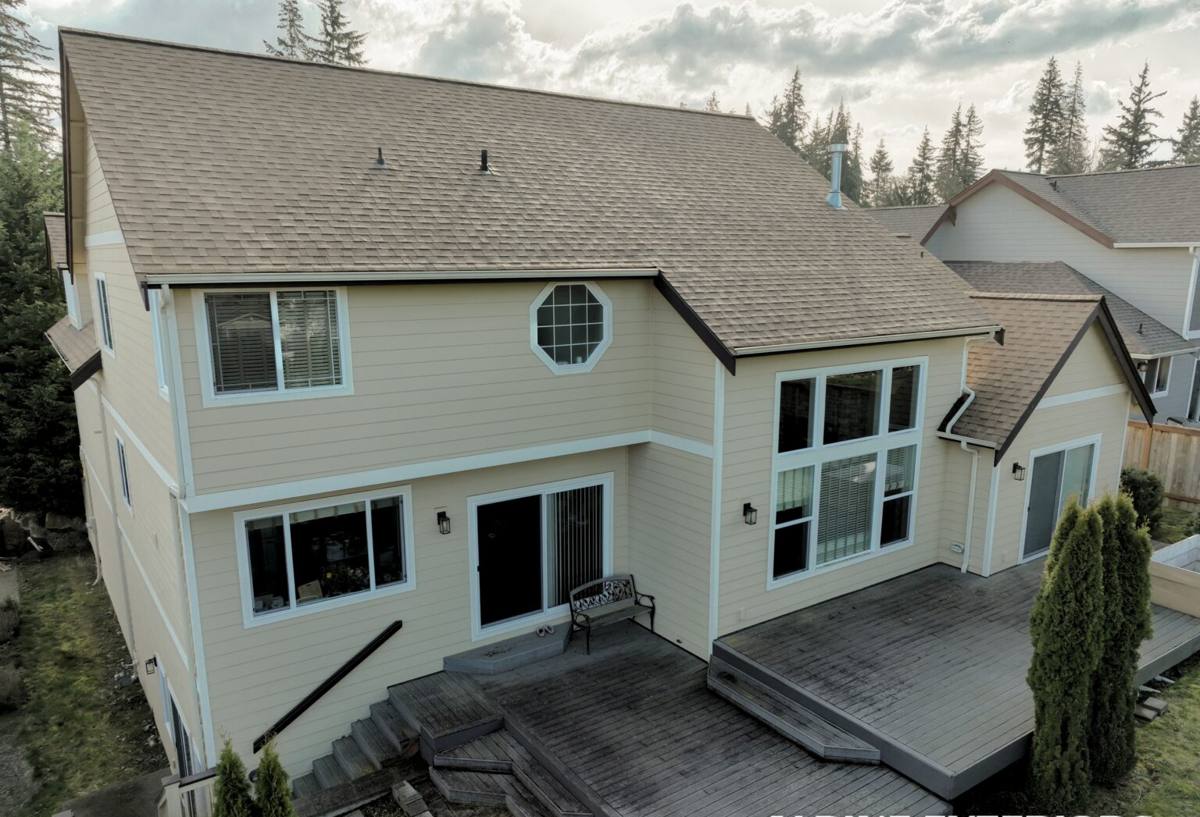
What Bellingham's Climate Actually Does to Windows
Every coastal Pacific Northwest town deals with rain. Bellingham and Whatcom County get a specific combination that's harder on windows than straight rainfall alone.
Salt Air
Homes closer to the water pick up airborne salt that settles on metal hardware, fasteners, and window frames. Over years, that salt exposure accelerates corrosion on lower-grade hardware and can pit or discolor unprotected metal components — which is part of why hardware quality matters as much as glass quality in this area.
Driving Rain
Wind-driven rain doesn't just hit a window — it pushes against it, testing every seal and flashing detail. A window that would perform fine in a calm climate can leak here if the flashing and sill pan weren't installed correctly, because the water is being forced sideways and upward, not just falling straight down.
Moss Season
Moss and algae thrive in the shaded, damp conditions common around mature Columbia lots with established trees. Moss holds moisture against wood trim and sills far longer than open sun would allow, which is a major contributor to rot around older wood-framed windows that don't get regular maintenance.
None of this means Columbia homes need exotic products. It means the installation details — flashing, sealants, drainage paths — have to be done right every time, because this climate finds every shortcut.
Signs a Columbia Home Is Ready for Window Replacement
Not every window problem means full replacement, but these are the signals worth taking seriously in this neighborhood:
- Visible gaps, soft spots, or discoloration in the wood trim or sill around the window
- Condensation forming between panes of a double-pane window (a sign the seal has failed)
- Windows that are difficult to open, close, or lock — often a sign the frame has shifted or swollen
- Drafts you can feel near the window edge even when it's fully closed
- Visible corrosion or stiffness in hinges, cranks, or locking hardware
- A noticeable rise in heating costs without any other explanation
- Moss or dark staining building up on the exterior trim or sill
If you're seeing two or more of these on the same window, it's usually more cost-effective to replace than to keep patching.
What a Correct Window Replacement Job Involves
Removal and Inspection
Once the old window is out, the sheathing and framing underneath get inspected before anything new goes in. This is the step that gets skipped by crews trying to move fast — and it's the step that matters most in a wet climate, because hidden rot behind a window doesn't go away just because a new window covers it up.
Flashing and Moisture Management
This is the part of the job that determines whether a window leaks in five years or stays dry for decades. A proper sill pan, correctly lapped flashing, and the right sealant at every joint create a drainage path that lets any water that does get behind the trim escape instead of sitting against the wood. Given how much wind-driven rain this area sees, this step isn't optional — it's the difference between a window that performs and one that doesn't.
Insulation and Air Sealing
The gap between the new window frame and the rough opening gets properly insulated and air-sealed, not just stuffed with whatever's on hand. Done right, this closes the draft points that make older Columbia homes feel cold near the windows even when the furnace is running.
Installation and Fastening
The window gets set plumb, level, and square, then fastened according to the manufacturer's specifications — not just "close enough." An out-of-square install stresses the frame, which can cause premature seal failure and hardware problems down the line.
Trim, Finish, and Cleanup
Exterior trim gets sealed and finished to shed water, interior trim gets reset or replaced to match, and the site gets cleaned up. A rushed finish on the exterior trim is exactly where moss and moisture will find a foothold first.
Choosing the Right Window Materials for This Climate
There's no single "best" window material for every home — it depends on the home's age, exposure, and your maintenance preferences. Here's how the common options actually perform in Bellingham's coastal, wet conditions:
| Material | Moisture Performance | Maintenance | Good Fit For |
|---|---|---|---|
| Vinyl | Won't rot; handles moisture well | Low — occasional cleaning | Budget-conscious replacements, rental properties |
| Fiberglass | Excellent; very stable in wet, temperature-swinging climates | Low | Homes near the water wanting long-term durability |
| Wood-Clad | Good if the exterior cladding is intact and maintained | Moderate — cladding needs periodic inspection | Homeowners wanting a traditional interior wood look |
| Aluminum | Can conduct cold and is prone to condensation without a thermal break | Moderate — watch for corrosion near salt air | Specific architectural styles, commercial applications |
For homes exposed to salt air and driving rain, we generally steer homeowners toward vinyl or fiberglass for the frame, paired with corrosion-resistant hardware. That's not a knock on other materials — it's about matching the product to what this particular climate will put it through, and being upfront about the maintenance commitment each option carries.
Our Process From Estimate to Final Walkthrough
On-Site Assessment
We look at the actual condition of your existing windows, framing, and trim — not just measurements. This is where we catch hidden rot or moisture issues before they become a surprise mid-project.
Straightforward Product Selection
We'll walk you through material and glass options based on your home's exposure and your budget, and explain the trade-offs honestly. No pressure toward the most expensive option if it's not what your home needs.
Installation Day
Work areas are protected, old windows are removed and inspected, and every opening gets the same flashing and sealing standard regardless of which window is going in.
Final Walkthrough
Before we consider the job done, every window gets tested — opened, closed, locked — and we walk the exterior with you so you know exactly what was done and why.
What Affects the Cost of Window Replacement in Columbia
Every home is different, but these are the main factors that move a project's cost up or down:
| Factor | Why It Matters |
|---|---|
| Number and size of windows | More openings and larger units mean more material and labor |
| Frame material chosen | Vinyl, fiberglass, and wood-clad carry different material costs |
| Condition of existing framing | Rot or moisture damage found during removal adds repair time |
| Window style | Casement, double-hung, and picture windows have different install complexity |
| Trim and finish work | Matching existing trim or upgrading finishes adds labor |
| Access and home height | Second-story or hard-to-access windows take more time and equipment |
We give a firm, itemized quote after the on-site assessment — not a vague range pulled from a phone call — so you know what you're actually paying for before work starts.
Why Local Experience in Columbia Matters
A crew that regularly works in this neighborhood already understands the housing stock here — the common framing quirks in older Bellingham homes, how exposure varies block to block depending on tree cover and wind direction, and what moisture problems tend to show up first in this climate. That familiarity shows up in fewer surprises during the job and a finished product that's built for what Whatcom County weather will actually throw at it, not a generic install pulled from a manual written for a drier region.
It also means accountability. A local contractor's reputation lives in the same neighborhood as the work — that's a real incentive to do the flashing right the first time, not just get the window in and move on.
If your Columbia home has windows showing their age — drafts, fogging, sticking, or visible wear on the trim — we're happy to take a look and give you a straightforward, no-pressure estimate. Use the form below to get started.