 Bellingham Window
 Building Decks for Cordata Homes in Bellingham's Marine Climate
Cordata sits in north Bellingham, close to the I-5 corridor, in a stretch of Whatcom County that gets the full range of what Pacific Northwest weather can throw at an outdoor structure. A deck is one of the most exposed things attached to a house — it sits low, catches runoff off the roofline, holds standing moisture longer than siding or trim, and gets walked on year-round whether it's dry or soaked. Building one that lasts here isn't about a fancier design. It's about getting the parts nobody sees right: flashing, fasteners, drainage, and board spacing, all chosen for a climate that includes driving rain, a long moss season, and salt-tinged coastal air drifting in off Bellingham Bay.
We build and repair decks around Cordata regularly, and most of the failures we get called out to inspect trace back to the same handful of shortcuts — not bad wood, not bad composite, just details that were fine for a drier climate and don't hold up here.
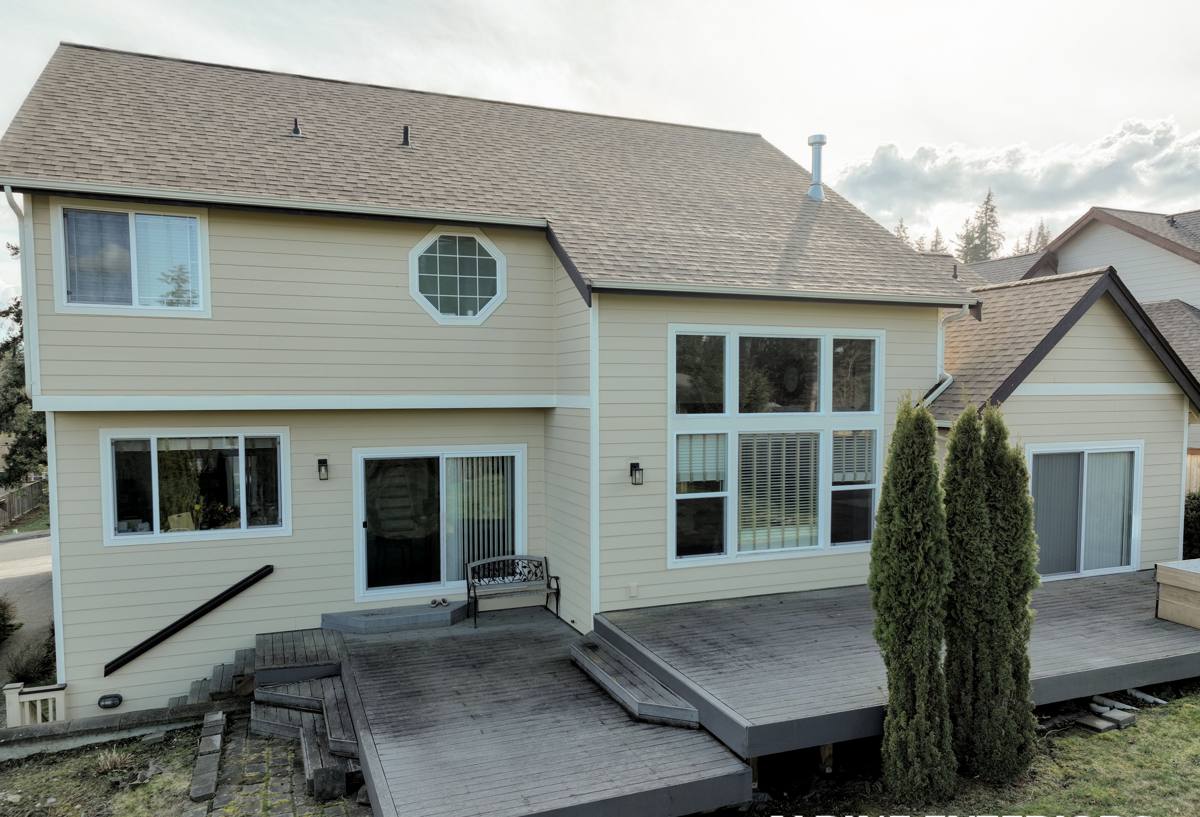
What Driving Rain, Moss, and Salt Air Do to a Deck Over Time
Moisture Intrusion at the Ledger and Framing
The ledger board — where the deck attaches to the house — is the single most common failure point on decks in this region. Whatcom County's rain doesn't fall straight down and stop; it drives sideways in storms and sits in the air as fine mist for days at a time. Without proper flashing and a drainage gap behind the ledger, water works its way behind the board and into the house's rim joist. That's slow, hidden rot, and by the time it shows up as a soft spot or a sagging corner, the damage has usually been building for years.
Moss and Algae on Deck Surfaces
Whatcom County's moss season runs long — realistically, anywhere shaded or slow to dry can grow moss nine or ten months of the year. On a deck, moss and algae aren't just cosmetic. They hold moisture against the board surface, make the walking surface slick, and on wood decking they accelerate fiber breakdown. Board spacing, gap width, and how much sun and airflow a deck gets all affect how fast moss takes hold — decisions made at the design stage, not something you can fully fix later with a pressure washer.
Salt Air and Fastener Corrosion
Bellingham's proximity to the bay means homes across the city, including north Bellingham neighborhoods like Cordata, get some exposure to salt-laden air, especially during windier winter weather. Salt air accelerates corrosion in standard fasteners and hardware — screws, joist hangers, post bases — well before the decking material itself shows wear. A deck can look fine on the surface while the structural hardware underneath is quietly rusting away. Using the right grade of stainless or coated fasteners and connectors isn't an upsell; it's the difference between a deck that's solid at year fifteen and one that needs structural repair at year seven.
Decking Material Options for Cordata Homes
There's no single "best" decking material — the right choice depends on your budget, how much upkeep you want to take on, and how exposed the deck is to sun, shade, and moisture. Here's how the common options actually perform in this climate:
| Material | Moisture Resistance | Moss/Algae Resistance | Maintenance | Typical Lifespan |
|---|---|---|---|---|
| Cedar | Naturally decent, degrades if not sealed | Moderate — needs regular cleaning | Annual cleaning, resealing every 1-2 years | 15-20 years with upkeep |
| Pressure-Treated Pine/Fir | Good if properly sealed and maintained | Low — prone to moss without upkeep | Annual cleaning, sealing every 1-2 years | 15-25 years with upkeep |
| Capped Composite | Very good — won't rot | Good, but surface can still grow moss film in deep shade | Periodic washing, no sealing | 25-30+ years |
| PVC Decking | Excellent — fully synthetic, no wood fiber to absorb moisture | Very good | Periodic washing, no sealing | 30+ years |
Wood decking costs less up front and has a genuinely warm, traditional look that a lot of Cordata homeowners still prefer, especially on older properties. But it asks for real annual maintenance in this climate — skip a couple of seasons of cleaning and sealing, and moss and moisture damage catch up fast. Composite and PVC cost more initially but hold up with far less ongoing work, which matters if the deck is going in a shaded, damp part of the yard where wood would need constant attention. We'll walk through the honest trade-offs for your specific site rather than push one product across the board.
Getting the Structure Right: Footings, Flashing, and Framing
The parts of a deck that fail first are almost never the visible decking boards — they're the structure underneath. In our wet coastal soils, that means:
- Footings set below frost depth and sized for the soil conditions on your specific lot, not a generic assumption
- Proper flashing at the ledger board with a drainage gap, so water sheds away from the house rather than pooling behind the deck
- Ground-contact-rated framing lumber anywhere it's within a few inches of soil or persistent moisture
- Joist spacing sized to the decking material — composite and PVC often need tighter spacing than solid wood to avoid flexing over time
- Post bases and hardware that keep wood off standing water and away from direct soil contact
None of this is visible once the deck is finished, which is exactly why it's worth asking a contractor to walk you through it before the build starts, not after.
Permits and Whatcom County Basics
Most decks attached to a house, or built more than a couple of feet off the ground, require a building permit in Whatcom County — the exact threshold depends on height, attachment, and whether it's a repair or new construction. Permitted work typically means an inspector checks footings, framing, and guardrail height before the decking goes down, which is a good thing: it catches structural issues while they're still easy to fix. We handle the permit process as part of the job so you're not stuck figuring out county requirements on your own, and so the finished deck is documented and code-compliant if you ever sell the home.
Our Process From First Call to Finished Deck
- Site evaluation. We look at drainage, sun exposure, soil, and how the deck will tie into your home's existing framing and rooflines.
- Design and material consultation. We go over layout, size, and material options honestly — including what each one will actually ask of you in upkeep.
- Permitting. We prepare and submit what's needed for Whatcom County sign-off so the structural work is inspected and documented.
- Construction. Footings, framing, flashing, and decking, built in the sequence that keeps water moving away from your house at every stage.
- Final walkthrough. We go over the finished deck together, including basic care so you know what it needs going forward.
Designing a Deck That Fits Cordata's Housing Stock
Cordata is a mix of newer subdivisions and established single-family homes, and a lot of that newer construction sits on tighter lots than you'd find in older parts of Bellingham. That affects deck design in practical ways: smaller footprints need layout choices that make the space work harder, and homes in planned developments sometimes fall under HOA design guidelines that limit materials, colors, or railing styles. We factor that in during design rather than after a permit's already been drawn up. We also pay attention to how much tree canopy and shade a given lot has — common throughout this part of Whatcom County — since that directly affects how fast moss takes hold and how a deck should be oriented and spaced to dry out between storms.
Keeping Your New Deck Looking Good: A Maintenance Checklist
A well-built deck still needs some seasonal attention in this climate. A short list that goes a long way:
- Sweep off leaves and debris regularly, especially in fall — trapped organic matter feeds moss and holds moisture against the boards
- Wash the surface at least once a year to knock back algae and moss buildup before it gets established
- Check and reseal wood decking every one to two years, more often in shaded areas
- Inspect fasteners and hardware annually for early signs of corrosion, particularly on older or unsealed connectors
- Confirm ledger flashing and gutters above the deck are directing water away, not onto the deck surface
- Trim back overhanging branches to improve airflow and sun exposure where moss is a recurring problem
Why a Local Crew Matters
A deck built to a generic national spec sheet can still fail here if it wasn't built for this specific climate. Working regularly around Cordata and the rest of Bellingham means we know which corners get hit hardest by driving rain, which yards hold shade and moisture long after a storm passes, and what Whatcom County inspectors expect to see on a permitted deck. That familiarity shows up in decisions you won't necessarily notice at handoff — flashing detail, fastener grade, board spacing — but you'll notice them in how the deck holds up ten and twenty years down the road.
If you're planning a new deck or need to replace one that's showing its age, we're happy to come take a look and give you a straightforward, no-pressure estimate. Use the form below to get started.