 Bellingham Window
 Cordata's Siding Problem Isn't Like Everywhere Else
Cordata sits in north Bellingham, tucked between I-5 and the wooded, creek-fed lots that give this part of Whatcom County its shade and its moisture. That combination — tree cover, marine air rolling in off Bellingham Bay, and a wet season that can stretch from October into May — is exactly the environment that wears out the wrong siding material fastest. Homes here don't fail because of one big storm. They fail from years of small, repeated exposure: damp mornings that never fully dry out under a shaded roofline, wind-driven rain that finds its way behind poorly lapped panels, and moss and algae that get a foothold on north-facing walls and never let go.
We install James Hardie fiber cement siding exclusively, and Cordata is a neighborhood where that decision matters more than most. A siding product that merely looks good on a sunny install day has to also survive a Whatcom County winter, spring after spring, without cupping, swelling, or feeding mold. That's the standard we hold every job to here.
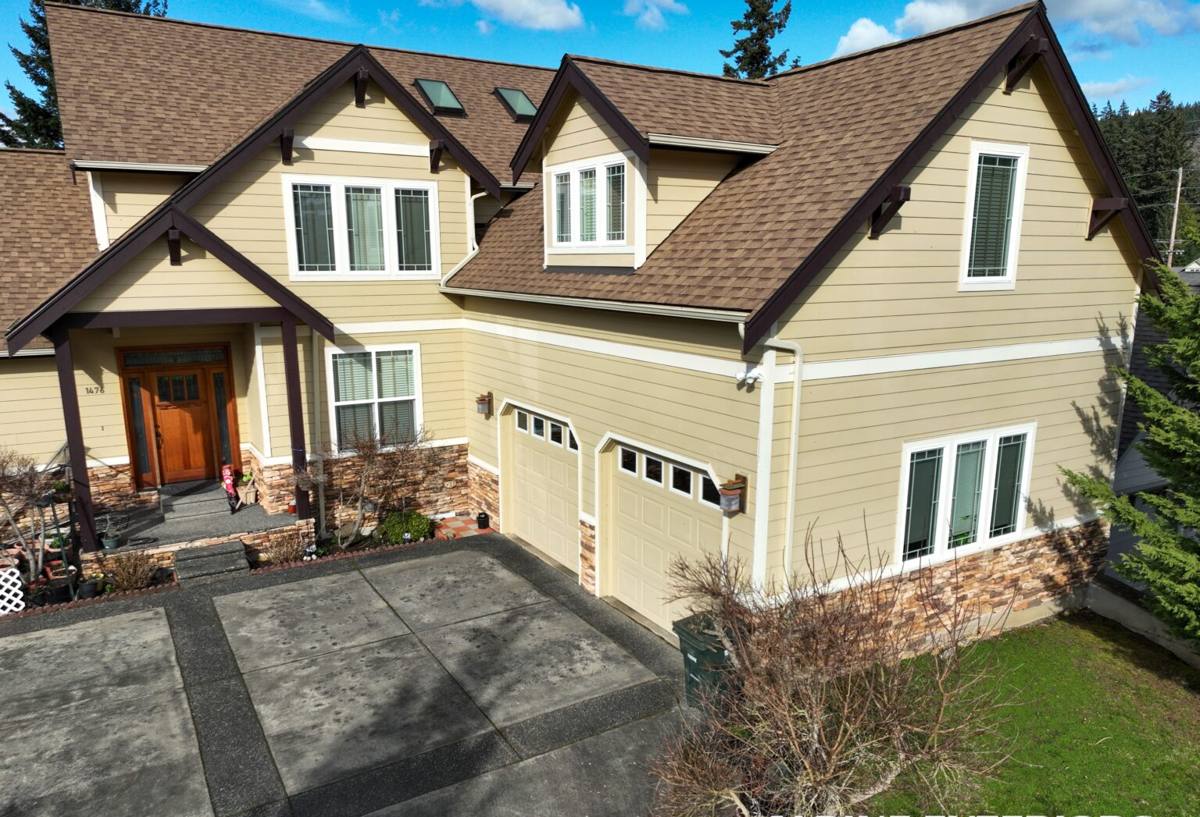
What the Local Climate Actually Does to Siding
Salt Air and Slow Corrosion
Bellingham's proximity to Puget Sound means airborne salt is a real factor, even a few miles inland in Cordata. Salt-laden moisture accelerates corrosion on fasteners, flashing, and any exposed metal trim. It also breaks down cheaper paint films faster than a dry-climate coating job ever would, which is why factory-applied, baked-on finishes hold up so much better here than field paint.
Driving Rain, Not Just Rain
Whatcom County storms frequently come with real wind behind them, pushing rain sideways into wall assemblies instead of letting it run straight down. That means lap joints, butt seams, and penetrations around windows and vents take on water pressure that a calm-climate installation wouldn't have to withstand. Every seam and fastener pattern on a Cordata home needs to assume wind-driven moisture, not just gravity.
The Long Moss Season
Shaded lots, tree canopy, and short winter daylight hours add up to siding that can stay damp for days at a stretch on the north and east elevations. Given a food source and enough moisture, moss and algae colonize slower-drying siding surfaces and start working into any seam or scratch in the coating. Left unaddressed, that turns into staining, then softening of the substrate underneath.
Why Fiber Cement Is the Right Answer Here
Fiber cement is dimensionally stable — it doesn't expand and contract with moisture the way wood-based products do, and it doesn't rely on a plastic shell to keep water out the way vinyl does. It's also non-combustible, which matters increasingly in Washington as wildfire smoke seasons stretch longer, even on the wet side of the state. For a neighborhood like Cordata, where damp shade and driving rain are the dominant stresses rather than heat or drought, fiber cement's resistance to moisture-driven warping and rot is the single biggest reason we standardized on it.
We specifically use James Hardie's climate-engineered product lines rather than a generic fiber cement panel. Hardie manufactures different formulations for different climate zones — colder, freeze-thaw-heavy regions get one engineering profile, and milder, high-moisture coastal regions like ours get a formulation tuned for consistent dampness and algae exposure rather than hard freezes. That zone-specific engineering, paired with a factory-baked ColorPlus finish, is what actually holds a color and a seal through a Bellingham winter instead of just a Bellingham summer.
What We Don't Install, and Why
- Vinyl siding: lightweight and inexpensive, but it flexes, can crack in cold snaps, and relies entirely on an intact plastic shell — any gap or warp becomes a direct path for wind-driven rain.
- LP SmartSide and other engineered wood products: reasonable performers when installed and maintained perfectly, but wood-based cores are more vulnerable to the sustained moisture exposure common in shaded, tree-covered Cordata lots.
- Primed spruce or cedar: beautiful when new, but field-applied coatings and natural wood substrates need more frequent recoating and sealing to keep pace with our rain and moss cycle than most homeowners want to commit to.
None of these are junk products — they're reasonable choices in the right climate and with the right maintenance commitment. We simply don't think that commitment matches what most Cordata homeowners actually want from their siding, which is why we put James Hardie on the homes we work on instead.
What a Correct Fiber Cement Job Looks Like
Fiber cement siding is only as good as its installation. The material itself resists moisture well, but a poorly executed install can still let water behind the siding, where it will sit against sheathing and framing for months at a time in our climate. A correct job includes:
- A weather-resistive barrier installed and lapped correctly before a single piece of siding goes up
- Rainscreen or proper furring where the wall assembly calls for a drainage gap, so water that does get behind the cladding can actually drain and dry
- Correct fastener type, spacing, and penetration depth per Hardie's published installation instructions — this is also what keeps the manufacturer warranty valid
- Properly flashed and caulked window and door penetrations, since these are the most common failure points in wind-driven rain
- Minimum clearance from grade, decks, and roof lines so the bottom edge of the siding isn't sitting in standing moisture
- Factory-mitered or properly sealed corners and butt joints, rather than caulk used as a substitute for correct lap technique
Skipping any one of these steps doesn't usually cause an obvious problem in year one. It shows up in year four or five, as a soft spot, a stain, or a warranty claim that gets denied because the installation didn't follow spec.
Our Process on a Cordata Job
1. On-Site Assessment
We walk the exterior with you, looking specifically at the elevations that take the most weather — usually the north and west sides on shaded Cordata lots — and check for existing moisture damage, trim condition, and drainage issues before we ever talk product selection.
2. Scope and Product Selection
We go over the applicable James Hardie plank profile, ColorPlus color options, and trim system, and explain how the choice affects both appearance and long-term maintenance for your specific exposure.
3. Tear-Off and Sheathing Check
Old siding comes off and we inspect the sheathing underneath. Any water damage found at this stage gets repaired before new weather barrier and siding go on — covering up a wet sheathing problem is how small issues become expensive ones.
4. Weather Barrier and Drainage Plane
This is the step most likely to get rushed by less careful crews and the one that matters most in our climate. We install and lap the weather-resistive barrier correctly and set up the drainage gap the wall assembly needs.
5. Installation to Manufacturer Spec
Siding, trim, and flashing go on following James Hardie's fastening and clearance requirements, which is also what keeps the manufacturer's warranty intact.
6. Final Walkthrough
We walk the finished job with you, check caulking and trim lines, and go over basic care so the finish holds up the way it's supposed to.
Cost Factors on a Cordata Fiber Cement Project
| Factor | Why It Moves the Price |
|---|---|
| Existing sheathing condition | Hidden moisture damage found during tear-off requires repair before new siding can go on |
| Home height and roofline complexity | Multi-story walls, steep gables, and tight eaves take more labor and staging |
| Trim and detail level | Corner boards, window trim, and accent details add material and install time |
| Access and lot layout | Tree-lined and sloped Cordata lots can limit staging space and add labor time |
| Plank profile and color | Wider reveals, specialty textures, and certain ColorPlus colors carry different material costs |
| Drainage plane requirements | Adding or upgrading a rainscreen gap on an older wall assembly adds material and labor |
We give you an itemized, written estimate after the on-site assessment rather than a ballpark number over the phone, since the sheathing condition and access on your specific lot drive most of the real cost variation.
Why a Crew That Already Works Cordata Matters
Siding installation isn't just about following a spec sheet — it's about knowing how that spec sheet needs to adapt to a specific site. A crew that regularly works Cordata and the surrounding north Bellingham neighborhoods already knows which elevations on a typical lot here stay shaded longest, where drainage tends to be a problem on this soil and slope, and what Whatcom County's permitting and inspection process actually expects on a re-side. That local repetition shows up in fewer surprises mid-job and fewer callbacks after.
It also matters for warranty support. James Hardie's product warranty and workmanship coverage are only as good as the installer standing behind them. A crew with an established local presence is one you can actually reach five or ten years from now if a question comes up — not a name that did one job in the area and moved on.
Maintaining Fiber Cement Siding in a Wet, Shaded Climate
- Rinse siding with a garden hose once or twice a year, focusing on shaded north and east walls where moss and algae take hold first
- Keep gutters clear so overflow doesn't run directly down the siding face
- Trim back vegetation and tree branches that keep any wall in constant shade or hold moisture against the surface
- Re-caulk joints and penetrations if you notice cracking or gaps, rather than waiting for a leak to show up inside
- Inspect the bottom edge of the siding near grade and decks periodically for splashback staining or standing moisture
- Address any soft spots, staining, or paint failure early — small repairs are far cheaper than replacing damaged sections later
Get a Local, No-Pressure Estimate
If your Cordata home's siding is showing moss staining, soft spots, or peeling paint, or you're planning ahead for a re-side, we're happy to take a look and walk you through what correct fiber cement installation looks like for your specific lot and exposure. Use the form below to request a free estimate — no pressure, just a straight assessment.