 Bellingham Window
 Cordata sits in north Bellingham, close enough to the I-5 corridor and Bellingham Bay that its homes take the same weather punishment as the rest of Whatcom County: salt-tinged marine air, long stretches of driving rain, and a moss season that can run most of the year on shaded, north-facing walls. A lot of Cordata's housing stock went up during periods of steady growth in the area, which means you'll find everything from older single-story homes to newer subdivisions with tighter, more modern building envelopes — and both types have siding needs that are easy to underestimate if you're not paying attention to how this climate actually behaves.
We install James Hardie fiber cement siding exclusively, and this page is specifically about what that looks like for a Cordata property: what the regional climate demands from a siding system, what a correct installation actually involves, how our process works from first visit to final walkthrough, and why hiring a crew that already works this specific area is worth more than it might seem.
What Cordata's Climate Actually Does to Siding
North Bellingham isn't right on the water the way some Whatcom County neighborhoods are, but it's close enough that salt-laden marine air still reaches Cordata regularly, especially on days with onshore wind. Combine that with the region's long wet season — months of low-intensity, driving rain rather than short heavy downpours — and you get a climate that keeps exterior wall assemblies damp for extended periods rather than giving them a quick soak and a fast dry-out. That's a very different stress pattern than siding installed in a drier climate has to handle.
Moss and algae growth is the visible symptom most homeowners notice first, usually on north- and west-facing walls that get less direct sun and more standing moisture. But moss is really just an indicator of a bigger issue: any siding material or installation detail that traps moisture instead of shedding it is going to show problems in this climate faster than it would almost anywhere else in the country.
Why This Matters More in Cordata's Newer Construction
Homes built in Cordata's more recent development waves tend to be built tighter than older housing stock, with more insulation and less incidental air leakage. That's good for energy bills, but it also means less passive drying happens through the wall assembly itself. When siding is installed without a proper drainage plane or with sealant used as a substitute for correct flashing, a tight modern wall can hold moisture against the sheathing far longer than an older, leakier wall would — which is exactly backwards from what most homeowners assume.
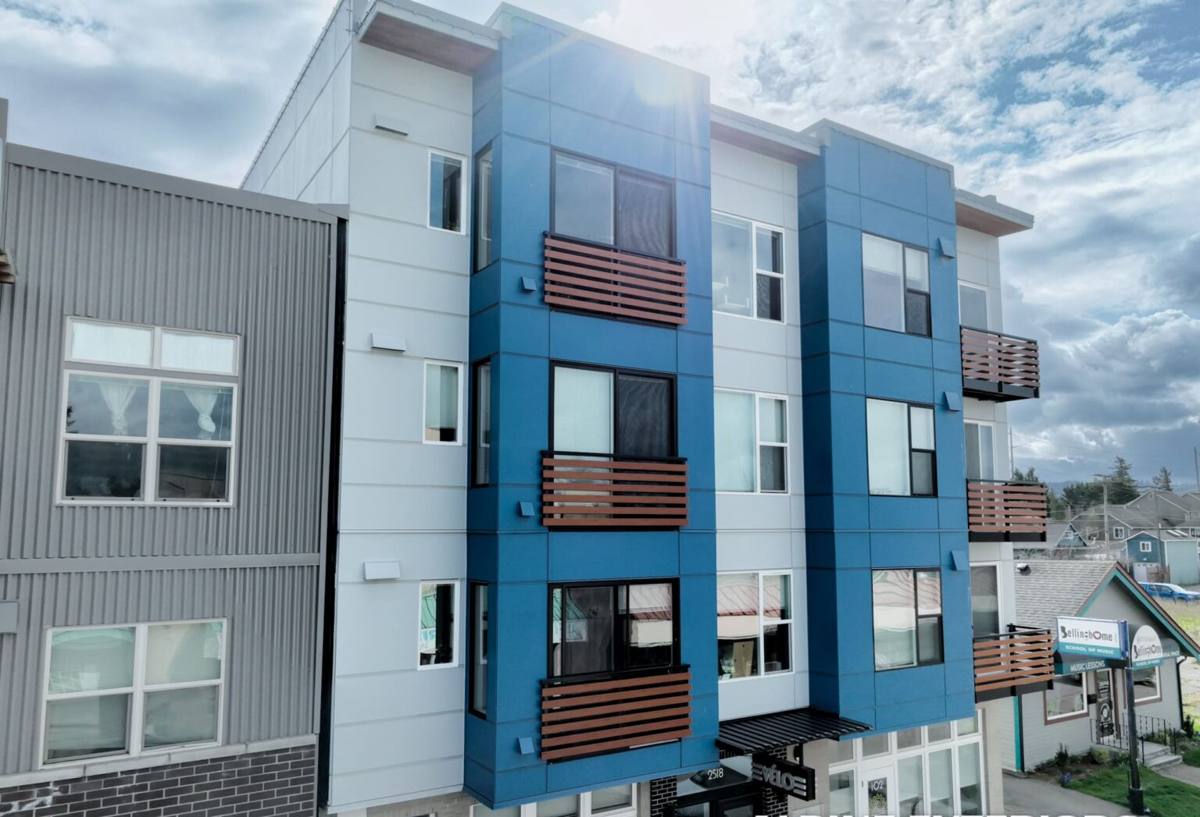
Why James Hardie Fits This Climate
We standardized on James Hardie fiber cement, and not any of the other siding materials on the market, because of how it performs specifically in conditions like Whatcom County's. Hardie's HZ5 product line is engineered for climates with sustained moisture exposure, and the material itself is dimensionally stable — it doesn't swell, warp, or rot the way wood-based products can when they stay damp for long stretches. It's also non-combustible, which matters as wildfire risk in the broader Pacific Northwest has become a bigger part of insurance and building conversations in recent years.
Just as important as the raw material is the factory-applied ColorPlus finish available on most Hardie products. A factory-cured finish resists the fading, chipping, and moisture intrusion at the surface level that field-applied paint struggles with in a climate that rarely gives a painter a long enough dry window to do the job right. On a Cordata home, that finish is doing real work every wet month of the year, not just adding curb appeal.
What a Correct Installation Actually Involves
James Hardie siding is only as good as the installation behind it. The board itself is engineered to handle this climate, but a rushed or shortcut installation can undermine all of that engineering by giving moisture a way behind the siding instead of down and off of it. The table below lays out the difference between what a correct install looks like and where we see shortcuts commonly taken.
| Installation Element | Correct Approach | Common Shortcut We See |
|---|---|---|
| Weather-resistive barrier | Continuous, properly lapped house wrap installed before any siding goes up | Reused or damaged wrap, or gaps left around penetrations |
| Rain screen / drainage gap | Furring strips or a drainage mat creating a gap for water to drain and air to circulate behind the siding | Siding fastened flat against the wrap with no drainage path |
| Flashing at windows and doors | Proper head, jamb, and sill flashing integrated with the barrier before trim and siding go on | Caulk used as a substitute for flashing |
| Fastener placement | Hardie's specified nailing pattern and fastener type, following manufacturer spec for the exposure zone | Off-spec fasteners or spacing that voids warranty coverage |
| Butt joints and seams | Sealed or flashed per manufacturer detail, staggered for water management | Unsealed or aligned joints that funnel water into the wall |
| Cut-edge sealing | Factory or field-applied sealant on any field-cut board edge | Bare cut edges left exposed to moisture |
Every one of these details is invisible once the wall is finished. That's exactly why they matter — nobody catches a bad flashing detail by looking at the house, they catch it two or three years later when water damage shows up on the inside of an exterior wall.
Signs a Cordata Home's Siding Needs Attention
Because the failure modes in this climate tend to be slow and hidden, it helps to know what to watch for before a small problem becomes a wall-cavity repair:
- Persistent moss or dark streaking on north- or west-facing walls that returns quickly after cleaning
- Soft or spongy spots when pressing on siding near the bottom of walls or below windows
- Visible gaps, cracked caulk, or separated joints, especially around window and door trim
- Paint or finish that's peeling, bubbling, or chalking unevenly across a wall
- Interior signs like musty smells, discoloration, or peeling paint on the inside face of an exterior wall
- Siding that feels warped, bowed, or no longer flat against the wall in sections
Any one of these on its own isn't necessarily an emergency, but they're worth a real inspection rather than a guess, since the underlying cause is often something you can't see from the outside.
Our Process for a Cordata Project
We approach every Cordata job the same structured way, because skipping steps is exactly how the shortcuts in the table above end up on a wall.
Assessment and Scope
We start with a walk of the exterior, looking at existing siding condition, trim, window flashing, and any signs of past moisture intrusion. On a re-side, this tells us whether we're dealing with sound sheathing underneath or whether there's rot that needs to be addressed before new siding goes on — covering damaged sheathing with new siding just hides the problem for a few more years.
Product and Detail Plan
We spec the right Hardie product line, texture, and color for the home, and we plan out flashing and drainage details specific to that wall's exposure — a south-facing wall with more sun and a north-facing wall with near-constant shade and moisture don't need identical treatment, even on the same house.
Installation to Manufacturer Spec
Weather-resistive barrier, drainage plane, flashing, and Hardie's fastening specifications are followed as a system, not as optional add-ons. This is where the manufacturer's engineered warranty coverage actually comes from — deviating from spec is one of the more common ways a warranty ends up compromised.
Final Walkthrough
We walk the finished project with the homeowner, checking joints, trim lines, and finish quality, and go over basic care so the siding performs the way it's designed to for decades, not just for the first few dry summers.
Why a Crew That Already Works Cordata Matters
A siding crew that works this area regularly already knows how north Bellingham's mix of older and newer construction tends to be built, where moisture problems typically show up first on a given orientation, and what the local building department expects for permitting and inspection. That's not a small thing — a crew unfamiliar with Whatcom County conditions can install siding perfectly well by the book for a drier region and still leave a Cordata home under-protected against a climate that behaves differently than most of the country.
There's also a practical side to it: a local crew can respond quickly if something needs a look after the fact, and has a reputation in the community that depends on the work holding up, not just looking good at handoff.
What Affects the Cost of a Cordata Hardie Project
Every home is different, but a few factors consistently move the price on a James Hardie project in this area more than homeowners expect:
| Factor | Why It Matters |
|---|---|
| Existing sheathing condition | Rot or moisture damage found during tear-off adds repair scope before new siding can go on |
| Product line and texture | HardiePlank lap siding, HardiePanel, and HardieShingle carry different material and labor costs |
| Wall complexity | Dormers, multiple gables, and lots of trim and window openings add labor time regardless of square footage |
| Drainage plane upgrades | Adding a proper rain screen where none existed is additional work but pays off in this climate |
| Access and site conditions | Tight lots, slopes, or limited staging area affect how efficiently a crew can work |
Caring for James Hardie Siding After Installation
Hardie siding is low-maintenance compared to wood, but "low-maintenance" doesn't mean "no maintenance" in a climate like this one. A gentle rinse once or twice a year keeps moss and organic buildup from taking hold, especially on shaded walls. It's worth a periodic visual check of caulk lines and trim joints, since sealant is the one part of the system that wears out on a normal schedule and is easy to touch up before it becomes a moisture path. Keeping gutters clear and vegetation trimmed back from the walls also goes a long way in a neighborhood with as much tree cover as Cordata has.
If you're weighing a re-side or planning new construction in Cordata and want a straight assessment of what your home actually needs, we're happy to take a look and put together a free, no-pressure estimate.