 Bellingham Window
 Siding Installation in Cordata: What This Neighborhood Is Up Against
Cordata, in north Bellingham, is a mix of newer subdivisions built up over the last few decades and older homes that predate them, which means siding on this side of town spans a wide range of ages and installation quality. Even though Cordata sits a few miles back from the shoreline rather than right on Bellingham Bay, it's still squarely inside Whatcom County's marine climate — the same salt-tinged air, wind-driven rain, and long moss season that affect homes closer to the water reach Cordata too, just with slightly less intensity than a waterfront lot gets. That difference in intensity doesn't change what a siding installation needs to get right; it just means the consequences of a shortcut take a little longer to show up.
We install James Hardie fiber cement siding exclusively. We don't offer LP SmartSide, vinyl, Cemplank, Allura, primed spruce, or cedar. That's a professional standard we hold across every job in Whatcom County, not a Cordata-specific rule, but it matters here for the same reason it matters anywhere in this climate: siding is the thing standing between your house and a lot of moisture, most of the year, for decades.
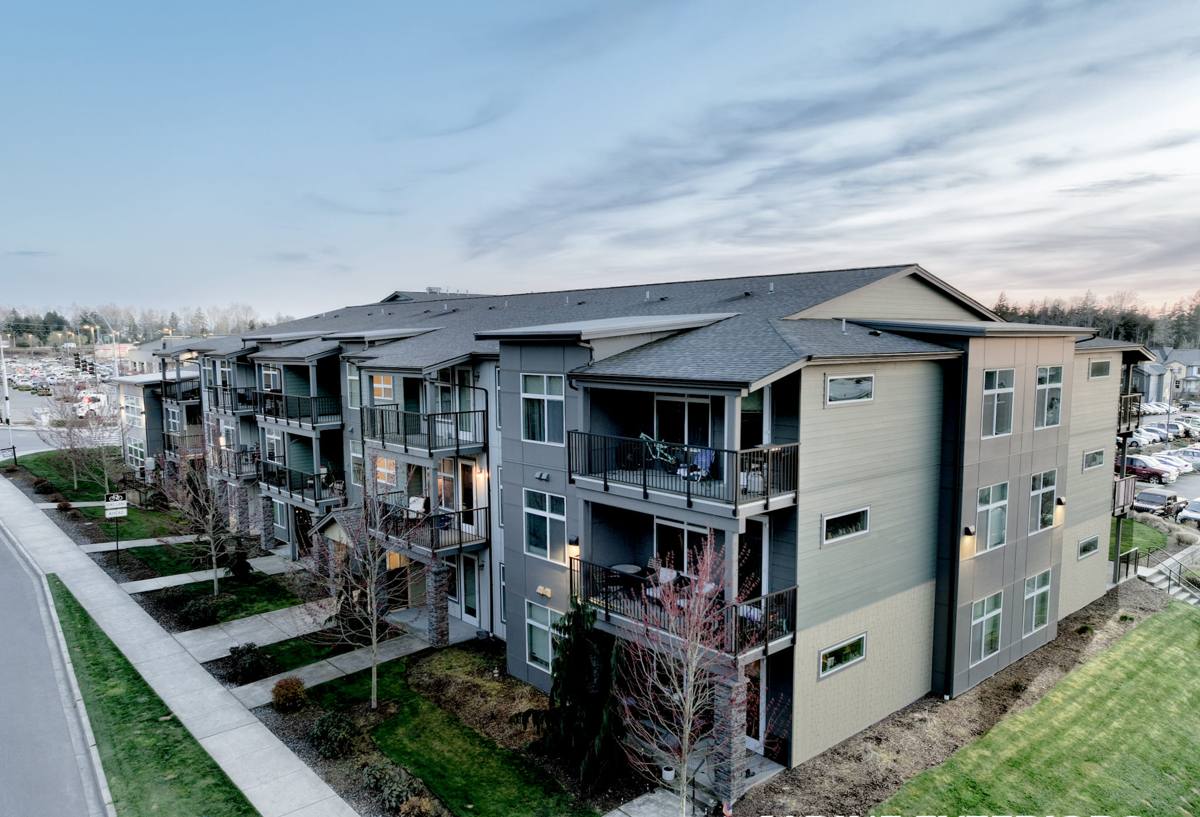
What Bellingham's Climate Asks of Cordata's Siding
Driving Rain That Doesn't Fall Straight Down
Storm systems coming off the water push rain sideways more often than they let it fall straight down, and wind-driven rain finds seams, laps, and fastener holes that a calm, dry climate would never test. Cordata's slightly inland position takes some edge off the wind compared to lots right on the bay, but the rain itself is the same rain, and a wall assembly that isn't built to shed it sideways will eventually let it in.
Salt Air That Doesn't Stop at the Shoreline
Salt-laden air off Bellingham Bay and the Salish Sea travels well past the waterfront, and it settles on exposed metal, fasteners, and lower-quality finishes throughout the county, Cordata included. It's a slower, quieter process than driving rain — corrosion and finish breakdown build gradually rather than showing up after one storm — which is exactly why it's easy to underestimate until fasteners or trim start showing rust years into a home's life.
A Moss Season That Runs Most of the Year
Mild, wet weather gives moss and mildew a long runway in this part of Washington, and shaded or north-facing walls in Cordata's tree-lined subdivisions hold moisture longer than open, sun-exposed ones. Any siding material with surface porosity becomes a growth surface over time in these conditions, and once moss establishes itself at a seam or fastener line, it holds moisture right against the wall instead of letting it dry.
Why We Install Only James Hardie Fiber Cement
We didn't arrive at a single-product standard casually. It came from watching how different siding materials actually perform, and fail, in a climate like this one.
- Non-combustible core: Fiber cement doesn't feed a fire the way wood-based siding can, which matters for both safety and insurance considerations.
- Factory-applied ColorPlus finish: The finish is baked on under controlled conditions rather than brushed on at the job site, so it holds color and resists moisture longer than a field-painted surface.
- Climate-engineered HZ product lines: Hardie's HZ5 formulation is built specifically for regions with sustained moisture and freeze-thaw cycling, which describes Whatcom County well.
- Dimensional stability: Fiber cement doesn't swell, cup, or warp the way engineered wood or natural wood siding can after repeated wet-weather exposure.
- Strong transferable warranty: Hardie backs the product with one of the stronger warranty structures in the industry, as long as installation follows their spec.
The products we don't install aren't bad products in the wrong hands. LP SmartSide, vinyl, Cemplank, Allura, primed spruce, and cedar all have a place in the market and homeowners who are satisfied with them. We simply made a professional call that in a climate this consistently wet, standing behind one system we trust completely serves our customers better than offering a cheaper option that quietly shifts maintenance risk onto them a few years down the line.
What a Correct Siding Installation Actually Involves
The finished look of a siding job is the easy part to judge from the curb. What actually determines how long it lasts happens underneath, before the first board goes up and at every seam after that:
- Full assessment of the substrate once old siding comes off, catching rot or hidden moisture damage before it gets buried under new material
- House wrap or weather-resistive barrier installed and properly lapped, top over bottom, so water is always directed outward and down
- A drainage gap or rainscreen behind the siding so any moisture that does get past the surface can dry out instead of sitting against the sheathing
- Fasteners that are corrosion-resistant, correctly sized, and placed at the manufacturer's specified spacing rather than "enough to hold it up"
- Flashing properly lapped and integrated at every window, door, corner, and penetration, where most real-world leaks actually start
- Factory-cured ColorPlus finish preserved by cutting boards face-down and priming any field-cut edges before they go on the wall
Skip any one of these and the siding can still look fine on install day and for a season or two after. The problems that come from skipping them — soft spots, staining at seams, paint or finish failure around trim — take a few wet seasons to surface, which is exactly why they're easy for a corner-cutting install to get away with until the homeowner is the one living with it.
Comparing Siding Materials for a Cordata Home
| Material | Moisture Behavior | Maintenance in This Climate | Realistic Lifespan |
|---|---|---|---|
| James Hardie fiber cement | Dimensionally stable; doesn't swell or absorb water at the core | Low; factory finish resists moss and fading | 30+ years with proper installation |
| LP SmartSide (engineered wood) | More sensitive to moisture at cut edges and fastener holes | Moderate; edge sealing needs ongoing upkeep | 15-25 years, climate-dependent |
| Vinyl | Doesn't absorb water, but can warp or gap with temperature swings; seams are a weak point | Low, but hidden moisture behind panels is hard to catch | 20-30 years, variable |
| Cedar | Absorbs moisture readily without regular sealing or repainting | High; recurring sealing or repainting cycle | 15-25 years with consistent upkeep |
The pattern that matters most for a wet climate like this one is what happens at the material's edges and seams, not just its flat surface. Fiber cement's stability there is the main reason it holds up longer in Whatcom County conditions than wood-based or vinyl alternatives, even when all of them start out looking similar on day one.
Our Installation Process for Cordata Homeowners
Walkthrough and Assessment
We start by walking the specific home — which walls face the weather most directly, which stay shaded and slow to dry under tree cover common in Cordata's residential streets, and whether there's any sign the existing wall assembly already has moisture problems that need addressing before new siding goes on.
Tear-Off and Substrate Check
Once old siding comes off, we check the sheathing and framing underneath before anything new goes up. New siding installed over a substrate with hidden rot or inadequate drainage just buries the same problem under fresh material, which is the opposite of what a siding replacement is supposed to fix.
Installation to Manufacturer Spec
Every fastener, gap, and flashing lap follows James Hardie's published installation requirements for this climate zone, not a generic national standard. That's what keeps the manufacturer's warranty intact and what keeps the wall performing the way it's supposed to for decades, not years.
Final Walkthrough
We walk the finished job with you, cover what little maintenance fiber cement actually needs, and make sure you know what a correctly installed wall looks like if you ever want to check it yourself down the road.
Cost Factors for Siding Installation in Cordata
| Factor | Why It Matters |
|---|---|
| Home size and wall complexity | More corners, dormers, and transitions mean more cuts and flashing details |
| Existing wall condition | Rot or moisture damage found during tear-off needs repair before new siding goes up |
| Tear-off vs. overlay | A full tear-off costs more upfront but avoids trapping moisture behind old material |
| Trim and window count | Each opening needs its own flashing and finish detail |
| Siding profile chosen | Lap, panel, and shingle-style profiles differ in material and labor requirements |
| Access and site conditions | Fencing, landscaping, or a steep lot can add labor time |
These are general drivers, not a quote. Two homes in Cordata with similar square footage can land at very different numbers once we're actually pulling old siding and can see what's underneath, which is why we walk the property before giving you a real figure.
Signs a Cordata Home May Need New Siding
- Moss or dark staining that returns quickly after cleaning, especially on shaded or north-facing walls
- Soft or spongy siding, particularly low on the wall or around window and door trim
- Paint or finish failure — peeling, chalking, or fading well ahead of what the product should deliver
- Visible gaps, warping, or cupping at siding seams
- Rising heating or cooling bills that track with drafts near exterior walls
- Rust staining around fasteners or trim
Any one of these on its own isn't necessarily an emergency, but a wall showing two or three of them together is usually further along than it looks from the ground.
Why Hire a Crew That Already Works Cordata
Siding installation rewards familiarity with a specific area's conditions in ways that aren't obvious from a spec sheet. A crew that's worked across Cordata and the rest of north Bellingham through multiple wet seasons already knows which orientations need extra flashing attention because of shade and tree cover, how much drainage clearance actually earns its keep in a climate this damp, and where a hurried install tends to cut corners that don't show up until years later. That judgment is the difference between siding that still looks and performs the same in fifteen years and siding that's showing seam staining or soft trim by year five.
If you're considering new siding for a home in Cordata, we're glad to walk the property, talk through what your specific walls need given their orientation and condition, and give you a straightforward, no-pressure estimate. There's a form below — reach out and we'll set up a time to take a look.