 Bellingham Window
 Deck Repair Built for the Puget Climate
Decks in the Puget area take a different kind of beating than decks inland. You're close enough to the water to deal with salt-laden air working on fasteners and finishes, you get the same driving, sideways rain that soaks the rest of Whatcom County all winter, and tree cover in a lot of yards means shaded, damp decking that never quite dries out between storms. Put those three things together and you get a specific pattern of deck problems: corroded hardware, soft framing, and a moss and algae layer that turns boards slick and starts eating into the wood underneath.
We repair decks in this area regularly, and the damage we find here tends to follow a pattern. This page covers what that pattern looks like, what an honest repair actually involves, and how we approach the work so it holds up through the next few wet seasons instead of just covering up a problem for a year or two.
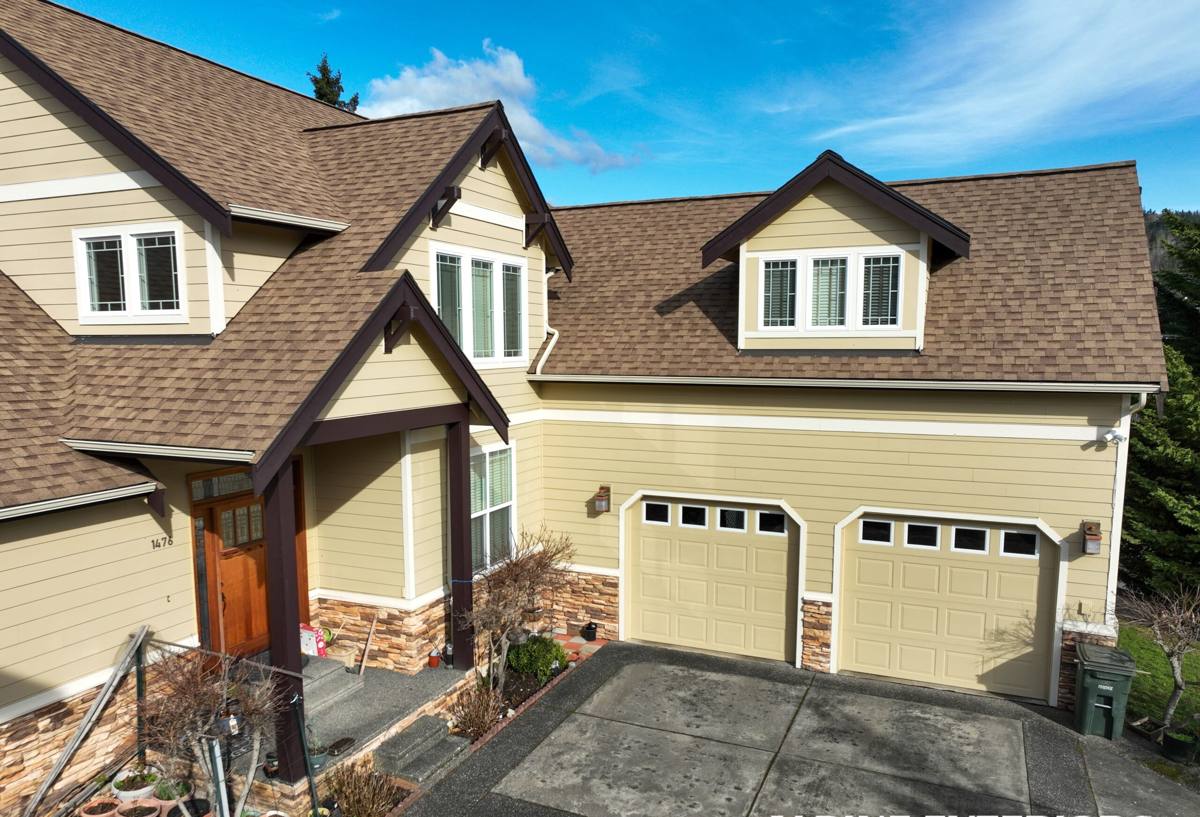
Why Puget-Area Decks Wear Differently
Salt Air and Metal Fatigue
Proximity to Puget Sound means the air carries a fine salt content that settles on exposed metal — nails, screws, joist hangers, post bases. Over time this accelerates corrosion, especially on older decks built before corrosion-resistant hardware was standard practice. A fastener that would last decades inland can weaken in a fraction of that time this close to the water.
Driving Rain and Standing Moisture
Bellingham's rain doesn't just fall straight down — winter storms push it sideways, driving water into joints, under flashing, and into end-grain cuts that were never sealed. Combined with our long wet season, wood assemblies in this area spend a lot of the year at or near saturation point, which is exactly the condition wood rot needs to take hold.
The Long Moss Season
Shaded decks, north-facing decks, and decks under fir or cedar canopy in and around Puget hold moisture longer than open, sun-exposed decks elsewhere in the region. Moss and algae don't just make boards slippery — their root structure holds water directly against the wood surface, which speeds up decay in exactly the spots where you'd least expect to look for it.
What We Actually Find on Puget Decks
Most service calls in this area fall into a handful of categories. Knowing which one you're dealing with matters, because the right fix is different for each.
- Ledger board rot — where the deck attaches to the house is the single most common failure point we see, especially on older decks without proper flashing between the ledger and the siding.
- Corroded fasteners and connectors — screws backing out, joist hangers rusted thin, post bases that have lost their structural integrity.
- Soft or spongy decking boards — usually from moss cover or standing water that never got the chance to shed properly.
- Post and footing movement — settling or rot at the base of support posts, sometimes made worse by poor drainage around the footing.
- Railing and guard post failure — a safety issue as much as a cosmetic one, often tied to the same moisture problems affecting the deck surface.
- Stair stringer deterioration — stairs see more direct rain exposure than the deck surface itself and often show damage first.
What a Correct Repair Actually Involves
A lot of deck "repairs" amount to swapping out the boards that look bad and calling it done. That approach leaves the actual cause of the damage in place, so the same problem shows up again in a season or two — often worse, because the underlying framing kept deteriorating the whole time.
We start every repair by getting underneath the visible surface. That means checking the ledger connection, probing joists and beams for soft spots with an awl rather than just looking at them, and checking post bases and footings for movement or rot. Surface boards get replaced where needed, but we're just as focused on what's holding those boards up.
Where We Look First
- Ledger-to-house connection and flashing condition
- Joist and beam integrity, especially near the ledger and at board ends
- Post base condition and footing drainage
- Fastener and connector corrosion throughout the structure
- Railing post attachment and guard stability
- Surface drainage — whether water is shedding off the deck or pooling on it
If we find rot or corrosion in the framing, we address that first. Replacing decking over compromised joists or a failing ledger connection is a cosmetic fix on a structural problem, and it's not something we're willing to do — it just moves the failure point down the road while giving the appearance that it's been solved.
Repair or Replace? What Actually Decides It
Homeowners in Puget often ask whether it makes more sense to repair what's there or replace the deck outright. The honest answer depends on where the damage is, not just how much of it there is.
| Factor | Favors Repair | Favors Replacement |
|---|---|---|
| Ledger board | Sound, properly flashed | Rotted or improperly flashed at the house connection |
| Framing (joists/beams) | Solid, isolated soft spots | Widespread soft or rotted framing members |
| Posts and footings | Stable, minor surface wear | Movement, rot, or undersized footings |
| Decking surface | Scattered damaged boards | Most boards cupped, splitting, or moss-saturated |
| Age of structure | Under 15 years, built to code | Older, outdated hardware or unpermitted framing |
| Hardware/fasteners | Corrosion-resistant, limited rust | Widespread rust on structural connectors |
In practice, a lot of Puget-area decks land somewhere in the middle — sound framing but a failing ledger connection, or good posts but decking that's had a decade of moss sitting on it. That's normal, and it's exactly the kind of job a targeted repair is meant for.
Our Process
We keep the process straightforward because deck repair doesn't need to be complicated to be done right.
- On-site inspection. We check the deck from the ground up — framing, connections, posts, and surface — and probe suspect areas rather than relying on a visual pass alone.
- Honest scope and estimate. We tell you what we found, what needs to happen, and what it's likely to cost, including where the scope could grow once we open things up.
- Removal of compromised material. Rotted boards, corroded hardware, and any framing that's lost structural integrity comes out — not just what's visible from the top.
- Rebuild with corrosion-resistant materials. We use hardware and fasteners rated for the moisture and salt exposure this area sees, not standard interior-grade connectors.
- Flashing and drainage correction. Where the ledger or a post base was the source of the problem, we fix the water management issue, not just the wood it damaged.
- Final walkthrough. We go over what was done, what to expect going forward, and any maintenance steps that'll extend the life of the repair.
Materials and Hardware — Why It Matters Here
What goes into a Puget-area deck repair isn't the same as what you'd spec for a covered patio somewhere dry. We use hot-dip galvanized or stainless connectors and fasteners in areas exposed to salt air and standing moisture, and we're careful about how framing lumber is treated and sealed at cut ends, since untreated end-grain is one of the fastest paths for rot to start.
On decking material, we'll talk through wood versus composite honestly. Wood decking costs less up front and can look great, but it needs regular sealing and cleaning to hold up against moss and rain in this climate. Composite costs more initially but sheds moisture differently and needs less maintenance — the trade-off is mainly about what you're willing to put into upkeep versus pay for up front. Neither is a wrong choice; it depends on your budget and how much deck maintenance you want to take on.
Maintenance That Actually Extends the Life of a Puget Deck
Repair work lasts a lot longer when it's paired with a basic seasonal maintenance routine. Given the moss season and rain exposure here, that routine matters more than it would in a drier climate.
- Clear moss and debris off the deck surface and out of gaps between boards at least twice a year, more often under heavy tree cover
- Keep gutters and downspouts near the deck clear so water isn't being dumped directly onto or under it
- Check the ledger flashing area for gaps or damage once a year, ideally before the wet season starts
- Reseal or restain wood decking on the manufacturer's recommended schedule — don't wait until it visibly needs it
- Look at fastener heads and connectors periodically for early rust, especially anything close to ground level or the water side of the property
- Keep planters and anything else that traps moisture off the deck surface directly — use feet or risers to allow airflow underneath
Why Hire a Crew That Already Works in Puget
Deck repair done right requires knowing what to expect before you open anything up. A crew that already works decks in this specific area knows where ledger rot tends to hide, which hardware holds up against salt air and which doesn't, and how much moss buildup is normal wear versus a sign of deeper moisture problems. That local pattern-recognition means fewer surprises mid-job and a repair scope that's accurate from the start rather than growing in stages as more problems get discovered.
It also means using materials that are actually suited to this climate rather than whatever's standard elsewhere. A deck repaired with the wrong hardware or an unsealed connection might look fine for a season, but Bellingham's rain and Whatcom County's damp winters will find the weak point eventually. Getting it right the first time, with materials built for this specific environment, is what keeps you from paying for the same repair twice.
If you've got a deck in the Puget area showing soft spots, moss buildup, rust streaks around the hardware, or a ledger connection you're not sure about, we're happy to take a look. Reach out for a free, no-pressure estimate using the form below — we'll tell you honestly what we find and what it would take to fix it right.