 Bellingham Window
 Board & Batten in a Neighborhood Built on Character
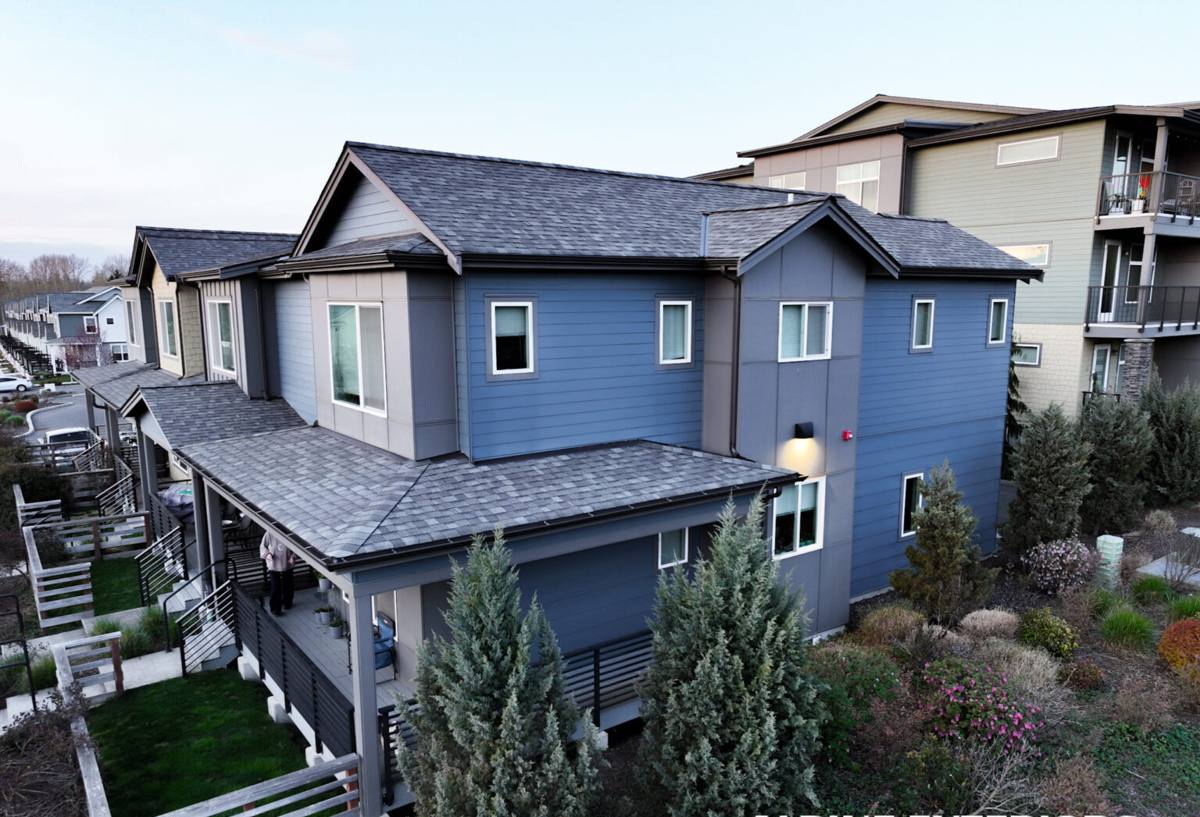
Edgemoor is one of the more distinctive pockets of Bellingham — wooded lots, a mix of older homes and newer builds, and a setting close enough to Bellingham Bay that the weather off the water shapes every exterior decision. Board and batten siding shows up a lot in this kind of neighborhood because it does something vinyl lap and flat panel products can't: it reads as intentional, architectural, and a little more custom than standard horizontal siding. Homeowners lean on it as an accent on gables and dormers, as a full-house treatment on craftsman and modern-farmhouse styles, or mixed with a second siding profile to break up a large elevation.
That visual role is exactly why the material and installation quality matter more here than on a plain elevation. Board and batten puts more seams, more vertical joints, and more exposed board edges into the wall than lap siding does. Get it right and it looks crisp for decades. Get it wrong — wrong material, wrong fastening, no drainage plane behind it — and it's often the first siding style on a house to show trouble, because every batten and every panel edge is a place water can find a way in.
What Edgemoor's Climate Actually Does to Siding
Edgemoor sits close to Bellingham Bay, and that proximity brings salt-laden air onshore more consistently than it reaches homes further inland in Whatcom County. Salt air accelerates corrosion on exposed fasteners and metal trim, and it speeds the breakdown of paint films and lower-grade composite products faster than a standard Pacific Northwest climate rating accounts for. Combine that with the driving rain that comes off winter storms — wind-driven, not just falling straight down — and you get moisture pushed sideways into every vertical seam a board and batten profile has.
Then there's moss. Bellingham's tree cover, humidity, and long wet season give moss and algae a real head start on any siding that stays damp, and board and batten's vertical battens create narrow, shaded channels that hold moisture longer than a flat wall does. On a lot with mature trees — common throughout Edgemoor — that shade only extends the moss season further into what would otherwise be a drying month.
None of this means board and batten is a bad choice for the area. It means the material and the installation details have to be matched to what this specific stretch of coastline actually does to a wall, not to a generic siding spec sheet.
The Three Things That Fail First
- Exposed or under-driven fasteners at batten strips, where salt air and standing moisture start corrosion early
- Board edges and butt joints that weren't factory-sealed or field-treated, letting water wick into the substrate
- Missing or inadequate rainscreen drainage, which traps the moisture that driving rain pushes behind the battens
Why the Material Itself Has to Be Right
Board and batten gets specified in a lot of different materials — vinyl, engineered wood, primed spruce, and fiber cement all offer a version of the look. In a marine climate like Edgemoor's, the material choice isn't cosmetic; it determines whether the siding is still doing its job in year fifteen.
| Material | How it handles salt air & driving rain | How it handles Bellingham's moss season |
|---|---|---|
| Vinyl board and batten | Doesn't corrode, but panels expand and contract with temperature swings, opening gaps at seams over time | Moss and algae grow directly on the surface; cleaning without damaging the finish is limited |
| Primed wood or engineered wood | Absorbs moisture at cut edges and joints; primed spruce needs disciplined repainting to stay ahead of driving rain | Trapped moisture under moss growth is the main driver of rot in wood-based sidings |
| James Hardie fiber cement | Non-combustible, dimensionally stable core resists warping; factory-sealed edges reduce water wicking at joints | Dense cement composition sheds moisture faster and holds up to periodic cleaning without damaging the finish |
This is why our crews install James Hardie exclusively. We don't carry vinyl, LP SmartSide, Cemplank, Allura, primed spruce, or cedar on our trucks. That's not a knock on every homeowner who has one of those products on their house — plenty are maintained well and hold up fine with attentive owners. It's that, given what Edgemoor's air and rain do to a wall over twenty years, we'd rather stand behind one system we trust completely than install several we'd have to caveat.
What Correct Installation Involves
Board and batten is less forgiving of shortcuts than standard lap siding, because every batten strip is a fastening point and every vertical joint is a potential water path. A correct install in this climate includes:
Drainage Plane First
A rainscreen gap behind the siding — not house wrap alone — gives any water that gets past the battens a way to drain and the wall a way to dry. On a coastal-influenced site like Edgemoor, skipping this is the single biggest predictor of moisture problems down the line.
Flashing at Every Transition
Window and door heads, roof-to-wall intersections, and the base of the wall all need proper flashing detail before the first board goes up. Board and batten's vertical lines make flashing errors more visible and more consequential, since water funnels straight down the batten channel to whatever's below it.
Fastening to Spec
James Hardie board and batten systems have specific fastener spacing, type, and embedment requirements. Under-driven or over-driven nails, or fasteners placed at the wrong stud spacing, are a common cause of early failure — and they're invisible from the ground once the job is finished, which is exactly why the crew's discipline during installation matters more than what the finished wall looks like on hand-off day.
Sealed Joints and Edges
Butt joints, corners, and any field-cut board edges need to be sealed per manufacturer spec before caulking and paint. This is the detail that most directly determines whether driving rain stays out of the wall assembly.
Our Process for an Edgemoor Board & Batten Project
- On-site assessment — we look at your home's exposure to prevailing wind and rain, tree cover and shade patterns that affect drying time, and the condition of the wall assembly underneath the existing siding.
- Scope and material plan — we spec the correct Hardie board and batten profile, reveal width, and HZ climate configuration for your elevation, and walk through color and finish options.
- Tear-off and wall prep — old siding comes off, sheathing is inspected for hidden moisture damage, and any repairs are made before anything new goes up.
- Drainage plane and flashing — rainscreen material and flashing go in at every penetration and transition before a single board is hung.
- Installation to manufacturer spec — fastening, spacing, and joint treatment follow James Hardie's published requirements, not shortcuts.
- Final inspection and walkthrough — we check seams, caulking, and trim details with you before we call the job done.
James Hardie's Board & Batten System
James Hardie's vertical siding panels are engineered as a matched system — panel, batten, and trim components designed to work together, with factory-applied ColorPlus finish that's baked on rather than field-painted. For a climate like Bellingham's, we typically spec the HZ5 configuration, which is engineered for wetter, harsher climate zones rather than a generic national spec. The ColorPlus finish carries a separate finish warranty from the product warranty, and both are transferable if you sell the home — a detail worth knowing if resale is ever part of your thinking on a project like this.
Because the panels are non-combustible fiber cement, they also don't carry the wildfire-related concerns that come up with some wood-based sidings, and they hold paint and color far longer than primed wood under the same rain exposure.
What Board & Batten Costs to Get Right
| Cost factor | Why it moves the price |
|---|---|
| Wall complexity | More gables, dormers, and trim transitions mean more flashing detail and cut boards |
| Existing wall condition | Rot or moisture damage found during tear-off adds repair scope before new siding goes on |
| Full-house vs. accent use | Board and batten as a full elevation costs more than using it as a gable or entry accent alongside another siding profile |
| Access and lot conditions | Tree cover, tight setbacks, and slope common on wooded Edgemoor lots can affect scaffolding and staging |
We give firm, itemized quotes after the on-site assessment rather than a phone estimate, because so much of the cost on a board and batten job depends on what the wall looks like once the old siding is off.
Why a Crew That Already Works Edgemoor Matters
A siding crew that works Bellingham's coastal neighborhoods regularly already knows how to sequence a job around driving rain windows, how to account for shaded, tree-covered lots when planning drying time between steps, and what Whatcom County's permitting and inspection process looks like for exterior work. That familiarity shows up less in what the finished siding looks like and more in whether the job was sequenced correctly — flashing installed in a dry window, drainage plane not rushed, fasteners driven to spec rather than to schedule.
What to Look for Before You Hire
- A written scope that specifies rainscreen/drainage plane, not just "new siding installed"
- A named James Hardie panel and HZ configuration, not a generic "fiber cement" line item
- Manufacturer-certified or manufacturer-trained installers for the specific product going on your house
- A clear answer on flashing details at windows, doors, and roof lines before work starts
- A transferable product and finish warranty explained in plain terms, not just referenced
If you're weighing board and batten for a home in Edgemoor, we're happy to walk your property, look at your exposure and existing wall condition, and give you a straight answer on what it would take to do the job right. Reach out below for a free, no-pressure estimate.