 Bellingham Window
 Why Birch Bay's Shoreline Climate Is Tough on Roofs
Birch Bay sits right on the water in Whatcom County, and that location is exactly what makes roofing here different from a roof job ten miles inland. Homes in this community deal with salt-laden air, wind-driven rain coming straight off the bay, and long stretches of gray, damp weather that never quite let a roof dry out. None of that is exotic information to us — it's the everyday reality we plan for on every new roof we install in this neighborhood.
Salt Air and Exposed Metal
Airborne salt accelerates corrosion on anything metal and unprotected — fasteners, flashing, vent boots, and drip edge. A roof built with standard-grade hardware in a shoreline zone can show rust streaks and early fastener failure well before it should. We spec corrosion-resistant fasteners and flashing metals for Birch Bay installs as a matter of course, not as an upgrade option.
Driving Rain and Wind-Driven Water Intrusion
Open exposure to the water means wind doesn't just push rain down onto a roof — it pushes it sideways and up under laps, eaves, and poorly sealed penetrations. A roof that would perform fine in a sheltered inland yard can leak at the same details in a wind-exposed Birch Bay lot. That changes how we handle underlayment coverage and flashing at every edge, valley, and penetration.
Moss, Shade, and Slow-Drying Roof Surfaces
Whatcom County's mature evergreen tree cover, combined with the extra humidity near the water, gives moss everything it needs: shade, moisture, and organic debris to root into. Moss doesn't just look bad — it holds water against the shingle surface and works its way under tabs, lifting them and creating a path for leaks. A new roof installed without moss in mind is a roof that will need moss treatment or early repair within a few years.
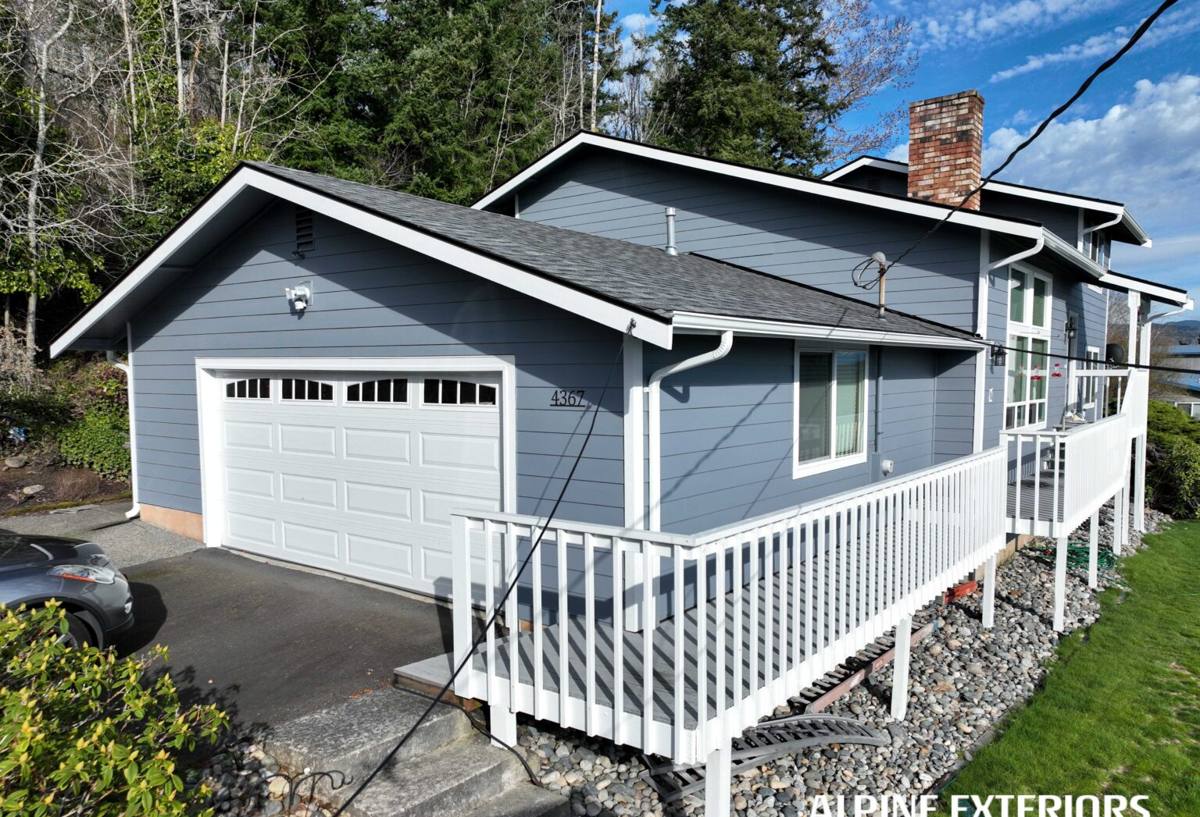
Signs Your Birch Bay Home Needs a New Roof, Not Just a Repair
Not every roof problem calls for full replacement, and we'll tell you honestly when a repair is the smarter move. But certain conditions mean patching is just delaying the inevitable and spending money that won't be credited toward a future replacement.
- Heavy granule loss showing up in gutters or at the base of downspouts
- Shingles that are curling, cracked, or have lost their seal in multiple areas, not just one spot
- Thick moss mats that have lifted shingle edges rather than just staining the surface
- Soft or spongy spots when walking the roof, which usually means deck damage underneath
- Daylight visible through the roof deck from inside the attic
- The same leak returning in the same place after more than one repair attempt
- A roof that's at or past the expected service life of its material, even if it looks okay from the ground
- Missing, rusted, or poorly sealed flashing around chimneys, skylights, or wall intersections
What a Correct New Roof Installation Actually Involves
"New roof" gets treated like a single product, but it's really a stack of individual decisions, each of which matters more in a coastal environment than in a dry inland one.
Full Tear-Off and Deck Inspection
We remove the existing roofing down to the deck rather than layering over it. That's the only way to find hidden rot, soft sheathing, or prior water damage — problems that are common on older Birch Bay homes where moss and moisture have been working on the roof for years without being visible from the ground. Any damaged decking gets replaced before anything new goes down.
Underlayment and Water-Resistant Barrier
Given the wind-driven rain this area sees, we don't treat underlayment as a formality. Self-adhered ice-and-water barrier goes at eaves, valleys, and around penetrations, with synthetic underlayment across the field for a roof that stays protected even if the surface layer is ever compromised by wind or debris.
Flashing Details That Get Skipped Elsewhere
Chimneys, skylights, sidewalls, and roof-to-wall transitions are where most leaks actually start, not in the open field of shingles. Step flashing, counterflashing, and proper kick-out flashing at wall intersections are non-negotiable details on our installs, and we use corrosion-resistant metal given the salt exposure near the water.
Attic Ventilation
Balanced intake and exhaust ventilation keeps the underside of the deck dry and helps prevent condensation, which matters in a humid coastal climate where moisture pressure comes from both outside and inside the home. Poor ventilation also shortens shingle life and can void manufacturer warranties.
Choosing the Right Roofing Material for Salt Air and Moss
There's no single "best" roofing material for Birch Bay — the right choice depends on your budget, your roof's exposure to shade and moisture, and how long you want to go before your next major roof decision. Here's how the common options stack up for this specific climate.
| Material | Moss Resistance | Salt Air Durability | Typical Lifespan | Relative Cost |
|---|---|---|---|---|
| Standard asphalt composition shingle | Moderate — improves with algae-resistant granules | Good with corrosion-resistant fasteners/flashing | 20-30 years | Lowest |
| Impact-rated / heavier composition shingle | Moderate to good | Good | 30+ years | Mid |
| Standing seam metal roofing | Excellent — moss can't root on a smooth vertical surface | Very good with proper coating and fastener spec | 40-60 years | Highest |
| Wood shake | Poor without diligent maintenance | Fair — salt and moisture accelerate decay | 15-25 years, shorter with moss | Mid to high |
We're honest with clients about wood shake in this environment: it can look great, but the same shade and moisture that grows moss also feeds rot in untreated wood, and the maintenance burden near the water is real. Most Birch Bay homeowners land on algae-resistant composition shingle for value or standing seam metal when they want the lowest long-term maintenance and are willing to pay more up front.
Our New Roof Installation Process
- On-site inspection and honest assessment of whether you need replacement or repair
- Written estimate covering material options, scope, and a realistic timeline
- Permitting handled on your behalf, per Whatcom County requirements
- Property protection — tarps and staging to protect landscaping, siding, and windows during tear-off
- Full tear-off to the deck, with any damaged sheathing identified and replaced
- Ice-and-water barrier, underlayment, and flashing installed at all critical points
- New roofing material installed to manufacturer specifications
- Ventilation checked and corrected if intake or exhaust is inadequate
- Full site cleanup, including a magnetic sweep for stray nails
- Final walkthrough with you before we consider the job done
Built-In Moss and Moisture Prevention
The best moss defense is designed into the roof at installation, not applied after the fact. We install zinc or copper strips near the ridge on shingle roofs where moss pressure is high — rain washing over these metals releases trace amounts that inhibit moss growth on the surface below. Proper attic ventilation keeps the underside of the deck from adding its own moisture to the equation. We'll also give you straightforward advice on tree trimming and gutter maintenance, since shade and clogged gutters are two of the biggest contributors to moss and slow-drying roofs in this area — that part is on the homeowner, but it makes a real difference.
Why a Birch Bay-Experienced Crew Makes a Difference
A roofing crew that mostly works drier, inland jobs can install a technically correct roof by the book and still end up with a client dealing with moss in three years or a leak at a wall flashing after the first big wind-driven storm. Working regularly in Birch Bay and along the rest of the Whatcom County coastline means we've seen which details fail first out here, which hardware holds up, and which shortcuts that pass fine inland don't hold up a few blocks from the water. That experience shows up in the small decisions — fastener choice, flashing metal, ventilation balance — that you won't see on a spec sheet but that determine whether your roof is still performing well in year twenty.
Cost Factors and Timeline
Every roof is priced on its own specifics, but the main cost drivers are consistent: the size and pitch of the roof, how many layers of old roofing have to come off, the material you choose, how much of the decking needs replacing, and whether flashing or ventilation upgrades are needed. A straightforward composition shingle replacement on an average-size home tends to fall on the lower end of the range; steep pitches, complex rooflines, or a switch to metal roofing push costs up. Full roof replacements for homes in this area commonly run from the mid-thousands into the higher end of five figures, depending on those factors — we'll give you an exact number in writing after we've actually looked at your roof, not a guess over the phone.
Most single-family home tear-off and installs take one to three days of active work once we start, though Whatcom County's rain pattern means we build in some flexibility around weather delays, especially outside the drier summer months.
If your roof is showing its age, has moss taking hold, or you just want an honest opinion on repair versus replacement, we're glad to take a look. Fill out the form below for a free, no-pressure estimate on your Birch Bay home.