 Bellingham Window
 Fairhaven's Climate Is Hard on Siding — Here's Why That Matters
Fairhaven sits close to Bellingham Bay, which means homes here take on a combination most siding was never built to handle: salt-laden air off the water, wind-driven rain that hits walls sideways instead of straight down, and a moss season that can stretch from early fall through late spring. Any one of these on its own is manageable. Together, over years, they find every weak point in a siding system — open seams, unsealed fastener heads, low-quality paint film, wood that never fully dries between storms.
This is a local service page for one job: fiber cement siding installation for Fairhaven homes. Not a general overview of siding options, not a citywide pitch — what this specific neighborhood's exposure demands, what a correct installation looks like here, and why the crew doing the work matters as much as the material itself.
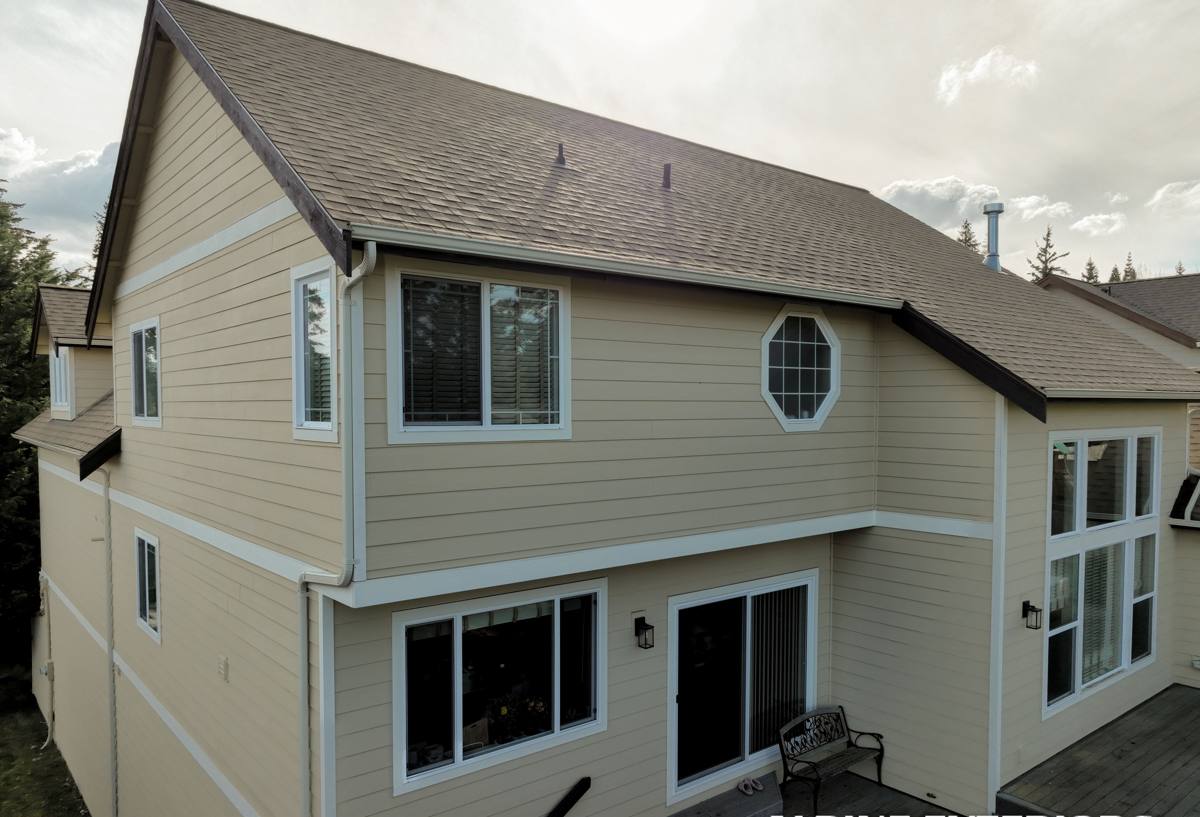
What Bellingham Bay Exposure Actually Does to a House
Salt Air and Metal Fasteners
Homes closer to the water deal with airborne salt that accelerates corrosion on anything metal — nail heads, flashing, trim fasteners. Once a fastener starts to corrode, it stains the siding around it and eventually loses holding power. Fiber cement itself doesn't corrode, but the installation details around it — nails, flashing, screws — need to be rated for the exposure or they become the failure point instead.
Driving Rain and Wall Assemblies
Whatcom County storms coming off the Salish Sea often carry enough wind to push rain sideways into wall assemblies rather than letting it run straight down. A siding system that relies purely on caulk and face-sealing to keep water out will eventually fail in this kind of weather. What holds up is a system built to shed water at every lap and manage the water that does get behind the cladding — which is a installation-detail issue as much as a material one.
Moss, Shade, and Moisture Retention
Mature trees and marine-layer humidity mean many Fairhaven properties stay damp longer than homes further inland. Moss and algae need that sustained moisture to establish, and once they take hold on a wall, they hold water against the surface even longer, creating a cycle that's hard to break without addressing the underlying material and drainage, not just cleaning the surface periodically.
Why We Only Install James Hardie Fiber Cement
We don't install vinyl, LP SmartSide, primed wood, cedar, or other fiber cement brands. That's a deliberate standard, not a sales pitch. Fiber cement in general resists moisture and pests far better than wood-based siding, and Hardie specifically engineers its product lines by climate zone — the HZ5 line used in this region accounts for the freeze-thaw cycles and sustained moisture the Pacific Northwest sees. It's non-combustible, which matters for insurance and wildfire-adjacent building codes, and it holds a factory-applied ColorPlus finish that's baked on under controlled conditions rather than field-painted, which is a meaningful difference in a climate where paint film failure is common.
We're not going to tell you other products are junk — LP SmartSide has real advantages in weight and workability, and vinyl has its place on a budget. But we've made a professional decision to build our installation expertise, warranty backing, and crew training around one system so we can do it correctly every time, rather than being average across five different products. On a wall exposed to bay-driven weather, that consistency matters more than it does on a sheltered inland lot.
What a Correct Fiber Cement Installation Actually Involves
Drainage Plane and Rain Screen Gap
Fiber cement should never be nailed directly against a wet-prone wall without a drainage plane behind it. On Fairhaven jobs, we install a weather-resistant barrier and maintain the manufacturer-specified gap so any water that gets past the siding face has somewhere to go instead of sitting against the sheathing. Skipping or shortcutting this step is one of the most common causes of hidden rot behind siding that looks fine from the street.
Flashing at Every Penetration
Windows, doors, hose bibs, vents, and deck ledgers are all places where water wants to get behind the cladding. Correct flashing — installed in the right order, lapped the right direction — is what actually keeps a wall dry in driving rain. Caulk is a backup, not the primary defense; caulk fails first in salt air and needs maintenance that homeowners often don't realize is required.
Fastening to Spec
James Hardie publishes specific fastener requirements — type, length, placement, and spacing — that vary by product and exposure. Using the wrong fastener, or spacing them incorrectly, can void manufacturer warranty coverage and cause boards to crack, cup, or pull loose over time. This is one of the most common corners cut by crews that don't install Hardie regularly.
Joint and Seam Treatment
Butt joints, corners, and trim transitions need to be treated according to Hardie's published details, not improvised. In a wind-driven rain environment, a poorly detailed joint is where water gets in first.
Our Process for a Fairhaven Siding Project
- Assessment and moisture check: We look at the existing siding, check for soft spots or hidden rot at penetrations, and evaluate what's happening behind the current cladding — not just what's visible from the ground.
- Sheathing and structural repair: Any damaged sheathing or framing found during tear-off gets repaired before new siding goes up. Covering a moisture problem with new siding just delays it.
- Drainage plane and flashing installation: Weather-resistant barrier, flashing at every penetration, and the drainage gap go in before a single piece of Hardie board is hung.
- Siding installation to manufacturer spec: Correct fasteners, correct spacing, correct joint treatment, factory-finished ColorPlus boards handled to avoid cut-edge exposure.
- Final detailing and walkthrough: Trim, caulking at designed joints only, and a walkthrough so you understand what was done and why.
Maintenance in a Salt Air, Moss-Prone Environment
One advantage of a correctly installed Hardie system is how little maintenance it actually needs compared to wood or vinyl — but "little" isn't "none," especially this close to the water.
- Rinse salt residue and grime off the siding once or twice a year, more often on bay-facing walls
- Keep gutters clear so overflow doesn't run down the wall face and feed moss growth
- Trim back vegetation and tree cover that keeps siding shaded and damp longer than it needs to be
- Check caulking at designed joints annually and re-caulk if it's cracked or pulling away
- Repaint only if you've had the surface refinished — factory ColorPlus finish generally outlasts field-applied paint and shouldn't need repainting on the same schedule
- Address any moss or algae growth promptly with a gentle wash rather than pressure-washing, which can drive water behind laps
What Failing Siding Looks Like Before It Becomes a Bigger Problem
Homeowners in this area often catch siding problems only once they're already expensive. Watch for boards that are cupping or bowing, persistent moss or dark streaking that keeps coming back after cleaning, soft or spongy spots near window and door trim, paint that's peeling or chalking heavily, and visible gaps opening up at seams or corners. Any of these is worth having looked at before the next wet season, since water damage behind siding tends to compound quietly.
Cost Factors for Fiber Cement Siding in This Area
Every project is different, but these are the factors that most affect what a Fairhaven fiber cement siding job costs:
| Factor | Why It Affects Cost |
|---|---|
| Tear-off and disposal of existing siding | More layers or hazardous materials (like old paint) add labor and disposal costs |
| Hidden sheathing or framing repair | Rot found once old siding comes off has to be fixed before new siding can go on |
| Home size and wall complexity | More corners, dormers, and trim details mean more cutting, flashing, and labor time |
| Siding profile and finish selection | Lap width, shingle-style panels, and board-and-batten looks vary in material and labor cost |
| Access and site conditions | Tight lots, slopes, or limited equipment access near the water can add time |
| Trim and accessory scope | Full trim replacement adds cost versus reusing sound existing trim where appropriate |
We won't quote a number without seeing the house, but we'll walk through these factors with you honestly so there are no surprises once work starts.
Why Hiring a Crew That Already Works Fairhaven Matters
A crew that regularly works this neighborhood already understands the exposure — how close a given wall sits to the water, how much wind-driven rain a particular elevation takes, and how long moss season really runs here versus a drier inland part of Whatcom County. That translates into fewer surprises during tear-off, better judgment about where extra flashing attention is worth it, and a finished job that's actually built for the conditions rather than a generic install dropped into a demanding climate. It also means someone who understands Bellingham's permitting and inspection expectations for exterior work, so the project moves without avoidable delays.
If you're weighing a siding replacement in Fairhaven, we're glad to take a look and give you a straightforward, no-pressure estimate — what we'd recommend for your home, what it would involve, and what it would cost. There's a form below to get that conversation started.