 Bellingham Window
 Building New in Fairhaven: What the Climate Asks of Your Windows
Fairhaven sits close to Bellingham Bay, and that waterfront exposure shapes how windows should be specified and installed on any new build in the neighborhood. Salt-laden air corrodes hardware and fasteners faster than it does further inland. Driving rain off the Sound tests every seam in the flashing and weather barrier. And the long, damp Pacific Northwest moss season means anything that traps standing water or organic debris against a window frame will eventually cause problems — rot, staining, or a failed seal. None of this is exotic engineering. It just means the install has to be done right the first time, because a new-construction opening is your one chance to get the flashing and integration correct before siding and trim close everything up.
We work new-construction and major-remodel window installs around Bellingham and Whatcom County, and Fairhaven jobs come with their own rhythm — tighter lots, a mix of new builds going in among older homes, and a building climate that doesn't forgive shortcuts on water management. This page covers what a correct new-construction window install actually involves here, and how our process protects the work for the long haul.
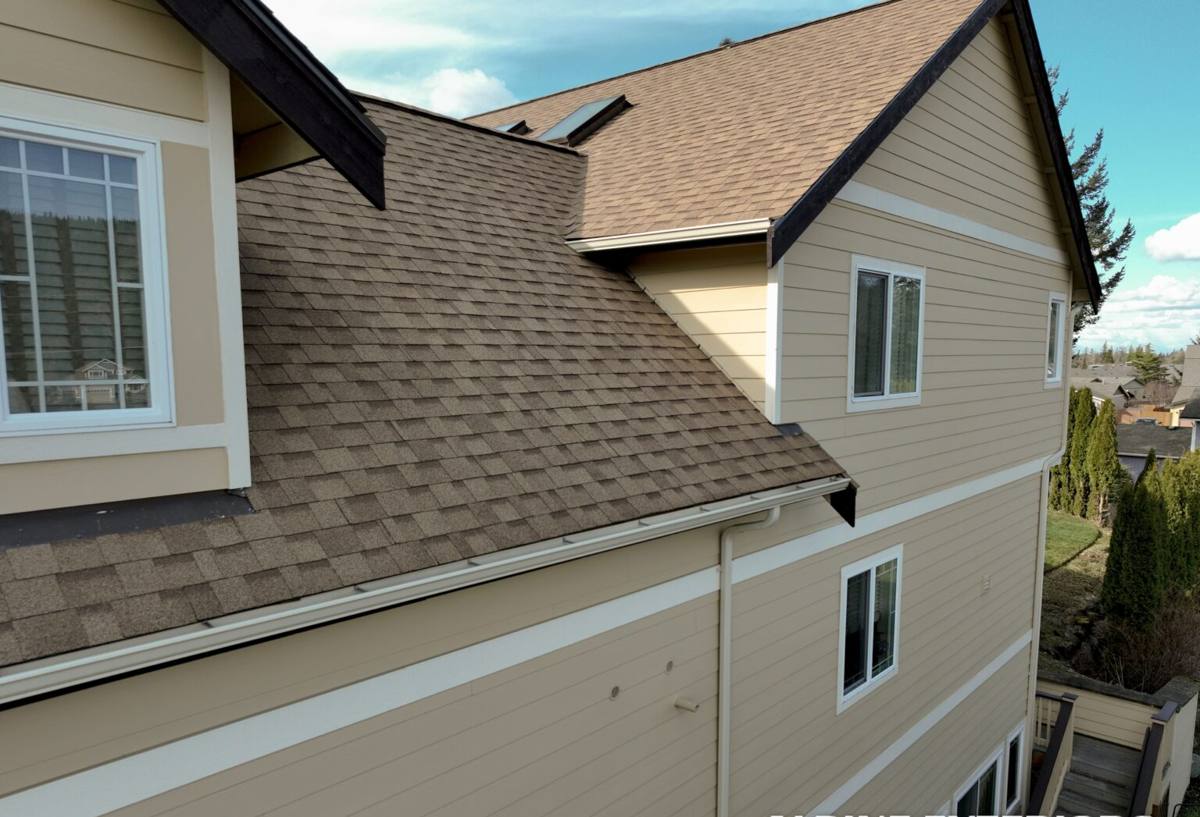
New-Construction Windows vs. Replacement Windows: Why the Distinction Matters
These are two different trades wearing the same name. Replacement windows go into an existing, finished opening — the old frame usually stays, and the new window is sized to fit inside it. New-construction windows go into a rough opening before siding, trim, or interior finish work is complete, which means the window itself becomes part of the structure's water-management system, not just an insert.
Nail Fin vs. Block Frame
Most new-construction windows use a nailing fin — a flange around the perimeter of the frame that gets fastened directly to the sheathing and then integrated with the weather-resistive barrier (housewrap) and flashing tape. Block-frame units are set differently and rely more on the surrounding rough opening and separate flashing details. Which approach is right depends on the wall assembly, the siding type going on, and what the architect or builder specified — we work with what the plans call for rather than pushing one method regardless of the house.
Flashing and Weather-Resistive Barrier Integration
This is the part that actually keeps water out of the wall long-term, and it's the part that's invisible once the siding goes on. Sill pan flashing, back-dam details, corner patches at the fin, and correct shingle-lap sequencing with the housewrap all have to happen in the right order. Get this sequence backwards and you don't find out until years later, when water has already been getting behind the siding — by then it's a tear-out and repair job, not a warranty callback.
What a Correct New-Construction Install Involves
Whether it's a single window on an addition or a full window package on new build, the same fundamentals apply. Here's what we check on every opening before it closes up:
- Rough opening is square, level, and sized correctly for the specified unit — with proper allowance for shim space
- Sill pan flashing installed with a back dam and sloped to shed water outward, not just laid flat
- Weather-resistive barrier integrated with the flashing in the correct shingle-lap order (bottom to top, so water always sheds over the layer below)
- Nailing fin fully fastened per the manufacturer's schedule — not just tacked at the corners
- Flashing tape fully adhered with no wrinkles, gaps, or fishmouths at corners
- Window shimmed and fastened so the frame isn't racked or bowed, which affects both operation and the seal
- Interior and exterior sealant joints installed at the correct locations — sealing everything is actually a mistake, since some cavities need to stay able to drain and dry
- Rough opening documented or photographed before it's covered by siding and trim, so there's a record of the work
That last point matters more on the coast than it does inland. In a marine climate, a flashing mistake doesn't announce itself right away — it shows up as a soft spot in the sheathing or a stain on the interior sill a couple of winters later. Doing the work correctly and documenting it is cheaper than diagnosing a hidden leak after the fact.
Window Materials for Bellingham Bay Exposure
Material choice on a Fairhaven new build isn't just about looks or budget — it's also about how the frame and hardware hold up to salt air and sustained moisture. None of the common options are wrong choices; they just come with different maintenance expectations.
| Material | How It Handles Salt Air & Moisture | Maintenance | Typical Fit |
|---|---|---|---|
| Vinyl | Won't corrode or rot; performs well in coastal humidity | Low — occasional cleaning | Budget-conscious new builds, rentals, spec homes |
| Fiberglass | Very stable dimensionally, resists moisture and salt exposure well | Low | Homes wanting durability with a more refined frame profile |
| Wood-clad (composite exterior) | Exterior cladding protects from weather; any exposed wood or damaged cladding needs prompt attention near salt air | Moderate — watch cladding seams and touch-up paint/finish | Homes prioritizing an interior wood look with painted or historic-style exteriors |
| Aluminum | Strong and slim-profile, but standard aluminum is thermally poor and can corrode without proper coatings near salt air | Moderate, coating-dependent | Modern architectural designs, often thermally-broken frames |
Hardware is worth a specific mention. Standard steel fasteners and hinges corrode faster this close to the water — we spec stainless or coated hardware for exterior-exposed components on coastal jobs rather than defaulting to whatever's cheapest, because swapping out corroded hinges on a finished window a few years in is a much bigger job than speccing it correctly up front.
Our Process for a Fairhaven New-Construction Job
New-construction window work has to fit into a builder's schedule, so timing and sequencing matter as much as the install itself.
- Plan review and takeoff. We work from the architect's window schedule to confirm sizes, egress requirements, and any energy-code details before ordering.
- Ordering and lead-time coordination. Window lead times vary by manufacturer and size — we build that into the framing and dry-in schedule so the job isn't waiting on windows.
- Rough opening check. We verify openings against the actual units before install day, not after — catching a framing discrepancy before the window shows up saves everyone a delay.
- Flashing and set. Sill pan, fin integration, and fastening happen in sequence, with each opening checked for square and plumb before moving to the next.
- Weather-barrier tie-in. We coordinate directly with the framer or general contractor so the housewrap and flashing sequence isn't left to guesswork between trades.
- Final walkthrough. Every opening gets checked for operation, seal, and finish before we call the job done.
Mistakes We Commonly Catch on Coastal New Builds
Most window failures we get called to diagnose in this area trace back to a handful of recurring issues, not a bad window unit itself:
- No back dam on the sill pan, so water that gets past the outer seal has nowhere to go but into the wall
- Weather-resistive barrier lapped in the wrong order at the head flashing, funneling water behind the window instead of over it
- Fully sealing a nailing fin cavity that was designed to drain, trapping moisture instead of letting it escape
- Standard (non-coated) fasteners used on exterior hardware, leading to early corrosion and staining
- Trim and siding installed tight against the frame with no room for the window to shed water at the sill
- Moss and organic debris left to accumulate in sill tracks and drainage channels, holding moisture against the frame through the wet season
Every one of these is preventable at install time and expensive to fix afterward, which is the whole argument for getting the sequencing right before the wall closes up.
Cost Factors on a New-Construction Window Package
New-construction pricing depends on more variables than a simple per-window number, so it's worth understanding what actually moves the cost on a Fairhaven job:
| Factor | Why It Affects Cost |
|---|---|
| Number and size of openings | More glass area and more units mean more material and labor hours |
| Frame material | Vinyl is typically the most affordable; fiberglass and wood-clad run higher |
| Energy performance rating | Higher-performance glass packages (needed to meet Washington's energy code) cost more per unit |
| Wall assembly complexity | Rainscreen or advanced weather-barrier assemblies take more labor to detail correctly than a standard wrap |
| Access and site conditions | Tight Fairhaven lots or multi-story openings can add scaffolding or lift costs |
| Hardware and finish upgrades | Coastal-rated (stainless/coated) hardware costs more than standard but avoids early corrosion |
We give a firm, itemized quote once we've seen the plans or the actual openings — broad national average ranges don't mean much for a coastal job, since the exposure and detailing requirements here are different from a sheltered inland lot.
Why a Bellingham Crew That Already Works Fairhaven Matters
New-construction window work is a coordination job as much as an installation job — you're working alongside framers, siding crews, and often a general contractor's schedule, all while getting flashing details right on the first try. A crew that already works regularly in Whatcom County knows how local building departments expect the work documented, understands what Bellingham Bay exposure actually does to fasteners and hardware over time, and isn't learning the region's moss-and-rain cycle on your project. That familiarity shows up as fewer surprises mid-build and fewer callbacks once the house is finished and occupied.
If you're planning a new build or a major addition in Fairhaven, we're happy to look at the plans, walk the site, and put together a straightforward, no-pressure estimate — just fill out the form below to get started.