 Bellingham Window
 Fairhaven's Climate Is Harder on Roofs Than Most Homeowners Realize
Fairhaven sits close to Bellingham Bay, which means homes here deal with a combination most inland Whatcom County neighborhoods don't face in the same way: salt-laden air rolling off the water, driving rain that comes in sideways during winter storms, and a long, damp moss season that can run from fall through spring. None of these factors are dramatic on their own, but stacked together year after year, they shorten the working life of a roof that wasn't installed with them in mind.
Salt air accelerates corrosion on exposed metal fasteners, flashing, and vent components. Driving rain finds every weak seam, lap, and nail pattern that isn't done exactly right. And moss doesn't just sit on the surface looking bad — its root structure lifts shingle edges, traps moisture against the roof deck, and opens the door to rot long before most homeowners notice a leak. A roof installed the same way you'd install one in a drier, inland climate simply won't perform the same way in Fairhaven.
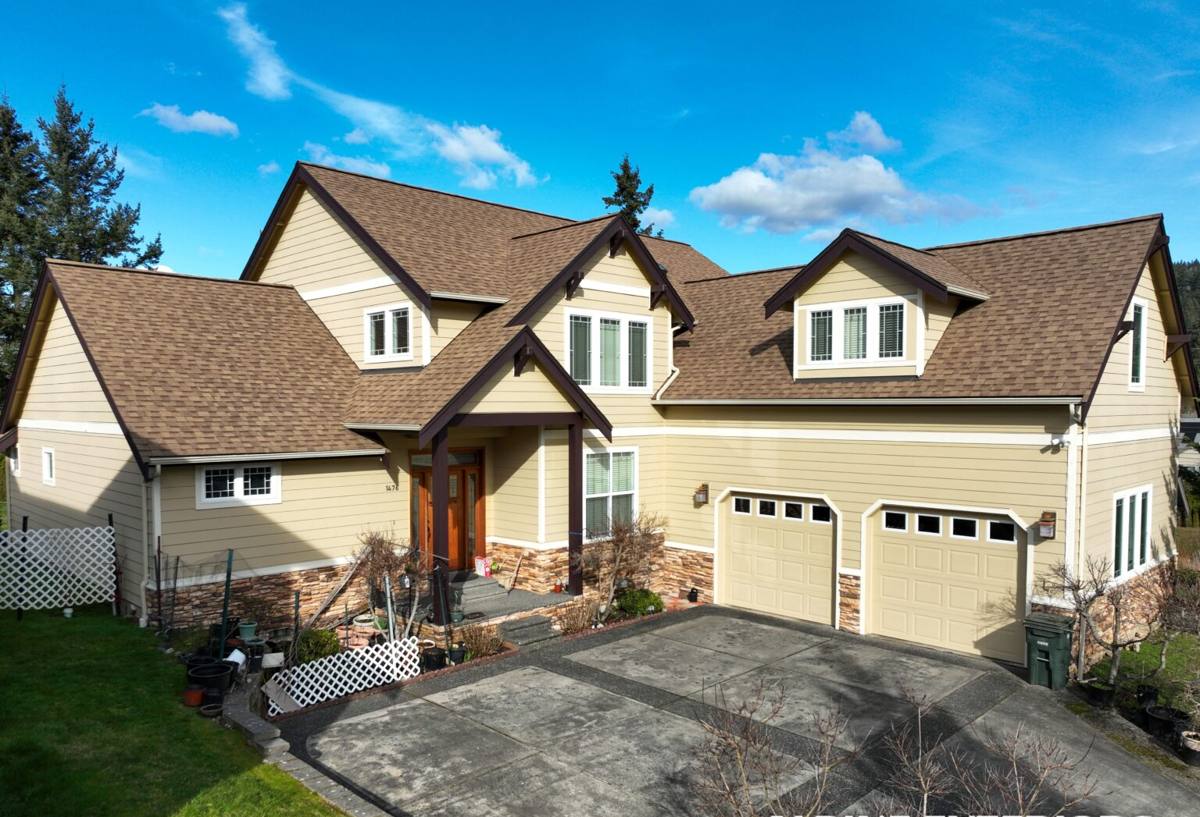
Signs a Fairhaven Home Needs Full Replacement, Not Another Repair
Roof repairs make sense when the damage is isolated and the underlying roof system is still sound. Replacement becomes the smarter move once the roof is failing broadly, or once repeated repairs stop solving the actual problem. Here's what tends to signal that a full new roof is the right call rather than another patch:
- Shingles that are cupping, cracking, or losing granules across large sections, not just one spot
- Moss that keeps coming back within a season or two of cleaning, even after treatment
- Soft or spongy spots when walking the roof, which usually means deck damage underneath
- Daylight visible through the attic roof boards, or consistent moisture staining on rafters
- A roof that's already had two or more repairs in the same area within a few years
- Granules collecting heavily in gutters, a sign the shingles are past their protective life
- Flashing around chimneys, skylights, or vents that's rusted, lifted, or was never sealed correctly
If a roof is showing two or more of these at once, patch repairs usually turn into a cycle of spending money without fixing the underlying issue.
What a Correct New Roof Installation Actually Involves
A new roof is more than stripping old shingles and laying new ones. The parts of the job that don't show once it's finished are the parts that determine whether it lasts fifteen years or thirty-five in a climate like Fairhaven's.
Full Tear-Off and Deck Inspection
We remove the existing roofing material down to the deck rather than layering over it. This isn't just best practice — it's the only way to actually see the plywood or plank decking underneath and catch soft, rotted, or delaminated sections before they're hidden under a new roof for another twenty years. Any damaged decking gets replaced before anything else happens.
Underlayment That Matches the Exposure
In a marine climate with driving rain, the underlayment layer matters as much as the shingles themselves. We use synthetic underlayment across the field and self-adhered ice-and-water membrane at the eaves, valleys, and any low-slope transitions — the areas where wind-driven rain is most likely to work its way under standard shingle laps.
Ventilation That Actually Balances
A roof deck that can't breathe traps moisture from the inside, which speeds up rot regardless of how good the shingles are. Proper installation balances intake at the eaves with exhaust at the ridge, sized to the attic space — not just adding a vent because there's room for one.
Flashing Done by Hand, Not by Shortcut
Chimneys, skylights, sidewalls, and roof-to-wall transitions are where the vast majority of roof leaks actually originate — not the open field of shingles. Step flashing, counter-flashing, and properly lapped valley metal take more time to install correctly, and it's the detail that separates a roof that stays dry for decades from one that leaks within a few winters.
Choosing the Right Roofing Material for a Fairhaven Home
There's no single "best" roofing material for every house — the right choice depends on the home's roof pitch, its exposure to wind and salt air, the look that fits the neighborhood, and the budget. Here's how the common options compare for a home in this specific climate:
| Material | Performance in Salt Air & Moss Climate | Typical Lifespan | Maintenance Burden |
|---|---|---|---|
| Architectural asphalt shingle | Good with algae-resistant granules; needs periodic moss removal | 25-35 years | Moderate — periodic cleaning recommended |
| Standing seam metal | Excellent corrosion resistance when properly coated; sheds moss well due to slope and smooth surface | 40-60 years | Low |
| Cedar shake (natural) | Attractive but moisture-sensitive; requires diligent upkeep in a damp climate | 20-30 years with upkeep | High |
| Synthetic/composite shake | Mimics cedar look with far better moisture and moss resistance | 30-50 years | Low to moderate |
For most Fairhaven homes, algae-resistant architectural shingles or standing seam metal offer the best balance of upfront cost and long-term performance against this climate. Natural cedar can still be the right call on homes where the look matters most, as long as the homeowner understands the added upkeep it requires here.
Moss and Algae: Why It's a Bigger Deal in This Neighborhood
Fairhaven's older, tree-lined streets and proximity to the water create shaded, damp conditions that are close to ideal for moss growth — especially on north-facing roof slopes that get less direct sun to dry out between rain events. Moss isn't just cosmetic. As it establishes itself, its root structure works into the shingle surface and lifts tabs at the edges, which is exactly where wind-driven rain gets underneath the roofing material.
A correct installation reduces future moss problems in a few concrete ways: choosing shingles with copper or zinc-infused granules where appropriate, making sure valleys and low-slope areas drain fully rather than holding standing moisture, and, where tree cover is heavy, discussing with the homeowner whether some branch clearance would meaningfully extend the roof's life. None of this eliminates moss entirely in this climate — but it changes how fast it comes back and how much damage it does in the meantime.
Our Installation Process
Every new roof we install in Fairhaven follows the same sequence, adjusted for the specific home:
- On-site assessment — we walk the roof, check the attic, and evaluate pitch, ventilation, and exposure before recommending a material or system.
- Written scope and estimate — a clear breakdown of materials, tear-off, and any deck repair contingencies, so there are no surprises mid-project.
- Material delivery and site protection — landscaping, siding, and gutters get protected before tear-off begins.
- Full tear-off and deck inspection — old material removed, deck inspected and repaired as needed.
- Underlayment, flashing, and ventilation installed — the components that determine long-term performance, done before a single finish shingle goes down.
- Finish roofing material installed — following manufacturer specifications for nailing pattern and exposure, which matters for both performance and warranty coverage.
- Final cleanup and walkthrough — magnetic sweep for stray fasteners, full site cleanup, and a walkthrough so the homeowner sees exactly what was done.
Permits and Local Considerations
Roof replacements in Bellingham typically require a building permit, and the work needs to meet Washington State building code for wind and structural loading. We handle the permit process as part of the job. Fairhaven also has a mix of older homes with real architectural character, and where that's the case, we talk with the homeowner up front about matching the roofline and material profile to the house rather than defaulting to whatever's easiest to install.
Why Hiring a Crew That Already Works in Fairhaven Matters
A roofing crew that's worked this specific area knows things that don't show up in a generic estimate: which streets have tight access that affects staging and dumpster placement, how steep some of the lots get near the bluffs, which homes tend to have original decking that needs closer inspection, and how the tree canopy on a given block affects moss and drainage patterns. That local familiarity translates into fewer surprises mid-project and a more accurate estimate from the start — rather than change orders once tear-off reveals something the crew didn't anticipate.
It also matters for material decisions. A crew that only installs one product line, regardless of the house, isn't necessarily giving the best recommendation for a Fairhaven roof — they're giving the recommendation that fits their business model. We install a range of systems specifically because a house two blocks from the water with heavy tree cover often needs a different answer than one on an open, sunnier lot a few streets over.
What a Fair Estimate Should Include
Whether you get an estimate from us or anyone else, a complete roofing estimate for this area should spell out:
- Full tear-off versus overlay, and why one is being recommended over the other
- The specific underlayment and ice-and-water membrane plan for valleys and eaves
- Ventilation changes, if any, and how intake/exhaust will be balanced
- Flashing scope at every chimney, skylight, and sidewall — not a vague "flashing as needed"
- Material brand, product line, and warranty terms in writing
- A contingency line for deck repair if rot is found once tear-off begins
- Cleanup and disposal terms
If an estimate skips most of these, it's hard to know what's actually being installed until the crew is already on the roof.
If you're weighing a roof replacement on a Fairhaven home, we're glad to come take a look, walk the roof, and put together a clear, no-pressure estimate — no obligation either way. Use the form below to get started.