 Bellingham Window
 Roofing in Fairhaven Isn't Generic Roofing
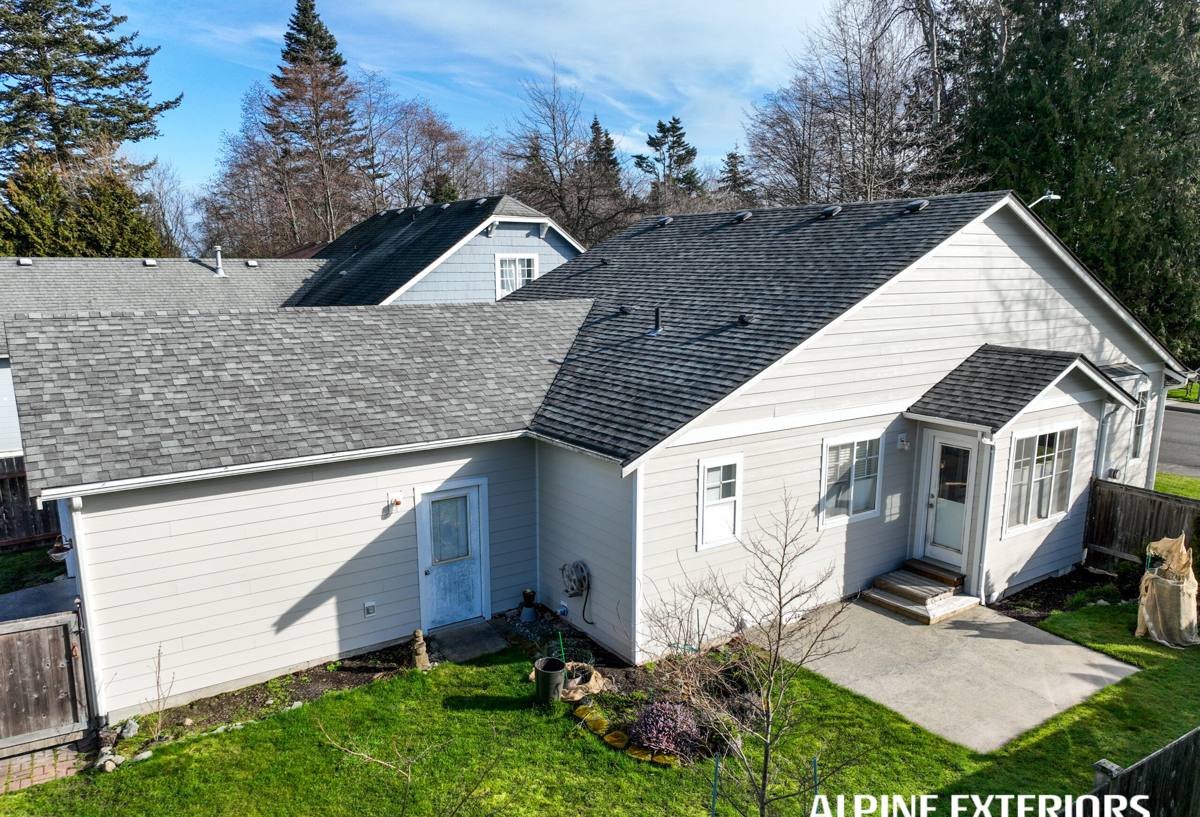
Fairhaven sits close enough to Bellingham Bay that salt-laden air is a daily fact of life for anything on a roofline, and its older, tree-lined streets mean a lot of homes spend a good part of the year in shade. Put those two things together with the driving rain that rolls in off the water through fall and winter, and you get a roofing environment that's tougher on materials and fasteners than most inland parts of Whatcom County. A roof replacement here has to account for all three: salt exposure, wind-driven rain, and a moss season that can run eight months or longer.
This page is specifically about full roof replacement for homes in and around Fairhaven — what wears out first in this climate, what a correct job actually includes, and how our process works. If you're just starting to research whether you need a repair or a full replacement, this should give you a straight answer.
Why Roofs Wear Differently This Close to the Water
Salt Air and Metal Fatigue
Salt air accelerates corrosion on anything metal — nail heads, flashing, valley metal, and the fasteners holding shingles or panels down. On a lot of older Fairhaven roofs we've looked at, the shingles themselves still had usable life left, but the flashing and exposed fasteners had corroded to the point of leaking. That's a detail generic roofing advice usually skips, and it's why material and fastener selection matter more here than they would twenty miles inland.
Moss, Shade, and Moisture Retention
Mature tree canopy is part of what makes Fairhaven's older neighborhoods pleasant, but it also means less direct sun on the roof deck and more organic debris landing in valleys and gutters. Moss holds moisture against the roofing surface long after a storm passes, which shortens the life of asphalt shingles and, on wood-based roofing, invites rot underneath. A roof that never fully dries out between rain events ages faster than one in full sun, even with identical materials.
Driving Rain Off the Sound
Wind direction matters. Storms coming off Bellingham Bay tend to drive rain at an angle rather than straight down, which pushes water sideways under shingle laps, around chimney flashing, and into any gap in the underlayment. A roof system that's fine in a calm, low-wind climate can still leak here if the underlayment and flashing details weren't built for wind-driven exposure.
Signs a Repair Won't Cut It Anymore
Not every roofing issue means you need a full replacement — but in this climate, patch repairs on an aging roof often just delay a bigger problem. Here's what tells us a homeowner is past the point where repair makes sense:
- Granule loss heavy enough that you're finding grit in gutters or downspouts every season
- Moss established thickly enough that it's lifting shingle edges, not just growing on the surface
- Soft or spongy spots underfoot on the roof deck, which usually means the sheathing is wet
- Flashing that's visibly rusted, pitted, or separating from the roof surface
- Daylight visible through the attic roof boards, or water staining on multiple rafters
- The roof is at or past the manufacturer's expected service life for its material type
- Repeated repair calls to the same two or three spots over the last couple of years
If you're only seeing one or two of these, a targeted repair may still be the honest answer — we'll tell you that during an inspection rather than push a replacement you don't need yet.
What a Correct Roof Replacement Involves Here
Full Tear-Off and Deck Inspection
We don't recommend roofing over an existing layer in this climate. A full tear-off is the only way to actually see the condition of the roof deck, which matters a lot on homes that have had moss or trapped moisture working on them for years. Any soft or rotted sheathing gets replaced before anything new goes down — skipping this step is how a new roof ends up with old problems underneath it.
Underlayment and Flashing Built for Wind-Driven Rain
Given the exposure here, we pay particular attention to self-adhered ice-and-water membrane at eaves, valleys, and around penetrations — the spots where wind-driven rain is most likely to find a way in. Flashing at chimneys, dormers, and sidewalls gets replaced as part of the job, not reused, and we spec corrosion-resistant fasteners and flashing metal given the salt air rather than standard-grade hardware that's fine further inland.
Ventilation That Actually Dries the Deck Out
Balanced intake and exhaust ventilation matters everywhere, but it matters more under heavy tree cover, where the roof deck gets less help from direct sun to dry out between storms. Poor ventilation traps moisture against the underside of the sheathing, which shortens the life of the roof from below while everything looks fine from the street.
Choosing the Right Material for This Climate
There's no single "best" roofing material — the right choice depends on your home's exposure, your budget, and how much long-term maintenance you're willing to put in. Here's how the common options actually perform under Fairhaven's specific conditions:
| Material | Moss Resistance | Salt Air Durability | Typical Lifespan | Relative Cost |
|---|---|---|---|---|
| Architectural asphalt shingle | Moderate — improves with zinc/copper strips | Good, if fasteners and flashing are corrosion-resistant | 25–30 years | Low–Mid |
| Standing seam metal | Very good — sheds moisture, little surface for moss to grip | Very good with proper coating; check fastener spec | 40–50+ years | Mid–High |
| Synthetic/composite (Class 4 impact) | Good — dense surface resists moss establishment | Good | 30–50 years | Mid–High |
| Cedar shake | Poor without diligent upkeep — organic material invites growth | Fair — needs regular treatment near salt air | 20–30 years with upkeep | High |
We're upfront about cedar's trade-offs: it's a beautiful, traditional look that suits a lot of Fairhaven's historic homes, but as a wood product it needs more frequent treatment and cleaning to hold up against sustained moss pressure and moisture. That's not a defect in the product — it's the honest maintenance commitment that comes with it, and we'll tell you that up front rather than after you've bought it.
Managing Moss for the Long Haul
A new roof doesn't stop moss from wanting to grow in a shaded, damp environment — it just gives you a clean slate to manage it properly from day one. As part of a replacement, we typically discuss:
- Zinc or copper control strips installed near the ridge, which release trace metals that inhibit moss regrowth as rain washes over the roof
- Keeping gutters and valleys clear, since trapped debris is what gives moss a foothold in the first place
- Where practical, coordinating with a tree service to open up sun exposure on the worst-shaded slopes
- Avoiding pressure-washing the roof surface yourself, which can strip granules and shorten shingle life faster than the moss would
How Our Process Works
- On-site inspection — we get on the roof (not just a look from the ground) and check the deck, flashing, ventilation, and any trouble spots you've noticed.
- Honest recommendation — repair, or replace, based on what we actually find, with the reasoning explained in plain terms.
- Written estimate — material options, scope, and a clear price, with no pressure to decide on the spot.
- Scheduled tear-off and replacement — full removal of the old roof, deck repair as needed, new underlayment, flashing, and roofing material installed to spec.
- Cleanup and walkthrough — magnetic sweep for nails, debris hauled off, and a final walkthrough so you know exactly what was done.
Why It Matters to Hire a Crew That Already Works in Fairhaven
A roofing crew that mostly works drier, inland areas doesn't necessarily think about salt-resistant fasteners or wind-driven flashing details by default — because they don't usually need to. Crews with regular experience in Bellingham's coastal neighborhoods build those details into the job as a matter of habit, not as an upsell. That includes knowing which permitting steps the City of Bellingham requires for a full re-roof, and being aware that some homes in Fairhaven's historic district may have additional guidelines around visible exterior changes — something worth flagging early rather than discovering mid-project.
Local experience also means we're not guessing at how a given slope or exposure will hold up — we've seen how roofs in this specific area actually age, which shapes the recommendations we make.
Get a Straight Answer on Your Roof
If your roof is showing its age, or you just want an honest opinion on whether you're looking at years of life left or a replacement in the near future, we're happy to take a look. There's no pressure and no obligation — just a clear read on where things stand and what your options are. Use the form below to request a free estimate.