 Bellingham Window
 Why Ferndale Roofs Wear Differently Than Roofs Inland
Ferndale sits close enough to the water and open farmland that roofs here take a different kind of beating than a roof twenty miles inland. Salt-laden air off Bellingham Bay and the Strait works on exposed metal fasteners, flashing, and gutter hardware year-round, not just during storms. Add in Whatcom County's long wet season, where driving rain comes in sideways off frequent windstorms, and you've got water finding its way into laps, seams, and fastener penetrations that would stay dry in a calmer climate. Then there's moss. Ferndale's tree cover, morning fog, and mild temperatures create ideal moss conditions for most of the year, not just a few winter months.
None of this means Ferndale homes need exotic roofing. It means the installation details that get skipped on a rushed job — proper underlayment overlap, correctly flashed penetrations, real attic ventilation — matter more here than they would somewhere drier. A roof that's "good enough" in a dry climate can fail early in a wet, mossy, salt-exposed one.
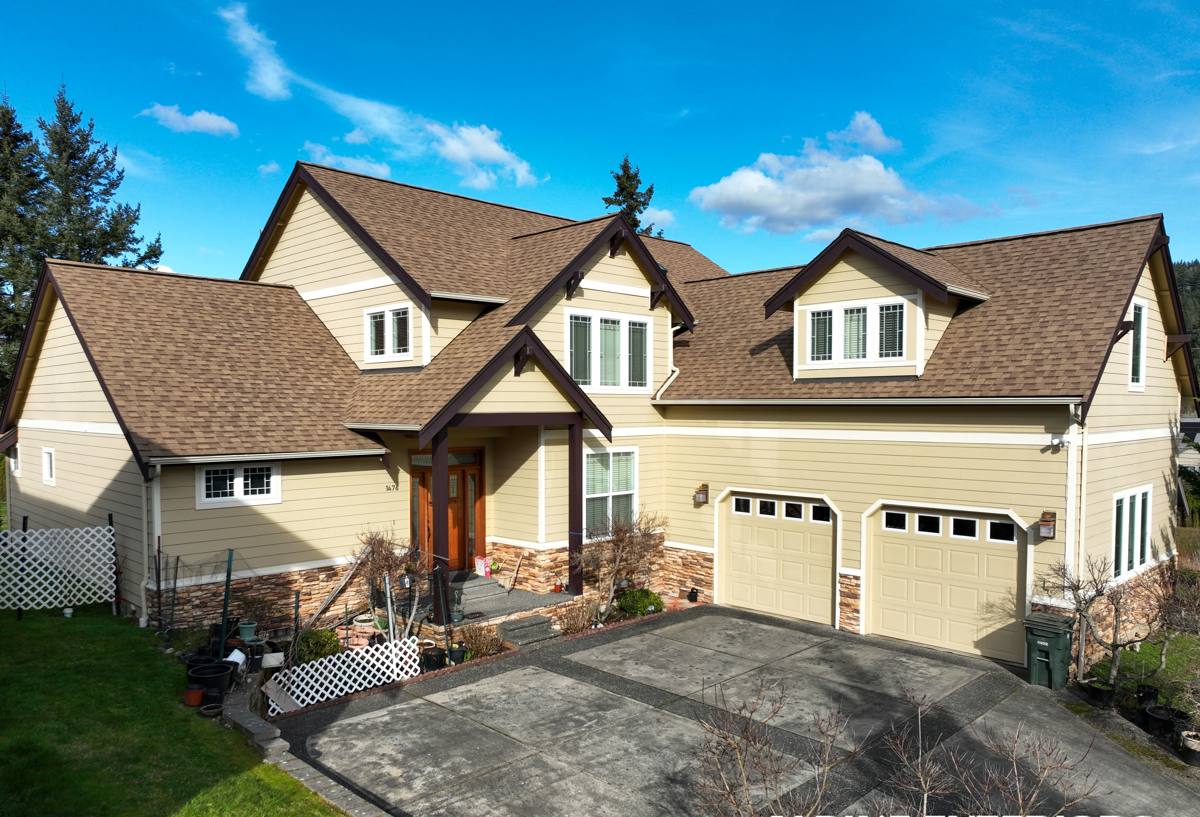
Signs Your Ferndale Home May Need a New Roof, Not a Repair
Not every roofing problem needs a full replacement. But there's a point where patching individual leaks becomes more expensive and less reliable than starting fresh. Some signs point clearly toward replacement rather than repair:
- Shingles that are cupping, curling, or losing granules across large sections rather than one isolated spot
- Moss growth that has worked its way under shingle edges, lifting them and holding moisture against the roof deck
- Soft or spongy spots when walking the roof, which usually means the decking underneath has taken on water damage
- Daylight visible through the attic roof boards, or water stains on interior ceilings that reappear after every heavy rain
- A roof that's 20+ years old, especially if the original installation used minimal underlayment or older flashing details
- Repeated repairs to the same areas without the leaks actually stopping
If you're only seeing one or two of these, a repair or partial re-roof may still make sense. A straightforward inspection is the fastest way to know which category your roof falls into.
What a Correct Roof Installation Actually Involves
Tear-Off and Deck Inspection
A proper job starts with removing the old roofing down to the deck, not layering new material over old. This lets the crew actually see the plywood or OSB sheathing underneath. In a climate like Ferndale's, it's common to find sections of soft or delaminated decking around old leak points, valleys, or plumbing vents — areas that stayed hidden under the old shingles. Any compromised decking gets replaced before anything new goes down. Skipping this step is one of the most common shortcuts on cheap re-roofs, and it's the one that causes the most trouble later.
Underlayment
Underlayment is the water-resistant layer between the decking and the visible roofing material, and it's your actual backup line of defense if wind-driven rain gets past the shingles or panels — which, in this climate, it eventually will at some point in the roof's life. Synthetic underlayments generally outperform old-style felt for wind and moisture resistance, and ice-and-water shield style membrane belongs at eaves, valleys, and around penetrations, even though Ferndale doesn't see heavy ice buildup the way colder regions do. The driving-rain factor matters just as much as ice would.
Flashing
Flashing — the metal or membrane detailing around chimneys, skylights, walls, and vent pipes — is where the majority of roof leaks actually originate, not out in the open field of shingles. Correct flashing means step flashing at wall intersections, proper counter-flashing, and pipe boots that are sealed and, ideally, made from materials that won't crack in a few years of UV and salt-air exposure.
Ventilation
An attic that can't breathe traps moisture, which shortens the life of the roof deck from underneath, regardless of how good the shingles above it are. Balanced intake and exhaust ventilation is part of a correct installation, not an optional upgrade.
Roofing Materials for Ferndale's Climate
There isn't one "correct" material for every home — it depends on budget, roof pitch, architectural style, and how long you plan to own the home. Here's an honest comparison of the main options homeowners in this area choose between.
| Material | Typical Lifespan | How It Handles Salt Air & Moss | Maintenance Burden |
|---|---|---|---|
| Architectural asphalt shingle | 25–30 years | Good with quality granule coating; needs periodic moss treatment | Low to moderate |
| Standing seam metal | 40–50+ years | Sheds moss well due to slick surface; needs coastal-rated fasteners and coatings | Low |
| Composite/synthetic shingle | 30–50 years | Resists moisture absorption better than wood-based products | Low to moderate |
| Cedar shake | 20–30 years with upkeep | Attractive but moisture-retentive; moss and rot risk is highest of this group in a wet climate | High |
For most Ferndale homes, architectural asphalt shingle remains the practical middle ground — it balances upfront cost, appearance, and durability well when installed correctly. Standing seam metal costs more up front but sheds moss and handles driving rain about as well as any roofing material available, which is why we see more of it going on in this area than we used to. We generally steer homeowners away from traditional cedar shake in this specific climate — not because it can't look good, but because its moisture retention and moss susceptibility mean a heavier, more frequent maintenance commitment than most owners want to sign up for.
Our New Roof Installation Process
- On-site inspection and estimate. We walk the roof (or use a lift/drone where pitch or access requires it), check the attic for ventilation and moisture signs, and give you a written scope, not just a number.
- Material selection. We go over the tradeoffs for your specific roof pitch, sun exposure, and tree cover, and help you land on a material that fits your budget and how long you plan to be in the home.
- Scheduling around weather. Roofing in Whatcom County means working around rain windows. We plan tear-off in sections when needed so your home isn't sitting exposed if weather shifts mid-job.
- Tear-off and deck repair. Old material comes off, the deck gets inspected, and any soft or damaged sheathing is replaced before moving forward.
- Underlayment, flashing, and ventilation installed. This is the stage that determines how the roof performs in year eight, not just year one.
- New roofing installed to manufacturer specification. Correct nailing patterns and exposure lines matter for both warranty coverage and wind performance.
- Final walkthrough and cleanup. We review the finished roof with you, cover warranty details in plain terms, and do a magnetic sweep of the yard for stray fasteners.
What Drives Cost on a Ferndale Roof
Roofing quotes vary widely, and the material line item is only part of the story. These are the factors that most often move a quote up or down:
| Factor | Why It Matters |
|---|---|
| Roof size and number of planes | More cuts, seams, and valleys mean more labor and material waste |
| Pitch and access | Steep or hard-to-access roofs require more safety equipment and time |
| Deck condition | Rotted or soft sheathing found during tear-off adds material and labor not visible in a surface inspection |
| Number of penetrations | Chimneys, skylights, and vent stacks each need individual flashing work |
| Material choice | Asphalt, metal, and composite products span a wide cost range per square |
| Tear-off layers | Removing multiple old layers of roofing costs more than removing one |
Rather than quote a broad price range that doesn't mean much without seeing your roof, we'd rather walk it, tell you honestly what condition it's in, and give you real numbers based on your specific home.
Ventilation and Moisture: The Part Homeowners Often Skip
It's easy to focus entirely on the visible roofing material and forget what's happening underneath it. In a climate with as much ambient moisture as Ferndale's, an attic without proper intake and exhaust ventilation traps humid air against the underside of the roof deck. Over time that moisture promotes rot, encourages mold growth, and can void material warranties that require adequate ventilation as a condition of coverage. A correct new roof installation includes checking and, where needed, correcting attic ventilation — not just laying new shingles over the same airflow problems the old roof had.
Why a Crew That Already Works Ferndale Matters
Roofing crews that work Whatcom County regularly build a working knowledge of things a visiting or out-of-area contractor won't have front of mind: which neighborhoods sit in heavier moss zones due to tree cover, how local wind patterns tend to drive rain into specific roof orientations, and what permitting and inspection expectations look like with Whatcom County and the City of Ferndale. That local familiarity shows up in small decisions — where extra membrane goes, how flashing details are handled around common regional architectural features, how a job gets sequenced around a wet forecast — that add up to a roof that holds up better over time.
Maintaining Your Roof Through Moss Season
A correctly installed new roof still benefits from basic seasonal maintenance in this climate. A few habits go a long way toward protecting the investment:
- Keep gutters clear of needles and debris so water isn't backing up under the roof edge during heavy rain
- Have moss treated or gently removed before it works its way under shingle tabs, rather than after
- Trim back overhanging branches to reduce shade, debris, and the moisture that feeds moss growth
- Schedule a walk-through inspection every couple of years, especially after major windstorms
- Address small flashing or sealant issues promptly — they're inexpensive fixes early and expensive ones once water gets into the deck
A well-installed roof paired with basic upkeep is what actually gets you the full lifespan out of whatever material you choose, in a climate that doesn't give roofs much of a break.
If your Ferndale roof is showing its age or you're just not sure whether repair or replacement makes more sense, we're happy to take a look and give you a straight answer. Use the form below to request a free, no-pressure estimate.