 Bellingham Window
 Roof Repair Built for Ferndale's Conditions, Not a Generic Climate
Ferndale sits close enough to Bellingham Bay and the Strait of Georgia that homes here deal with a specific combination of stresses most roofing guides never mention: salt-laden air moving in off the water, long stretches of driving rain that come in sideways rather than straight down, and a moss season that can run from early fall through late spring in a wet year. None of these things alone is unusual for the Pacific Northwest. Together, on the same roof, year after year, they wear down flashing, fastener heads, and shingle granules faster than a textbook maintenance schedule assumes.
A roof repair that ignores this combination tends to fail again within a season or two. A roof repair that accounts for it holds up. That distinction is the whole reason a page like this exists — not to sell a generic patch job, but to explain what actually needs to happen on a Ferndale roof, and why.
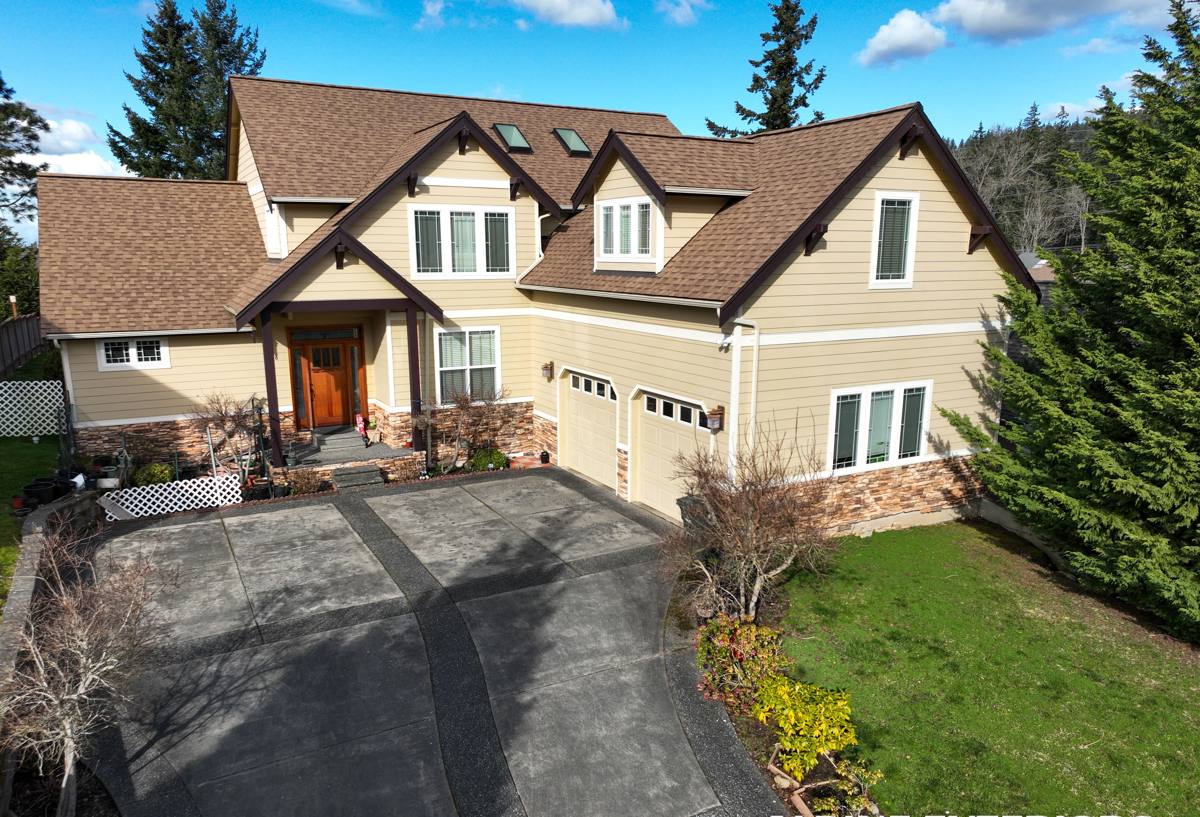
What Salt Air, Rain, and Moss Actually Do to a Roof
Salt Air and Metal Components
Salt in the air accelerates corrosion on any exposed metal — nail heads, flashing, gutter fasteners, vent caps. On a roof more than a few miles inland this isn't much of a factor. On roofs closer to the water, it's often the reason a repair fails at the fastener before the surrounding shingle ever does. Corroded fasteners back out slightly over time, which opens a path for water long before anyone notices a visible leak.
Driving Rain and Wind-Driven Water
Whatcom County storms frequently push rain sideways instead of down, which means water gets tested against vertical surfaces — sidewalls, dormers, chimney flashing — that a straight-down rain would never reach. A repair that only addresses the horizontal roof plane and skips these transition points is repairing half the problem.
Moss and Prolonged Moisture
Moss doesn't just look bad. It holds moisture directly against the roofing material, and on shaded, north-facing slopes or roofs under overhanging trees, it can grow thick enough to lift shingle edges and hold water underneath them long after a storm has passed. Left alone through a full moss season, that trapped moisture is one of the more common causes of hidden deck and underlayment damage we find once we get a section opened up.
Common Roof Repair Calls We See Around Ferndale
- Flashing that's separated or corroded around chimneys, skylights, and where a roof meets a sidewall
- Moss buildup along shaded slopes causing lifted shingle edges and slow leaks
- Wind-lifted or cracked shingles near roof edges and ridge lines after a strong storm
- Clogged or sagging gutters backing water up under the roof edge (ice-and-water shield failure points)
- Nail pops and corroded fasteners working loose over several wet seasons
- Valley leaks where two roof planes meet and debris or moss has slowed drainage
- Soft or spongy decking discovered under a section that looked fine from the ground
Most of these show up first as a small stain on a ceiling, a damp attic smell, or a shingle that looks slightly out of place. By the time a homeowner notices, the underlying issue has usually been developing for a while — which is exactly why a proper repair starts with finding the real cause, not just patching the visible symptom.
What a Correct Repair Actually Involves
Diagnosis Before Anything Gets Fixed
A repair that starts with a nail gun instead of an inspection is a guess. We start by tracing the actual water path, which is often not where the stain shows up inside the house — water can travel along rafters or sheathing seams for several feet before it drips somewhere visible. Skipping this step is how the same "fixed" leak comes back a year later in a slightly different spot.
Matching the Repair to the Roof's Age and Material
A patch on a roof with ten years of useful life left should be built to last that long — proper underlayment, correctly lapped flashing, fasteners rated for the exposure. A patch on a roof nearing the end of its service life should be honest about that fact rather than dressed up as a long-term fix. We'll tell you which situation you're in.
Addressing the Cause, Not Just the Symptom
If moss caused the lifted shingle, removing the moss and treating the slope matters as much as replacing the shingle. If corroded flashing let water in, the flashing gets replaced with material suited to a salt-air environment, not just re-sealed with caulk. A repair that doesn't address why the failure happened is a temporary fix wearing the appearance of a permanent one.
Our Process, Step by Step
- Inspection and diagnosis — We get on the roof (weather permitting) and in the attic if needed, tracing the actual source rather than assuming it matches where the damage shows up inside.
- Honest assessment — We explain what we found in plain terms: what needs repair now, what's worth watching, and what — if anything — points toward replacement instead.
- Written scope and estimate — You get a clear description of the work and a price before anything starts, not a verbal ballpark that changes once the invoice arrives.
- The repair itself — Old or damaged material removed, decking checked and replaced where soft, proper underlayment and flashing installed, and materials matched to the surrounding roof as closely as possible.
- Cleanup and walkthrough — Debris and old material hauled off, work area cleared, and we walk you through what was done and why.
Repair or Replace? How to Tell the Difference
Not every roof problem needs a full replacement, and not every roof problem should be patched indefinitely. The table below covers the factors that actually matter when making that call.
| Factor | Leans Toward Repair | Leans Toward Replacement |
|---|---|---|
| Roof age | Well within expected material lifespan | At or past expected service life for the material |
| Extent of damage | Isolated to one section or flashing detail | Spread across multiple slopes or recurring in different spots |
| Decking condition | Solid, no soft spots found | Soft, delaminated, or water-stained decking found in multiple areas |
| Shingle condition overall | Granule loss and wear limited to the damaged area | Widespread granule loss, curling, or brittleness across the roof |
| History | First repair needed in this area | Same area or same type of leak repaired more than once already |
When a roof is genuinely borderline, we'll say so and lay out both options honestly rather than steering you toward whichever job is larger.
A Note on Repair Cost Factors
Roof repair pricing depends on access (steepness and height), the type of repair (a flashing detail is different labor than a section of shingles), how much of the decking underneath needs to be replaced, and how many trades are involved (a chimney flashing repair sometimes touches masonry as well as roofing). Because of that spread, we avoid quoting a number before we've actually seen the roof — but we can talk through rough ranges once we know what we're dealing with.
A Ferndale-Ready Roof Repair Checklist
Before calling anyone for a repair, a quick visual check from the ground and the attic can help you describe the problem more clearly and get a faster, more accurate estimate.
- Check the attic (if accessible) for damp insulation, water stains on rafters, or daylight showing through the roof deck
- Look at ceilings and walls below the roofline for staining, especially after a heavy storm
- From the ground, scan for shingles that look lifted, curled, or missing granules in patches
- Note any visible moss, especially on north-facing or shaded slopes
- Check that gutters are draining freely and not overflowing during rain
- Look at flashing around chimneys, skylights, and vent pipes for gaps, rust, or separated seams
- Note whether any leak seems tied to wind direction — that often points to a sidewall or valley issue rather than the open roof field
Moss Season Maintenance After the Repair Is Done
A repair holds up longer when it isn't immediately re-exposed to the same conditions that caused the original failure. Keeping gutters clear heading into fall rain is one of the simplest ways to prevent water from backing up under a roof edge. Where moss is a recurring issue, periodic gentle removal — not pressure washing, which strips granules and shortens shingle life — keeps it from re-establishing on the same slopes each year. Trimming back branches that overhang the roof reduces both shade (which moss favors) and the debris load that collects in valleys and gutters. None of this is complicated, but it's the difference between a repair that lasts and one that's fighting the same battle again by the following winter.
Why a Crew That Already Works Ferndale Matters
Roofing knowledge that's specific to this stretch of Whatcom County isn't something you get from a general trade textbook. It comes from having been on enough local roofs to know which slopes tend to hold moss longest, which flashing details fail first when salt air and driving rain combine, and what a genuinely sound repair needs to hold up through another wet season. A crew that already works in and around Ferndale isn't guessing at any of that — we've seen the pattern before, and we build the repair to match it rather than applying a one-size-fits-all approach better suited to a drier inland climate.
Local presence also means straightforward accountability. If something about a repair doesn't hold up the way it should, you're not chasing down a company that was only ever passing through the area for one job.
Get an Honest Look at Your Roof
If you're seeing a stain, a lifted shingle, or just want a second opinion before winter storms roll in, we're happy to take a look. The estimate is free, there's no pressure to book anything on the spot, and if the honest answer is "this can wait," we'll tell you that too. Use the form below to get in touch and we'll schedule a time to come out.