 Bellingham Window
 Storm Damage Roof Repair for Ferndale Homes
A windstorm off the water doesn't treat every roof the same. Two houses on the same block can take the same storm and come out with very different problems, and the difference usually isn't luck. It's what condition the roof was already in before the wind showed up. In Ferndale, that starting condition is shaped by a specific combination of weather that works on a roof year-round, not just during a named storm event: salt-tinged marine air, driving rain that comes in sideways as often as it falls straight down, and a moss season that can run most of the calendar year on shaded, north-facing slopes. Storm damage repair here isn't just about patching what a single event broke. It's about understanding how that event interacted with a roof that was already under quiet, ongoing stress.
Ferndale's mix of open, rural-edge properties and closer-in residential streets means wind exposure varies more from lot to lot than it does in a denser city grid. A roof on an open piece of ground with little windbreak takes wind loading differently than one tucked behind mature trees and neighboring rooflines, and that matters when we're assessing what actually happened during a storm and why. This page covers what storm damage on a Ferndale roof typically looks like, what a correct repair actually involves, how our process works from first call to final walkthrough, and why having a crew that already works this area matters when a roof needs fast, reliable attention.
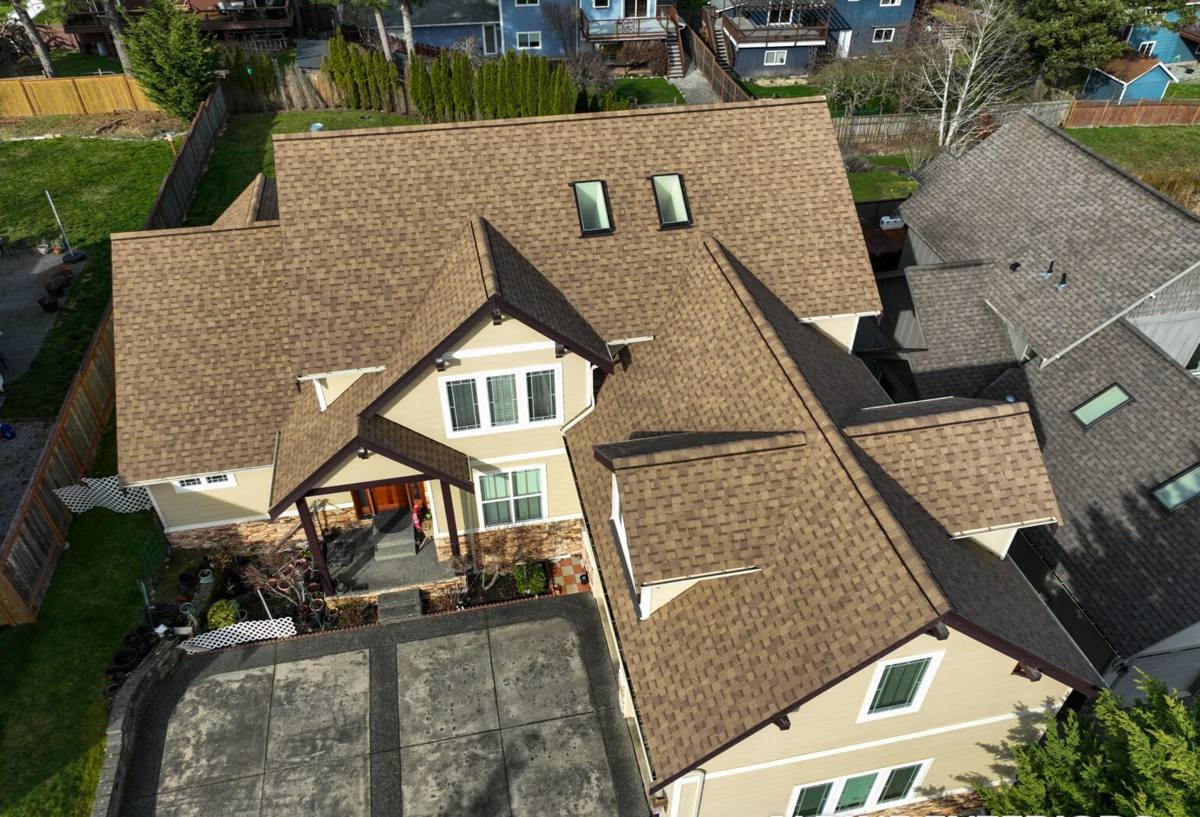
How Storms Actually Damage a Ferndale Roof
Wind-Driven Rain and Shingle Uplift
Most people picture storm damage as a tree branch coming through the roof, but the more common failure is quieter. Sustained wind gets underneath shingle tabs that have already lost some of their seal, and once wind gets under an edge, it can lift, crease, or tear the shingle outright. Rain pushed sideways by that same wind then finds any gap the lifted shingle leaves behind, and it can travel a surprising distance under the roofing before it shows up as a stain on a ceiling weeks later. This is why storm damage often isn't obvious from the ground the day after a windstorm passes through.
Falling Debris and Impact Damage
Ferndale's tree cover, a normal part of the landscape here, becomes a real liability during high-wind events. Limbs and, occasionally, whole trees come down on roofs, and the damage ranges from a few cracked or punctured shingles to structural damage to decking and framing underneath. Even smaller debris, gravel, branches, and wind-carried material, can abrade shingle granules and leave a roof more vulnerable to the next storm even when nothing looks obviously broken.
A Long Moss Season Sets the Stage
This is the part of storm damage that's easy to overlook. A roof that's carried moss and trapped moisture on a shaded slope for months or years is already weaker at the exact spots a storm is most likely to exploit. Moss holds water against the shingle surface, degrades the granule layer that protects the asphalt underneath, and can work its way under shingle edges, breaking the seal that's supposed to keep wind and rain out in the first place. A storm doesn't create that vulnerability. It just finds it.
Signs of Storm Damage Homeowners Often Miss
Some storm damage is obvious, a missing shingle or a visible hole. A lot of it isn't, and the damage you can't see from the driveway is often the damage that causes the most trouble if it sits unaddressed through the next wet stretch.
- Granules collecting in gutters or at the base of downspouts after a storm, which points to shingle surface wear
- Shingles that look slightly lifted, curled, or out of line with the surrounding roof plane
- Soft spots or noticeable give when the roof is walked, which can indicate deck-level moisture damage
- New or worsening water stains on ceilings or in the attic, especially near valleys, chimneys, or roof-wall intersections
- Dented, cracked, or displaced flashing around vents, skylights, or chimneys
- Debris still lodged in valleys or against roof penetrations well after the storm has passed
- A musty smell in the attic, which can point to moisture intrusion before it's visible anywhere else
What to Do in the First 24 to 48 Hours After a Storm
What happens right after a storm affects how much a problem grows before it gets fixed. A few practical steps make a real difference.
- Stay off the roof yourself, especially if it's wet, steep, or you can't see the full extent of the damage from the ground
- Photograph any visible damage from the ground and from inside the attic if it's safely accessible
- Move furniture or belongings away from any active interior leak and set out a container to catch water
- Avoid DIY tarping on a roof you're not equipped to safely walk, particularly during or right after a windstorm
- Call for an inspection promptly rather than waiting to see if a small leak gets worse on its own
A roof that's leaking actively gets priority scheduling from us, because the cost of delay isn't just cosmetic. Water sitting in insulation, framing, or drywall for days does more damage than the original storm event usually did on its own.
Our Storm Damage Inspection and Repair Process
We keep this process consistent regardless of how big or small the damage turns out to be, because a rushed assessment is how real problems get missed.
- Initial contact and priority scheduling: Active leaks and safety hazards get moved to the front of the schedule ahead of cosmetic-only damage.
- In-person roof and attic inspection: We walk the roof and check the attic directly rather than assessing from photos or a drive-by look.
- Documentation: We photograph the damage in detail, which supports both our repair plan and any insurance claim you may file.
- Temporary protection if needed: If a repair can't happen immediately, we can install temporary tarping or sealing to stop active water intrusion while a permanent fix is scheduled.
- Written repair plan: You get a clear explanation of what's damaged, what repair options exist, and a written estimate before any commitment.
- Repair execution: Work is done to manufacturer specification, matched to the existing roofing where possible, with particular attention to flashing and underlayment at the repair boundary.
- Final walkthrough: We review the completed repair with you and confirm there's no remaining evidence of the original leak path before calling the job done.
Repair or Replace? How We Help You Decide
Not every storm-damaged roof needs a full replacement, and we don't default to recommending one. The right call depends on how much of the roof is affected, the roof's age and existing condition, and whether the damage is isolated or points to a broader problem underneath.
| Damage Type | Often Repairable | When Replacement Makes More Sense |
|---|---|---|
| Isolated shingle loss or wind lift | Yes, section repair matched to existing roofing | If the surrounding shingles are also brittle or near end of life |
| Single flashing failure (chimney, vent, valley) | Yes, flashing can usually be replaced on its own | If multiple flashing points are failing across the roof |
| Localized debris impact damage | Yes, if decking underneath is sound | If impact damage has cracked or split the decking itself |
| Widespread granule loss and shingle brittleness | Limited, repairs won't extend a roof already near end of life | Storm damage on an aging roof close to the end of its service life |
| Long-term moisture and moss damage found during repair | Sometimes, if it's contained to one section | If moisture has been tracking under the roof for an extended period |
We'll tell you plainly which category your roof falls into, including when a repair is the honest recommendation even though a replacement would be a larger job for us.
Working With Your Insurance Company on a Storm Claim
Documentation That Actually Helps a Claim
Detailed photos, a clear written scope of damage, and a dated inspection report all make a storm claim easier to process. We provide that documentation as part of our inspection, which you're free to submit to your insurer along with your own photos and any weather records for the storm event.
What Storm Coverage Typically Does and Doesn't Include
Most homeowner policies cover sudden, storm-caused damage, wind uplift, impact from falling debris, that kind of thing, but coverage details, deductibles, and exclusions vary by policy and insurer, so we can't tell you what your specific policy covers. What we can do is give you an honest, accurate account of what actually happened to your roof, which is what your insurer needs to make that determination. We don't inflate a scope of work to chase a bigger claim, and we won't tell you damage exists where it doesn't. That approach holds up better with adjusters than an exaggerated estimate does, and it's simply how we'd want a contractor to handle our own roof.
What Storm Repair Costs Depend On
| Factor | What It Affects | Why It Matters in Ferndale |
|---|---|---|
| Extent of visible damage | Material and labor scope | Isolated damage from a single wind event costs far less than widespread shingle failure |
| Deck condition underneath | Whether structural repair is needed before re-roofing the section | Long-term moisture from a wet climate can hide rot that only shows up once shingles come off |
| Roof pitch and access | Labor time and staging equipment | Steeper roofs and tree-covered lots common around Ferndale can add setup time |
| Flashing scope | Whether valleys, chimneys, or vents need new flashing, not just shingles | Most leaks in this region trace back to flashing, not the open shingle field |
| Matching existing shingles | Whether a color or product match is available | Older roofs may need a broader repair area if the original shingle is discontinued |
| Emergency vs. scheduled timing | Whether temporary protection is needed first | Active leaks during ongoing wet weather sometimes require tarping before permanent repair can start |
We walk every roof in person before quoting, because storm damage estimates based on a description over the phone are frequently wrong in one direction or the other.
Why a Ferndale-Based Crew Matters After a Storm
When a windstorm moves through Whatcom County, it's common to see unfamiliar trucks and door-to-door crews appear within days, offering fast repairs. Some of that work is fine. A lot of it disappears along with the crew once the immediate demand dries up, which becomes a real problem if a workmanship issue shows up a year or two later and there's no one local left to call. A crew that already works Ferndale roofs day to day has a reason to still be answering the phone well after the storm has passed.
There's also a practical advantage that has nothing to do with marketing. A crew familiar with this specific stretch of coastal Whatcom County has already seen how salt air corrodes underspecified flashing, how wind-driven rain finds its way through a shingle seal that's failed early, and which roof orientations around Ferndale hold moisture longest after a storm. That experience shapes real decisions during a repair, not just the sales pitch beforehand, and it's part of why we treat storm repair with the same attention to flashing, underlayment, and fastening detail as a full roof replacement, even when the visible damage is small.
If a recent storm has left your Ferndale roof with missing shingles, a leak, or damage you're not sure how serious it is, we're glad to come take a look. Use the form below to request a free, no-pressure estimate, and we'll give you a straightforward read on what happened and what it actually takes to fix it right.