 Bellingham Window
 Barkley's Climate Is Harder on Siding Than It Looks
Barkley sits inland from Bellingham Bay, but it still gets the same weather pattern that defines exterior work across Whatcom County: long stretches of low-intensity rain pushed sideways by wind off the water, salt-tinged air that travels farther inland than most homeowners expect, and a cool, shaded microclimate created by the neighborhood's mature tree cover and landscaped common areas. None of that is dramatic on any single day. The damage shows up slowly, over years, as siding that never quite dries out between storms.
Moss is the clearest sign of it. In Barkley's tree-lined sections, north-facing walls and anything shaded by landscaping can stay damp for days after a storm passes. That moisture sits against the siding surface, feeds moss and algae growth, and — on materials that aren't built for it — starts to break down paint film, swell seams, or soften substrate. A siding choice that works fine in a drier inland climate can struggle here.
What Barkley's Housing Stock Is Actually Dealing With
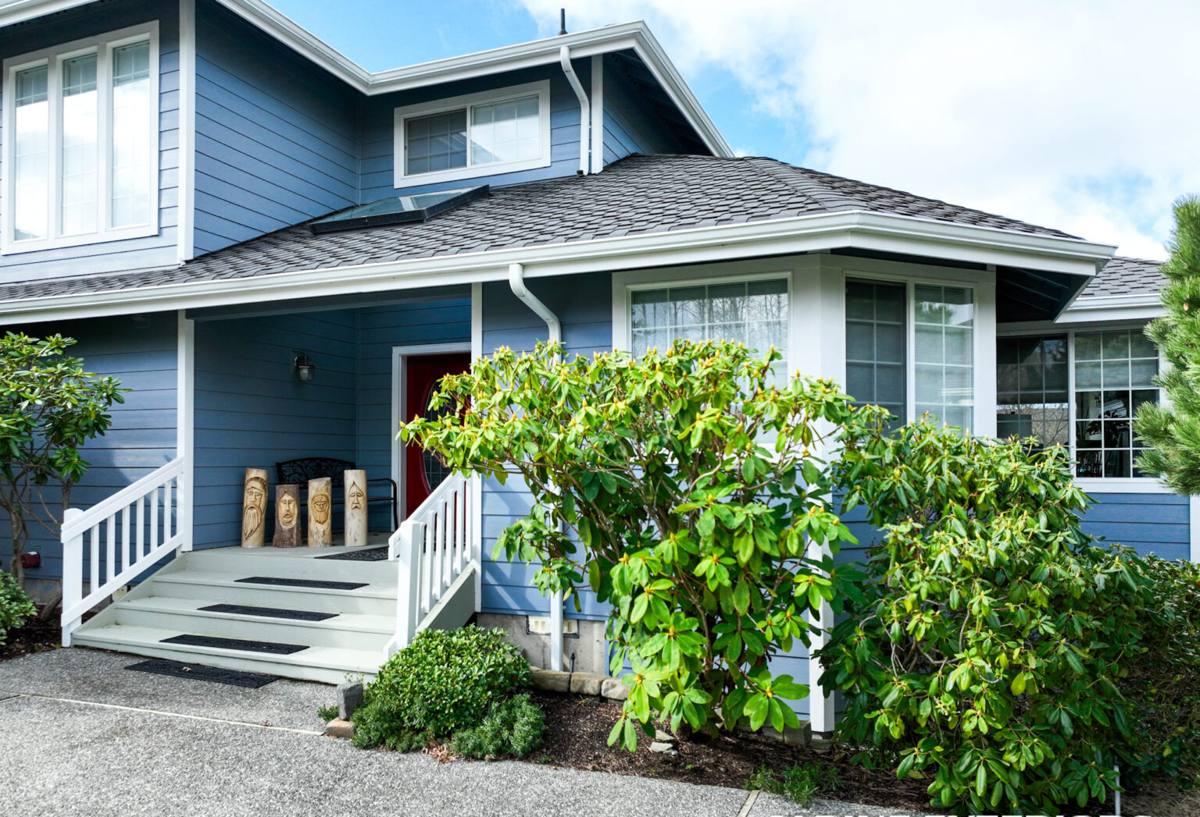
Barkley is a master-planned neighborhood with a mix of home ages and styles — some sections built in the 1990s and early 2000s, others added more recently. That mix matters for siding decisions in two ways. Older homes are often due for a full siding replacement anyway, since original wood or early-generation composite products are past their realistic service life. Newer homes may still be under original siding but already showing early moss staining or caulk failure at trim joints, which is worth addressing before it becomes a moisture problem behind the wall.
Lot Density and Shade
Many Barkley lots are closer together than in older, more spread-out Bellingham neighborhoods, and landscaping has had two to three decades to mature. That means more shaded wall area, slower drying times after rain, and more surface area exposed to windblown moisture funneled between structures. It's a small detail that changes how a siding system should be detailed at trim, corners, and clearances.
Why We Install Only James Hardie Fiber Cement
We don't install vinyl, LP SmartSide, primed wood, or other fiber cement brands like Allura or Cemplank. That's a deliberate standard, not a sales position. Vinyl expands and contracts with temperature swings and can warp or gap at seams over time, which becomes a moisture entry point in a climate that rarely stops raining long enough to dry things out. Engineered wood siding products rely on resin-treated wood strand substrates that, when a seam or cut edge is left unsealed or the wrong caulk is used, are vulnerable to swelling. Bare or primed wood needs a maintenance schedule most homeowners can't realistically keep up with in a marine climate.
James Hardie fiber cement is cement, sand, and cellulose fiber — it doesn't rot, it isn't a food source for moss the way wood fiber can be, and it's engineered specifically for wet climates through Hardie's HZ5 product line, which the Pacific Northwest falls under. That's the reasoning behind our standard, not a knock on every other product on the market.
How Fiber Cement Compares
| Factor | James Hardie Fiber Cement | Vinyl | Engineered Wood |
|---|---|---|---|
| Moisture tolerance | Engineered for wet climates (HZ5) | Sheds water but seams can trap it | Vulnerable at unsealed cuts/edges |
| Moss/algae resistance | Non-organic substrate, factory finish | Surface staining common | Organic substrate, more susceptible |
| Finish life | 15-year ColorPlus finish warranty | Color baked in, can chalk/fade | Field-painted, repaint cycle needed |
| Fire resistance | Non-combustible | Combustible | Combustible |
| Expansion/contraction | Minimal | Notable with temperature swings | Moderate |
Product Lines That Make Sense for Barkley
Not every Hardie product is the right fit for every wall. Part of our job is matching the product line to the exposure.
HardiePlank Lap Siding
The standard for most Barkley homes — traditional lap profile, available in several exposures and textures (smooth, cedarmill), and finished with ColorPlus factory paint, which cures under controlled conditions rather than on the wall. That matters in a climate where field-painted finishes rarely get ideal drying weather.
HardiePanel Vertical Siding
Useful for accent walls, gable ends, or a more modern look on newer Barkley builds. Vertical panel systems need correct joint detailing to stay water-tight, which is where installation quality matters more than the product itself.
HardieTrim
Fiber cement trim boards at corners, windows, and fascia close out the system so you're not pairing Hardie field siding with a wood trim package that will weather at a different rate and eventually telegraph rot back into the wall assembly.
What a Correct Fiber Cement Installation Actually Involves
Fiber cement siding fails less often because of the material and more often because of how it was installed. In a climate like Bellingham's, installation detail is where moisture either gets managed or gets trapped.
- Correct starter strip and clearance at the foundation so siding never wicks moisture from grade or hardscape
- Weather-resistive barrier and rainscreen or drainage plane behind the siding, not siding fastened flush to sheathing
- Flashing integrated above windows, doors, and any horizontal trim — not caulk used as a substitute for flashing
- Correct fastener type, spacing, and penetration depth per Hardie's published installation instructions
- Butt joints and panel seams sealed with a siding-rated sealant compatible with the ColorPlus finish
- Minimum clearance maintained between siding and roof lines, decks, and patios to avoid splash-back moisture
- Field-cut edges primed or sealed before installation, not left exposed
Skip any one of these and you can end up with a wall that looks right for a few years and then fails from behind — which is a much more expensive repair than the siding job itself.
Our Process, Start to Finish
| Stage | What Happens |
|---|---|
| Estimate & inspection | We walk the exterior, check current siding condition, look for existing moisture or rot, and measure for material |
| Product & color selection | Review Hardie lines, textures, and ColorPlus colors suited to the home and any HOA guidelines in your section of Barkley |
| Prep & tear-off | Remove existing siding, inspect sheathing, repair or replace any damaged framing before it's covered again |
| Weather barrier & drainage plane | Install house wrap and rainscreen/furring where called for so the wall can dry outward |
| Siding installation | Install panels or planks per Hardie specification, with correct flashing, fastening, and clearances |
| Trim, caulking & finish | Close out corners, trim, and joints; final inspection of all penetrations and seams |
| Final walkthrough | Review the completed job with you before we consider it done |
What Affects Cost on a Barkley Job
Every fiber cement quote is different because every home is different. The factors that move the number most on a Barkley project:
| Cost Factor | Why It Matters |
|---|---|
| Existing siding removal | Tear-off and disposal of old material adds labor before new siding goes on |
| Sheathing/framing repair | Hidden water damage found during tear-off needs to be fixed before re-siding |
| Home height and access | Multi-story sections or tight lot spacing between neighboring homes change staging and scaffolding needs |
| Product line and texture | Plank, panel, and trim combinations vary in material cost |
| Trim complexity | Homes with more corners, gables, and window trim take more labor per square foot |
| Rainscreen/drainage detailing | Correct moisture management adds a step but is not optional in this climate |
Living With Fiber Cement Through a Long Moss Season
One reason we recommend Hardie in Barkley specifically is how little upkeep it needs compared to wood or vinyl once it's installed correctly. That said, no siding is entirely maintenance-free in a climate this wet.
- Rinse shaded or north-facing walls periodically to discourage moss and algae buildup
- Keep gutters clear so overflow doesn't run down the siding face repeatedly
- Trim back landscaping that keeps a wall section shaded and damp longer than the rest of the house
- Inspect caulked joints every couple of years and re-caulk if you see cracking or separation
- Address any impact damage (a ladder, a dropped tool, storm debris) promptly so the substrate underneath isn't exposed
Why It Matters to Hire a Crew That Already Works in Barkley
Fiber cement installation quality varies a lot between crews, and the mistakes aren't always visible right after the job — they show up two or three years later as staining, seam failure, or moisture damage. A crew that regularly works Barkley and the surrounding Bellingham area already understands the exposure patterns specific to this neighborhood: which walls stay shaded longest, how close-set lots affect drainage and drying time, and what detailing holds up against Whatcom County's rain patterns year after year. That familiarity shows up in the small decisions — clearance heights, flashing choices, fastener selection — that a crew unfamiliar with the area might get technically "code compliant" but not actually right for this climate.
If your section of Barkley falls under an HOA or community covenant, we're also used to working within color and material approval processes as part of the project timeline, rather than treating it as an afterthought.
If you're weighing a siding replacement or repair in Barkley, we're happy to take a look and give you a straightforward, no-pressure estimate — use the form below to get started.