 Bellingham Window
 Custom Windows Built for Happy Valley's Weather, Not a Showroom
Happy Valley sits close enough to the water and the hills around it that homes here take a specific kind of beating: salt-laden air off Bellingham Bay, wind-driven rain that finds every gap in a window's seal, and a moss season that can run most of the year on north-facing walls and shaded rooflines. A custom window job in this neighborhood isn't about picking a style out of a catalog — it's about sizing, sealing, and flashing each opening correctly for a house that's already been dealing with this climate for years, sometimes decades.
"Custom" here means the window is built to the actual rough opening in your wall, not the other way around. Older Bellingham homes settle, walls go slightly out of square, and stock-sized replacement units end up shimmed, caulked, and forced into place in ways that shorten their life. A properly custom-fit window seals tight the first time and stays that way.
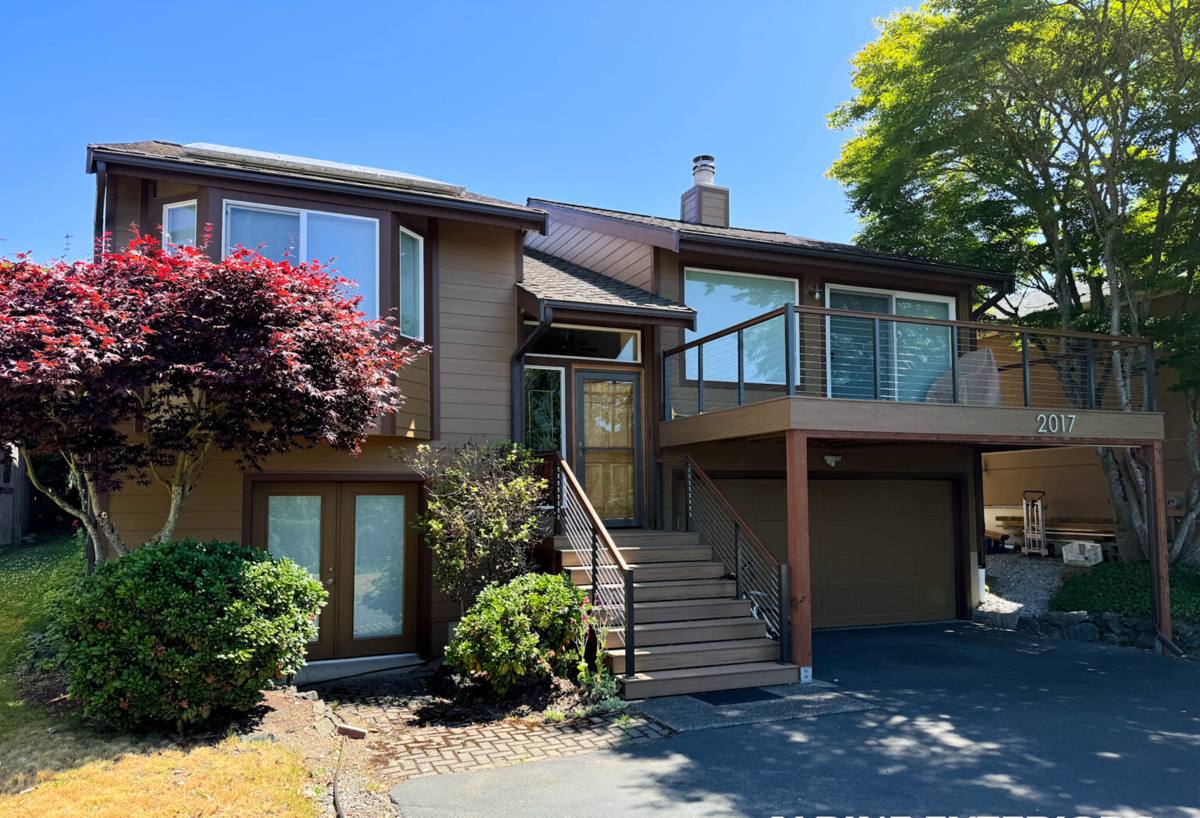
What Marine Climate Does to Windows Over Time
Whatcom County's coastal exposure creates a specific failure pattern in windows, and it's worth understanding before you decide what to replace and with what.
Salt Air
Airborne salt accelerates corrosion on exposed hardware, fasteners, and lower-quality aluminum components. It also breaks down some sealants and finishes faster than the manufacturer's inland testing would suggest. Windows facing west or south toward open water take the worst of it.
Driving Rain
Bellingham doesn't just get a lot of rain — a good share of it arrives sideways during winter storms. That means water is being pushed against and around window assemblies under pressure, not just falling on them. Flashing details and sill pans matter more here than in a drier climate, because a marginal seal that would hold in light rain can fail under wind-driven conditions.
Moss and Sustained Dampness
Extended damp periods let moss and algae establish on north-facing siding, trim, and window frames, particularly where sun exposure is limited. Beyond the cosmetic issue, sustained moisture against wood trim or a compromised seal is exactly the condition that leads to rot around a window opening if it isn't addressed.
Reading the Signs: Does Your Happy Valley Home Actually Need New Windows?
Not every window problem means full replacement. Some are sealant or hardware issues that a repair can solve. Here's what we actually look for during an assessment:
- Fogging or a visible haze between panes of double-pane glass — a sign the seal has failed and the gas fill is gone
- Soft or discolored wood trim at the sill or corners, especially on north- or west-facing walls
- Visible daylight or a noticeable draft around the sash when the window is closed and locked
- Difficulty opening, closing, or locking — often a sign the frame has shifted or the hardware has corroded
- Moss or persistent green staining on the frame or sill that keeps returning after cleaning
- Noticeably higher heating bills in winter compared to similar-sized homes nearby
- Paint that bubbles or peels specifically at window trim, even when the rest of the siding looks fine
If you're only seeing one or two of these, and the frame itself is sound, a repair or resealing job may be the more honest recommendation. We'll tell you that directly rather than pushing a full replacement you don't need yet.
Frame Material: What Actually Holds Up Here
There's no single "best" window material — there's a best fit for your home's exposure, budget, and how much upkeep you want to take on. Here's how the common options compare specifically under Bellingham's coastal conditions:
| Material | Coastal/Moisture Performance | Maintenance | Typical Trade-Off |
|---|---|---|---|
| Vinyl | Good — won't rot or corrode, handles moisture well | Low — occasional cleaning | Fewer color/finish options; frame can flex on very large openings |
| Fiberglass | Very good — dimensionally stable, resists moisture and salt exposure | Low | Higher upfront cost than vinyl |
| Wood (clad exterior) | Good on the exterior face if cladding is intact; interior wood still needs protection from condensation | Moderate to high — exterior cladding helps, but any breach exposes wood to rot | Best interior look and warmth; most exposure risk in a wet climate |
| Aluminum | Poor to fair without thermal breaks — conducts cold and is more prone to corrosion in salt air | Low, but corrosion can be hard to reverse | Slim sightlines, but generally not our first recommendation this close to the water |
For most Happy Valley homes, we lean toward vinyl or fiberglass for anything facing prevailing weather, and reserve wood-look interior finishes for rooms where the exterior exposure is more sheltered. This is a professional judgment based on how these materials perform in this specific climate over years, not a knock on any manufacturer's product line.
Glass Packages: Where the Real Performance Difference Is
Frame material gets most of the attention, but the glass package often matters more for comfort and condensation control in a wet, mild climate like ours.
- Double-pane, low-E glass is the baseline we recommend for any full replacement — it cuts heat loss and reduces interior condensation on cold, damp mornings.
- Argon or krypton gas fill between panes improves insulation value with no visible difference, and is worth the modest upcharge on most jobs.
- Warm-edge spacers (rather than older metal spacers) reduce the cold spot at the glass edge, which is where condensation and, eventually, seal failure tend to start first.
- Triple-pane is worth discussing for north-facing rooms or homes with persistent condensation complaints, though it adds cost and weight that should be weighed against the actual comfort gain for your specific rooms.
What a Correct Installation Actually Involves
The window unit itself is maybe half the job. The other half — the part that determines whether it still performs in ten years — is how it's installed.
Sill Pan Flashing
A proper sill pan creates a sloped, waterproof pocket under the window that directs any water that does get past the sash back outside, rather than into the wall framing. This is non-negotiable on a house that sees the amount of wind-driven rain Bellingham does.
Integrated Flashing Sequence
Flashing tape and building paper (or house wrap) need to be layered in the correct order — sill, jambs, then head — so water is always shed downward and outward, never trapped behind a layer above it.
Air Sealing, Not Just Caulk
A bead of exterior caulk is not an air seal. Proper installation includes backer rod and sealant at the right joints, plus interior air sealing at the frame-to-framing gap, so you're not just blocking bulk water but also stopping air infiltration and the moisture it carries.
Shimming and Fastening
The window needs to be shimmed plumb, level, and square, then fastened per the manufacturer's schedule — not just wherever it's convenient to drive a screw. An out-of-square install stresses the sash and shortens hardware life regardless of how good the window itself is.
Our Process, Start to Finish
- Walkthrough and assessment — we look at each window's condition, the wall assembly behind it, and any signs of past water intrusion before recommending anything.
- Honest scope — we tell you which windows need full replacement, which can be repaired, and why, in plain terms.
- Material and glass selection — matched to each opening's exposure, not a single spec applied to the whole house.
- Precise measurement — every opening is measured individually; older homes rarely have identical openings even when they look the same.
- Removal and inspection — when we pull the old window, we check the framing underneath for hidden rot or moisture damage before closing anything back up.
- Correct installation — sill pan, flashing sequence, air sealing, and fastening done to the standard described above, every time.
- Final walkthrough — we test operation and locking hardware and walk you through basic care before we consider the job done.
Why It Matters That We Already Work This Neighborhood
A crew that regularly works Happy Valley and the surrounding Bellingham hillside knows which orientations take the worst weather, what kind of framing and window ages are common in homes of a certain era here, and what a properly flashed opening needs to hold up through another wet season. That's not something you get from a crew doing one job in the area and moving on. It also means when you call about a drafty window or a failed seal two years after installation, you're calling people who are still working nearby and stand behind what they installed.
We'd also rather lose a sale than install the wrong thing. If your home's exposure calls for fiberglass over vinyl, or if a repair is genuinely the better call than a full replacement, that's what we'll tell you.
Living With Custom Windows in a Wet Coastal Climate
Even a correctly installed window needs a little seasonal attention here:
- Clean weep holes at the sill periodically so water can drain rather than pool
- Wipe down frames and tracks when moss or algae starts to establish, before it gets a foothold
- Check exterior caulking annually, particularly after a hard winter, and touch up any cracked joints
- Keep gutters and downspouts clear so runoff isn't sheeting directly down onto window heads
- Operate locking hardware through its full range a few times a year, especially on windows that see less daily use
None of this is heavy maintenance — it's the kind of upkeep that, done consistently, is the difference between a window that looks and performs well at year fifteen and one that's already showing problems at year seven.
If you're seeing drafts, fogged glass, or stuck sashes in your Happy Valley home, we're happy to take a look and give you a straight assessment — no pressure, no upsell, just what your windows actually need. Use the form below to request a free estimate.