 Bellingham Window
 Siding That Has to Work for Happy Valley's Climate
Happy Valley is a residential neighborhood in Bellingham, and like the rest of Whatcom County, it sits in a climate that is genuinely hard on exterior siding. Homes here deal with salt-laden air off the Salish Sea, long stretches of driving rain pushed in by wind off the water, and a moss and algae season that can run most of the year in shaded, damp spots. Siding that looks fine in a showroom in a dry climate does not always hold up under those conditions. A siding material and installation method that ignores any one of these three factors — salt, wind-driven rain, or moss — tends to show it within a few years, not a few decades.
This page focuses specifically on fiber cement siding for Happy Valley homes: what the climate demands of it, what a correct installation actually involves, and why we install only James Hardie fiber cement rather than the wider range of siding products on the market.
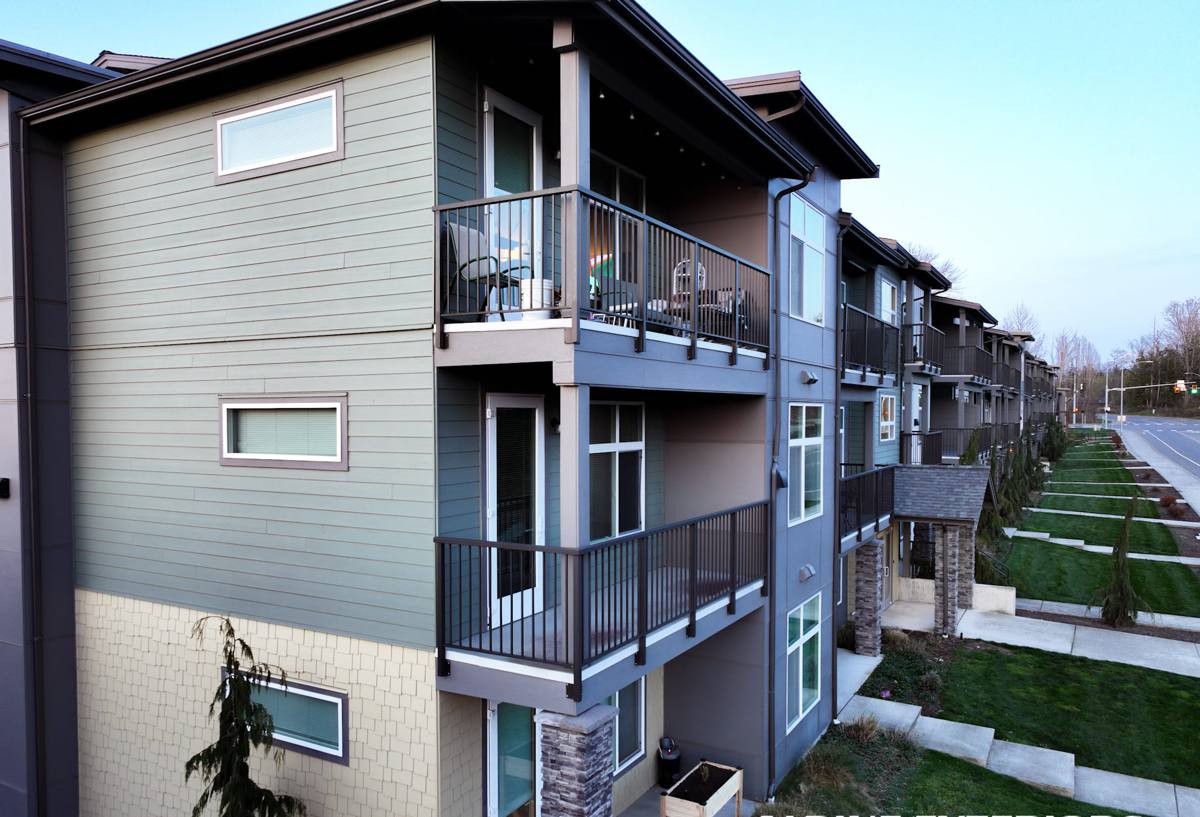
What Local Homes Are Up Against
Salt Air and Marine Exposure
Bellingham is a coastal city, and salt-laden moisture in the air corrodes exposed metal fasteners, degrades cheap coatings, and accelerates the breakdown of materials that are not engineered to resist it. Over time, this shows up as fastener staining, premature paint failure, and soft spots where moisture has been sitting against a vulnerable substrate. Siding and fastening hardware both need to be chosen with this in mind, not just for coastal-front properties but for inland neighborhoods too, since salt air travels.
Driving Rain, Not Just Rain
Whatcom County doesn't just get a lot of rainfall — a meaningful share of it arrives sideways, driven by wind off the water. That matters because driving rain finds every weak seam, gap, and improperly lapped joint in a siding system. A material can be perfectly water-resistant on its face and still let a house take on moisture damage if the installation behind it — flashing, house wrap, joint treatment — wasn't done to handle wind-driven water rather than just vertical rain.
A Long Moss Season
Cool temperatures, consistent moisture, and shaded exposures (common on north- and east-facing walls, and under mature trees) create ideal conditions for moss and algae growth for much of the year. Once organic growth gets established on a siding surface, it holds moisture against the material, which accelerates whatever deterioration process that material is already prone to. Siding that resists moisture intrusion at the material level, not just the paint level, holds up far better under sustained moss exposure.
Why We Install Only James Hardie Fiber Cement
We do not install vinyl, LP SmartSide, cedar, primed spruce, or other fiber cement brands. That is a deliberate standard, not a sales preference. Vinyl can warp and its seams are a weak point against driving rain; wood and wood-composite products need consistent maintenance to resist rot and moss in a climate this wet; and not every fiber cement product on the market is engineered the same way for moisture and climate performance.
James Hardie fiber cement is non-combustible, dimensionally stable in wet climates, and available in HZ product lines specifically engineered for regions with heavy moisture exposure — which describes Happy Valley and the rest of Bellingham accurately. The factory-applied ColorPlus finish is baked on under controlled conditions, which gives it better long-term color and moisture resistance than field-applied paint, and it comes with a strong transferable warranty when installed to Hardie's specifications. That last part — installed to spec — is doing a lot of work in that sentence, because fiber cement's real-world performance depends heavily on the installation, not just the product.
How Fiber Cement Compares for This Climate
| Material | Moisture & Rot Resistance | Moss/Algae Resistance | Salt Air Durability | Typical Maintenance |
|---|---|---|---|---|
| James Hardie Fiber Cement | High — engineered HZ lines for wet climates | High with correct clearances | High | Low; occasional wash |
| Vinyl Siding | Moderate; seams are vulnerable | Moderate; growth on surface | Moderate; can become brittle | Low, but limited repair options |
| Cedar / Primed Spruce | Low without diligent upkeep | Low; organic material feeds growth | Low to moderate | High; regular sealing/painting |
| LP SmartSide / Wood Composite | Moderate; sensitive to edge moisture | Moderate | Moderate | Moderate; edge sealing required |
What a Correct Fiber Cement Installation Involves
Fiber cement's reputation is only as good as the crew installing it. Most of the siding failures we see on inspections trace back to installation shortcuts, not the material itself. For a Happy Valley home, a correct installation includes:
- A sound, dry substrate — any rot, soft sheathing, or existing moisture damage gets repaired before new siding goes on, not covered up.
- A continuous weather-resistive barrier installed and lapped correctly, so it sheds wind-driven rain rather than trapping it against the wall.
- Proper flashing at every window, door, and penetration — this is where driving rain finds its way in if it's skipped or rushed.
- Correct fastener type, spacing, and depth per Hardie's installation specs, using fasteners rated to resist corrosion in a coastal-influenced climate.
- Manufacturer-specified clearances from grade, roofing, and decks, so moisture and organic debris don't sit against the bottom edge of the siding.
- Properly caulked and sealed joints and butt seams, sized and treated to move with the material rather than crack open over time.
- Field-cut edges sealed where required, since factory ColorPlus protection is strongest on unmodified factory edges.
Skip any one of those steps and you can end up with a material rated for a 30+ year lifespan showing moisture problems in under ten. That gap between "good product" and "good installed product" is the whole reason installation quality matters as much as brand selection.
How We Approach the Job
Assessment First
We start by inspecting the existing siding, sheathing, and trim to understand what's underneath before quoting the job. In an older wet-climate home, hidden moisture damage behind the existing siding is common enough that we plan for the possibility rather than being surprised by it mid-project.
Tear-Off and Substrate Repair
Old siding comes off, and any damaged sheathing, framing, or trim gets repaired or replaced before anything new goes up. Installing new siding over a compromised substrate just hides a problem that gets worse.
Weather Barrier and Flashing
We install a continuous weather-resistive barrier and detail flashing at every penetration point, since this layer — not the visible siding — does most of the work keeping wind-driven rain out of the wall assembly.
Installation to Manufacturer Spec
Hardie panels and lap siding go on following the manufacturer's fastening, clearance, and joint-treatment specifications, which is also what keeps the transferable warranty intact.
Finish and Cleanup
Trim, caulking, and touch-up work are completed, and the site is cleaned up before we walk it with the homeowner.
Maintenance in a Moss-Prone Climate
Fiber cement is low-maintenance compared to wood or wood composite, but "low-maintenance" isn't "no-maintenance" in a climate with this much moss pressure. A short, occasional routine keeps a Hardie installation performing the way it's designed to:
- Rinse siding periodically, especially on shaded north- and east-facing walls where moss and algae are most likely to establish.
- Keep gutters clear so overflow doesn't run down the siding face repeatedly.
- Trim back vegetation and tree cover that keeps a wall surface shaded and damp longer than it needs to be.
- Check caulked joints and trim seams every few years and have any cracked sealant redone before it lets moisture behind the siding.
- Address any impact damage or cracked panels promptly rather than waiting, since a compromised panel is a moisture entry point.
Cost Factors for a Happy Valley Project
| Factor | How It Affects the Job |
|---|---|
| Tear-off and substrate condition | Hidden rot or sheathing damage adds repair scope before new siding can go on |
| Home size and wall complexity | More corners, penetrations, and trim detail mean more labor and flashing work |
| Siding profile chosen | Lap siding, panel systems, and shingle-style Hardie products carry different material and labor costs |
| Access and site conditions | Slopes, tight lot lines, and multi-story walls affect staging and labor time |
| Trim and finish scope | Full trim replacement versus reusing sound existing trim changes overall cost |
We don't quote a job without seeing the house, since guessing at substrate condition and access from the street is how estimates end up wrong in either direction. What we can say honestly is that fiber cement typically costs more up front than vinyl and less over its lifetime than wood or wood composite once you account for painting, sealing, and repair.
Why Local Experience Matters Here
A crew that regularly works Bellingham neighborhoods like Happy Valley already knows how the local climate behaves against a wall assembly — which exposures take the worst of the driving rain, where moss tends to establish first, and how salt air factors into fastener and flashing choices even away from the immediate waterfront. That local pattern recognition shows up in small decisions during the job — where to add extra flashing attention, which joints need the most careful sealing — that a crew unfamiliar with this climate might not think twice about. It also means we're a known, findable business if a warranty question comes up years down the road, not a crew that worked the area once and moved on.
Get a Free, No-Pressure Estimate
If you're weighing a siding replacement on a Happy Valley home, we're glad to take a look, walk you through what we find, and put together a straightforward estimate — no pressure, no obligation. Use the form below to get started.