 Bellingham Window
 Roof Repair in Happy Valley: A Different Kind of Wear
Happy Valley sits close enough to Bellingham Bay and the surrounding hills that its homes take a specific kind of beating from the weather. It isn't one dramatic storm that wrecks a roof here — it's the slow, steady combination of salt-laced air, driving rain that comes in sideways off the water, and long stretches of shade and dampness that keep moss growing for most of the year. Roofs in this neighborhood don't usually fail all at once. They fail one weak point at a time: a flashing seam that finally gives out, a patch of moss that's held moisture against the decking long enough to rot it, a shingle tab that's been curling for two winters and just cracked. Repair work here has to account for all of that, not just patch the one leak someone noticed.
We work on roofs throughout this part of Bellingham regularly, and the patterns repeat house to house. Understanding those patterns is what separates a repair that lasts from one that reopens in a year.
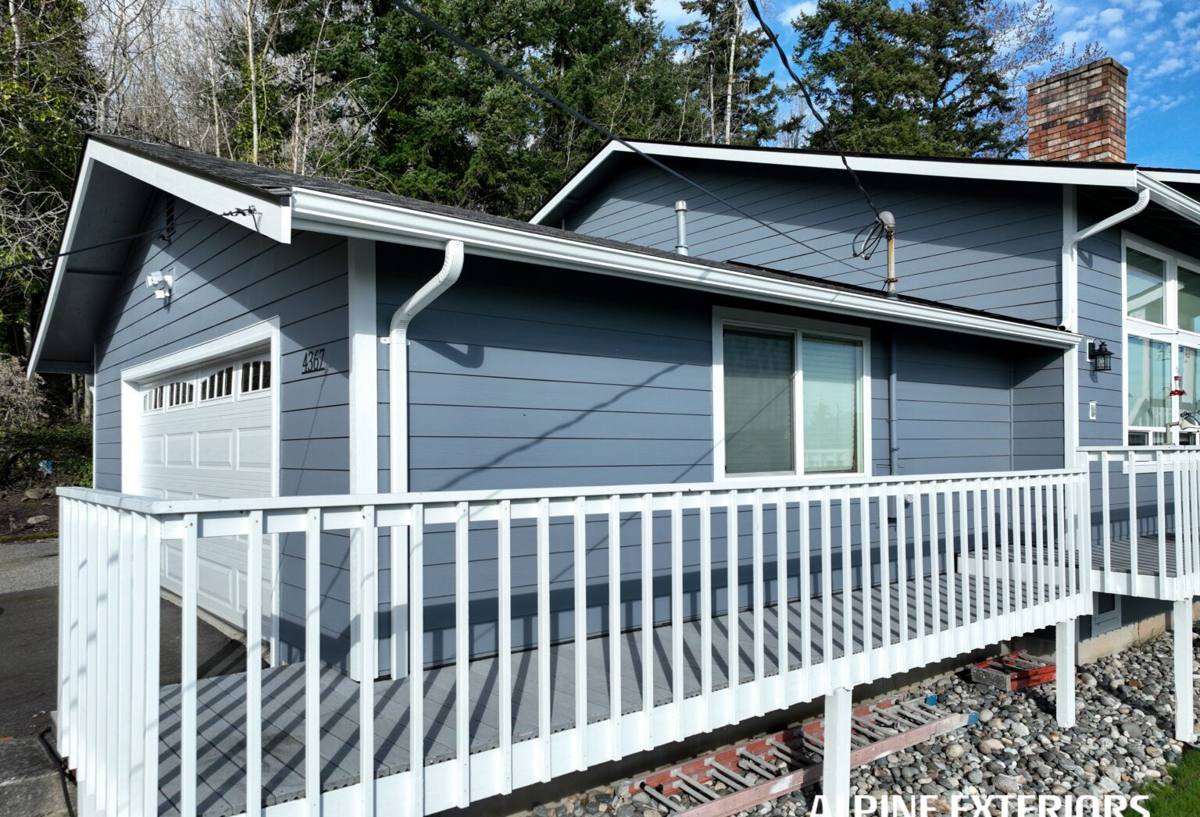
Signs a Happy Valley Roof Needs Repair, Not Replacement
Most homeowners call us because of a visible symptom — a stain on a ceiling, a shingle in the yard after a windstorm, moss creeping past the ridge line. The symptom rarely tells the whole story, so part of our job is figuring out whether what you're seeing is a contained, fixable problem or an early warning of something bigger.
- Isolated ceiling or wall stains that appear only during heavy rain, especially near a chimney, skylight, or roof valley
- Missing, cracked, or curling shingles in one section rather than spread evenly across the whole roof
- Moss buildup thick enough to hold water against the surface, particularly on north-facing slopes that stay shaded most of the day
- Rust streaks or gaps at metal flashing around vents, chimneys, and where roof planes meet
- Sagging or soft spots you can feel when walking a low-slope section, which usually points to decking damage underneath
- Granules collecting in gutters, a sign the shingle surface is wearing down but not necessarily failing yet
If the damage is confined to a section — a valley, a chimney flashing, a small area of storm damage — repair is almost always the right call. If we find soft decking spreading across multiple areas, or shingles that are brittle and failing uniformly because of age, we'll tell you honestly that repair is a short-term fix and replacement is the better use of your money. We don't have a reason to steer you toward the more expensive option; a roof that's genuinely repairable gets repaired.
What a Correct Repair Actually Involves
Diagnosis Before Any Work Starts
Leaks are deceptive. Water often travels along a rafter or sheathing seam before it drips through the ceiling, so the wet spot inside the house isn't always directly below the entry point on the roof. We trace the path from the interior stain or damp insulation back up to the actual source before we touch a single shingle. Guessing and re-shingling the wrong spot is one of the most common reasons a "repaired" roof leaks again the next season.
Flashing and Underlayment, Not Just Shingles
A huge share of the roof leaks we find in this neighborhood aren't shingle failures at all — they're flashing failures. Step flashing along a wall, counter-flashing at a chimney, and valley metal all take direct hits from the driving, wind-pushed rain that's common off the bay. When we open up a repair area, we replace compromised flashing and underlayment along with any damaged shingles, rather than just laying new shingles over a flashing detail that's already failing. Shingles alone don't stop water; the flashing and underlayment underneath them do the real work at every transition point.
Moss and Organic Growth Removal
Moss doesn't just look bad — its root structure holds moisture against the roofing material and, over time, lifts shingle edges and works into fastener holes. Correct moss treatment means physically removing growth (not just chemically killing it and leaving it in place), clearing debris from valleys and gutters, and, where it makes sense, installing zinc or copper strips near the ridge that let rain carry inhibiting minerals down the slope on future rains.
Matching Materials Honestly
On an older roof, we won't always be able to get an exact color or product match for a repaired section — manufacturers change product lines and discontinue colors over the years. We'll tell you upfront if a perfect match isn't realistic and show you the closest available option before any work starts, rather than surprising you with a patch that stands out.
Common Problems We See on This Side of Bellingham
| Issue | Typical Cause | Why It Matters Here |
|---|---|---|
| Moss and algae buildup | Shaded, damp roof sections that dry slowly | Long wet seasons give moss more months per year to establish and spread |
| Corroded fasteners and flashing | Salt-carrying air moving inland from the bay | Metal components corrode faster near coastal air than they would inland |
| Wind-driven leaks at valleys and walls | Rain pushed sideways by storms rather than falling straight down | Standard flashing laps can be overwhelmed if not detailed for driving rain |
| Soft or rotted decking | Slow leaks left unaddressed, often behind moss or failed flashing | Not visible until a repair opens the area up, which is why diagnosis matters |
| Granule loss and shingle brittleness | UV exposure combined with repeated wet-dry cycling | Accelerates aging on roofs already past 15-20 years old |
Our Repair Process
1. On-Site Inspection
We walk the roof (or use a lift/ladder for steep or high sections) and inspect from the interior attic space if accessible, checking decking, insulation, and any staining pattern. We photograph problem areas so you can see exactly what we're describing.
2. Written Scope and Straight Talk on Options
You get a clear explanation of what's actually wrong, what a repair will address, and — if relevant — an honest note on remaining roof life so you're not blindsided by a bigger issue down the road. No pressure toward replacement if repair genuinely solves the problem.
3. The Repair Itself
We remove damaged material back to sound decking and flashing, replace what's compromised, and reinstall roofing material matched as closely as possible to the surrounding area. Fasteners, underlayment, and flashing are treated as part of the repair, not skipped to save time.
4. Debris and Moss Clearing
Gutters, valleys, and downspouts near the repair area get cleared as part of the job, since trapped debris is often what caused or worsened the original problem.
5. Final Walkthrough
We review the completed repair with you, point out what was found and fixed, and flag anything else worth keeping an eye on — even if it's not something we're recommending action on yet.
Repair vs. Replacement: How We Decide
| Factor | Leans Toward Repair | Leans Toward Replacement |
|---|---|---|
| Extent of damage | Localized to one section or detail | Spread across multiple slopes or the whole roof |
| Roof age | Under roughly 15 years with sound decking | Approaching or past typical material lifespan |
| Decking condition | Solid, no soft spots found on inspection | Rot or soft decking found in multiple areas |
| Material availability | Close match still manufactured | Product long discontinued, poor match likely |
| Repair history | First or second repair on this roof | Repeated repairs to the same or nearby areas |
We use this kind of comparison as a starting point, not a rigid formula — every roof and every homeowner's plans (how long you intend to stay in the home, upcoming budget priorities) factor into the honest recommendation we give you.
What Affects the Cost of a Roof Repair
We're not going to quote a number without seeing the roof, but the factors that move a repair estimate up or down are consistent:
- Size of the affected area — a single flashing repair costs far less than reworking an entire valley or slope
- Roof pitch and access — steep roofs or ones needing a lift take more time and safety setup
- Decking condition — if we find rot once we open the area, replacing sheathing adds material and labor
- Material type — composition shingle, cedar shake, and metal repairs all involve different techniques and material costs
- Moss and debris severity — heavy buildup adds cleanup time before the repair itself can start
- Number of penetrations involved — chimneys, skylights, and multiple vents each add flashing detail work
Straightforward, small-area repairs are generally a modest expense; anything involving decking replacement or multiple flashing details runs higher. We'll walk you through exactly what's driving your number before we start, not after.
A Maintenance Checklist Between Repairs
A repair fixes what's currently wrong; a little maintenance in between keeps the next problem from starting. This is worth doing once or twice a year in a climate like ours:
- Clear gutters and downspouts before the fall rains arrive, and again mid-winter if trees are nearby
- Look at shaded, north-facing roof sections for moss starting to establish — early removal is far easier than a heavy mat later
- Check attic insulation and roof decking from the inside for any new staining after a heavy storm
- Have flashing around chimneys, skylights, and vent pipes visually checked every couple of years, since these are the first spots to fail
- Trim back branches that overhang the roof to reduce shade, debris, and moss-friendly conditions
Why Hiring a Crew That Already Works This Neighborhood Matters
Roofing techniques that work fine in a dry climate can fall short here. Flashing laps sized for straight-down rain don't always hold up against wind-driven rain off the bay. Ventilation and moss-prevention details that are optional elsewhere aren't optional in a place where a roof stays damp for months at a stretch. A crew that repairs roofs throughout Bellingham and Whatcom County regularly has already seen how local conditions age different roofing materials, and that shows up in the details — where extra flashing gets added, which valleys get reinforced, which moss-prone spots get a permanent zinc strip instead of a one-time treatment.
It also means faster, more accurate diagnosis. A leak pattern that might take an out-of-area crew a couple of visits to track down is often one we can identify quickly, because we've traced the same pattern on other roofs nearby facing the same wind and moisture exposure.
Get an Honest Look at Your Roof
If you're dealing with a leak, visible moss buildup, storm damage, or you just want a second opinion before committing to a bigger project, we're happy to take a look. We'll give you a straight answer on what's actually needed — repair, monitoring, or replacement — and a clear estimate with no pressure attached. Reach out using the form below to schedule a free, no-obligation estimate.