 Bellingham Window
 Windows Built for Lynden's Weather, Not Just Its Openings
Lynden sits in the Nooksack River valley, surrounded by farmland, with the Cascade foothills to the east and Bellingham Bay not far to the west. That geography matters more than most homeowners realize when it comes to windows. The same marine air that moves in off the bay carries humidity and salt-laden moisture well inland, and it settles into the valley alongside fog, wind-driven rain, and long stretches of overcast, wet weather for much of the year. Add in the shade from mature trees and the shorter winter light that keeps siding and trim damp for days at a time, and you get a climate that is genuinely hard on window assemblies — not because the glass fails, but because the installation around it does.
A window is only as good as the flashing, sealant, and framing detail behind it. In a dry climate, a mediocre install might go unnoticed for a decade. In Whatcom County, water finds every shortcut within a few wet seasons. That's the gap we focus on closing for Lynden homeowners: not just swapping glass, but making sure what's behind the trim actually keeps water out.
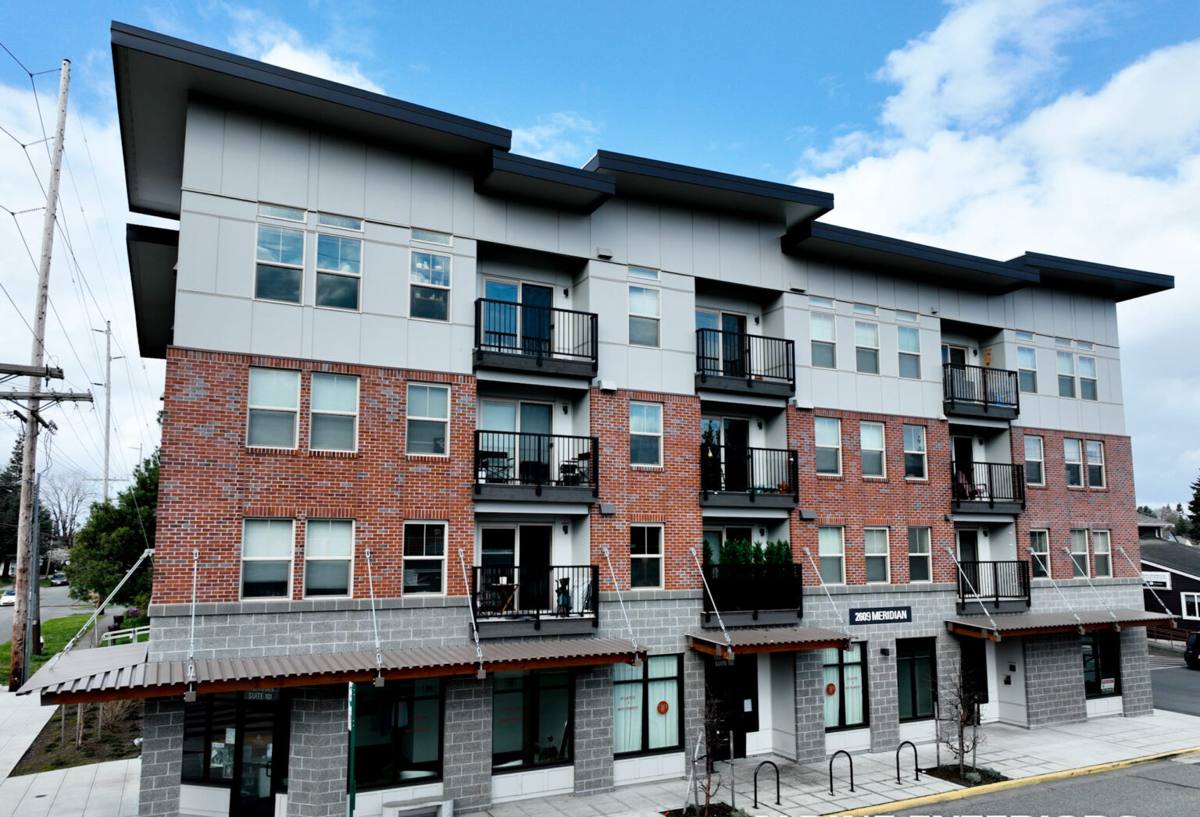
What Driving Rain and Moss Season Actually Do to a Window Opening
Three things wear on windows here more than in most parts of the country:
- Wind-driven rain pushes water sideways and upward against the building envelope, not just straight down. Openings that rely on caulk alone instead of proper flashing and drainage will eventually let water in around the corners.
- Extended moss and mildew season keeps moisture sitting against exterior surfaces for longer stretches each year. Wood trim and sills that don't shed water quickly stay damp long enough for rot and moss growth to take hold.
- Marine humidity works its way into wall cavities through poorly sealed or poorly integrated windows, contributing to condensation, fogged glass between panes, and eventually soft framing that isn't visible until it's a bigger repair.
None of this is dramatic on its own. It's cumulative — small moisture intrusion, repeated year after year, that eventually shows up as a soft sill, a stained wall below a window, or a frame that no longer seals tight.
Signs a Lynden Home Needs Window Replacement or a Corrective Reinstall
Not every issue means full replacement. But these are the signals worth taking seriously before they become structural:
- Visible fogging or moisture between panes of double- or triple-glazed glass — a sign the seal has failed
- Soft, spongy, or discolored wood trim or sill around the window frame
- Drafts you can feel near the frame even when the window is fully latched
- Difficulty opening, closing, or locking windows that used to operate smoothly
- Visible moss or persistent green staining on the sill, trim, or siding directly below a window
- Interior condensation on the glass that shows up regularly, even in normal indoor humidity
- Paint that's peeling or bubbling specifically around window openings and nowhere else
If you're only seeing one of these, it might be a targeted repair. If you're seeing several across the same wall or the same side of the house, that's usually a sign the original installation — not just the window unit — needs to be corrected.
What a Correct Window Installation Actually Involves
The window unit itself is the easy part. The installation detail is where jobs succeed or fail over time, and it's where corners get cut most often. A proper install for a Lynden home includes:
Opening Preparation
Removing the old window and inspecting the rough opening for rot, soft framing, or prior water damage before anything new goes in. Installing over a compromised opening just seals the problem behind new trim.
Sill Pan Flashing
A sloped or pan-style flashing at the sill that directs any water that gets past the window back outside the wall assembly, rather than letting it pool and soak into framing.
Integration With the Water-Resistive Barrier
Flashing tape and house wrap need to be layered correctly — shingle-style, top over bottom — so water sheds down and out rather than working its way behind the barrier. This is one of the most commonly rushed steps on production-style installs.
Sealant, Not Just Caulk
Exterior sealant has a job to do around the frame perimeter, but it's a backup to good flashing, not a substitute for it. An installer relying on caulk alone to keep water out is setting the window up to fail once that bead eventually cracks or shrinks.
Insulation and Air Sealing at the Frame
Gaps between the window frame and rough opening need to be filled with appropriate low-expansion foam or backer rod and sealant — enough to stop drafts and moisture movement without bowing the frame out of square.
Interior and Exterior Trim
Trim that's reinstalled cleanly, caulked appropriately, and painted or sealed to shed water rather than trap it against the wood.
Choosing Window Materials for Lynden's Climate
There's no single "best" window material — it depends on the home, the budget, and how much long-term maintenance you want to take on. Here's how the common options actually compare for a wet, marine-influenced climate like ours:
| Frame Material | Moisture Performance | Maintenance | Typical Trade-Off |
|---|---|---|---|
| Vinyl | Good — won't rot, minimal moisture absorption | Low — occasional cleaning | Less rigid over very large spans; color options limited |
| Fiberglass | Excellent — very stable, resists warping and moisture | Low | Higher upfront cost than vinyl |
| Wood (unclad) | Requires diligent upkeep in this climate | High — repainting, sealing, inspection | Classic look, but demands consistent maintenance in wet seasons |
| Wood-clad (vinyl or aluminum exterior) | Good if cladding and flashing are installed correctly | Moderate | Interior wood look with better exterior protection, but installation quality matters more |
| Aluminum | Fair — prone to condensation without thermal breaks | Low | Can conduct cold and sweat on interior in our climate without upgraded thermal separation |
For most Lynden homes — including the older farmhouses and the newer construction going up around town — we steer people toward vinyl or fiberglass for exterior exposure, or a well-detailed wood-clad unit where the interior wood look matters. We're honest about wood-frame windows: they can look great, but in a climate with this much sustained moisture, they only perform well with an owner committed to regular upkeep. That's a maintenance conversation we'd rather have upfront than after paint starts failing.
Our Window Installation Process in Lynden
- On-site assessment. We look at the existing windows, the condition of the opening, drainage around the foundation, and any signs of past moisture issues before recommending anything.
- Honest scope and options. You get a clear picture of what's actually needed — full replacement, targeted reinstall, or repair — along with material options that fit the home and budget.
- Opening inspection at removal. Once the old window is out, we check the framing for hidden rot or damage before installing anything new, and flag it before proceeding if we find something.
- Proper flashing and barrier integration. Sill pan, flashing tape, and house wrap integration done in the right order, every time — not skipped to save an hour.
- Install, seal, and insulate. The window is set square and plumb, insulated at the frame, and sealed on the exterior with appropriate materials.
- Trim and finish. Interior and exterior trim reinstalled and finished so it sheds water and matches the home.
- Final walkthrough. We check operation, seals, and finish with you before calling the job done.
New Construction and Full Replacement Around Lynden
We work on both ends of the spectrum in this area — new construction window installs on homes going up around Lynden's growing residential areas, and full replacement projects on older farmhouses and homes throughout the surrounding valley that are due for an upgrade. The core installation standards don't change between the two, but the starting point does. New construction gives us a clean rough opening to flash correctly from scratch. Replacement work means assessing what's already there, correcting any past installation shortcuts, and making sure the new window doesn't inherit the same problems as the old one.
Rot repair is a common companion to replacement work here. If moisture has been getting behind a window for years, it's not unusual to find soft sheathing or framing once the old unit comes out. We address that as part of the install rather than covering it back up, because a new window over a damaged opening just delays the same failure.
Why Hiring a Crew That Works Lynden Regularly Matters
Window installation isn't complicated in theory, but it's easy to do just well enough to pass a quick look and still fail in three to five years once the flashing detail is tested by a real wet season. A crew that works Whatcom County regularly has seen what actually goes wrong here — where water tends to find its way in, which details matter most on older farmhouse construction versus newer builds, and how to sequence an install so it holds up through repeated wind-driven rain and a long moss season rather than just looking finished on install day.
That local pattern recognition is hard to replace with a generic installation checklist. It's the difference between a window that's sealed correctly for this climate and one that's sealed correctly for a drier one.
What Affects the Cost of Window Installation in Lynden
| Factor | Why It Matters |
|---|---|
| Window size and quantity | Larger openings and whole-house projects have different labor and material needs than single-window swaps |
| Frame material | Vinyl, fiberglass, and wood-clad options carry different upfront costs |
| Condition of the existing opening | Hidden rot or framing damage found during removal adds repair scope |
| New construction vs. replacement | Replacement work involves removal, disposal, and matching existing trim and siding |
| Access and site conditions | Second-story windows, tight clearances, or landscaping obstacles affect labor time |
Every home is different, so rather than quote a number that won't actually apply to your project, we'd rather walk the job with you and give you a real figure based on what's in front of us. Broadly, homeowners in this area should expect installed window pricing to vary widely depending on the factors above — which is exactly why an on-site look matters more than a phone estimate.
If you're noticing drafts, moisture, or a window that just doesn't operate like it used to, we're happy to take a look and give you a straight assessment — no pressure, no upsell. Fill out the form below to schedule a free estimate for your Lynden home.