 Bellingham Window
 Why Puget's Coastal Climate Is Hard on Windows
Homes in the Puget area of Bellingham deal with a combination of weather stresses that most window manufacturers design around but don't always design for. Salt-laden air off the water accelerates corrosion on hardware, fasteners, and unprotected metal components. Driving rain, pushed sideways by wind rather than falling straight down, finds any gap in flashing or sealant that a calmer climate would never expose. And the long, damp moss season that Whatcom County is known for keeps shaded walls and window sills wet for weeks at a time, which is exactly the condition that rot, mildew, and failed seals need to take hold.
None of this means windows in Puget need to be exotic or overbuilt. It means the installation has to respect how water actually moves around a house in this climate, and the materials have to be chosen with salt exposure and prolonged moisture in mind, not just looks or price. A window that performs fine in a drier inland climate can fail here in a fraction of the time if it's installed the same way.
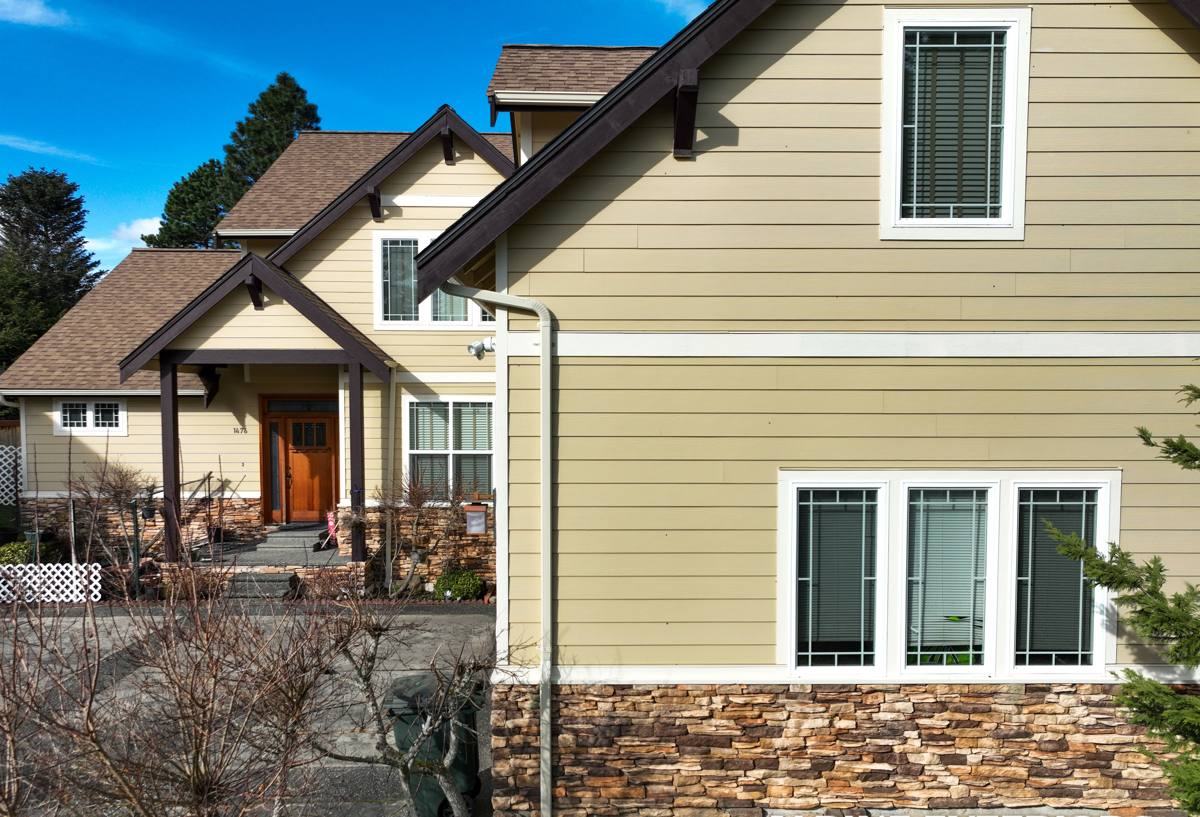
What a Correct Window Installation Actually Involves
Window installation is often treated as a simple swap: pull the old unit, set the new one, caulk the edges. That approach is a big reason so many replacement windows in wetter climates start leaking within a few years. A correct installation is really a small water-management project built around the window opening.
Removing the Old Window Without Hiding Problems
Tear-out is the point where hidden damage gets found — or gets covered up. Soft or discolored framing at the sill, rotted sheathing, or old flashing that was never sealed properly needs to be addressed before a new window goes in, not painted over and hoped for the best. In a climate with a long wet season, skipping this step is how a homeowner ends up paying twice.
Flashing and Water Management
The single most important part of the job is the flashing system: a sloped sill pan that directs any water that gets past the window back outside instead of into the wall, side flashing that integrates with the house wrap in the correct shingle-lap order (so water always sheds downward and outward), and head flashing above the window to break up wind-driven rain before it reaches the frame. In an area exposed to salt air, we also pay attention to fastener compatibility so dissimilar metals aren't left in contact where they can corrode against each other over time.
Insulation and Air Sealing
The gap between the window frame and the rough opening needs to be filled with a low-expansion foam or backer rod and sealant designed for that purpose — not stuffed with excess fiberglass, which holds moisture, or over-filled with high-expansion foam, which can bow the frame and cause the sash to bind. Done correctly, this step also cuts down on drafts and the cold spots that show up around older windows in winter.
Interior and Exterior Finish Work
The final sealant bead on the exterior and the trim work on the interior aren't cosmetic afterthoughts — they're the last line of defense and the first thing a homeowner notices if it's done poorly. We match reveal lines, set trim so it doesn't trap water against the siding, and use exterior sealants rated for the temperature and moisture swings this region actually sees.
Signs Your Puget Home's Windows Are Already Struggling
Because coastal moisture and salt exposure work slowly, window problems in this area often show up as small annoyances long before they become expensive repairs. Worth checking for:
- Fogging or a milky haze between panes of double-glazed glass, which means the seal has failed and the insulating gas has escaped
- Visible gaps, cracking, or peeling in the exterior caulk line around the frame
- Soft, discolored, or spongy wood at the sill or lower corners of the frame
- Windows that are increasingly hard to open, close, or lock — a sign the frame has shifted or swollen
- Persistent condensation or a musty smell along the interior sill, especially on north-facing or shaded walls
- Corroded or stiff hardware, including locks, cranks, and hinges, from prolonged salt air exposure
- Visible moss or dark staining building up on the sill or the siding just below the window
Any one of these on its own isn't an emergency. Several at once, especially on the same wall, usually means water is getting behind the window rather than just at the surface.
Choosing a Window Built for Salt Air and Driving Rain
There's no single "best" window material for every home — the right choice depends on exposure, budget, and how much upkeep a homeowner wants to take on. Here's how the common options generally compare for a coastal climate like Bellingham's:
| Material | Salt air / corrosion behavior | Moisture behavior | Maintenance |
|---|---|---|---|
| Vinyl | Won't corrode; hardware quality varies by manufacturer | Doesn't absorb water or rot; relies on good seals | Low — occasional cleaning |
| Fiberglass | Very stable, minimal expansion or corrosion risk | Excellent moisture resistance, dimensionally stable when wet | Low |
| Wood, painted or stained | No metal corrosion issue, but finish needs upkeep | Prone to rot if seals or paint fail in a wet climate | High — regular refinishing |
| Aluminum-clad wood | Cladding resists weather; hardware and fasteners need to be corrosion-rated | Good if flashing detail is correct; interior wood still needs protection | Moderate |
For most homes in Puget, we lean toward vinyl or fiberglass frames specifically because they don't give salt air and standing moisture a foothold, and we always spec corrosion-resistant hardware regardless of frame material. We won't sell a homeowner on a product that looks good on a showroom floor but creates a maintenance burden in this specific climate — that's a trade-off worth being upfront about rather than glossing over.
How Our Installation Process Works
- On-site assessment. We look at each window opening individually — orientation, exposure to wind-driven rain, existing flashing condition, and any signs of past water intrusion.
- Product selection. We walk through frame material, glass package, and hardware options based on that specific wall's exposure, not a one-size-fits-all recommendation.
- Careful removal. Old units come out without forcing or cracking surrounding siding or trim, and we inspect the rough opening before anything new goes in.
- Repair as needed. Any soft framing, rotted sheathing, or failed old flashing is repaired before the new window is set — never covered over.
- Flashing and sealing. Sill pan, side flashing, and head flashing go in following correct water-shedding order, integrated with the existing house wrap or building paper.
- Setting and shimming. The window is leveled, plumbed, and squared, then shimmed so it operates smoothly without stressing the frame.
- Insulating and sealing the gap. Low-expansion foam or backer rod and sealant fills the perimeter without bowing the frame.
- Interior and exterior finish. Trim, caulk lines, and touch-up work are completed to match the surrounding wall and shed water properly.
- Final walkthrough. Every window is opened, closed, and locked to confirm smooth operation before we consider the job done.
What Affects the Cost of Window Installation in Puget
Window installation pricing varies enough by project that we don't quote flat per-window numbers online — but the factors that move the price are consistent and worth understanding before you start comparing bids:
| Factor | Why it matters |
|---|---|
| Frame material | Vinyl is typically the most budget-friendly; fiberglass and clad-wood cost more up front but often less over time |
| Glass package | Low-E coatings and gas-filled double panes cost more but perform significantly better in a wet, temperate climate |
| Number and size of windows | Larger openings and specialty shapes require more material and labor time |
| Condition of the existing opening | Rotted framing or old flashing failures found during tear-out add repair time before the new window can go in |
| Access and story height | Second-story or hard-to-access windows require staging or lift equipment |
| Siding and trim tie-in | Matching existing trim profiles or repairing siding around the opening adds finish work |
| Disposal and site conditions | Hauling away old units and managing debris on the site is part of every accurate quote |
The honest answer to "how much will this cost" is that it depends on which of these factors apply to your home — which is exactly what an in-person estimate is for.
Why Hiring a Crew That Already Works Puget Matters
A window installer who mostly works drier inland climates can still do competent work, but they're often solving a different problem than the one Puget homes actually have. A crew that regularly works this stretch of Whatcom County already knows which walls tend to take the worst of the wind-driven rain, how quickly moss and organic growth build up on shaded siding, and why corrosion-resistant hardware isn't optional here the way it might be a hundred miles inland. That familiarity shows up in the small decisions — flashing sequence, sealant selection, hardware spec — that determine whether a window is still performing well in ten years or leaking in three.
It also means a faster, more accurate estimate. We're not guessing at how this climate treats a window opening; we're accounting for it from the first walkthrough.
Caring for New Windows Through Moss Season and Beyond
A correctly installed window in Puget still needs a small amount of seasonal attention to get its full lifespan out of the local climate:
- Clear moss, leaves, and debris from window sills and adjacent gutters before the wet season builds up, so water has a clear path to drain
- Rinse salt residue off frames and hardware periodically, especially on walls with direct exposure to marine air
- Check exterior caulk lines once a year for cracking or gaps and have them touched up before they fail completely
- Exercise locks, cranks, and hinges through the seasons so hardware doesn't seize from disuse combined with corrosion
- Watch for early fogging between panes, which is much cheaper to address as a single seal failure than as a full window replacement later
None of this is heavy maintenance — it's the kind of occasional attention that keeps a good installation performing the way it was designed to for its full warranty life and beyond.
If your windows in Puget are drafty, fogging, sticking, or just original to a home that's due for an honest look, we're glad to come take a look and put together a straightforward, no-pressure estimate — no obligation, just a clear picture of what your home actually needs.