 Bellingham Window
 Why Metal Roofing Makes Sense in Sehome
Sehome sits close enough to the water and under enough tree cover that its homes take a specific kind of weather beating: salt-tinged air rolling in off Bellingham Bay, long stretches of driving rain through fall and winter, and a moss season that can run most of the year on north-facing slopes and shaded roof planes near Sehome Hill. A roof here isn't just shedding water a few weeks a year — it's under near-constant moisture load, and it's doing it under a tree canopy that drops needles, leaves, and organic debris into every valley and gutter line. Metal roofing holds up well against that combination when it's specified and installed correctly. It doesn't when it's treated like a drop-in replacement for whatever was on the house before.
This page is about doing that installation right for a Sehome property specifically — not metal roofing in the abstract, but what it needs to actually perform in this neighborhood's rain, moss, and salt-air exposure.
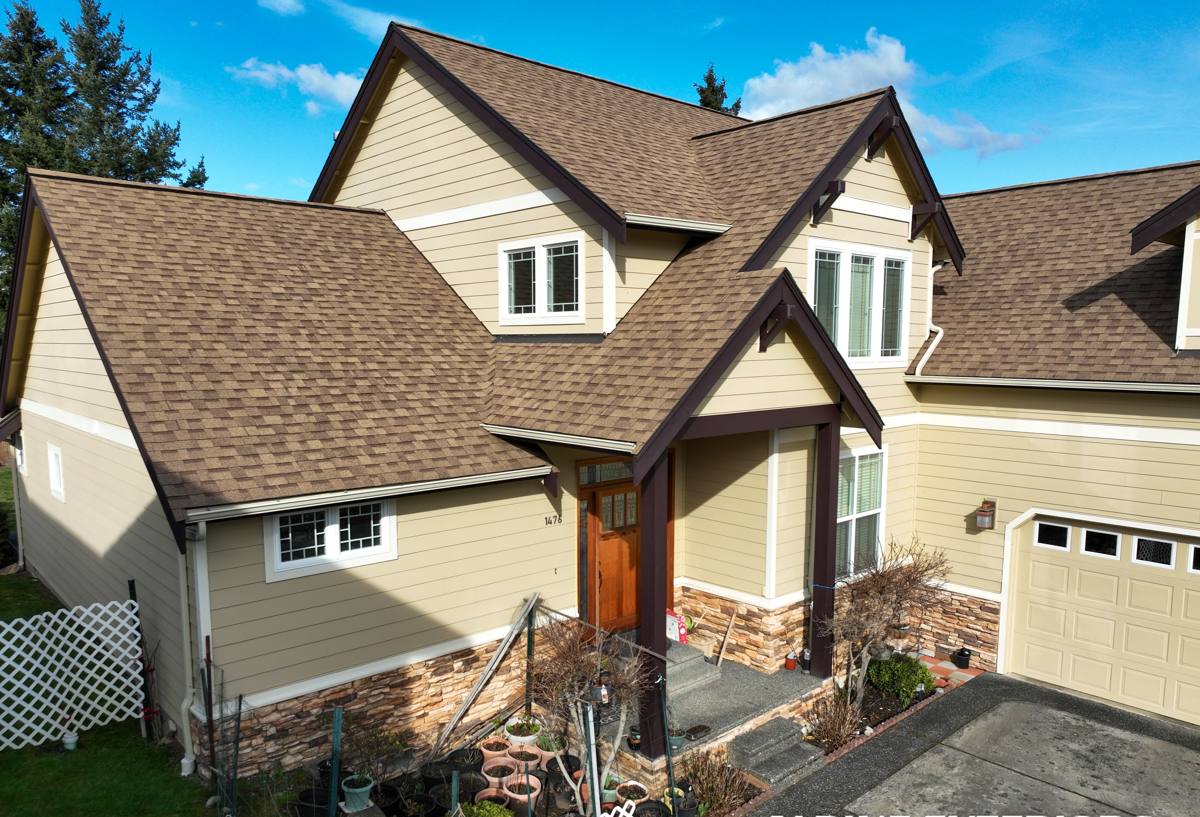
What Bellingham's Climate Actually Does to a Roof
Three things drive almost every roofing problem we see in this part of Whatcom County:
- Wind-driven rain. Storms off the Sound don't just fall straight down — they drive rain sideways under poorly lapped flashing and up under exposed fastener heads, which is why flashing detail and fastener choice matter more here than in drier climates.
- Persistent moss and moisture. Shaded, tree-covered lots like much of Sehome stay damp longer after a storm than open, sun-exposed roofs. Moss doesn't just look bad — it holds water against the roof surface and works into seams and laps over time.
- Salt air corrosion. Proximity to the bay means airborne salt settles on exposed metal — fasteners, flashing, cut edges — and accelerates corrosion unless the coatings, fastener grade, and finish are chosen with that exposure in mind.
None of these are reasons to avoid metal roofing. They're reasons to be specific about panel style, fastener type, and finish rather than defaulting to whatever's cheapest or most common inland.
What a Correct Metal Roof Installation Involves
Underlayment and deck prep
In a climate this wet, we don't cut corners on underlayment. A high-quality synthetic or self-adhered ice-and-water membrane at eaves, valleys, and penetrations gives the roof a real second line of defense if wind-driven rain ever gets past the panel seams — which, over enough years and enough storms, it eventually will at any roof's weak points. The deck itself gets inspected and repaired before anything goes down; metal panels will telegraph and outlast a bad deck, which just moves the problem, it doesn't solve it.
Flashing and penetrations
Most metal roof failures we're called out to fix aren't panel failures — they're flashing failures around chimneys, skylights, vents, and valleys. Correct step flashing, counterflashing, and sealed penetration boots matter more on a metal roof than almost any other component, because the panels themselves are the easy part.
Fastening and ventilation
Exposed-fastener panels need the correct fastener type, spacing, and torque — overdriven or underdriven screws are the single most common cause of leaks on this panel style. Ridge and soffit ventilation needs to be sized correctly too; a sealed-up attic under a metal roof in a moss-prone, moisture-heavy climate is a recipe for condensation problems that have nothing to do with the roofing material itself.
Choosing the Right Metal Roofing Style for a Sehome Home
There isn't one "correct" metal roof for every house — it depends on roof pitch, budget, how visible the roof is from the street, and how much maintenance the homeowner wants to take on. Here's how the common options stack up for this specific climate:
| Panel Style | Best Fit | Moisture & Moss Behavior | Maintenance Load |
|---|---|---|---|
| Standing seam (concealed fastener) | Most Sehome homes, especially shaded or lower-pitch roofs | Fewest penetration points; sheds moss and debris well on adequate pitch | Low — occasional debris clearing |
| Exposed-fastener panel | Budget-conscious projects, outbuildings, lower-visibility roof planes | More fastener penetrations for wind-driven rain to test over time | Moderate — fastener checks every few years |
| Stone-coated steel | Homes wanting a shake or tile look with metal's durability | Textured surface can hold moisture and debris longer in shaded areas | Moderate — needs debris clearing from texture |
For heavily shaded lots — common on the wooded side of Sehome — we lean toward standing seam more often than not, simply because fewer penetration points means fewer places for moss-holding moisture and wind-driven rain to find a way in.
Moss, Debris, and Long-Term Moisture Management
A metal roof doesn't grow moss the way a shingle or wood roof does, but it isn't immune to the effects of standing debris. Needles and leaves that pile up in valleys or against a lower slope can trap moisture against the finish and, over years, lead to the kind of localized staining or coating breakdown that a clear roof plane wouldn't see. On tree-covered Sehome lots, we pay particular attention to:
- Valley design that sheds debris instead of catching it
- Gutter and downspout capacity sized for the volume of rain and debris this area actually sees
- Panel finish and coating rated for both UV and the kind of shaded, damp-most-of-the-year exposure common here
None of this is exotic — it's just paying attention to how water and debris actually move on this specific kind of lot, rather than installing to a generic spec sheet.
Our Process for a Sehome Metal Roof
- On-site assessment. We look at the existing roof, deck condition, tree exposure, drainage paths, and how the house is oriented to prevailing wind and rain, not just square footage.
- Tear-off vs. overlay decision. Metal can sometimes go over an existing roof, but we're honest about when that's the right call versus when a full tear-off is what the deck and long-term performance actually need.
- Material and panel selection. Based on pitch, visibility, and shading, we walk through panel style, finish, and fastener options that fit the house and the budget — not just what's fastest to install.
- Installation. Deck prep, underlayment, flashing, panels, and ventilation, in that order, with attention to the details that actually fail in this climate.
- Cleanup and walkthrough. We clear the site and walk the finished roof with the homeowner so there are no surprises.
Why a Crew That Already Works Sehome Matters
Sehome's mix of mature tree canopy, sloped lots, and older housing stock means access and staging aren't always straightforward — narrow driveways, overhead branches, and drainage that has to be respected during tear-off, not just at the end of the job. A crew that's worked this neighborhood before knows to plan for that before the first panel ever goes on the truck, not discover it mid-project. Familiarity with Bellingham's permitting process and typical inspection expectations also keeps a metal roof project moving instead of stalling on paperwork.
Just as important: a local crew is still local after the install. If a windstorm off the bay lifts a piece of flashing or a fastener works loose after a few winters, we're not a distant call center — we're the same crew that installed it, working the same neighborhood.
Homeowner Maintenance Checklist
Metal roofing is low-maintenance, not no-maintenance. A few times a year in this climate is enough:
- Clear needles, leaves, and debris from valleys and around penetrations, especially after fall leaf-drop
- Check gutters and downspouts for blockages that can back water up under the drip edge
- Look for any lifted flashing after major windstorms, particularly around chimneys and skylights
- On exposed-fastener panels, scan for backed-out or corroding screws every couple of years
- Touch up any scratched or exposed metal promptly — salt air works fastest on bare, unprotected edges
What Affects the Cost of a Metal Roof in This Area
| Factor | Why It Matters Here |
|---|---|
| Roof pitch and complexity | More valleys, dormers, and penetrations mean more flashing work and labor time |
| Tear-off vs. overlay | Deck condition under an older roof often isn't known until tear-off begins |
| Panel style and finish | Standing seam and higher-grade coatings cost more upfront but reduce long-term maintenance |
| Tree cover and site access | Shaded, tree-lined lots common in Sehome can require extra care and staging time |
| Ventilation upgrades | Older homes may need ridge or soffit vent work added to perform correctly under new metal |
We give homeowners a real range based on their specific roof, not a one-size number — every one of these factors moves the estimate up or down.
If you're weighing metal roofing for a home in Sehome, we're glad to come take a look and walk through what your specific roof needs. There's a free, no-pressure estimate form below — no obligation, just an honest read on your roof and your options.