 Bellingham Window
 Why Siding in Sehome Wears Differently Than Siding Inland
Sehome sits close enough to Bellingham Bay that homes here take on a slightly different weather load than siding a few miles inland in Whatcom County. It's not dramatic, but it's constant: a steady dose of salt-tinged air off the water, wind-driven rain that hits walls at an angle instead of just falling straight down, and a long, damp shoulder season each fall and spring when moss and algae get a real foothold on anything shaded or slow to dry. None of that is unique to Sehome, but the combination of an older, established neighborhood with a mix of home ages and siding types means we see a wide range of siding problems here — from failing paint on old wood lap to buckled vinyl to soft spots on hardboard products that were never meant to handle this much cumulative moisture.
Siding repair in a neighborhood like this isn't a one-size job. A repair that works fine on a newer, well-ventilated home in a drier part of the county can fail fast on an older Sehome home with tighter eaves, mature landscaping that shades the walls, or a wall assembly that was never built with a modern drainage plane. Doing it right means reading the house first, not just the damage.
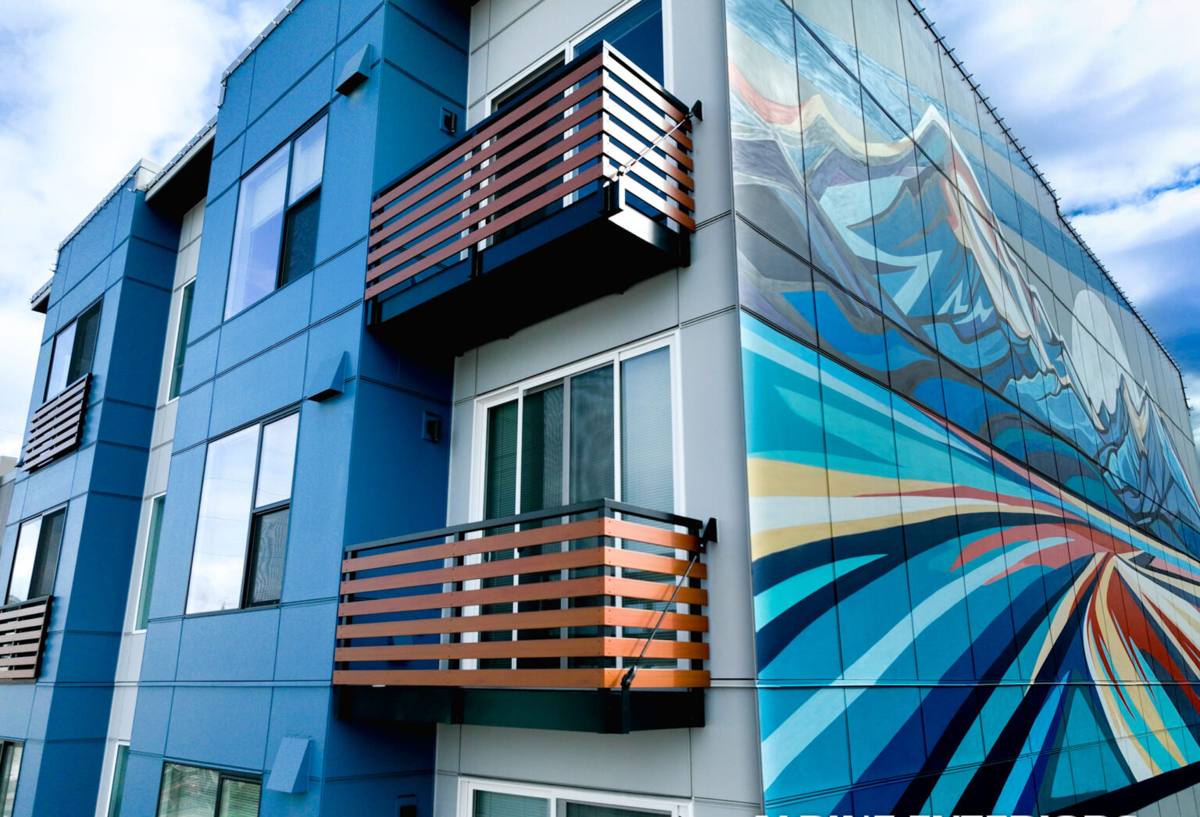
What Bellingham's Climate Actually Does to Siding Over Time
Salt Air
Airborne salt from the bay doesn't dissolve siding, but it accelerates corrosion on fasteners, flashing, and any exposed metal trim. When those fail quietly behind the siding, water gets a path inward long before anyone notices a problem on the surface.
Driving Rain
Whatcom County storms often come with real wind behind them. Rain that's driven sideways finds every gap in caulking, every under-lapped seam, and every spot where flashing was skipped or installed short. Repeated wetting and drying at those weak points is what turns a small installation flaw into a rot problem.
Moss and Algae Season
Our long, mild, wet fall-through-spring stretch is ideal moss weather. Moss doesn't just look bad — it holds moisture directly against the siding surface for weeks at a time, which is exactly the condition that breaks down paint film, swells wood and engineered wood products, and stains fiber cement finishes if they're not properly maintained.
Signs a Sehome Home Needs Siding Repair, Not Just a Paint Job
- Soft, spongy, or crumbling siding when you press on it — especially near the bottom courses, window sills, and anywhere downspouts discharge close to the wall
- Paint that's bubbling, peeling, or repeatedly failing in the same spots year after year
- Visible gaps, buckling, or waviness in panels, especially after a windy storm season
- Dark streaking, persistent moss, or green-black staining that comes back within a season of cleaning
- Cracked or missing caulking at trim, corners, and butt joints
- Interior signs — musty smell, peeling interior paint, or soft drywall on an exterior wall that lines up with exterior damage
- Rust streaks below nail heads or metal flashing
Any one of these can be a small fix. Several of them together, especially on one wall or elevation that catches more weather, usually means water has been getting behind the siding for a while and the repair needs to include what's underneath, not just what's visible.
What a Correct Siding Repair Actually Involves
A repair that only replaces the boards you can see is a cosmetic fix, not a real repair. Done properly, siding repair in a climate like ours has three parts:
1. Diagnose the Water Path
Before anything gets replaced, we trace how water is getting in — a failed seam, missing flashing, bad caulking, or a grading/gutter issue throwing water at the wall. Replacing siding without fixing the entry point just buys you a few more years before the same spot fails again.
2. Check What's Behind the Siding
Once boards are pulled, we look at the water-resistive barrier (house wrap or building paper), the sheathing, and the framing underneath. Soft or delaminated sheathing and rotted framing need to be addressed before new siding goes back on — covering damaged structure with new siding is how small problems become expensive ones.
3. Match or Upgrade the Material
Where the surrounding siding is sound, we match it as closely as possible. Where a section is failing repeatedly — or where the original material simply isn't holding up to Bellingham's climate — we'll tell you honestly and talk through whether a full or partial re-side with a more durable material makes more long-term sense than another patch.
Repairing Different Siding Types: What We See in Sehome
| Siding Type | Common Failure Mode Here | Repair Reality |
|---|---|---|
| Older painted wood lap | Paint failure, checking, soft spots at butt joints | Repairable if wood is sound; recurring rot usually means it's time to talk replacement |
| Vinyl siding | Buckling from wind and heat cycling, cracked panels, faded color mismatch on repairs | Patchable, but exact color/profile matches get harder to find on older installations |
| Hardboard/composite (older LP-type products) | Edge swelling, softness at seams and bottom edges from repeated wetting | Once swelling starts it typically spreads; spot repair often just delays a larger fix |
| Fiber cement (James Hardie) | Caulking and paint touch-up needs, occasional impact damage | The cement substrate itself doesn't absorb and swell like wood-based products, so repairs are usually cosmetic, not structural |
We install James Hardie fiber cement exclusively for full re-sides, but siding repair calls aren't limited to Hardie homes — we work on whatever is currently on your house. Part of an honest repair visit is telling you when a material has reached the point where patching it no longer makes financial sense compared to replacing that section, or the whole elevation, with something built for this climate.
Our Repair Process
- On-site assessment. We walk the exterior, probe suspect areas, and check flashing, caulking, and drainage details, not just the obvious damage.
- Honest scope and options. You get a clear explanation of what's causing the problem, what a proper repair involves, and — when relevant — whether repair or partial replacement is the more sensible long-term call.
- Remove and inspect. Damaged siding comes off, and we check the water-resistive barrier and sheathing underneath before anything new goes back on.
- Fix the cause. Flashing, house wrap, or trim details that let water in get corrected, not just covered over.
- Install and finish. New siding is installed to manufacturer spec, seams and penetrations are properly sealed, and paint or caulk lines are finished to blend with the surrounding wall as closely as the existing material allows.
- Walkthrough. We show you what we found, what we did, and anything worth keeping an eye on going forward.
What Drives the Cost of a Siding Repair
| Factor | Why It Matters |
|---|---|
| Extent of hidden damage | Rotted sheathing or framing behind the siding adds labor and material beyond the visible repair area |
| Material match | Older vinyl or discontinued colors/profiles can be harder or impossible to match exactly |
| Access and elevation | Second-story sections, tight side yards, or areas requiring staging or lift access take more time |
| Number of affected areas | Several small repair points across the house often cost less combined than one large concentrated failure |
| Root cause fixes | Correcting flashing, grading, or drainage issues is what prevents the same repair from repeating in a few years |
We give straightforward, written estimates that separate the repair itself from any root-cause corrections, so you know exactly what you're paying for and why.
Why a Crew That Already Works in Sehome Matters
Sehome's mix of home ages, lot sizes, and street layouts means every job comes with its own access and logistics questions — narrow driveways, hillside lots, mature trees close to the house, or older construction details that aren't common in newer Whatcom County developments. A crew that's already worked in the neighborhood has a feel for these details before we even get a ladder up, which means fewer surprises mid-job and a more accurate estimate up front. Familiarity with Bellingham's permitting expectations and typical inspection requirements also keeps a repair project moving instead of stalling on paperwork.
Just as importantly, a local crew is accountable locally. We're not passing through — if a repair doesn't hold up the way it should, we're the same company you call, working in the same neighborhoods, season after season.
Preventing the Next Repair
- Keep gutters clean and downspouts directed away from the foundation and walls
- Trim back vegetation and tree limbs that keep siding shaded and slow to dry
- Have moss and algae growth cleaned gently — pressure washing directly into siding seams can force water in rather than out
- Re-caulk trim, corners, and penetrations every few years rather than waiting for visible cracking
- Walk your home's exterior once or twice a year, especially after major windstorms, and check the usual failure points: bottom courses, window sills, and anywhere two materials meet
A little regular attention goes a long way in a climate that never really stops testing your siding.
When Repair Turns Into Replacement
Sometimes a repair call ends with a straightforward fix. Other times, we find that the damage is spread across enough of the wall, or the underlying material has reached the end of what it can reasonably handle, that patching it further isn't the responsible recommendation. When that's the case, we'll say so plainly and explain why — along with what a full or partial re-side with James Hardie fiber cement would involve, including its non-combustible construction, factory-applied ColorPlus finish, and product lines engineered for exactly the kind of wet, coastal-influenced climate Sehome sits in. There's no pressure either way; our job on a repair visit is to give you an accurate picture, not to upsell a bigger project than the house needs.
If you're seeing paint failure, soft spots, buckling, or persistent moss on your Sehome home's siding, we're happy to take a look and give you a straightforward, no-pressure assessment. Fill out the form below to schedule a free estimate.