 Bellingham Window
 Siding Replacement for Sehome Homes
Sehome sits close to Bellingham Bay, wraps around a wooded hillside near Western Washington University, and carries a mix of older homes alongside newer infill. That combination — salt-tinged air off the water, tree cover that keeps siding shaded and damp, and a hillside that funnels driving rain sideways during winter storms — is hard on exterior siding in ways that flat, open neighborhoods don't experience the same way. A siding replacement here isn't just a cosmetic project. Done right, it's what keeps moisture out of your walls for the next several decades. Done wrong, or with the wrong material, it's a problem you'll be dealing with again sooner than you should.
This page covers what siding replacement actually involves for a Sehome property, why the local climate changes the calculus, and why we install only James Hardie fiber cement — never vinyl, LP SmartSide, or bare wood — on the homes we work on.
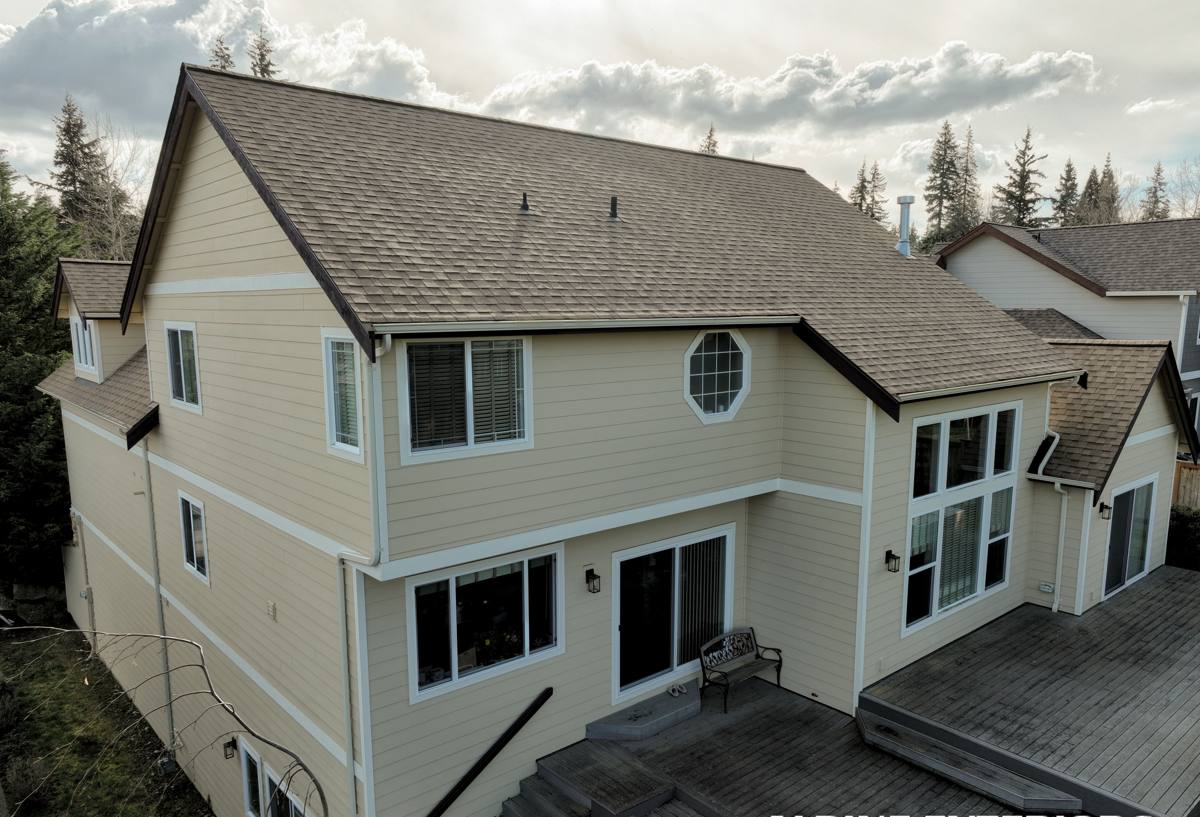
What Bellingham's Climate Does to Old Siding
Salt Air and Slow Corrosion
Homes closer to the water pick up airborne salt that settles on exterior surfaces. It doesn't corrode fiber cement the way it can degrade some metal fasteners and trim, which is one reason fastener choice and flashing details matter as much as the siding panel itself.
Driving Rain, Not Just Rain
Bellingham doesn't just get a lot of rain — a good share of it arrives horizontally, pushed by wind off the Sound. That means siding on the exposed sides of a house takes direct wind-driven moisture, not just runoff from the roofline. Lap siding with too little overlap, gaps at butt joints, or caulk standing in for proper flashing will let that water find a way behind the cladding over time.
Moss Season Runs Long
Whatcom County's moss season isn't a few weeks — it's most of the year. Shaded, north-facing walls and anything under mature tree canopy (common on Sehome's hillside lots) stay damp longer between dry spells, which is exactly the environment moss and mildew need to take hold on siding, trim, and fascia.
Signs a Sehome Home Needs Siding Replacement
Some warning signs are obvious from the ground; others take a closer look. Before you commit to a full replacement — or decide you don't need one yet — walk the exterior and check for:
- Soft or spongy spots when you press on siding, especially near the bottom courses and around window trim
- Visible moss or dark green-black staining that keeps coming back after cleaning
- Paint that's peeling or bubbling rather than just fading — often a sign moisture is trying to escape from behind the siding
- Warped, cupped, or separating boards, particularly on north- and west-facing walls
- Cracked or crumbling caulk at seams, corners, and trim joints
- Any musty smell or visible staining on interior walls that share an exterior wall with damaged siding
- Siding that's original to a home built more than 25-30 years ago, especially if it's wood or an older composite product
One or two of these on their own might just mean a repair. Several together, or anything involving soft wood or interior staining, usually means the water has already gotten past the surface and a repair won't hold for long.
Why We Install Only James Hardie in This Climate
We standardized on James Hardie fiber cement because it holds up to exactly the conditions Sehome deals with. It's non-combustible, doesn't swell or rot when it takes on moisture the way wood-based products can, and James Hardie's HZ5 product line is engineered for wetter, harsher climates like ours — not a generic national product stretched to fit every region.
The factory-applied ColorPlus finish also matters more here than in drier climates. A finish that's baked on and warrantied against cracking, chipping, and fading holds color and integrity through repeated wet-dry cycles far better than field-applied paint, which is where a lot of older siding starts failing first — at the finish, long before the substrate underneath is compromised.
We don't install vinyl, LP SmartSide, Cemplank, Allura, or bare cedar and primed spruce. Each of those has real strengths, but none of them match fiber cement's combination of moisture tolerance, fire resistance, and finish durability in a marine climate with this much sustained dampness. We'd rather turn down a job than install something we don't think will hold up on a Bellingham exterior.
What a Correct Siding Replacement Actually Involves
It Starts Underneath the Siding, Not With It
The siding itself is the visible part, but the water-resistive barrier and flashing underneath it are what actually keep a wall dry. A correct replacement means removing the old siding down to the sheathing, checking for hidden rot or damage, repairing anything compromised, and installing a proper weather-resistive barrier with correctly lapped and taped seams before a single new board goes up.
Flashing at Every Vulnerable Point
Windows, doors, deck ledgers, and roof-to-wall intersections are where most siding failures start. Each of these needs its own flashing detail — not just caulk — so water sheds outward instead of tracking behind the siding.
Fastening and Clearances Matter More Here
James Hardie has specific fastening patterns and minimum clearances from grade, roofing, and decks, and those specs exist for a reason in a climate like ours. Skipping them is one of the most common ways an otherwise good siding job fails early — and it's a mistake that doesn't show up until years later, once moisture has already gotten in.
Our Process on a Sehome Property
Sehome's terrain and layout add a few practical wrinkles that a crew unfamiliar with the neighborhood might not plan for well:
Hillside Access and Staging
A number of Sehome lots sit on sloped ground with narrow driveways or street parking near campus. We plan material staging and scaffolding around that ahead of time so the job doesn't stall out waiting on access on day two.
Working Around Mature Trees
Established tree cover is part of what gives Sehome its character, but it also means we're often working close to root systems and low branches. We protect landscaping during tear-off and haul-away rather than treating it as an afterthought.
Permits and Older Construction
Older homes sometimes reveal surprises once the old siding comes off — outdated sheathing, old repairs, or wiring and vents that need to be worked around. A local crew that pulls permits in Bellingham regularly knows what inspectors are going to want to see and builds that into the plan instead of finding out midway through.
What Affects the Cost of Your Project
Every siding replacement is priced around the specifics of the house, but a few factors consistently move the number up or down. This isn't a quote — it's meant to help you understand what you're actually paying for.
| Factor | Why It Matters |
|---|---|
| Extent of hidden damage | Rot found under old siding has to be repaired before new siding goes on — this is the biggest source of cost variance on older Sehome homes |
| Home height and access | Two-story and hillside homes need more scaffolding and staging time than single-story, flat-lot homes |
| Siding profile chosen | Lap, shingle, and panel James Hardie products differ in material and labor cost |
| Trim and detail work | Homes with more corners, window trim, and architectural detail take longer to fit and finish correctly |
| Tree and landscape protection | Dense tree cover near the house adds time for protecting plantings and hauling debris carefully |
| Existing moisture barrier condition | A full tear-off with new weather-resistive barrier costs more upfront than a straightforward re-side, but it's what actually stops future water intrusion |
Why Hire a Crew That Already Works Sehome
Siding contractors who mostly work flatter, drier neighborhoods can still do competent work, but they haven't necessarily dealt with hillside staging, dense tree canopy, or the specific way wind-driven rain hits homes near the bay. A crew that already works Sehome and the surrounding Bellingham neighborhoods has seen how these houses actually fail — which walls take the worst weather, which older construction details tend to hide problems, and what it takes to get a permit and inspection through without delays. That local pattern-recognition is worth more than it sounds like on paper; it's the difference between a crew guessing at a Sehome home's problem areas and one that already knows where to look.
Get a Straight Answer About Your Siding
If you're noticing moss that won't quit, soft spots near the bottom of your walls, or siding that's simply reached the end of its life, we're glad to take a look and give you an honest read on what your home actually needs — not an upsell. Reach out for a free, no-pressure estimate and we'll walk your Sehome property with you.