 Bellingham Window
 South Hill's Siding Problem Is Location, Not Just Age
South Hill sits above Bellingham Bay, and that elevation changes how weather hits a house. Wind off the water drives rain sideways into wall surfaces that would stay drier on a low, sheltered lot. Mature trees and uphill neighbors keep many South Hill properties shaded for long stretches of the day, which means siding here often doesn't get the sun exposure that helps other homes dry out between storms. Combine that with Whatcom County's long wet season running from fall through spring, and you have siding that spends months at a time damp, not just occasionally rained on.
That's the environment a siding job in this neighborhood actually has to solve for. A product and installation method that's fine on a flat, sun-exposed lot across town can fall short here. Anyone installing siding on a South Hill home needs to plan for near-constant moisture load, not average western Washington weather.
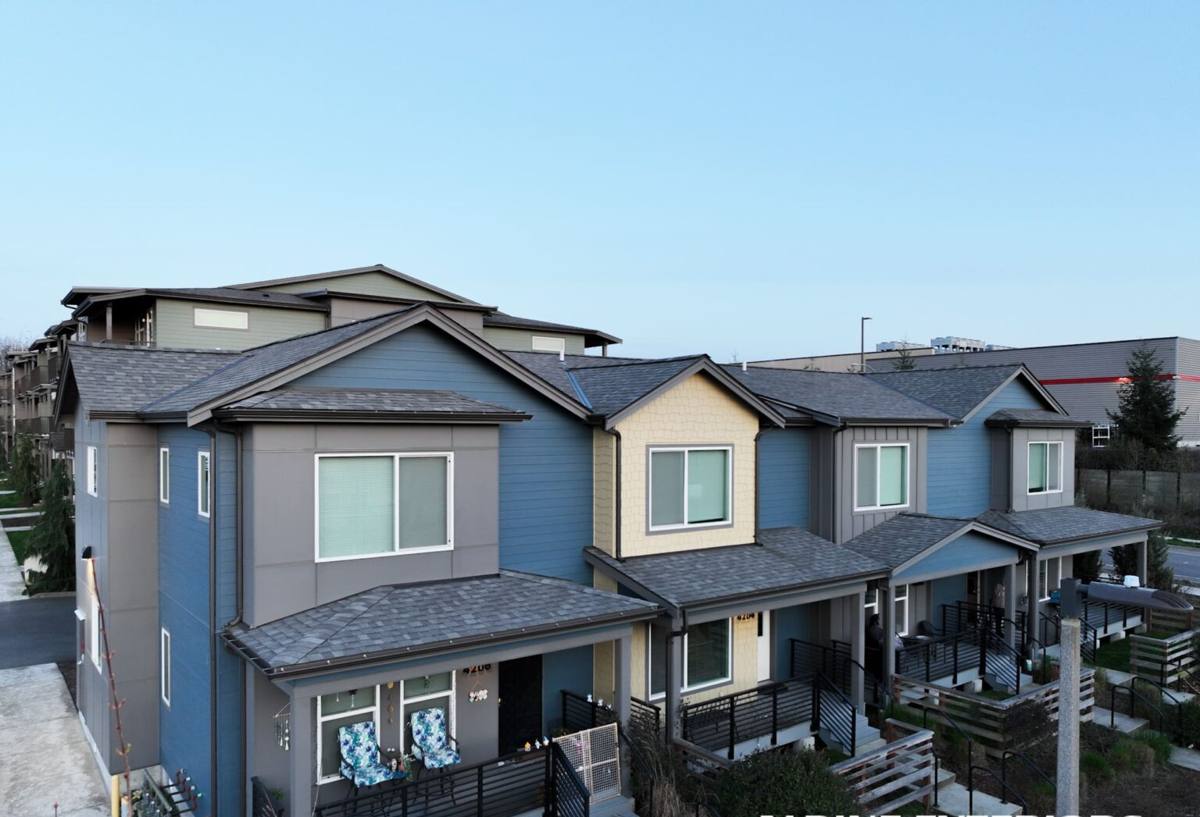
What Coastal Exposure Does to the Wrong Siding
Salt Air and Metal Fasteners
Homes with any bay exposure deal with a fine salt content in the air that accelerates corrosion on unprotected metal — fasteners, flashing, trim edges. Over years, corroding fasteners can loosen siding panels or leave rust streaks bleeding down the face of the wall. Correct installation uses corrosion-resistant fasteners rated for coastal exposure and keeps metal flashing properly lapped and sealed so it isn't taking on standing moisture.
Moss, Algae, and Constant Dampness
Whatcom County's moss season isn't a few weeks — it's most of the year on shaded, north-facing, or tree-covered walls, which describes a lot of South Hill lots. Moss and algae need sustained moisture to establish, and siding that stays damp longer gives them exactly that. Left unaddressed, moss holds water against the surface, degrades caulking and paint finishes faster, and can work into seams and laps over time. The fix isn't a chemical wash every spring — it's a siding system and installation detail that don't give moss and algae the damp surface they need to take hold in the first place.
What a Correct Siding Installation Actually Involves
Drainage Plane and Rainscreen Gap
Behind the visible siding, there should be a continuous weather-resistant barrier and, ideally, a small gap (a rainscreen) that lets any moisture that does get past the siding drain and evaporate instead of sitting against the sheathing. On a wall this exposed, skipping or shortcutting that drainage plane is one of the most common ways siding jobs fail early — not because the surface material was wrong, but because water had nowhere to go once it got behind it.
Flashing at Every Penetration
Windows, doors, hose bibs, vents, light fixtures — every penetration through the siding is a place water can find its way in if the flashing isn't installed and lapped correctly, shingle-style, so water is always directed outward and down. On a wind-driven-rain site like South Hill, flashing detail work matters more than it does on a calmer lot, because rain isn't just falling on these penetrations, it's being pushed into them.
Fastening to Manufacturer Spec
Fiber cement siding has specific fastener spacing, penetration depth, and clearance requirements from the manufacturer. Overdriven or underdriven fasteners, wrong spacing, or fastening too close to panel edges can crack panels or create gaps that let moisture in — all things that show up as problems years later, long after the crew that cut corners is gone.
Why We Install Only James Hardie Fiber Cement
We install James Hardie fiber cement siding exclusively. We don't install vinyl, LP SmartSide, primed spruce, or cedar — not because those products have no place in the market, but because we've made a professional judgment that fiber cement is the right standard for homes in this climate, and we'd rather be excellent at one system than average across several.
James Hardie's ColorPlus finish is baked on at the factory under controlled conditions, which gives it more consistent, longer-lasting color adhesion than field-applied paint. The HZ5 product line is engineered specifically for climates like ours — cold, wet winters and sustained moisture exposure — rather than a general-purpose formulation. Fiber cement itself is non-combustible, doesn't rot, and doesn't feed moss and algae the way wood-based products can. It's a material built to hold up to exactly the conditions South Hill throws at it, and it carries a strong, transferable manufacturer warranty when installed to spec.
How Siding Materials Compare for a Home Like Yours
| Factor | James Hardie Fiber Cement | Vinyl | Cedar / Wood | LP SmartSide |
|---|---|---|---|---|
| Moisture resistance | Excellent — engineered for wet climates | Good on the surface, but seams and gaps can trap water behind it | Poor without constant upkeep | Moderate — engineered wood core is moisture-sensitive at cut edges |
| Moss/algae resistance | High, factory finish resists buildup | Moderate, can stain and streak | Low, feeds organic growth | Moderate |
| Maintenance | Low — occasional wash, no repainting for years | Low, but cracks and fades over time | High — regular sealing, staining, repair | Moderate — caulking and edge sealing upkeep matters |
| Fire resistance | Non-combustible | Combustible | Combustible | Combustible (engineered wood) |
| Typical lifespan installed to spec | Decades, backed by strong warranty | Shorter, especially in harsh coastal wind | Shortest without heavy maintenance | Moderate, dependent on moisture management |
None of this means the other products are junk — vinyl and LP SmartSide both have a place in the market and plenty of installed examples that hold up fine in the right conditions. It's that for a bay-exposed, shaded, high-moisture site like South Hill, the trade-offs of those products (seam vulnerability, edge sensitivity, upkeep demands) are ones we're not willing to install and stand behind. Fiber cement's trade-offs — it's heavier, requires specific fastening, and costs more upfront — are ones we think are worth it for what a South Hill home actually faces year-round.
Our Installation Process
- On-site assessment — we look at your current siding, sheathing condition, existing flashing, and any moisture damage before quoting anything.
- Tear-off and sheathing check — old siding comes off and we inspect the sheathing underneath for rot or soft spots before anything new goes up.
- Weather-resistant barrier and flashing — a continuous drainage plane goes on first, with flashing installed and lapped correctly at every window, door, and penetration.
- James Hardie panel or lap installation — installed to manufacturer fastening spec, with attention to clearances at grade, trim, and roofline.
- Trim, caulking, and touch-up — factory-finished edges and cut ends get properly sealed so the ColorPlus finish isn't compromised at joints.
- Final walkthrough — we go over the finished job with you before calling it done.
Signs Your South Hill Home's Siding Needs Attention
- Soft or spongy spots when you press on the siding, especially near the bottom courses
- Persistent moss or algae growth on shaded or north-facing walls that comes back soon after cleaning
- Peeling, bubbling, or chalky paint that keeps needing repainting more often than it used to
- Visible warping, buckling, or gaps opening up between panels or at trim joints
- Rust streaking below fasteners or metal flashing
- Rising heating bills that suggest moisture or air leaks behind the siding
- Interior signs like musty smells or discoloration on walls that back up to exterior siding
Cost Factors for a South Hill Siding Project
Every home is different, so we won't quote a number without seeing your house, but the main things that move the price on a South Hill siding project are: the size and number of stories of the home, how much trim and architectural detail is involved (dormers, gables, bump-outs), what condition the sheathing is in once old siding comes off, and site access — hillside lots with limited driveway space or steep yards can add time and staging cost compared to a flat, easy-access property. Homes with existing moisture damage will also need sheathing repair as part of the job, which is something we can only scope accurately once the old siding is off.
Why Hire a Crew That Already Works This Neighborhood
South Hill has its own quirks — hillside driveways and tight side-yard access, a mix of older homes with existing moisture issues hiding under old siding, and a shared exposure to bay wind and rain that flatter Bellingham neighborhoods don't deal with the same way. A crew that's worked this area before knows to check for those things upfront instead of discovering them mid-job. That familiarity also means fewer surprises on permitting and site logistics with the City of Bellingham, and a better sense of what a correctly installed, weather-tight job actually needs to hold up here for the long haul.
If your South Hill home's siding is showing its age, or you're just planning ahead, we're happy to take a look and give you a straightforward, no-pressure estimate — no invented urgency, just an honest read on what your home needs.