 Bellingham Window
 Edgemoor sits close enough to the water and deep enough in tree cover that its homes take a different kind of weather beating than siding a few miles inland. Salt-laden air off Bellingham Bay, wind-driven rain that finds its way sideways under trim, and a moss season that can run eight or nine months a year all work on exterior siding at once. Repairing siding here isn't just patching a hole — it's understanding why that hole showed up in the first place and making sure the fix doesn't fail again in eighteen months.
Why Edgemoor's Setting Is Hard on Siding
Edgemoor's mix of waterfront exposure and heavily wooded lots creates two very different stress patterns, often on the same house. Sides facing the bay deal with salt air and wind-driven rain that pushes moisture into seams, laps, and fastener holes that would stay dry on a more sheltered elevation. Sides shaded by mature trees rarely get direct sun or a hard breeze to dry them out, which is exactly the environment moss, algae, and mildew need to take hold.
Add Whatcom County's overall rainfall pattern — long stretches of steady, low-intensity rain rather than short downpours — and siding here spends more cumulative hours wet than siding in drier parts of the state. Materials and installation details that would hold up fine in Eastern Washington show their weaknesses faster in Edgemoor.
The Combination That Causes Most Failures
It's rarely one factor alone. A section of siding might handle salt air fine on its own, or handle shade and moisture fine on its own, but the combination — salt-tinged moisture sitting in a shaded, poorly ventilated wall cavity — is what actually rots trim, delaminates old boards, and lifts paint. Any repair plan that doesn't account for both factors is treating a symptom.
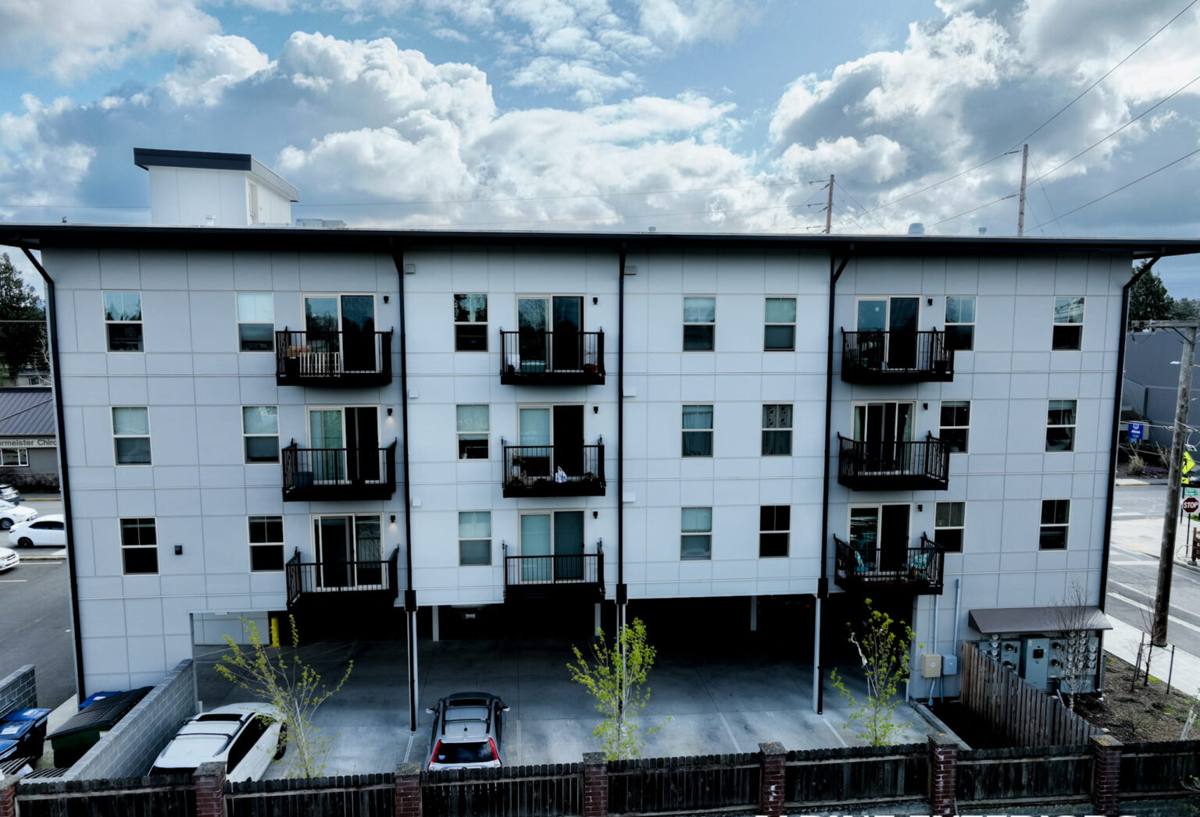
Signs Your Edgemoor Home Needs Siding Repair
Some damage is obvious. A lot of it isn't, especially on shaded elevations where it's easy to mistake early-stage problems for surface staining. Walk your exterior a couple of times a year and look for these:
- Soft or spongy spots when you press on siding near the bottom courses, around window trim, or at butt joints
- Persistent green or black staining that comes back within weeks of being cleaned
- Paint that's bubbling, peeling, or chalking heavily in one area but not others
- Visible gaps opening up at seams, corner boards, or where siding meets trim
- Warping, cupping, or boards that no longer sit flat against the wall
- Caulk that's cracked, shrunk, or pulled away from the joint it's supposed to seal
- A musty smell near exterior walls inside the house, especially after a stretch of rain
- Rust streaks below fasteners, which usually means the wrong fastener was used originally
Any one of these on its own might be minor. Two or three together, especially on a shaded or bay-facing wall, usually means water has been getting in for a while.
What a Correct Repair Actually Involves
A siding repair that just covers the damaged spot without figuring out how water got there is a repair you'll be paying for again. Done right, the process looks like this:
1. Find the Real Cause, Not Just the Symptom
Before anything gets replaced, we look at what's behind the siding — flashing, house wrap, trim details, and whether the damage is isolated or a sign of a bigger moisture path. A rotted board at a window corner is often a flashing problem, not a siding problem, and swapping the board without fixing the flashing just buys a few more years before it happens again.
2. Remove Only What Needs to Come Out
Good repair work is targeted. We pull damaged material back to solid, dry wood or board, not further than necessary, but far enough that we're not nailing new material next to something that's already compromised.
3. Address the Water Path
This is the step that actually prevents a repeat. That might mean correcting flashing above a window, re-lapping house wrap, adding or fixing kick-out flashing where a roofline meets a wall, or improving drainage behind the cladding so bulk water has somewhere to go instead of sitting against the back of the siding.
4. Match Material and Reinstall to Spec
New material gets installed with correct fastener spacing, gapping, and caulking — not just tacked into place. On homes with James Hardie fiber cement siding, this includes following Hardie's own installation specifications for clearances and fastener patterns, which is part of what keeps the manufacturer warranty intact.
5. Finish and Blend
Where paint or factory finish needs to be matched, we do our best to blend the repair into the surrounding wall rather than leaving an obvious patch. On factory-finished ColorPlus siding this is more predictable than trying to hand-match field paint, which is one more reason we lean toward Hardie product on any section that needs full replacement rather than a repaint-and-patch approach.
Repair or Replace? How We Make That Call
Not every damaged section needs to come out — and not every damaged section should just be patched. The right call depends on the extent of the damage, the age and condition of the surrounding material, and what's actually causing the problem.
| Situation | Usually Repair | Usually Replace |
|---|---|---|
| Damage confined to one or two boards or a small trim section | Yes | — |
| Rot or delamination traced back to a single flashing failure | Yes, plus flashing fix | — |
| Damage spread across multiple elevations | — | Yes |
| Original siding is old wood, LP-type product, or vinyl nearing end of life | Short-term only | Yes, in fiber cement |
| Repeated staining or moss on the same wall despite cleaning and past repairs | — | Yes, address ventilation too |
| Home is bay-facing with heavy salt and wind exposure and siding is aging | Case by case | Often, for long-term durability |
We'll always tell you honestly which category your project falls into. A repair that's really a stopgap on failing material isn't a good use of your money, and we won't sell it to you as more than that.
Material Choices When Repair Isn't Enough
When a section of siding is too far gone to patch — or when we're matching into an area that's clearly nearing the end of its life — the material choice matters more than most homeowners expect. This is where our standard is straightforward: we install James Hardie fiber cement, and we don't install vinyl, LP SmartSide, primed spruce, cedar, or other fiber cement brands. That's not a marketing line; it's a practical one.
Wood-based products and vinyl behave differently in exactly the conditions Edgemoor has in abundance — sustained moisture, shade, and salt air. Wood substrates are vulnerable to swelling and rot at cut edges and fastener points once the factory seal is breached, which is common on repair-heavy older homes. Vinyl expands and contracts with temperature and can crack or bow over time, and it doesn't hold paint if a color change is ever wanted. Fiber cement doesn't absorb water the way wood does, doesn't support moss growth the way porous surfaces do, and holds a factory ColorPlus finish that's built to handle UV and moisture cycling without repainting for years.
None of this means every home needs a full re-side. Plenty of Edgemoor repairs are legitimately just repairs. But when a homeowner is looking at a wall that's failed more than once, we'll say so plainly and explain why fiber cement is what we'd put back up rather than repeating the same wood or vinyl repair a third time.
Our Process for Edgemoor Repair Projects
- Walk-through and diagnosis — We inspect the damaged area and the surrounding wall assembly, not just the visible symptom.
- Honest scope and estimate — You get a clear explanation of what's actually wrong, what repair involves, and what it costs, with no pressure toward a bigger project than the house needs.
- Scheduling around Bellingham weather — Exterior repair work needs a reasonable dry window; we plan around the forecast rather than rushing a job into the rain.
- Correct removal and moisture-path repair — Damaged material comes out, the underlying cause gets addressed, not covered up.
- Reinstallation to spec — New or matched material goes back in following proper fastening, gapping, and sealing details.
- Site cleanup — Debris and old material are hauled off; we don't leave a project site looking worse than we found it.
Moss, Algae, and Ongoing Maintenance
Even correctly repaired siding needs some seasonal attention in a climate like this one. Moss and algae don't cause rot directly, but they hold moisture against the siding surface longer than bare material would, which speeds up everything else — paint failure, wood softening, and caulk breakdown. A simple annual rinse of shaded and north-facing walls, kept clear of pressure-washing force that can drive water behind laps, goes a long way. Keeping vegetation and low tree limbs trimmed back from the siding also helps by letting air and light reach walls that would otherwise stay damp for days after a storm.
Gutters matter more here than people expect. A clogged or misaligned gutter dumping water down a wall face is one of the most common causes of the localized rot we get called out to repair, and it's one of the easiest to prevent.
Why Local Experience in Edgemoor Matters
Every Bellingham neighborhood has its own combination of exposure, tree cover, and site conditions, and Edgemoor's mix of waterfront wind and shaded, wooded lots is distinct even from other close-in parts of the city. A crew that's worked in the area knows to check bay-facing walls differently than shaded ones, expects narrower or sloped lot access on some properties, and has a feel for how long a given repair will actually stay dry given the surrounding tree canopy and prevailing wind off the water. That local pattern recognition shortens the diagnosis step and helps avoid repairs that look fine going in but weren't matched to the actual exposure of that wall.
What Siding Repair Typically Costs
Repair pricing depends heavily on scope, access, and what's found once the damaged material comes off — a straightforward board swap costs very differently than a repair that uncovers a flashing problem behind it. Broad factors that move the price:
| Factor | Effect on Cost |
|---|---|
| Size of the damaged area | Larger area, more material and labor |
| Cause of damage (surface vs. hidden moisture path) | Hidden causes add flashing/wrap repair time |
| Height and access (second story, tight or sloped lot access) | Increases labor and equipment needs |
| Material match (in-stock profile vs. discontinued or custom color) | Custom matching can extend cost and lead time |
| Extent of trim and flashing work required | Adds labor beyond the siding itself |
We give a firm, itemized estimate after the on-site diagnosis, not a phone-quote guess — repair work has too much variability to price responsibly without seeing the wall.
Get an Honest Look at Your Siding
If you're seeing soft spots, recurring staining, or gaps opening up on your Edgemoor home, it's worth having someone look before the next stretch of wet weather makes it worse. We'll give you a straight answer on what's actually going on, what a proper repair involves, and whether repair or replacement is the better long-term move for that wall — with a free, no-pressure estimate using the form below.