 Bellingham Window
 Decks in the Silver Beach Area Face a Different Set of Conditions
Silver Beach sits in one of the shadier, more tree-covered corners of Bellingham, and that changes what a deck has to deal with day to day. Whatcom County's climate already means long stretches of driving rain, salt-tinged air moving in off the water, and a moss season that can run from fall through spring. Add heavy tree canopy and lots with grade changes down toward the water, and you get decks that stay damp longer, dry out slower, and grow moss and algae faster than a deck built on an open, sunny lot across town. None of that means a deck here can't last decades — it means it has to be built with those conditions in mind from the footings up, not patched around later.
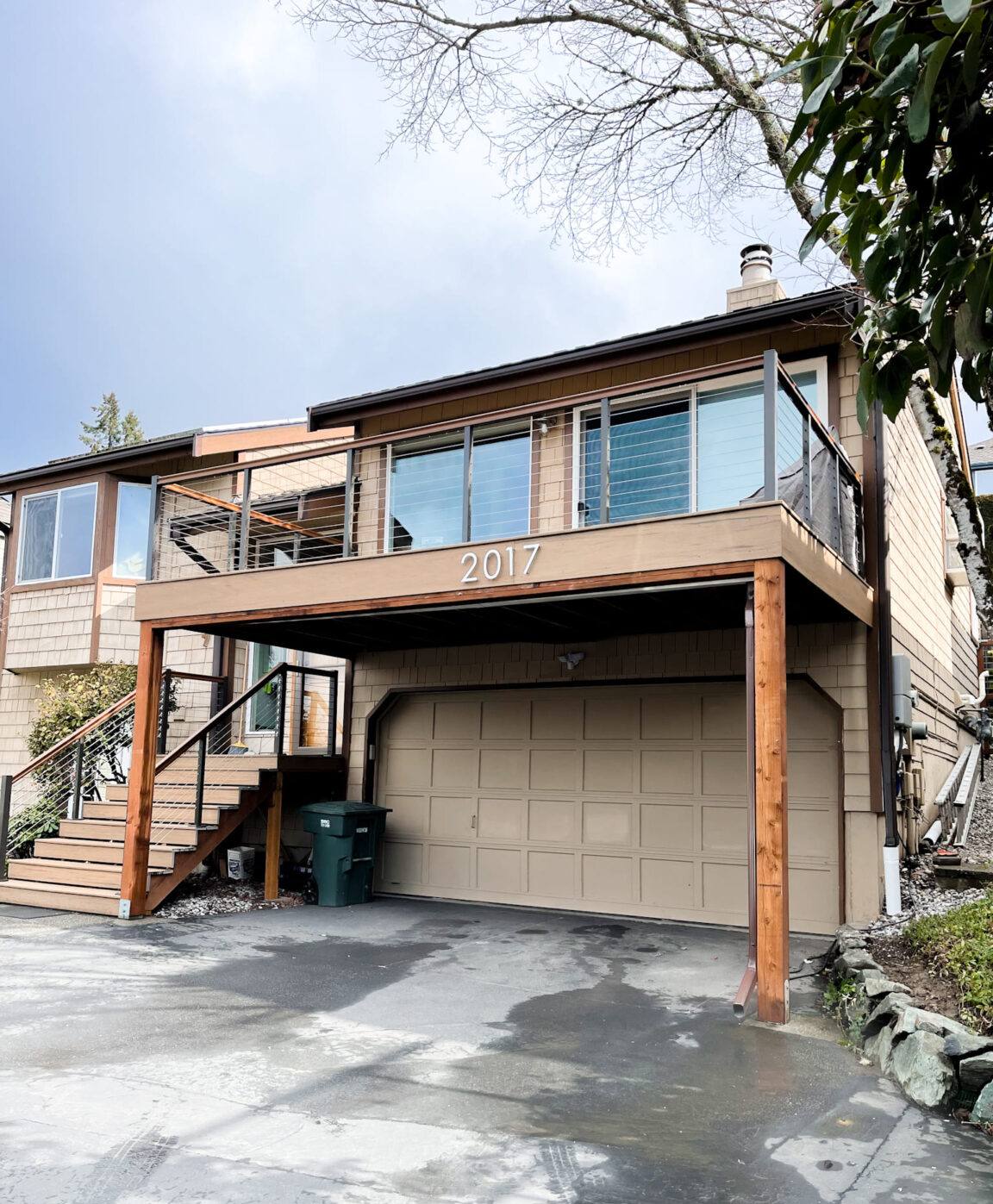
What a Deck in This Neighborhood Actually Needs
A deck built for a dry, sunny lot and a deck built for a shaded, damp one in Silver Beach shouldn't be built the same way, even if they look identical from the street. The differences that matter here are mostly about how fast water leaves the structure and how much shade the boards sit in for most of the day.
Airflow and drainage under the deck
On shaded lots, the ground underneath a deck often stays wet for days after a storm passes. Boards need enough gap spacing and joist framing needs enough clearance for air to actually move underneath — otherwise you're building a moss and mildew farm instead of a deck. Low decks tight to the ground with poor ventilation are the ones we see with rot problems first, regardless of what the boards on top are made of.
Material choice matched to sun exposure
Wood species and composite products behave differently in shade versus full sun, and it's worth understanding the trade-offs before picking a material based on price or looks alone.
| Material | How it handles shade & moisture | Maintenance | Typical lifespan |
|---|---|---|---|
| Cedar | Naturally rot-resistant, but stays damp longer in deep shade and needs airflow to perform well | Sealing/staining every 1-3 years | 15-25 years with upkeep |
| Pressure-treated fir/pine | Treated for ground contact but end cuts and fasteners are the weak points in wet, shaded spots | Sealing every 1-2 years, more frequent inspection | 15-20 years with upkeep |
| Composite decking | Doesn't absorb water into the board itself, but can still grow surface moss/algae in constant shade | Periodic cleaning, no staining/sealing | 25-30+ years |
We don't push one material as the answer for every yard. A sunny, open deck in a different part of Bellingham might be a great fit for cedar; a deeply shaded Silver Beach lot with limited airflow often does better with composite decking or, if wood is preferred, a design that opens the underside up to more light and air.
The Structural Details That Determine How Long a Deck Actually Lasts
Most deck failures we get called out to inspect aren't failures of the decking boards — they're failures at the connections and hidden framing that nobody thinks about until something's soft or sagging.
Ledger board attachment and flashing
The ledger board — where the deck bolts to the house — is the single most important connection on the structure and the most common source of water damage when it's done wrong. It has to be lag-bolted or through-bolted into the rim joist (not just nailed), and it needs proper flashing that directs water away from the house framing rather than behind the ledger where it can't be seen. In a climate with as much sustained rain as ours, a poorly flashed ledger is a slow, hidden leak waiting to happen.
Joist protection and fasteners
Joist tape over the top edge of every joist keeps water from soaking into end grain where rot starts. In a damp, shaded yard, we also treat fastener choice as a durability decision, not a cost one — coated or stainless-steel hardware resists the corrosion and staining that plain fasteners develop fast when they're wet more often than they're dry.
Footings and posts
Footings need to be poured below frost depth and sized for the load and soil conditions on the actual lot, not just to a generic minimum. On sloped or grade-changed lots — common as you move down toward the water in this part of Bellingham — post heights and footing placement also have to account for drainage and erosion around the base, so the posts aren't sitting in standing water after every heavy rain.
Permits, Code, and Why Both Matter More Than They Seem
Most decks attached to a house, above a certain height, or with guardrails required by code need a permit in Whatcom County, and inspectors are checking the same structural details outlined above — ledger attachment, footing depth, guardrail height, and stair geometry. Skipping the permit doesn't make those requirements go away; it just means nobody checked the work, and it can create real problems later when you sell the house or file an insurance claim.
- Guardrails are required above a certain deck height and have minimum height and baluster spacing rules
- Stair rise and run have to fall within a consistent range for safety
- Footing depth has to reach below the frost line for the area
- Ledger attachment method has to meet current code, not "how it's always been done"
- Span tables determine allowable joist size and spacing based on the actual load
We handle the permit process as part of the job rather than leaving it to the homeowner, because it's easier to design a deck correctly the first time than to redesign it after a plan gets rejected.
How We Approach a Silver Beach Deck Project
- Site visit — we look at sun exposure, tree cover, slope, drainage patterns, and how the deck will attach to the house before talking materials.
- Design and material selection — sized and specified for that specific lot's shade and moisture conditions, not a one-size-fits-all layout.
- Permit and engineering — drawings and footing/framing specs prepared to meet current Whatcom County requirements.
- Construction — footings, framing, ledger flashing, and decking installed in that order, with inspections at the required stages.
- Final walkthrough — we go over the finished deck, the hardware used, and what maintenance it actually needs going forward.
Keeping a Deck Looking Good Through the Wet Season
A well-built deck in a shaded, damp spot still needs some seasonal attention — the goal of good construction is to make that upkeep manageable, not to eliminate it entirely.
- Sweep leaves and debris off the boards regularly in fall — trapped organic matter is what feeds moss and algae growth
- Rinse or lightly scrub boards a couple of times a year to remove surface moss before it gets established
- Check that gaps between boards stay clear so water keeps draining through instead of pooling
- Reseal or restain wood decking on the schedule the product calls for — don't wait until it's visibly gray and dry
- Walk the underside of the deck once a year to check for standing water, soft framing, or fastener staining
What Drives the Cost of a Custom Deck
| Factor | Why it moves the price |
|---|---|
| Size and shape | More square footage and multi-level or angled designs mean more framing and labor |
| Material | Composite and higher-grade wood cost more upfront but change long-term maintenance costs |
| Site conditions | Slope, tree removal, and access difficulty on grade-changed lots add labor time |
| Footings and engineering | Deeper or additional footings for sloped or poor-drainage soil add material and inspection steps |
| Railing and stairs | Custom railing styles and multiple stair runs add both material and labor |
We give honest estimates based on the actual lot and design, not a flat per-square-foot number that ignores whether your yard is flat and sunny or sloped and shaded.
Why Local Experience on This Type of Lot Matters
A deck built by a crew that hasn't worked shaded, damp Bellingham lots before often looks fine on installation day and shows problems two or three wet seasons later — moss building up faster than expected, a ledger that was flashed for a drier climate, or footings that weren't sized for the soil. Working regularly in and around Silver Beach means we've already seen how these lots behave through a full wet season, what drainage patterns actually do on sloped ground here, and which permit and inspection details the county checks closely. That experience shows up in decisions made before the first post hole is dug, not in repairs made after the fact.
If you're planning a new deck or replacing one that's showing its age, we're happy to take a look and put together a straightforward, no-pressure estimate — just fill out the form below and we'll go from there.