 Bellingham Window
 Why Silver Beach Siding Takes a Different Kind of Beating
Silver Beach sits close enough to Bellingham Bay that homes here deal with a combination of weather stresses that inland Whatcom County neighborhoods don't face in the same way. Salt-laden air off the water accelerates corrosion on fasteners, trim, and anything metal. Driving rain off the bay hits siding at an angle, not straight down, which pushes water into laps, seams, and corner joints that a calmer install site would rarely test. And the long stretch of wet, low-light months that defines a Bellingham winter gives moss and algae months at a time to get established on north-facing walls and anything shaded by mature trees.
None of that makes Silver Beach a bad place to own a home. It does mean the siding on that home is doing more work than siding on a dry, sun-exposed lot across town, and it needs to be installed with that reality in mind from the first course.
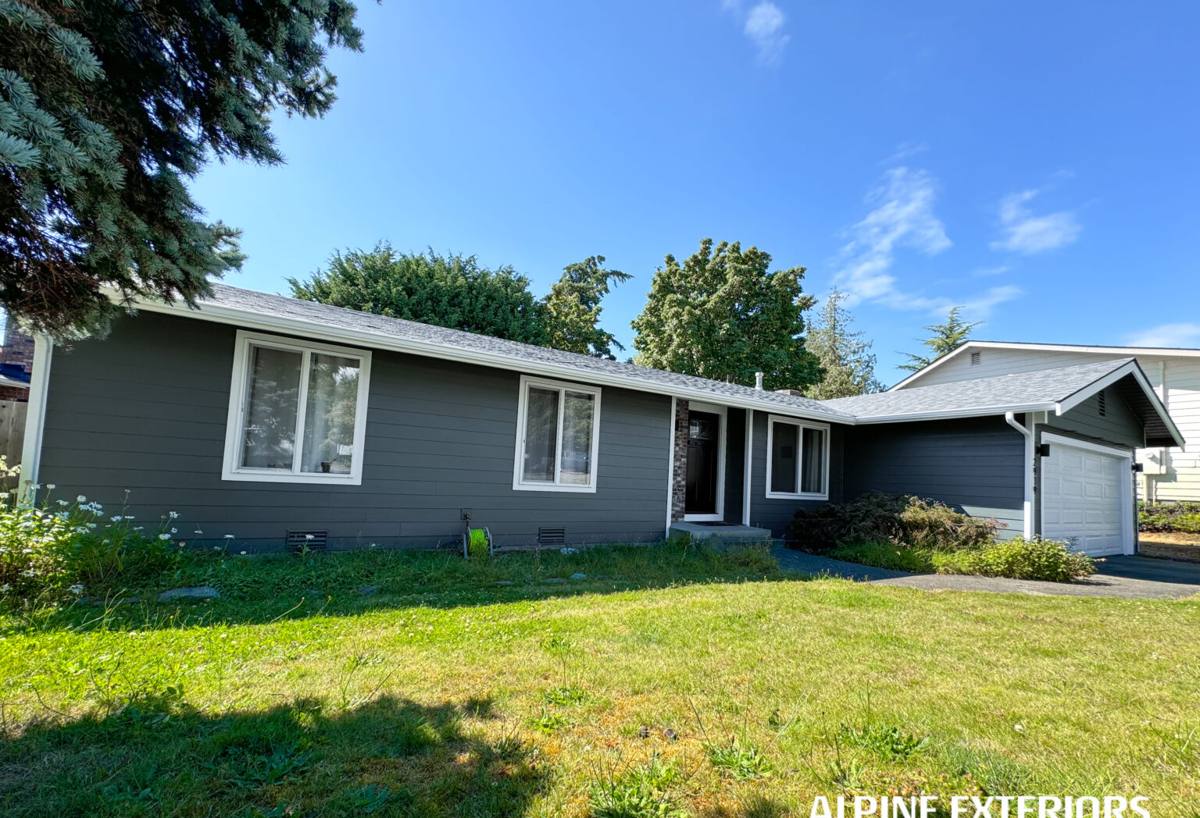
What Local Homes Actually Need From a Siding Job
A siding installation in this neighborhood has to manage three things at once: moisture that wants to get behind the cladding, air that carries salt into every gap and fastener head, and organic growth that thrives in shade and standing damp. A product and installation method that ignores any one of those three will show it within a few years, usually as swelling, staining, soft trim, or moss creeping up from the base of the wall.
- A weather-resistive barrier and flashing details that shed water outward at every horizontal joint, window, and door
- Fasteners and trim hardware rated to hold up against salt-air corrosion, not just standard exterior-grade hardware
- A cladding material that doesn't absorb and hold moisture, since wet material is what feeds moss and rot
- Proper clearance between the bottom of the siding and grade, decks, and roof lines so water and debris don't sit against it
- A finish that can be washed to remove moss and algae without stripping paint or damaging the substrate
Why We Only Install James Hardie Fiber Cement Here
We don't offer vinyl, LP SmartSide, primed spruce, cedar, or other fiber cement brands as options on Silver Beach homes, and that's a deliberate standard, not an oversight. Each of those products has a real place in the market — the issue is how they perform specifically under sustained salt air, driving rain, and moss pressure over the long haul.
Vinyl siding doesn't rot or corrode, but it's a poor match for a bay-adjacent lot in a different way: it expands and contracts more than fiber cement in temperature swings, its seams and J-channels give moisture more places to travel, and it's a petroleum-based product with a finish that fades rather than a factory finish that's engineered to hold color. Engineered wood products like LP SmartSide use wood strand cores that, once the outer treatment is compromised at a cut edge, nail hole, or joint, can wick moisture and swell — a real risk in a neighborhood where wet weather isn't occasional, it's the default. Primed spruce and cedar are natural wood products that need active homeowner maintenance — recoating, caulking, moss treatment — to keep moisture from working past the finish, and salt air shortens the window between those maintenance cycles.
James Hardie fiber cement is cement, sand, and cellulose fiber. It doesn't rot, it doesn't feed insects, and it's non-combustible, which matters given how often summer wildfire smoke now reaches this part of Washington. Its ColorPlus factory finish is baked on under controlled conditions rather than field-applied, which gives it better adhesion and color retention against the exact combination of UV, salt, and moisture that Silver Beach homes see year-round. Hardie's HZ5 product line is engineered specifically for wetter, harsher climates, which the greater Bellingham area qualifies as. That's the whole reason we standardized on it: it's the product that keeps its integrity in this specific environment without asking the homeowner to babysit it.
How the Common Options Actually Compare Near the Water
| Material | Salt air / corrosion | Moisture & moss resistance | Maintenance burden |
|---|---|---|---|
| James Hardie fiber cement | Non-metallic core, factory-finished trim resists corrosion well | Doesn't absorb water or feed rot; washes clean of moss buildup | Low — periodic rinse, no recoating |
| Vinyl | No corrosion, but seams/channels trap salt-laden grit | Sheds water on the face, but can trap moisture behind panels | Low, but fades and can crack in cold snaps |
| Engineered wood (LP SmartSide) | Metal fasteners/trim still exposed to salt corrosion | Wood-strand core vulnerable once edges/joints are compromised | Moderate — edge sealing and joint checks matter |
| Cedar / primed spruce | Fasteners corrode; wood itself doesn't rust but weathers | Needs finish maintenance to keep moisture and moss out | High — recoating, caulking, moss treatment on a cycle |
What a Correct Installation Involves
The material is only half the job. A Hardie installation that's actually built for a Silver Beach lot follows a sequence that's easy to shortcut and expensive to fix later:
Tear-off and inspection
Old siding comes off far enough to expose sheathing at trouble spots — corners, below windows, around any past water intrusion — so it can be inspected and repaired before anything new goes on. Covering up soft or damaged sheathing is the single most common cause of siding failures we get called out to fix.
Weather-resistive barrier and flashing
A continuous weather-resistive barrier goes on first, lapped correctly top over bottom, with flashing integrated at every window, door, and horizontal transition so water is directed out and down, never into the wall assembly. Given how directly this neighborhood catches wind-driven rain, this step gets no shortcuts.
Fastening and clearance
Hardie panels and lap siding are fastened per manufacturer spec with corrosion-resistant fasteners, and every course keeps proper clearance from grade, roofing, decks, and other siding transitions. That clearance is what keeps splash-back and standing moisture from sitting against the bottom courses where moss gets its start.
Caulking, trim, and finish detailing
Joints get sealed with the right sealant in the right places — not everywhere, since fiber cement is designed with some joints meant to be left to drain rather than sealed shut. Trim gets back-primed where cut, and touch-up paint matches the factory ColorPlus finish so repairs don't leave a visible patchwork down the road.
Our Process on a Silver Beach Job
- On-site assessment — we walk the exterior, check current siding and trim condition, and look specifically at drainage, grade clearance, and shaded/north-facing walls where moss tends to establish first.
- Scope and product selection — we spec the Hardie panel or lap profile and HZ5 configuration that fits the home and its exposure, and walk the homeowner through color and finish options.
- Sheathing and moisture check — tear-off exposes the wall assembly so we can confirm sheathing is sound before anything new is installed over it.
- Installation to spec — barrier, flashing, fastening, and clearances installed per Hardie's requirements, not shortcuts common on lower-bid jobs.
- Final walkthrough — we go over the finished job with the homeowner, including what routine care (if any) the new siding needs.
What Drives the Cost of a Siding Job Here
| Factor | Why it matters in Silver Beach |
|---|---|
| Existing wall condition | Water-damaged sheathing found at tear-off adds repair scope before new siding can go on |
| Home exposure to wind and rain | Waterfront-facing walls often need more flashing detail and fastener attention than sheltered walls |
| Trim and detail complexity | Older homes with more corners, dormers, and trim take longer to flash and finish correctly |
| Access and site conditions | Narrower lots, retaining walls, or sloped yards common near the bay can add setup time |
| Product selection | Panel vs. lap profile and HZ5 configuration affect material cost per square foot |
We give a firm, itemized quote after the on-site assessment rather than a rough number over the phone — tear-off almost always reveals something the homeowner needs to see and approve before we move forward.
After Installation: Keeping Moss and Salt From Getting a Foothold
One advantage of correctly installed Hardie siding is how little it asks of the homeowner afterward. It doesn't need recoating on a schedule the way wood does. That said, a periodic gentle rinse — especially on shaded, north-facing walls — keeps moss and algae from building a foothold in the first place, and it's far easier to rinse residue off a factory finish than to strip and repaint a wood surface that's already started absorbing moisture.
Why the Crew Matters as Much as the Material
Two crews can install the same Hardie product and get very different results. Flashing details, fastener choice, and clearance decisions are all judgment calls made in the field, and they're exactly the details that don't show up in a walkthrough the day the job wraps — they show up three winters later. A crew that already works Silver Beach and similar Bellingham waterfront neighborhoods has already made those judgment calls under this exact combination of salt air, wind-driven rain, and moss pressure, and knows where the easy shortcuts cost homeowners the most down the line.
If you're considering a siding replacement on a Silver Beach home, we're happy to walk the property, look at what your current siding is telling us, and put together a straightforward estimate — no pressure, no obligation. Use the form below to get started.