 Bellingham Window
 Siding Repair Built for Silver Beach's Weather, Not a Generic Climate
Silver Beach sits close to Bellingham Bay, and that proximity shapes what siding repair actually needs to accomplish here. Homes in this part of Bellingham deal with a combination that inland neighborhoods don't see in the same intensity: salt-laden air blowing off the water, driving rain that hits siding at an angle instead of falling straight down, and a moss season that stretches across most of the fall, winter, and spring. Any repair that ignores that combination is a temporary fix, not a real one.
This page is about siding repair specifically — not full re-siding, not general exterior work. If a section of your home's siding is failing, cracking, staining, or letting moisture in, this is what a correct repair looks like in a Whatcom County coastal neighborhood, and why the crew doing the work matters as much as the materials.
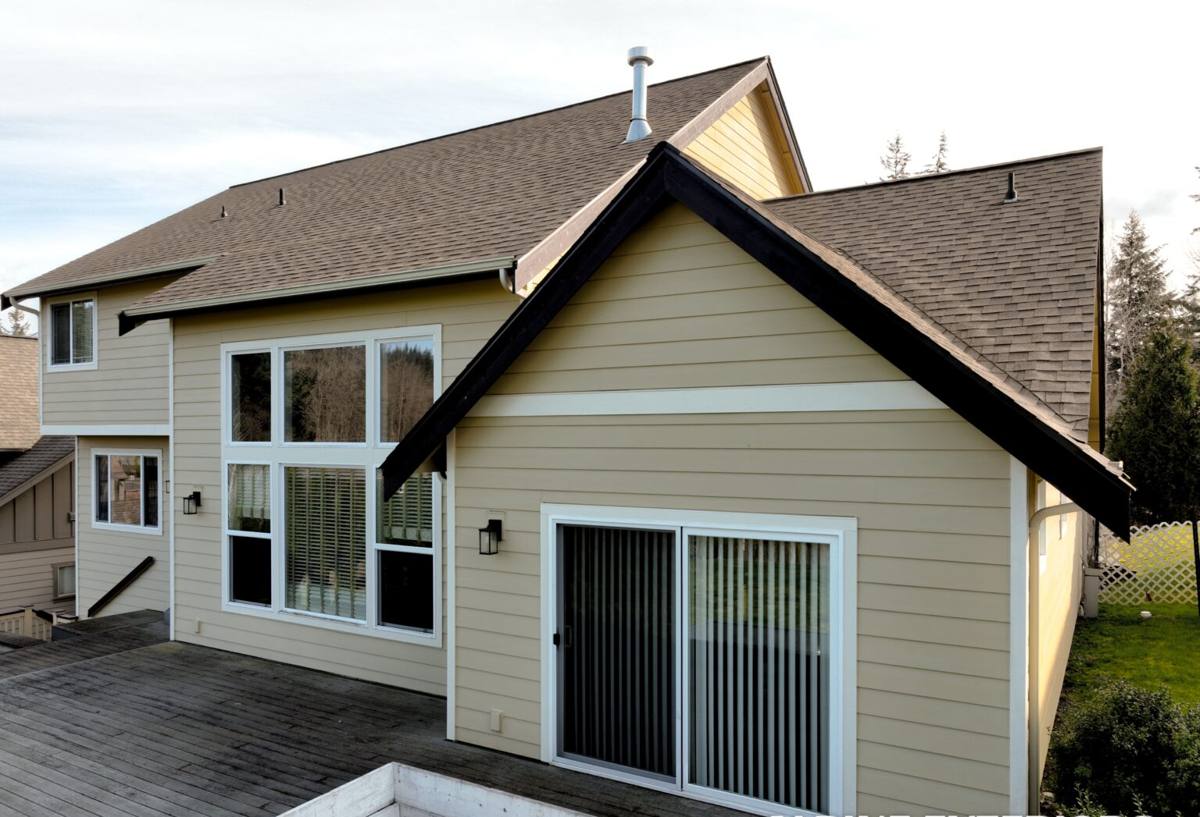
Why Silver Beach Siding Fails Differently
Siding doesn't fail the same way in every part of Bellingham. In Silver Beach, three conditions do most of the damage over time:
Salt Air
Airborne salt from Bellingham Bay accelerates corrosion on fasteners, flashing, and any exposed metal trim. It also breaks down cheaper paint and coatings faster than inland exposure would, which shows up as chalking, fading, or peeling well before a manufacturer's finish warranty would normally suggest.
Driving Rain
Wind off the water pushes rain sideways into wall assemblies, not just down over them. Siding systems that rely on gravity alone to shed water — rather than proper lapping, flashing, and sealed penetrations — are the ones that develop hidden rot behind the surface long before anything is visible from the yard.
Long Moss Season
Shaded, moisture-retaining conditions on north- and west-facing walls let moss and algae take hold for much of the year. Moss holds water against the siding surface, keeps panels from drying out between rain events, and, on the wrong material, can work into seams and joints.
None of this means Silver Beach homes are doomed to constant repair. It means the repair has to account for salt air, driving rain, and moss the same way the original installation should have — otherwise you're just patching the same failure back into the wall.
Signs Your Siding Needs Repair, Not Just a Wash
Homeowners often mistake early siding failure for cosmetic staining and reach for a pressure washer. Some of it is cosmetic — but some of it is a sign that water has already gotten past the surface. Watch for:
- Soft or spongy spots when you press on the siding, especially near the bottom courses or around windows
- Visible cracking, splitting, or buckling in individual panels or boards
- Dark staining that returns quickly after cleaning, particularly along seams or under trim
- Paint or finish that's peeling or bubbling rather than just fading
- Gaps opening up at butt joints, corner boards, or where siding meets window and door trim
- Persistent moss or algae growth in the same spots year after year, even after cleaning
- Any musty smell or visible staining on interior walls that back onto exterior siding
If you're seeing more than one or two of these, especially the soft spots or interior staining, it's worth having someone look at what's happening behind the siding — not just at the surface.
What a Correct Siding Repair Actually Involves
Finding the Real Source, Not Just the Visible Damage
The damage you can see is rarely where the water is actually getting in. A stain near the bottom of a wall is often the result of a flashing gap or sealant failure several feet higher up. A proper repair starts by tracing the water path, not just replacing the board that looks bad.
Fixing the Water Management, Not Just the Surface
Siding is a system — the panels or planks are only part of it. Flashing at windows, doors, and penetrations, the house wrap or weather-resistant barrier behind the siding, and the way courses overlap all have to work together to shed driving rain. If the repair replaces damaged boards but leaves faulty flashing or a gapped weather barrier underneath, the same failure comes back.
Matching Material and Finish
A repair that looks patched is a repair done poorly. Matching profile, reveal, and finish color matters, especially on street-facing walls. Where an exact match isn't available — which happens with older or discontinued products — we'll tell you honestly rather than force a mismatch and hope you don't notice.
Sealing Against Salt Air and Moisture, Not Just Weather in General
Fasteners, trim, and sealants used in a Silver Beach repair need to hold up to salt exposure specifically, not just generic Pacific Northwest rain. That affects what hardware and sealant products we choose, and it's part of why local experience matters more here than a repair crew that mostly works drier, inland neighborhoods.
Repair or Replace? How We Make That Call
Not every damaged section needs full re-siding, and not every "small" repair is actually small once you open the wall. Here's how we think through it:
| Situation | Usually Repair | Usually Replace |
|---|---|---|
| Damage location | Isolated to one or two sections | Spread across multiple walls or elevations |
| Underlying rot | Confined to the damaged boards | Extends into sheathing or framing |
| Siding age and material | Sound overall, good material, recent install | Aging, outdated, or a product prone to repeat failure |
| Water intrusion history | First occurrence, clear single cause | Repeated intrusion from multiple failure points |
| Match availability | Product still available or close match exists | Discontinued, mismatched, or visibly patched look |
We'll always give you the honest read on which category your home falls into — including telling you when a repair is the right call even if a full re-side would be the easier sale for us.
Our Siding Repair Process in Silver Beach
- Inspection: We look at the damaged area and the surrounding wall assembly, not just the spot you called about, since water travels.
- Diagnosis: We identify the actual entry point — flashing, sealant, a failed joint, or a material issue — and explain it in plain terms.
- Scope and estimate: You get a clear picture of what needs to happen, what it costs, and why, before any work starts.
- Repair: We remove and replace only what needs it, correct the underlying water management issue, and match material and finish as closely as possible.
- Final check: We confirm the repair sheds water correctly and walk you through what we did.
Why We Repair — and Install — Only James Hardie Fiber Cement
When we're called out for a siding repair, we sometimes find the existing material is vinyl, LP SmartSide, primed wood, or another fiber cement brand. We'll repair what's there when a repair is the honest recommendation. But when a section is far enough gone that replacement makes more sense — or when a homeowner asks what we'd recommend putting up instead — our answer is always James Hardie.
We made that call because of what Silver Beach's climate does to siding over time. Hardie's fiber cement is non-combustible and doesn't rely on paint alone to resist moisture the way wood-based products do; it's engineered specifically for wet, high-moisture climates through its HZ5 product line, which is built for the kind of driving rain and humidity this area sees. The ColorPlus factory finish holds color and resists the fading and chalking that salt air accelerates on field-applied paint, and it comes with a strong transferable warranty when installed to spec. We don't install vinyl, LP SmartSide, Cemplank, Allura, primed spruce, or cedar — not because those products have no merit, but because we've standardized on the one system we're confident holds up to this specific coastline, and we'd rather stand behind one thing we trust completely than offer several we don't.
Why a Crew That Already Works Silver Beach Matters
Siding repair in a coastal Bellingham neighborhood isn't the same job as siding repair twenty minutes inland. A crew that regularly works Silver Beach already knows which elevations take the worst of the driving rain, where moss builds up fastest under the tree cover common on many of these lots, and how salt exposure changes fastener and sealant choices. That's not something you can fully substitute with a general contractor working from a checklist — it comes from doing this specific work, in this specific neighborhood, repeatedly.
It also matters for permitting and code awareness within the City of Bellingham and Whatcom County, and for knowing realistic timelines around the wetter months when repair scheduling gets tighter across the region.
What Siding Repair Typically Costs
We don't quote firm numbers without seeing the damage, but these are the factors that move the price up or down:
| Factor | Effect on Cost |
|---|---|
| Size of the damaged area | Larger sections cost more; small isolated spots are the least expensive |
| Hidden sheathing or framing damage | Significantly increases cost once the wall is opened up |
| Height and access | Second-story or hard-to-access walls add labor and equipment cost |
| Material match | Custom color matching or discontinued profiles can add cost and lead time |
| Flashing and trim work required | Repairs that include flashing corrections cost more than a simple board swap but prevent repeat failure |
The only way to get an accurate number is to have someone look at the actual damage — estimates based on a phone description alone tend to be wrong in one direction or the other.
Get an Honest Look at Your Silver Beach Siding
If you're seeing soft spots, staining, cracking, or persistent moss on your siding, it's worth getting it looked at before the next stretch of driving rain makes it worse. We'll give you a straight answer on whether it's a repair or something bigger, with no pressure either way. Request a free estimate using the form below and we'll take a look.