 Bellingham Window
 Siding Replacement Built for Silver Beach's Lake-Side Conditions
Silver Beach sits along the shore of Lake Whatcom on Bellingham's east side, and it's a different environment than a lot of the rest of the city. Mature evergreen canopy shades many lots most of the day, homes sit close to the water and to each other on sloped ground, and a good number of the houses started life as lake cabins before being converted to full-time residences. That combination — shade, slope, moisture, and older building stock — puts more stress on siding than a typical open, sunny lot does.
We're not talking about a generic "Bellingham is rainy" pitch. Silver Beach specifically holds onto moisture longer than homes on open, wind-exposed sites. Tree cover blocks sun and airflow, so siding and trim stay damp longer after a storm. Add in the broader Whatcom County marine climate — driving rain off the water, humid air, and a long moss season that runs from fall through spring — and you've got a neighborhood where siding choice and installation quality matter more than average.
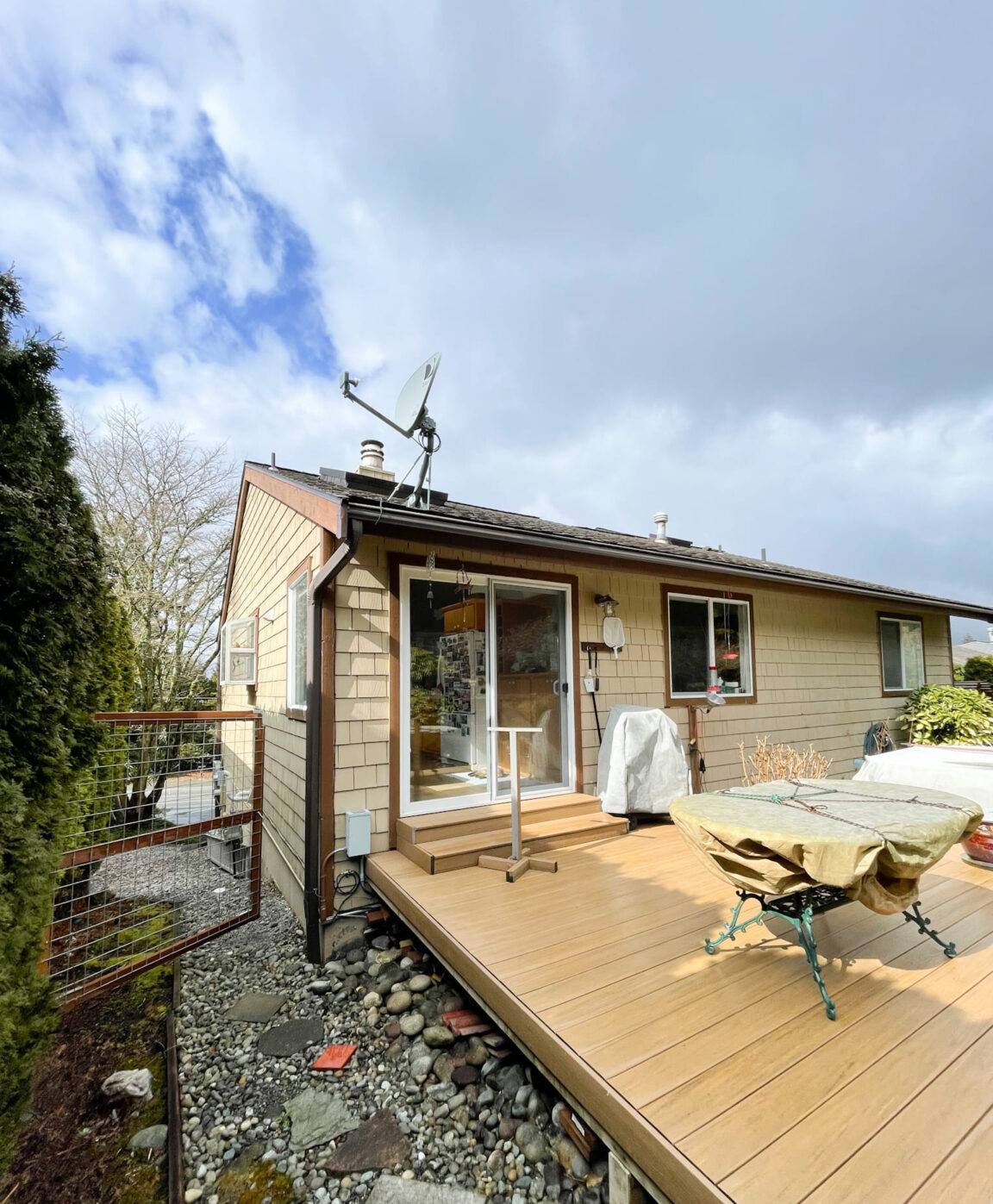
What Silver Beach's Climate Actually Does to Siding
Slow-Drying Shade
Under heavy tree cover, siding doesn't get the sun exposure that helps it shed moisture quickly after rain. Wood-based products (cedar, primed spruce, LP SmartSide) are the most vulnerable here — they're engineered to tolerate normal wetting-and-drying cycles, but "normal" assumes drying actually happens on a reasonable schedule. In a shaded lake-side lot, that cycle stretches out, and the risk of swelling, delamination, or rot climbs.
Moss and Organic Growth
Whatcom County's moss season is long, and Silver Beach's shade and moisture make it worse than most neighborhoods. Moss and algae hold water against the siding surface and, on porous or wood-based materials, can accelerate breakdown at the seams and butt joints. On fiber cement, moss is mostly a cosmetic issue that washes off — it doesn't compromise the material the way it can on wood or wood-composite siding.
Driving Rain and Wind-Driven Moisture
Storms coming off the water push rain sideways into wall assemblies, not just straight down. That means lap joints, corner boards, and window trim take on more direct moisture intrusion than they would on a sheltered inland lot. If the water-resistive barrier, flashing, and siding overlaps aren't detailed correctly, that moisture finds its way behind the cladding — and once it's behind the siding, it's your sheathing and framing paying the price, not just the surface finish.
What a Correct Siding Replacement Involves Here
A siding replacement in Silver Beach isn't just stripping old material and nailing up new panels. Given the moisture load this neighborhood deals with, the work underneath the siding matters as much as the siding itself.
- Full tear-off, not overlay: installing new siding over old hides the condition of the sheathing and any existing rot or water damage — a bad idea on a lot that holds moisture this long.
- Sheathing inspection: every wall gets checked for soft spots, delamination, or existing water staining once the old siding is off, especially at ground level and around windows.
- Correct water-resistive barrier: a weather-resistant barrier installed shingle-style (upper layers overlapping lower ones) so any water that gets past the siding runs down and out, not into the wall.
- Proper flashing at every penetration: windows, doors, hose bibs, vents, and any lake-facing decks or overhangs need flashing detailed to shed water outward, not funnel it inward.
- Rain screen or drainage gap where called for: on shaded, damp walls, a ventilated gap behind the siding helps both the wall assembly and the siding itself dry out faster after wet weather.
- Manufacturer-spec fastening and clearances: correct nail placement, butt joint treatment, and ground clearance — all of which affect both warranty coverage and how the wall actually performs in wet weather.
Why We Install James Hardie Fiber Cement — And Only That
We install James Hardie fiber cement siding exclusively. We don't install vinyl, LP SmartSide, Cemplank, Allura, primed spruce, or cedar. That's a deliberate standard, not a limitation of what we're capable of installing — and in a neighborhood like Silver Beach, the reasoning is straightforward.
Fiber cement doesn't rot, swell, or delaminate the way wood and wood-composite products can when they stay damp for extended periods. It's non-combustible, which matters for wildfire-conscious homeowners in the wooded, tree-dense lots common around the lake. And Hardie's ColorPlus factory finish is baked on and warranted against fading and peeling, which matters a lot under heavy shade where paint jobs on other materials tend to hold moisture and mildew longer between recoats.
The HZ5 Climate Engineering
James Hardie engineers its siding to different "HZ" (Hardiezone) specifications by climate. The Pacific Northwest, including Whatcom County, falls in a zone where moisture performance is the priority, and Hardie's product formulation and installation guidance for this region are built around wet, marine-influenced conditions rather than a one-size-fits-all specification. That regional engineering — not just the material itself — is a meaningful part of why it holds up here.
What We Don't Install, and Why
Vinyl is inexpensive and low-maintenance, but it can warp in temperature swings and doesn't offer the same fire resistance or factory finish durability. Cedar and primed spruce look great and are traditional in this region, but they demand real, ongoing maintenance — recoating, caulking, and vigilance against rot — that a shaded, damp lot like Silver Beach makes harder to keep up with. LP SmartSide and similar wood-strand products have improved their moisture engineering over the years, but they're still wood-based at the core, with installation-sensitivity around cut edges and joints that we'd rather not gamble on in this environment. We'd rather put one product on every home and know exactly how it performs than mix standards.
Comparing Siding Options for a Shaded Lake-Side Lot
| Factor | James Hardie Fiber Cement | Wood / Wood-Composite | Vinyl |
|---|---|---|---|
| Moisture tolerance in shade | High — won't rot or swell | Moderate — depends on drying cycles | High, but can trap moisture behind panels if not vented |
| Moss/algae impact | Cosmetic only, washes off | Can accelerate joint and edge breakdown | Cosmetic, but growth shows readily on the surface |
| Fire resistance | Non-combustible | Combustible | Combustible, can melt/deform near heat |
| Finish durability | Factory-baked ColorPlus finish, long warranty | Field-applied paint/stain, recoat every few years | Color molded through, but can fade over time |
| Typical maintenance | Occasional wash, minimal upkeep | Regular inspection, caulking, recoating | Low, but repairs can be visually mismatched |
Our Process for a Silver Beach Siding Replacement
- On-site assessment: we walk the property, check existing siding condition, note shade patterns, drainage, and any trouble spots specific to the lot.
- Written estimate: scope, product selection (profile, color, HZ specification), and a clear cost breakdown — no surprise add-ons buried in fine print.
- Tear-off and sheathing check: old siding comes off, sheathing is inspected and repaired as needed before anything new goes up.
- Weather barrier and flashing: water-resistive barrier and flashing installed and detailed for wind-driven rain, sequenced correctly at every window, door, and penetration.
- Hardie installation to manufacturer spec: correct fastening, clearances, and joint treatment for the HZ5 product line.
- Final walk-through: we review the finished work with you before calling the job done, not before.
Signs a Silver Beach Home Needs Siding Replacement
- Soft or spongy spots when you press on the siding, especially near the ground or under windows
- Persistent moss or dark staining that returns quickly after cleaning
- Visible warping, cupping, or separated seams on wood or composite siding
- Paint that's peeling or blistering faster than a normal repaint cycle would suggest
- Rising energy bills or noticeably drafty rooms along exterior walls
- Visible daylight, gaps, or rot at corner boards and trim
Why Local Experience in Silver Beach Matters
A crew that's already worked this part of Bellingham knows what to expect before the tear-off even starts: narrow or sloped access on many lake-side lots, mature trees that require care around scaffolding and staging, and a moisture history that's usually worse than what a homeowner further inland deals with. That experience shows up in small decisions — where to add extra flashing, whether a rain screen gap is worth the added step, how to sequence work around wet weather — that a crew unfamiliar with the neighborhood might not think to flag.
It also means realistic expectations on timeline. Shaded, damp job sites don't always dry out on a predictable schedule, and a crew that knows the area builds that into the plan rather than treating it as a surprise mid-project.
If your Silver Beach home's siding is showing its age, we'll walk the property, look at what your specific lot and sun exposure are up against, and give you a straightforward, no-pressure estimate for a James Hardie siding replacement done right the first time. Use the form below to get started.