 Bellingham Window
 Decks in South Hill Face a Specific Kind of Wear
South Hill sits up on the slope above downtown Bellingham, and that elevation comes with a trade-off. The views are real, but so is the exposure. Decks up here take a steady combination of salt-tinged air drifting in off Bellingham Bay, driving rain that comes in sideways during a Northwest storm, and long stretches of shade under mature trees that never really let a deck dry out between rain events. Add in Whatcom County's moss season, which for a lot of properties runs nearly year-round on the north and east-facing sides of a structure, and you get decks that look fine from a distance but are quietly failing underneath.
We're not describing a generic Pacific Northwest problem here. We're describing what actually happens to a deck that sits at this elevation, under this tree cover, exposed to this air. Framing lumber stays damp longer than it would in a drier, sunnier spot. Fasteners corrode faster near the water. Moss and algae hold moisture against the wood surface instead of letting it shed. None of that is dramatic on its own, but stacked together over a few seasons, it's exactly how a structurally sound deck turns into a liability.
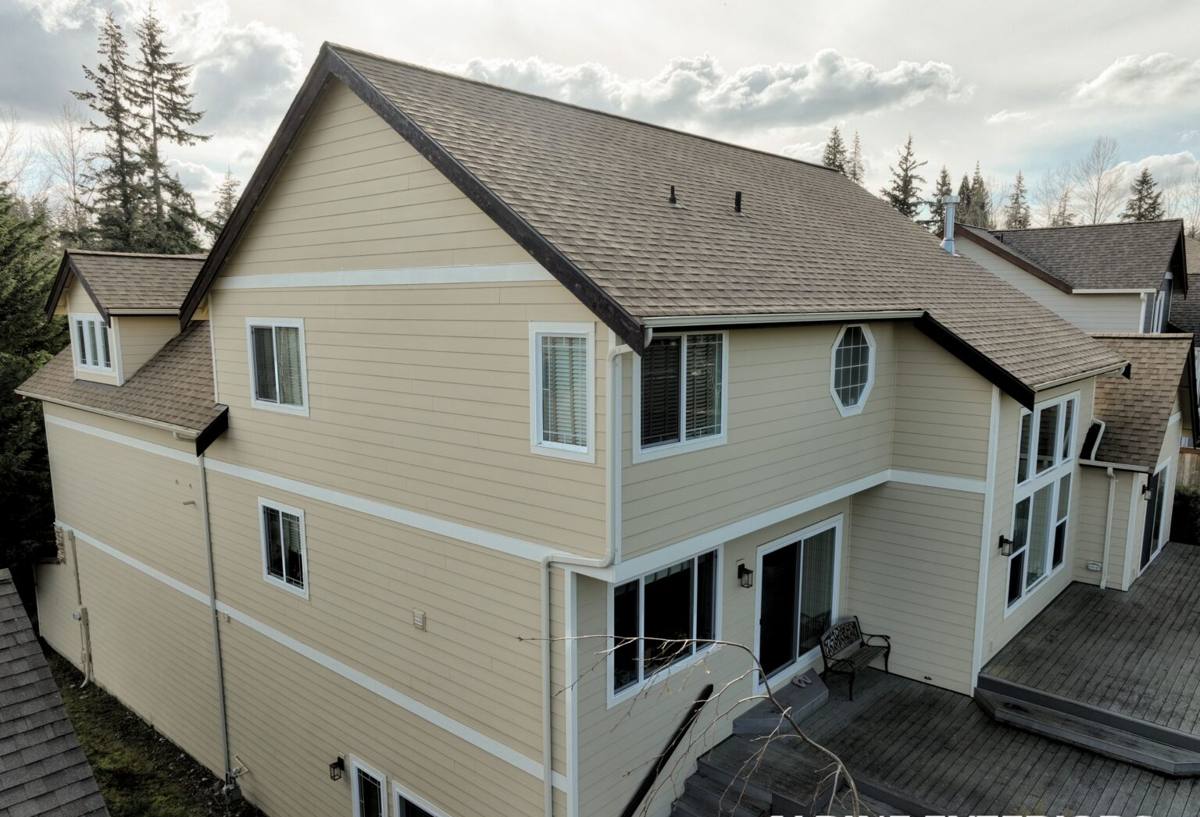
What Moisture and Moss Actually Do to a Deck
It's Not Just Cosmetic
A layer of moss or green algae on a deck board isn't only an eyesore. It's a sponge sitting directly on top of your decking, holding water against the wood surface long after the rain has stopped. That constant dampness is what drives rot, softens fastener connections, and eventually opens the door to structural decay that isn't visible until you push a screwdriver into a board and it goes in soft.
Where It Hits Hardest
The parts of a South Hill deck we see fail first are almost always the same: the ledger board where the deck attaches to the house, the joists directly underneath any low spot where water pools, the stair stringers, and any post base sitting in or near soil contact. These are the areas that stay wet the longest and get inspected the least, because they're hidden under the decking or tucked against the house.
Signs Your Deck Needs Repair
Most deck problems give warning signs well before anything becomes dangerous. Catching them early is what keeps a repair a repair, instead of a full rebuild. Walk your deck and check for the following:
- Soft, spongy, or bouncy spots underfoot, especially near the house or stairs
- Boards that have visibly cupped, split lengthwise, or pulled away from fasteners
- Rust streaks running down from screws or nails, which usually means the fastener is failing
- A railing or post that wiggles or flexes when you lean on it
- Gaps or separation where the deck meets the house at the ledger board
- Green or black staining that keeps coming back within weeks of cleaning
- Visible daylight or gaps between joists and the framing they sit on
- A musty or earthy smell coming from underneath the deck
Any one of these on its own might be minor. Two or three together, especially near the house connection or stairs, usually means it's time for a real inspection rather than another round of pressure washing.
What a Correct Deck Repair Actually Involves
It Starts Underneath, Not on the Surface
A repair that only replaces the boards you can see and skips the framing underneath is a cosmetic fix, not a structural one. On a South Hill deck, we check the ledger board attachment first, since that's the single connection holding the whole deck to the house, and it's also the spot most prone to trapped moisture. We check joists for soft spots, confirm post bases aren't sitting in standing water or buried soil, and look at how the deck is flashed where it meets the siding.
Fasteners Matter More Than People Think
In a coastal, high-moisture climate, the wrong fastener is a slow-motion failure. Standard galvanized screws and nails can corrode faster than the wood around them when they're exposed to salt-laden air year after year. We use fasteners rated for the actual exposure conditions here, not just whatever's cheapest at the hardware store, because a rusted-out fastener in a joist you can't see is exactly the kind of failure that turns into a real safety problem.
Flashing and Drainage
Water needs somewhere to go. A big part of getting a repair right is making sure flashing at the ledger board actually sheds water away from the house rather than trapping it against the rim joist, and that the deck surface has enough slope and gapping between boards to drain instead of pool. A lot of the rot we find traces back to flashing that was missing, installed wrong, or that failed years before anyone noticed.
What This Looks Like Board by Board
| Component | Common Failure | What a Correct Repair Does |
|---|---|---|
| Ledger board | Trapped moisture, missing or failed flashing, rot at house connection | Remove and inspect, replace flashing, reattach with corrosion-resistant fasteners |
| Joists | Soft spots, sagging, rot near low points | Sister or replace affected sections, correct drainage slope |
| Deck boards | Cupping, splitting, moss buildup, loose fasteners | Replace individual boards, re-fasten with proper spacing for drainage |
| Posts and footings | Rot at soil contact, undersized or shifted footings | Reset on proper footing, use post bases that keep wood off grade |
| Railings and stairs | Loose connections, wobble, worn stringers | Re-secure or rebuild to current structural standards |
Repair or Replace? What Actually Drives That Decision
Not every deck problem means starting over, and not every deck is worth patching. The honest answer depends on how much of the structure underneath is still sound. Here's how we think through it:
| Factor | Leans Toward Repair | Leans Toward Replacement |
|---|---|---|
| Framing condition | Joists and ledger are solid, only isolated soft spots | Widespread rot across multiple joists or the ledger board |
| Age of deck | Under 15-20 years, built to a reasonable original standard | Older deck nearing or past typical structural lifespan |
| Extent of damage | Limited to a few boards, a railing, or one problem area | Damage spread across the surface, stairs, and framing |
| Footings and posts | Footings are appropriately sized and still stable | Undersized, shifted, or failing footings |
| Code compliance | Original build already meets current railing and attachment standards | Older railings, spacing, or ledger attachment don't meet current code |
When the framing is fundamentally sound, repair is almost always the smarter move financially. When the damage has worked its way into the structure itself, patching individual boards just delays a bigger problem and can end up costing more over time than doing it right once.
Our Deck Repair Process
1. Full Inspection, Not Just a Look
We start by actually getting underneath the deck and checking the framing, not just walking the surface. That's where the real answers are, especially on a deck that's been up here in South Hill's weather for more than a few years.
2. A Straight Assessment
We'll tell you plainly what's structural and what's cosmetic, what needs to happen now versus what can be monitored, and what your realistic options are. No pressure toward a bigger job than the deck actually needs.
3. The Repair Itself
We address the problem at its source, framing first, then surface. That means correcting the moisture path, replacing what's actually failed, and using materials and fasteners suited to this specific climate, not a one-size-fits-all approach pulled from a drier region.
4. Finish and Protect
Where wood decking is involved, that includes appropriate sealing or finishing to help the repaired sections hold up against the next few seasons of rain and moss. A repair that isn't protected afterward is a repair that starts failing again almost immediately.
Why It Matters to Hire a Crew That Already Works This Neighborhood
South Hill's mix of hillside lots, mature tree canopy, and proximity to the bay creates conditions that aren't identical to a flat, sun-exposed yard elsewhere in Whatcom County. A crew that's worked on decks in this specific setting already knows which framing connections tend to fail first, how much drainage slope actually holds up under this rainfall pattern, and which fastener and material choices are worth the extra cost versus which ones are marketing. That local pattern recognition is the difference between a repair that solves the actual problem and one that just covers it up for a season or two.
Keeping a Repaired Deck in Good Shape
Once a deck is repaired correctly, a little seasonal attention goes a long way in this climate. A few habits worth keeping up:
- Clear leaves and debris from between boards before they trap moisture through the fall and winter
- Address moss growth early in the season rather than letting it establish and spread
- Check the ledger board area and any low spots once or twice a year for early signs of trapped water
- Re-seal or refinish wood decking on the schedule appropriate to the product, rather than waiting until it's visibly gray and dry
- Keep gutters and downspouts near the deck clear so runoff isn't draining directly onto or under it
Let's Take a Look
If your deck in South Hill is showing soft spots, moss that won't quit, or a railing that doesn't feel as solid as it used to, it's worth getting an honest, no-pressure look before those signs turn into a bigger repair. We'll tell you straight what we find, what it means, and what your options actually are. The estimate is free — use the form below to get started.