 Bellingham Window
 South Hill sits up above downtown Bellingham with a mix of older character homes, mature tree canopy, and rooflines that look out toward the bay. That combination is good for a view and hard on a roof. Salt-tinged air moving in off the water, driving rain that doesn't fall straight down, and a moss season that stretches across most of the wet months all put real wear on a roof that a drier, more sheltered neighborhood wouldn't see. Roof repair on South Hill isn't just patching a leak wherever it shows up inside the house — it's understanding why that particular roof, in that particular spot, is failing in the first place. This page covers what a South Hill home typically needs from a roof repair, what a correct repair actually involves, and how our process works from first call to final check.
Why South Hill Roofs Wear Differently
A roof on South Hill deals with a few compounding stresses that don't show up the same way on a flatter, more inland lot elsewhere in Whatcom County.
Salt Air
Elevation and proximity to Bellingham Bay mean South Hill homes get a steady dose of salt-laden air moving up off the water. That air is quietly hard on anything metal on a roof — fasteners, flashing, vent stacks, and gutter hardware corrode faster here than they would forty miles inland. Corrosion at a fastener head or a flashing seam is usually invisible until it's already let water in, which is why so many repair calls turn out to be a corrosion problem wearing a leak's clothing.
Driving Rain
Rain off the water rarely falls straight down on a hillside lot — wind pushes it sideways into valleys, laps, and flashing details that would stay dry in a calmer downpour. A roof built to a bare minimum standard for wind-driven exposure tends to leak first at valleys, chimney flashing, and the places where a roof plane meets a wall or dormer. Those are exactly the spots we check first on a South Hill repair call, because they're where driving rain actually gets in.
Moss Season and Tree Cover
Mature tree cover is part of what makes South Hill attractive, and it's also part of what keeps roofs damp for long stretches between rains. Shaded slopes, especially north-facing ones, support moss and algae growth for most of the wet season. Moss isn't cosmetic — it holds moisture against the roofing surface, lifts shingle edges as it grows, and works its way under laps that weren't sealed tightly to begin with. A roof surrounded by tree canopy needs more attention to ventilation, gutter clearance, and moss removal than one on an open, sunny lot.
Older Roofs, Steeper Pitches
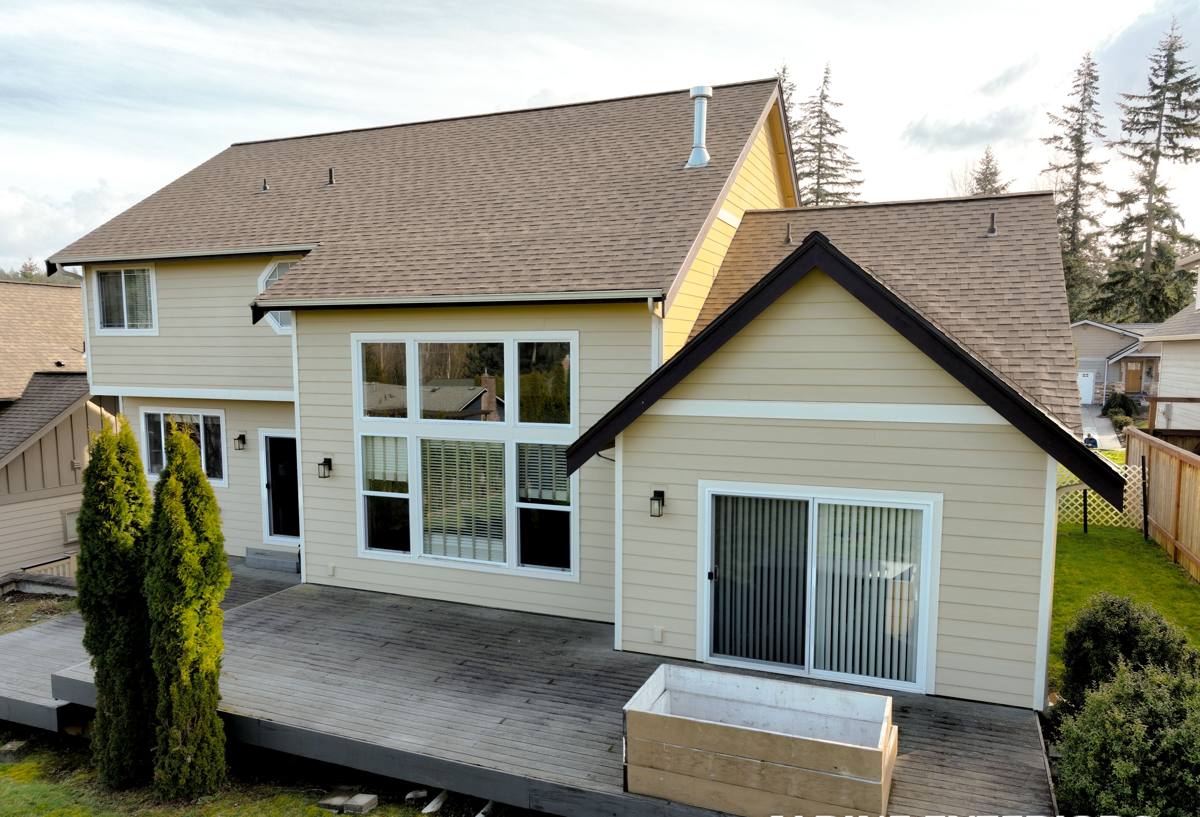
Many South Hill homes are older character houses with steeper, more complex rooflines than a typical newer build — more valleys, more dormers, more places where two roof planes meet. That's more square footage of flashing detail per house, and flashing detail is where repair problems concentrate. An older roof on a steep, complex plane also means more of the original materials and fasteners are approaching the end of what they were rated for, which changes how we approach a repair versus a straightforward patch.
Signs Your Roof Needs Repair, Not Replacement
Most of what brings someone to call about a roof problem doesn't require tearing the whole thing off. These are the signals that usually point to a targeted repair:
- A leak that shows up in one or two specific spots rather than throughout the house
- Visible damage limited to a section — a torn or lifted shingle, a cracked flashing seam, a damaged vent boot
- Moss buildup that's holding moisture but hasn't yet lifted or displaced large sections of roofing
- Staining or a soft spot on an interior ceiling that lines up with a known roof penetration like a chimney or skylight
- Granule loss or wear concentrated near a valley or edge rather than spread evenly across the whole roof
- A roof that's still within a reasonable portion of its expected service life for the material and this climate
- Gutter or flashing hardware showing rust or separation in an otherwise sound roof
Repair or Replace? Making the Right Call
Not every roof problem has an obvious answer, and we'd rather tell a homeowner the honest picture than push whichever job is bigger. These are the factors that usually settle it:
| Factor | Points Toward Repair | Points Toward Replacement |
|---|---|---|
| Extent of damage | Localized to one area or a handful of spots | Widespread across multiple roof planes |
| Roof age | Well within expected service life for the material | At or past the manufacturer's rated life |
| Deck condition | Sheathing underneath is sound where checked | Rot or soft sheathing found in more than one spot |
| Leak history | First occurrence or an isolated, explainable cause | Recurring leaks in different spots over time |
| Moss/algae extent | Present but not yet lifting material broadly | Heavy growth across most slopes with material displacement |
When a roof lands in a gray area, we'll say so directly and lay out both the repair cost and the replacement cost side by side, rather than steering the decision one way.
What a Correct Roof Repair Actually Involves
A repair that only addresses the spot where water is showing up inside the house often misses the actual entry point, which is usually somewhere else on the roof. Doing it right means tracing the problem to its source, not just its symptom.
Finding the Real Leak Source
Water can travel a surprising distance along a rafter or sheathing seam before it shows up as a stain on a ceiling. We trace leaks back to the actual entry point — often a flashing seam, a cracked pipe boot, or a lifted shingle well upslope from where the interior damage appears — instead of sealing the visible symptom and leaving the real problem in place.
Flashing Repair
Flashing at chimneys, skylights, vent penetrations, and roof-to-wall transitions is where most South Hill leaks start, especially on older homes with more of these details per roof. We replace or re-seat damaged flashing with corrosion-resistant material suited to salt air exposure, and we integrate it properly with the surrounding roofing rather than relying on sealant alone to hold it together.
Shingle and Material Repair
Damaged, cupped, or missing shingles get replaced to match the surrounding roof as closely as the existing material allows. We check the fasteners and underlayment beneath any removed section while it's open, since that's often the only chance to catch a problem before it's covered back up.
Moss and Debris Removal
Moss and accumulated debris get removed carefully rather than pressure-blasted, since aggressive cleaning can strip granules and shorten the life of the material we're trying to repair. Gutters and valleys get cleared as part of the same visit, since trapped debris is a common cause of water backing up under an edge.
Ventilation Check
Poor attic ventilation keeps a roof deck damp longer after every rain, which speeds up moss growth and can lead to condensation damage from the inside. We check intake and exhaust ventilation as part of a repair visit, since a leak repair that ignores a ventilation problem tends to see moss and moisture issues return in the same spot.
Our Repair Process
- Initial call and description. We ask what you're seeing and where, which helps us come prepared for the specific problem rather than a generic inspection.
- On-site inspection. We get on the roof and trace the actual leak path, checking flashing, penetrations, valleys, and the surrounding material condition.
- Honest diagnosis. We explain what we found, what's causing it, and whether a repair is the right call or a larger issue needs discussing.
- Written estimate. You get a clear scope and price before any work starts — no surprise add-ons once we're up there.
- Repair work. Flashing, material, and any affected fasteners or underlayment get replaced or corrected, matched to the existing roof where possible.
- Cleanup and check. Debris and moss in the affected area are cleared, and we confirm the repair is watertight before we consider the job done.
- Follow-up. We let you know what to watch for and when it's worth a periodic check, especially heading into the wetter months.
Cost Factors for a South Hill Roof Repair
Repair costs vary more than replacement costs, since the range runs from a single flashing fix to a multi-area repair on a steep, complex roof. These are the variables that move the number:
| Factor | Why It Matters Here |
|---|---|
| Number of repair locations | A single flashing fix costs far less than several separate problem areas on one roof |
| Roof pitch and access | Steep, hillside rooflines take longer to work safely and need more setup |
| Material match | Matching older or discontinued shingle profiles can add cost versus a common current product |
| Underlying damage found | Rot or soft sheathing discovered once a section is opened up adds cost beyond the original estimate |
| Extent of moss/debris removal | Heavy buildup across several slopes takes more time than a single clear area |
| Flashing material upgrade | Corrosion-resistant flashing suited to salt air costs a bit more than standard-grade material but holds up longer here |
Why Hire a Crew That Already Works South Hill
A roofer who mostly works flatter, more sheltered neighborhoods isn't wrong about roofing — they're just working from a different set of defaults. Fastener and flashing choices that are perfectly fine on a typical inland roof are often undersized for what a hillside lot facing Bellingham Bay deals with year-round. A crew that's already worked on South Hill has seen which flashing details actually fail on these older, steeper roofs, not just which ones fail in general.
There's also a practical side to local experience. Steep driveways, mature trees close to the roofline, and older framing that doesn't always match modern assumptions are all things we plan around rather than discover mid-job. Knowing the neighborhood means fewer surprises and a repair that's built to actually hold up through the next moss season, not just patched to get through the next dry spell.
Keeping a Repaired Roof Healthy Through Moss Season
A properly done repair still benefits from some basic upkeep given the conditions here:
- Clear gutters and valleys before the wet season builds up, especially under heavy tree cover
- Have moss addressed while it's light rather than waiting for it to spread across a full slope
- Trim back branches that keep a section of roof shaded and slow to dry between rains
- Have flashing points checked periodically, especially after a stretch of high wind and driving rain
- Address small leak signs right away rather than waiting to see if they get worse on their own
If you're dealing with a leak, some moss buildup, or just want an honest read on where your South Hill roof stands, we're glad to take a look. Reach out for a free, no-pressure estimate using the form below.