 Bellingham Window
 Deck Replacement in Sudden Valley
Sudden Valley sits in a pocket of Whatcom County where tall timber, lake-effect moisture, and long stretches of overcast weather all work against an aging deck at the same time. Homes here tend to have mature tree cover close to the house, which means shade that never fully burns off and a steady drop of needles, leaves, and organic debris onto deck boards year-round. Add in the driving rain that comes through the region for much of the fall, winter, and spring, plus the salt-tinged marine air that moves inland off the greater Bellingham area, and you have a climate that is genuinely hard on exterior wood structures. A deck that would last two or three decades in a drier, sunnier part of the country can start failing structurally in half that time here if it wasn't built or maintained with this climate in mind.
We replace decks specifically with this environment in mind — not a generic build dropped into a wet neighborhood, but one detailed for moss resistance, drainage, and long-term structural integrity under Whatcom County conditions.
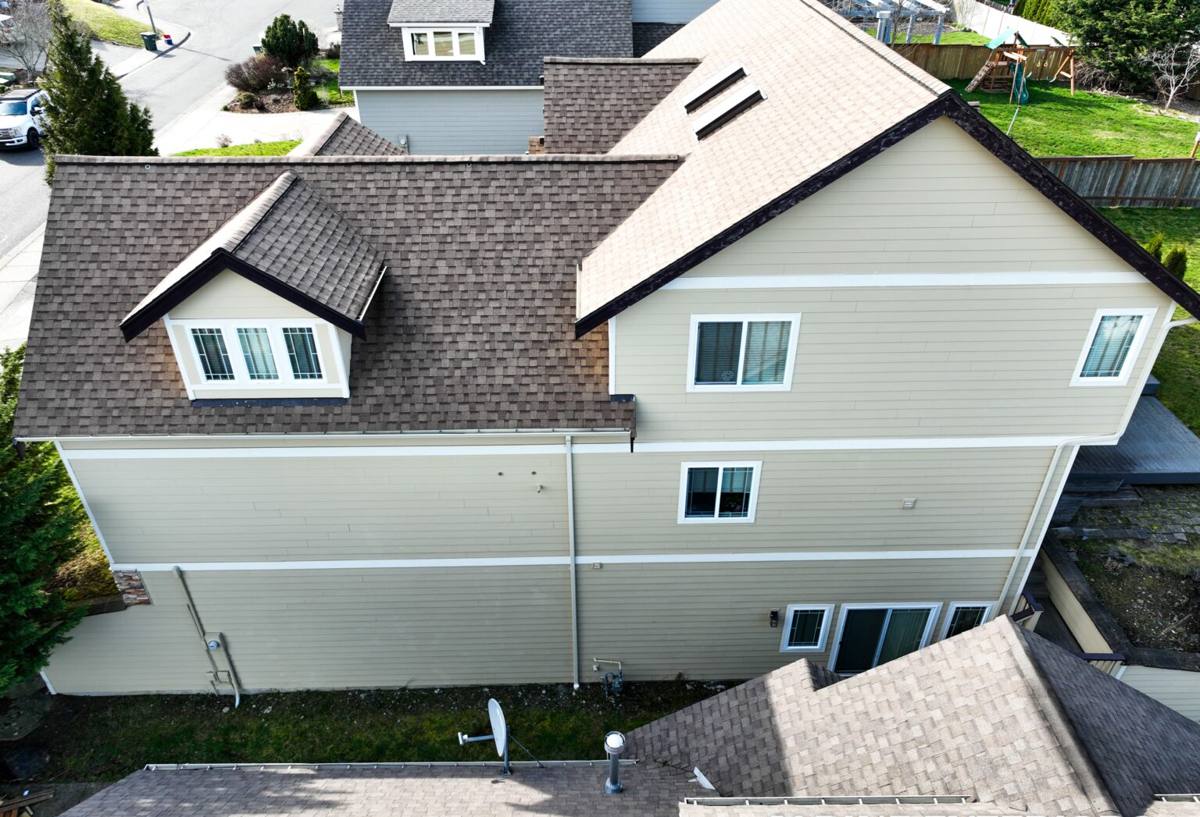
Why Sudden Valley Decks Wear Differently
Moss, Shade, and Standing Moisture
Moss doesn't just look bad — it holds water against wood fibers and fasteners far longer than open air ever would. On shaded lots, moss and algae can establish on deck boards within a single wet season, and once it takes hold on the top surface it's often already working on the underside and in the gaps between boards where nobody looks. Over a few seasons, that constant damp cycle softens wood, corrodes fasteners, and starts rot at the joints — usually well before the surface looks obviously bad.
Driving Rain and Ledger Board Rot
The bigger structural risk isn't the decking surface at all — it's the ledger board, the framing member that bolts the deck to the house. Whatcom County's wind-driven rain pushes moisture sideways and upward under flashing that wasn't detailed correctly the first time. Once water gets behind the ledger, it can rot the band joist and even the house's rim framing from the inside, hidden behind the decking, long before a homeowner sees any visible sign from the yard. This is the single most common failure point we find replacing older decks in this area.
Signs Your Deck Needs Replacing, Not Repairing
Some deck problems are cosmetic and fixable. Others mean the structure itself is compromised and a repair is just delaying the inevitable. A few honest indicators that it's time to replace rather than patch:
- Soft, spongy, or spring-back decking when you walk across it, especially near the house
- Visible gaps, rust streaks, or movement where the ledger board meets the siding
- Persistent moss or dark staining that returns within weeks of cleaning
- Posts or footings that feel loose or have visibly shifted or settled
- Railings that flex noticeably when pushed at waist height
- Fasteners that are rusted, backed out, or leaving dark streaks down the boards
- A deck older than 15-20 years that has never had ledger flashing upgraded
If you're only seeing one or two of these and the framing underneath is sound, a repair may genuinely make sense. We'll tell you that directly rather than push a full replacement you don't need.
What a Correct Deck Replacement Involves
Framing and Footings
Everything starts below the decking. Footings need to bear on solid, undisturbed soil below frost depth, and posts need proper post bases that keep end grain off concrete and out of standing water. In a climate that stays wet for months at a time, keeping wood off direct ground or concrete contact is one of the simplest things that makes the biggest long-term difference.
Ledger Attachment and Flashing
Since ledger rot is the most common failure we see, this is where we spend the most care. A correct install means proper lag bolts or through-bolts (not just nails), a code-compliant flashing detail that sheds water out and away from the house rather than trapping it, and house wrap or building paper integrated correctly at the top of the flashing rather than tucked in as an afterthought.
Decking Material and Fastening
Board spacing, fastener type, and airflow underneath all affect how fast moss and rot take hold again after the new deck goes in. We space boards to allow for material expansion and drainage rather than tight-fitting them for looks, and we use fasteners rated for the specific decking material so they don't corrode and streak within a few seasons.
Choosing Decking Material for This Climate
There's no single "right" decking material for every home — it depends on budget, how much shade the deck sits in, and how much upkeep you're willing to do. Here's how the common options actually perform under Whatcom County's wet, shaded conditions:
| Material | Moisture & Moss Behavior | Maintenance | Typical Lifespan Here |
|---|---|---|---|
| Pressure-treated wood | Absorbs moisture readily; needs sealing to resist moss and staining | Annual cleaning and re-sealing recommended | 10-15 years before major repair |
| Cedar | Naturally rot-resistant but still needs upkeep in shaded, damp spots | Periodic cleaning and oil/stain | 15-20 years with upkeep |
| Composite decking | Doesn't absorb water like wood, but can still grow surface moss/algae in deep shade | Occasional washing; no sealing needed | 25+ years, varies by brand and shade exposure |
| PVC decking | Fully moisture-resistant surface; least hospitable to moss growth | Lowest maintenance of the group | 25-30+ years |
We're honest with clients about trade-offs rather than steering everyone to the priciest option. A well-detailed cedar deck in a home with decent sun exposure can be a perfectly good choice; a heavily shaded lot tight against tree cover is usually a better candidate for composite or PVC simply because it takes moss and moisture out of the maintenance equation.
Our Deck Replacement Process
- On-site assessment — we check the ledger, framing, footings, and existing decking for hidden rot before quoting anything
- Honest scope discussion — repair vs. full replacement, material options, and realistic budget ranges based on what we actually find
- Demolition — full removal of old decking and, where needed, framing, with disposal handled for you
- Structural rebuild — footings, posts, framing, and ledger reattachment with correct flashing
- Inspection — framing inspected before decking goes on, per local permit requirements
- Decking and railing installation — spaced and fastened for drainage and long-term performance
- Final walkthrough — we go over the finished deck with you, including any maintenance the material requires
Permits and Code Considerations
Deck replacement work in Whatcom County generally requires a permit once the structure involves ledger reattachment, footings, or railings above a certain height — even when it looks like a straightforward swap of an existing deck. We handle the permit process and coordinate the required framing inspection so the job is documented and code-compliant, not just visually finished. Skipping this step is one of the more common shortcuts we see on older decks that later fail inspection at resale.
What Affects the Cost of a Deck Replacement
| Factor | Why It Matters |
|---|---|
| Extent of hidden rot found | Rotted ledger, band joist, or framing adds rebuild scope beyond the visible decking |
| Decking material chosen | Composite and PVC cost more upfront but less over the deck's lifespan |
| Deck size and height | Larger footprints and elevated decks need more framing, footings, and railing |
| Access for demolition and material delivery | Tight, sloped, or wooded lots common in Sudden Valley can add labor time |
| Railing and stair requirements | Code-required railing height and baluster spacing affects material and labor |
We give straightforward, itemized estimates rather than one vague lump sum, so you can see exactly what's driving the price before work starts.
Why Local Experience in Sudden Valley Matters
A crew that mainly works drier, sunnier neighborhoods can build a technically fine deck that still struggles here — because the details that matter most in this climate (ledger flashing, board spacing for drainage, material choice under heavy shade) aren't things you learn from a general how-to, they're things you learn from replacing decks that failed the first time around. Working regularly in and around Bellingham and Whatcom County means we've seen how different materials and details actually hold up through repeated wet seasons in this specific setting, not just how they're rated on paper.
If your deck is showing any of the warning signs above, or you just want an honest read on whether it needs repair or full replacement, we're happy to take a look. Use the form below to request a free, no-pressure estimate.