 Bellingham Window
 Why Sunnyland Roofs Wear Differently
Sunnyland is one of Bellingham's older, more established neighborhoods, and that maturity cuts both ways when it comes to roofs. The tree canopy that makes the streets shady and pleasant also means a lot of roof surfaces here spend a good part of the year under a mix of filtered sun, dripping branches, and settled debris. Add in Bellingham Bay's salt air moving inland, driving rain off the Strait of Georgia, and a moss season that can run from October through May in a wet year, and you have a climate that is genuinely harder on a roof than what you'd find in a drier inland city. This isn't a page about scare tactics — it's about what actually happens to roofing materials in this specific part of Whatcom County, and what a replacement done right looks like when it has to hold up to it.
A roof in Sunnyland doesn't fail the same way a roof in Phoenix or Denver fails. Out here, the enemy is rarely a single hailstorm or a heat blast — it's slow, repeated moisture cycling: rain soaking in, cool nights holding that moisture against the roof deck, and moss and algae colonies quietly working their way under shingle tabs and fasteners. Replacement decisions and material choices need to account for that pattern, not just a generic 20-year warranty number on a shingle wrapper.
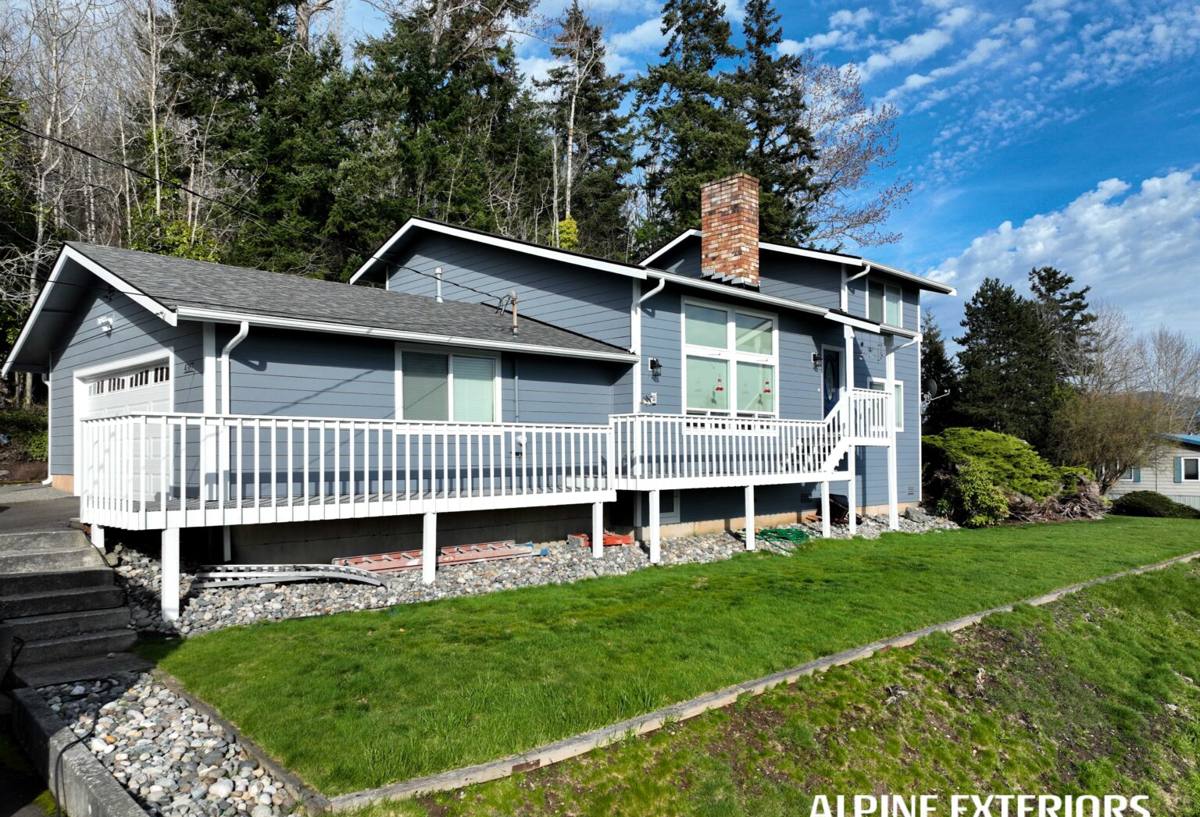
Signs a Sunnyland Roof Is Due for Replacement
Roofs rarely fail all at once. In this climate, the tells usually show up gradually, and homeowners often live with a marginal roof longer than they should because there's no dramatic leak yet. Watch for:
- Granule loss showing up in gutters or at downspout outlets — a sign the shingle's protective surface is wearing thin
- Dark streaking or a green-black cast across north-facing or shaded slopes, which is algae and moss getting a foothold
- Shingles that look "wavy," cupped, or curled at the edges, especially after a stretch of wet-then-dry weather
- Soft spots or slight sponginess when the roof is walked (a sign the decking underneath has absorbed water)
- Daylight visible through the attic roof boards, or damp insulation near the eaves
- Moss growing thick enough to hold standing water against the shingles rather than shedding it
- Flashing around chimneys, skylights, or roof-to-wall transitions that's rusted, lifted, or gapped
Any one of these on its own might just mean a repair. Several at once, especially on a roof that's already 18–25 years old, usually means the underlying materials are past the point where patching makes financial sense.
What a Correct Roof Replacement Actually Involves
A roof replacement is more than swapping old shingles for new ones. In a wet marine climate like Whatcom County's, the parts you don't see matter as much as the parts you do.
Full Tear-Off, Not Overlay
We don't install new shingles over an old layer. Overlaying traps moisture, hides deck damage, and voids most manufacturer warranties. A full tear-off lets us actually inspect the deck, replace any rotted or delaminated plywood, and start clean.
Deck Inspection and Repair
Once the old roofing is off, the sheathing gets a real inspection — not a glance. Soft, water-stained, or delaminated panels get cut out and replaced before anything new goes down. Skipping this step is the single most common cause of premature roof failure we see on older Sunnyland homes.
Underlayment Built for Wet Weather
Given how much rain this area gets, we use synthetic or ice-and-water underlayment at the eaves, valleys, and any low-slope transitions — the spots where wind-driven rain is most likely to work its way backward under the shingle line. This is a place where cutting corners on materials shows up as an interior leak two or three winters later, not immediately.
Ventilation That Actually Balances
Ridge and soffit ventilation has to work together to let the attic breathe. In a humid coastal climate, poor ventilation traps moisture in the attic, which speeds up deck rot from underneath and can void shingle warranties that require balanced airflow. We check intake and exhaust as part of every replacement, not as an upsell afterward.
Flashing Done Properly
Chimneys, skylights, sidewalls, and valleys are where most roof leaks actually start — not in the open field of shingles. New step flashing, counter-flashing, and valley metal are installed as part of the job, not reused from the old roof just to save time.
Material Options for Sunnyland's Climate
There's no single "best" roofing material — the right choice depends on your home's slope, shade coverage, budget, and how much moss maintenance you're willing to keep up with. Here's how the common options actually compare for this specific climate:
| Material | How it handles moss/algae | How it handles wind-driven rain | Typical lifespan here |
|---|---|---|---|
| Standard asphalt composition shingle | Vulnerable without algae-resistant granules; needs periodic cleaning under shade | Good, with proper underlayment and flashing | 18–25 years |
| Algae-resistant (copper-granule) composition shingle | Noticeably better resistance in shaded, damp areas | Good | 20–30 years |
| Standing-seam metal | Sheds moss growth well due to smooth, sloped surface | Excellent | 40–60 years |
| Cedar shake | High maintenance burden in this climate; needs regular treatment to resist rot and moss | Fair, depends on install quality | Variable, heavy upkeep required |
We'll be direct about cedar shake: it can look great, but in a shaded, damp neighborhood like Sunnyland it demands a maintenance schedule most homeowners underestimate — regular cleaning, treatment, and closer inspection than composition or metal roofing require. We're happy to install it if that's what a homeowner wants and understands the upkeep, but for most Sunnyland homes we steer people toward algae-resistant composition shingle or metal, because they hold up with far less babysitting.
How Our Replacement Process Works
- On-site assessment — we walk the roof (or use a drone where the pitch is unsafe), check the deck condition from the attic side, and photograph problem areas.
- Written estimate — a clear breakdown of material options, labor, and any deck repair contingencies, so there are no surprise change orders mid-job.
- Permitting — we pull the required City of Bellingham roofing permit before work starts.
- Material delivery and site prep — landscaping and siding get protected, and a dumpster or trailer is staged for tear-off debris.
- Tear-off and deck repair — old roofing removed, deck inspected and repaired the same day where possible so it's never left exposed overnight longer than necessary.
- Underlayment, flashing, and roofing installation — installed to manufacturer spec so warranties stay valid.
- Cleanup and magnetic nail sweep — yard, driveway, and gutters cleared of debris and stray fasteners.
- Final walkthrough — we go over the finished roof and warranty paperwork with you before calling the job done.
Why Local Experience in Sunnyland Matters
A roofing crew that mostly works dry-climate jobs and occasionally takes on a Whatcom County project doesn't have the same instincts as one that works this neighborhood regularly. Knowing which slopes in Sunnyland tend to stay shaded and moss-prone into June, how much overhang from mature trees affects debris buildup in gutters, and how Bellingham's permitting and inspection process actually runs isn't something you learn from a manual — it's something you learn from doing the work here, repeatedly. That local pattern-recognition shows up in small decisions: where to add extra underlayment even if it's not strictly required, which valleys need wider metal because of how water actually moves off a given roof shape, and when a homeowner's moss problem is really a ventilation problem in disguise.
Ongoing Moss and Algae Prevention
Even a well-installed new roof will get some moss and algae growth over time in this climate — the goal is managing it before it undermines the roofing, not pretending it won't happen. A few habits go a long way:
- Trim back overhanging branches to cut down on shade and debris buildup on the roof surface
- Keep gutters clear so water doesn't back up under the shingle edge, which accelerates moss growth
- Have moss physically brushed or gently treated off rather than pressure-washed, which can strip granules and shorten shingle life
- Consider zinc or copper strips near the ridge on shaded slopes, which release trace metal ions that discourage moss regrowth as rain washes over them
- Schedule a roof check every year or two, especially heading into the wet season, so small issues get caught before they become deck damage
Permits, Timeline, and What to Expect
Roof replacement in Bellingham requires a permit through the City, and we handle that as part of the job rather than leaving it to the homeowner. Most straightforward single-family roof replacements in Sunnyland take one to three days of on-site work, weather permitting — and weather is the real variable here. We watch the forecast closely and won't tear off a roof into an open sky if a wet system is rolling in off the Strait; keeping the deck dry during the job matters more than sticking to an arbitrary schedule. If your home has multiple roof planes, steep pitch, or extensive deck repair needed, the timeline extends accordingly, and we'll walk through that specific to your roof before work starts, not after.
If your roof is showing its age or you just want an honest read on how much life it has left, we're glad to take a look. Fill out the form below for a free, no-pressure estimate on your Sunnyland roof.